Choosing a portable multitrack recorder for musicians comes down to more than just track count. The best options balance clean preamps, flexible inputs, simple editing, and dependable battery life.
Whether you’re sketching songs at home, tracking rehearsals, or building demo sessions on the move, the right recorder should fit your workflow without slowing it down.
Best 10 Portable Multitrack Recorder for Musicians Picks for 2026
Portable Sketchpad
Zoom R12 8-Track Touchscreen Recorder

- Records up to 8 tracks with touchscreen editing
- Includes drum loops, synths, and MIDI support
- Runs on AA batteries and works as a USB-C interface
Best For: Songwriters who want a portable all-in-one recording and sketching tool
Classic Pocket Studio
BOSS BR-600 Multitrack Recorder

- 8 playback tracks with 64 V-Tracks for layering
- Built-in stereo mic plus guitar, vocal, and pitch FX
- Battery-powered with a built-in drum machine
Best For: Songwriters who want a compact, effects-heavy recorder for demos
Clip-Free Creator
Zoom R4 4-Track Float Recorder

- 32-bit float recording helps prevent clipping
- Records, layers, and bounces tracks for compact sessions
- Works as a USB audio interface and runs on AA batteries or USB-C
Best For: Musicians who want effortless recording and portable demo layering
Pocket Songwriter
Tascam DP-006 6-Track Recorder

- Up to six tracks with two-track simultaneous recording
- Built-in omni-directional mics for quick capture
- Battery-operated and compact for mobile songwriting
Best For: Acoustic players and songwriters wanting a simple pocket studio
Dual-Input Compact Recorder
Zoom H1 XLR 2-Channel Recorder

- 32-bit / 96kHz recording for detailed audio
- Two locking XLR/TRS combo inputs
- OLED waveform display for level monitoring
Best For: musicians needing a compact two-input recorder
Easy 4-Track Starter Recorder
Zoom H4essential 4-Track Portable Audio Recorder
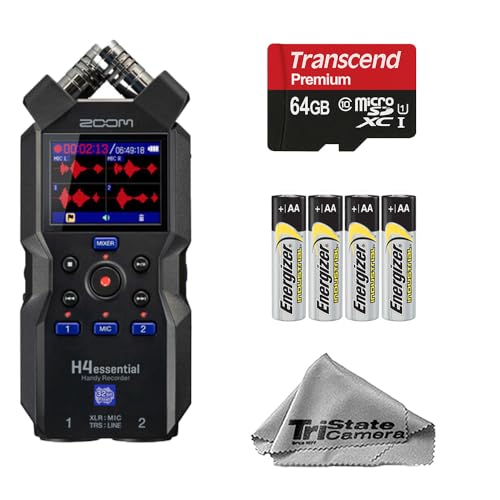
- 4-track recording for multiple sources
- 32-bit float reduces gain-setting hassles
- Built-in X/Y mics and 64GB card included
Best For: musicians wanting an easy all-in-one portable recorder
Four-Input Production Recorder
TASCAM DR-70D 4-Channel Portable Audio Recorder
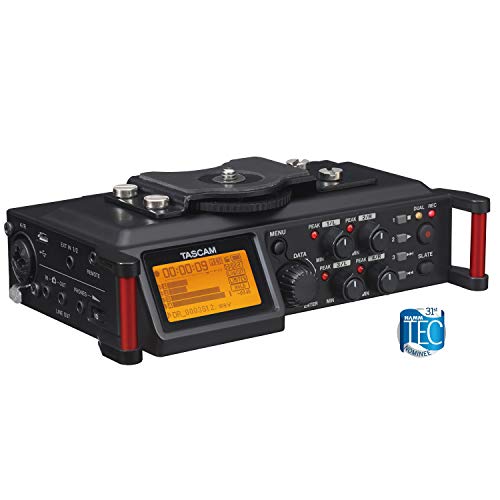
- Four balanced XLR inputs with phantom power
- Dual Recording mode for safety copies
- Built-in mics and HDDA preamps
Best For: musicians and creators needing four mic inputs and safety recording
Compact 2-Track Creator Recorder
Zoom H1 Essential for Musicians & Creators

- 32-bit float stereo recording
- X/Y mics plus USB-C mic mode
- Lightweight 92 g portable design
Best For: portable stereo capture, podcasts, rehearsals, and quick USB recording
DSLR-Rig 4-Channel Recorder
TASCAM DR-60DmkII for Camera Setups

- Up to 4 channels to SD card
- Dual XLR/TRS plus dual 3.5 mm inputs
- Fits neatly under a DSLR rig
Best For: camera-based recording with multiple mics or sources
4-Track Handheld Recorder
Zoom H4 Essential for Musicians & Filmmakers

- 4-track recording with 32-bit float
- Built-in stereo mics and 2 XLR/TRS inputs
- USB-C recording plus SD card backup
Best For: song recording, live capture, interviews, and portable multitrack work
Portable Sketchpad – Zoom R12 8-Track Touchscreen Recorder
If you want a portable multitrack recorder for musicians that feels closer to a compact studio than a field recorder, the Zoom R12 is built for fast song capture and simple hands-on editing. It records up to 8 tracks, gives you two XLR/TRS combo inputs, and lets you cut, copy, loop, and mix directly on the touchscreen without a computer.
Best For: Songwriters and solo musicians who want an all-in-one portable recorder with onboard editing, drum loops, and USB-C computer integration.
Pros:
- Records up to 8 tracks with a full-color touchscreen and DAW-style editing tools
- Built-in drum loops and 18 FM synth instruments add quick backing and idea-building options
- Both inputs support 48V phantom power, and input 1 includes a Hi-Z switch for guitar or bass
- Runs on four AA batteries for up to 5 hours of portable use
Cons:
- Only two XLR/TRS inputs are available for live tracking at once
- Battery life is useful, but not especially long for extended sessions away from power
The R12 is a strong fit if you want to record ideas anywhere and keep the workflow simple on the device itself. Its mix of multitrack recording, onboard instruments, and USB-C interface features makes it especially practical for musician-friendly home or mobile production.
Classic Pocket Studio – BOSS BR-600 Multitrack Recorder
The BOSS BR-600 is a practical portable multitrack recorder for musicians who want a self-contained sketchbook with built-in tools for tracking and practice. It offers 8 simultaneous playback tracks, a built-in stereo microphone, battery power, and onboard drum and effects features for quick demo work.
Best For: Musicians who want a compact, battery-powered recorder with built-in mics, effects, and drum-machine support for songwriting and demos.
Pros:
- 8 simultaneous playback tracks with 64 V-Tracks for flexible layering
- Built-in stereo microphone makes it easy to start recording right away
- Includes guitar and vocal effects, plus a pitch corrector
- Built-in drum machine with velocity-sensitive pads supports songwriting and practice
Cons:
- Uses CompactFlash media rather than modern removable storage formats
- Runs on four 9V batteries, which may be less convenient than AA-powered units
This model suits musicians who value an integrated, no-frills workflow and want useful effects built in. It is especially appealing as a compact demo recorder, though its older storage approach may matter if you prefer newer hardware conveniences.
Clip-Free Creator – Zoom R4 4-Track Float Recorder
The Zoom R4 is a portable multitrack recorder for musicians who want simple capture without worrying about gain staging. It records up to 4 tracks, supports stereo bouncing, and uses 32-bit float recording so you can plug in and focus on playing rather than constantly adjusting levels.
Best For: Musicians who want clip-free recording, easy layering, and a compact device that also doubles as a USB audio interface.
Pros:
- 32-bit float recording helps avoid clipping and reduces the need for gain adjustments
- Can record, layer, and bounce tracks to free up space for more parts
- Two XLR/TS combo inputs work with microphones, instruments, and keyboards
- Includes over 80 drum patterns and runs on AA batteries or USB-C
Cons:
- Limited to 4 tracks, so larger arrangements will require bouncing
- Only two combo inputs are available for simultaneous recording
The R4 is a smart choice if you want a compact recorder that minimizes technical setup and keeps sessions moving. Its bounce workflow and interface mode make it especially useful for quick demos, mobile tracking, and computer-based recording.
Pocket Songwriter – Tascam DP-006 6-Track Recorder
The Tascam DP-006 is a straightforward portable multitrack recorder for musicians who want a small songwriting tool with built-in microphones. It records up to six tracks, offers two simultaneous recording channels, and keeps the focus on quick demo capture rather than deep production features.
Best For: Songwriters and acoustic players who want a simple battery-operated pocket studio with built-in mics.
Pros:
- Records up to six tracks with two tracks available for simultaneous recording
- Built-in omni-directional condenser microphones make spontaneous capture easy
- Battery operation and compact size support truly mobile songwriting
- CD-quality 16-bit/44.1kHz recording keeps sessions simple and familiar
Cons:
- Built-in microphones may not suit every recording situation
- 2.5 mm headphone jack is less common than full-size outputs
The DP-006 is best when you want a lightweight recorder for capturing ideas fast, especially without extra gear. It is not the most expandable option here, but it works well as a dedicated pocket studio for basic multitrack songwriting.
Dual-Input Compact Recorder – Zoom H1 XLR 2-Channel Recorder
If you want a portable multitrack recorder for musicians that stays simple but still gives you flexible input options, the Zoom H1 XLR is built around quick setup and clean capture. Its 32-bit/96kHz recording, two locking XLR/TRS combo inputs, and 3.5mm stereo in/out make it a practical choice for recording instruments, vocals, or a small live setup without much fuss.
Best For: Musicians who need a compact recorder with two pro-style inputs and easy level monitoring.
Pros:
- Records in 32-bit / 96kHz for detailed, clip-resistant audio.
- Two locking XLR/TRS combo inputs support microphones, instruments, and more.
- OLED waveform display helps you monitor levels at a glance.
- 3.5mm stereo input and headphone output add extra flexibility.
Cons:
- Only two XLR/TRS inputs, so it is not ideal for larger ensembles.
- Relies on AA batteries rather than a built-in rechargeable pack.
- Best suited to compact setups instead of full-band multitrack sessions.
Overall, this is a strong pick if you need a no-nonsense portable recorder with dependable inputs and straightforward monitoring. It favors simplicity and clean audio over complex routing, which makes it especially appealing for small musician recording setups.
Easy 4-Track Starter Recorder – Zoom H4essential 4-Track Portable Audio Recorder
The Zoom H4essential is a portable multitrack recorder for musicians who want more channels without a complicated setup. With 4-track recording, built-in X/Y stereo microphones, and 32-bit float recording, it is designed to capture rehearsals, songwriting ideas, and small sessions with less worry about gain adjustments.
Best For: Musicians, podcasters, and creators who want an easy 4-track recorder with built-in mics.
Pros:
- 4-track recording lets you capture multiple sources at once.
- 32-bit float recording helps reduce the need to adjust gain.
- Built-in X/Y stereo microphones provide ready-to-use stereo sound.
- Includes a 64GB microSD card and batteries for immediate use.
Cons:
- Built-in mics may not replace the flexibility of external mic inputs for every setup.
- Hardware interface is USB Type C, but the supplied notes do not list XLR/TRS combo inputs.
- Better suited to compact recording than to large multi-mic live rigs.
As a starter-friendly option, this model balances portability with useful track count and hands-off recording. It is a smart fit when you want a reliable recorder for music ideas, demo capture, or simple multi-source sessions.
Four-Input Production Recorder – TASCAM DR-70D 4-Channel Portable Audio Recorder
For a portable multitrack recorder for musicians that leans toward serious input flexibility, the TASCAM DR-70D offers four balanced XLR mic inputs with phantom power in a compact body. It is aimed at production-style recording, but the four inputs, built-in microphones, and safety-focused features make it useful for small live sessions, rehearsals, and capture situations where clean backup audio matters.
Best For: Musicians and creators who need four XLR inputs and safety recording in a compact recorder.
Pros:
- Four balanced XLR mic inputs with phantom power support pro mic setups.
- Built-in microphones can capture sound on-set or as a backup source.
- Dual Recording mode creates a safety copy at a lower level.
- High-quality HDDA mic preamps offer up to 64dB of gain.
Cons:
- Notes emphasize production use, so it is less music-focused than some dedicated recorders.
- Runs on four AA batteries, which adds to carry needs.
- Compact camera-mount design may be more than some musicians need for simple practice recording.
This is the most input-rich option in the group and the best fit when you want multiple mic channels with extra recording protection. If your sessions benefit from four XLR inputs and backup safety, it brings a very practical set of tools.
Compact 2-Track Creator Recorder – Zoom H1 Essential for Musicians & Creators
If you want a portable multitrack recorder for musicians that’s simple to carry and quick to use, the Zoom H1 Essential focuses on clean stereo capture rather than complicated track juggling. Its 32-bit float recording, X/Y stereo mics, and USB-C mic mode make it a practical grab-and-go option for songwriting sessions, rehearsals, acoustic sets, and content creation.
Best For: Musicians, podcasters, and creators who need a lightweight recorder for stereo music capture, voice work, and quick USB recording.
Pros:
- 32-bit float recording helps reduce clip-prone takes.
- Built-in X/Y stereo mics are ready for rehearsals, acoustic performances, and ambient sound.
- USB-C microphone mode supports livestreams, calls, and desktop recording.
- Compact 92 g design makes it easy to carry anywhere.
Cons:
- Only captures stereo audio, so it is less flexible than a true 4-track recorder.
- Uses AAA batteries instead of a built-in rechargeable pack.
- Best suited to quick capture rather than larger multi-input setups.
Overall, the H1 Essential is a strong fit if your priority is portable stereo recording with modern safety features and easy USB use. It is not the most expansive recorder here, but it is one of the simplest ways to get better-sounding music and voice recordings on the move.
DSLR-Rig 4-Channel Recorder – TASCAM DR-60DmkII for Camera Setups
For a portable multitrack recorder for musicians working around camera rigs, the TASCAM DR-60DmkII is built to sit under a DSLR setup and handle up to four channels at once. With dual XLR/TRS inputs, dual 3.5 mm inputs, phantom power, and limiter/HP filter tools, it suits capture scenarios where you need more routing than a simple handheld recorder provides.
Best For: Videographers and musicians who need a compact recorder for multi-input capture with a camera-based workflow.
Pros:
- Records up to 4 channels to SD card at up to 96kHz/24-bit WAV.
- Two locking XLR inputs with 48V phantom power support external mics.
- Two 3.5 mm inputs work well for wireless and lavalier mics.
- Designed to fit under a DSLR camera rig.
Cons:
- Uses 4 AA batteries, which adds to carry and power management.
- Built more for camera rigs than for handheld music recording.
- Listed internal recording time is short in the supplied details.
The DR-60DmkII makes the most sense when your recordings are tied to video production and you want more input flexibility than a camera alone can offer. It is less of an all-purpose handheld music recorder, but it is a practical multi-input tool for rig-mounted recording.
4-Track Handheld Recorder – Zoom H4 Essential for Musicians & Filmmakers
If you need a portable multitrack recorder for musicians that can handle bigger sessions, the Zoom H4 Essential brings 4-track recording, built-in stereo mics, and two XLR/TRS inputs into a compact handheld design. It is built for recording music, interviews, podcasts, and live performances, with 32-bit float capture to help protect against distorted takes.
Best For: Musicians and creators who want a compact 4-track recorder for songs, interviews, live audio, and backup SD recording.
Pros:
- 4-track recording offers more flexibility than a basic stereo recorder.
- Built-in stereo mics plus two XLR/TRS inputs support mics, instruments, and mixers.
- 32-bit float recording helps capture loud or quiet sources with less worry about clipping.
- USB-C support lets it record or stream to a phone, tablet, or computer while saving to SD card.
Cons:
- Uses AA batteries instead of a rechargeable internal battery.
- Its interface may feel more feature-rich than a simple recorder if you only need quick stereo capture.
- Some users may not need the added 4-track capability for basic voice or rehearsal recording.
Among these options, the H4 Essential is the most balanced choice for creators who want true 4-track flexibility without moving to a larger setup. It combines practical inputs, backup recording, and USB-C connectivity in a portable body that suits both music and content work.
How We Picked These Portable Multitrack Recorder for Musicians
We focused on models that are practical for real music-making: enough tracks for overdubs, combo inputs for mics and instruments, easy transport, and recording quality that holds up for demos and scratch tracks. We also favored recorders with useful extras such as built-in effects, onboard mics, USB audio interface modes, and 32-bit float where available.
Quick Comparison
The lineup includes compact pocket-style recorders, handheld stereo units, and more traditional multitrack machines. If you want the most songwriting-friendly setup, look for dedicated multitrack recorders with onboard editing and multiple inputs. If you need something fast and rugged, handheld 32-bit float recorders are easier to grab and use anywhere. For rehearsal capture or band recording, the 4-channel TASCAM units and higher-input models are the better fit.
Key Buying Factors for a Portable Multitrack Recorder for Musicians
Inputs and Track Count
Think about how many sources you record at once. Solo writers may only need one or two inputs, while duos and small bands benefit from four or more channels. More inputs usually mean more flexibility, but also a larger body and a more complex workflow.
Recording Format and Headroom
32-bit float recording is a major advantage if you want to avoid clipping and keep setup simple. Traditional recorders can still sound excellent, but they require more careful gain staging. If you record loud instruments or unpredictable performances, 32-bit float is especially useful.
Microphones, Preamps, and Monitoring
Built-in mics are handy for quick ideas, but external mic inputs matter most for serious music capture. Good headphone monitoring, low-noise preamps, and limiter or high-pass filter tools can improve results in less-than-ideal spaces.
Workflow Features
Onboard editing, looping, drum patterns, USB interface support, and battery operation all help a recorder feel more like a songwriting tool than just a capture device. If you move between home, rehearsal space, and live sessions, prioritize speed and simplicity.
Who Should Buy Which Portable Multitrack Recorder for Musicians?
Songwriters and solo musicians should lean toward compact multitrack units with editing tools and easy overdubbing. Mobile creators who value quick setup will likely prefer a handheld 32-bit float recorder. Bands and rehearsal rooms should choose models with multiple combo inputs and stronger routing options. If you mainly need a portable sketchpad, a smaller recorder can be the smartest choice; if you want to build full demos, step up to a true multitrack machine.
The best Portable Multitrack Recorder for Musicians is the one that matches your recording style, not just your channel count. Pick the simplest model that still gives you enough inputs, clean sound, and room to grow.