The best open-back banjos make traditional, clawhammer, and folk playing feel approachable without the extra weight and projection-focused design of a resonator model. This roundup compares 10 options ranging from lightweight composite instruments to full-size maple and wood-bodied banjos.
Whether you are buying your first banjo, upgrading for old-time music, or looking for a compact travel instrument, use the guide below to match the instrument’s scale, construction, accessories, and setup potential to your playing style.
Best 10 Open Back Banjos Picks for 2026
Best All-Inclusive Kit
AKLOT 5-String Open Back Banjo

- Bright, clear maple sound
- Adjustable 18-bracket head and truss rod
- Includes tuner, gig bag, strings, and accessories
Best For: Beginners and advancing players wanting a complete setup kit
Best Premium Choice
Deering Goodtime 5-String Openback Banjo

- Rock maple body with violin-grade rim
- Comfortable D-shaped neck and 22 frets
- Includes bag, tuner, mute, picks, and six-year warranty
Best For: Players prioritizing premium construction and support
Best Lightweight Beginner Pick
Gold Tone AC-1 Open Back Banjo
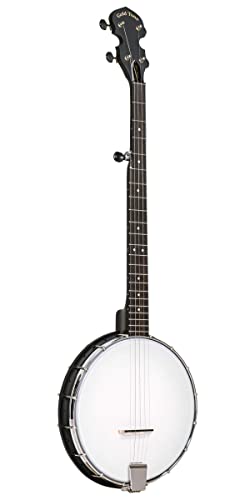
- Lightweight 3.75-pound composite design
- Zero-Glide nut system and 12-point setup
- Gig bag included for convenient transport
Best For: Beginners and gift buyers seeking a portable starter banjo
Best Convertible Design
Jameson 5-String Banjo with Removable Resonator
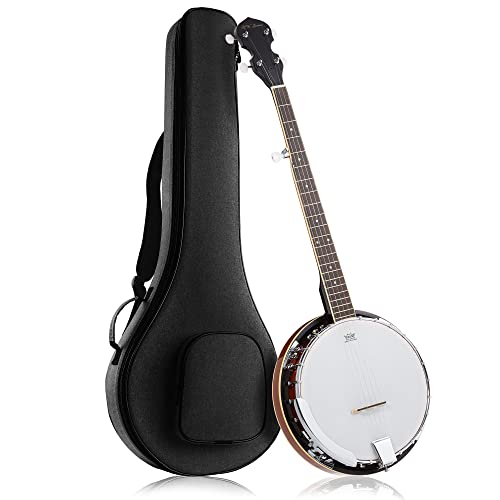
- Switches between open-back and closed-back use
- Mahogany body with maple-and-mahogany shell
- Geared fifth tuner and adjustable hardware
Best For: Players wanting flexibility across open-back and closed-back styles
Best Left-Handed Pick
Gold Tone AC-1/L Beginner Banjo

- Full-size left-handed 5-string design
- Composite rim and rosewood fingerboard
- Gig bag and 2-year warranty included
Best For: Left-handed beginners learning bluegrass or clawhammer
Best Accessory Bundle
Mulucky MB1101 Open Back Banjo

- Maple body with Remo head
- 24 adjustable brackets and geared fifth tuner
- Includes tuner, picks, strings, strap, and gig bag
Best For: Beginners seeking a complete banjo starter kit
Best Lightweight Composite

- Full-size 5-string openback design
- Lightweight composite construction
- Remo frosted head and Zero Glide nut
Best For: Beginners wanting a manageable, low-maintenance banjo
Best Full-Size Starter Set
Kmise 5-String Open-Back Banjo

- Full-size 38-inch 5-string design
- Removable resonator for two sound options
- Includes bag, tuner, strap, strings, and picks
Best For: Adult beginners wanting a complete full-size package
Best Portable Pick
Vangoa 26-Inch Mini Open-Back Banjo

- Compact 26-inch travel-friendly format
- Remo head and warm mahogany tone
- Beginner kit includes pickup and accessories
Best For: Traveling beginners and casual learners
Best Two-Tone Upgrade

- Full-size 38-inch 5-string configuration
- Switches between open-back and resonator tones
- Remo head, pickup, tuner, bag, and strap included
Best For: Players covering folk, clawhammer, and bluegrass
Best All-Inclusive Kit – AKLOT 5-String Open Back Banjo
For shoppers comparing open back banjos, the AKLOT 5-string model stands out as a full-size maple instrument bundled with useful setup and maintenance accessories. Its Remo head, adjustable brackets, and bright, clear sound profile make it a practical option for beginners who want room to refine the setup.
Best For: Beginners and advancing players who want a complete 5-string kit with adjustable components.
Pros:
- All-maple construction and a European tiger maple head are designed for a bright, clear sound.
- Open-back design, Remo head, 18 adjustable brackets, and a two-way truss rod support setup flexibility.
- Includes a tuner, spare strings, picks, strap, cleaning cloth, tuning wrenches, and gig bag.
Cons:
- The head may require several adjustments to settle on the desired sound.
- At 8.2 pounds, it is heavier than some lightweight beginner alternatives.
The AKLOT offers strong package value for players who want an instrument and essential accessories in one purchase. Its adjustability is useful, though new players may need time to learn the setup process.
Best Premium Choice – Deering Goodtime 5-String Openback Banjo
Among open back banjos, the Deering Goodtime emphasizes refined construction and a comfortable playing design. Its rock maple body, violin-grade three-ply rim, clear bright tone, and included padded gig bag make it a polished choice for players ready to invest in a U.S.-made instrument.
Best For: Players seeking premium construction, a comfortable neck, and long-term manufacturer support.
Pros:
- Rock maple construction and an 11-inch, three-ply violin-grade maple rim support tone and resonance.
- D-shaped neck, 22 nickel-silver frets, and a 1 1/4-inch nut width provide a defined playing layout.
- Includes a padded gig bag, chromatic tuner, banjo mute, and picks, with a six-year warranty.
Cons:
- Its premium construction may make it a larger investment than basic beginner models.
- The supplied sound profile is clear and bright, which may not suit players seeking a darker tone.
The Goodtime is a strong fit when build quality, comfort, and warranty coverage matter more than minimizing the initial cost. Its accessory package also reduces the need for immediate add-on purchases.
Best Lightweight Beginner Pick – Gold Tone AC-1 Open Back Banjo
The Gold Tone AC-1 is one of the more approachable open back banjos for new players who value low weight and straightforward features. Its composite rim, Zero-Glide nut system, Remo frosted head, and included gig bag create a simple package for learning 5-string banjo.
Best For: Beginners and gift buyers seeking a lightweight, easy-to-start acoustic banjo.
Pros:
- Composite open-back construction keeps the instrument lightweight at the listed 3.75 pounds.
- Zero-Glide nut system is included to support the setup.
- Comes with a gig bag and a Gold Tone 12-point setup.
Cons:
- Composite construction may appeal less to players specifically seeking an all-wood banjo.
- The one-year warranty is shorter than the coverage listed for the Deering model.
The AC-1 focuses on portability and beginner-friendly value rather than elaborate appointments. It is a sensible starting point for players who want an open-back instrument that is easy to carry and ready to learn on.
Best Convertible Design – Jameson 5-String Banjo with Removable Resonator
Jameson Guitars 5-String Banjo 24 Bracket with Closed Solid Back and Geared 5th Tuner
Check Price On AmazonAlthough it is supplied with a closed back, this Jameson 5-string banjo deserves consideration alongside open back banjos because its resonator is removable. That lets players switch between open-back and closed-back configurations while benefiting from a mahogany body, maple-and-mahogany shell, geared fifth tuner, and adjustable hardware.
Best For: Players who want one banjo that can accommodate both open-back and closed-back playing styles.
Pros:
- Removable resonator allows open-back or closed-back use.
- Five-ply maple and mahogany shell, mahogany neck, and purpleheart fretboard give it a distinctive wood-focused build.
- Includes a Remo Weatherking head, adjustable tailpiece, truss rod, and geared fifth tuner.
Cons:
- It is not a dedicated open-back instrument unless the resonator is removed.
- The listed 90-day limited warranty is relatively brief.
- The supplied package includes a gig bag but does not list a tuner or picks.
The Jameson is the flexible choice in this group, especially for players exploring clawhammer, folk, country, and bluegrass. Its convertible format offers versatility, but buyers focused exclusively on open-back playing may prefer a purpose-built model.
Best Left-Handed Pick – Gold Tone AC-1/L Beginner Banjo
The Gold Tone AC-1/L is a full-size, 5-string open-back banjo designed specifically for left-handed players. Its composite rim, rosewood fingerboard, and included gig bag make it a practical starting point for bluegrass or clawhammer practice.
Best For: Left-handed beginners who want a full-size acoustic banjo with a warm, low-midrange-focused sound.
Pros:
- Left-handed configuration with a Nato neck and rosewood fingerboard
- Lightweight composite construction with an 11-inch rim
- Includes a gig bag and a 2-year warranty
- Suitable for bluegrass or clawhammer playing
Cons:
- Designed specifically for left-handed players, limiting versatility for right-handed users
- Composite construction may not suit players seeking an all-wood instrument
With its dedicated left-handed layout and beginner-friendly full-size design, the AC-1/L is a focused choice for learning open-back banjo techniques without needing to adapt a right-handed instrument.
Best Accessory Bundle – Mulucky MB1101 Open Back Banjo
The Mulucky MB1101 is a full-size 5-string open-back banjo kit with a maple body, Remo head, and 24 chrome-plated brackets. It also includes the core accessories a beginner needs, making it a convenient all-in-one option for exploring open back banjos.
Best For: Beginners who want an open-back banjo package with tuning, maintenance, and playing accessories included.
Pros:
- Maple construction with a Remo head and 5/8-inch maple/ebony bridge
- Open-back design produces a softer, more mellow sound
- 24 adjustable brackets help manage head tension
- Includes a tuner, strap, picks, spare strings, tools, cleaning cloth, and gig bag
Cons:
- Shorter 2-month warranty
- Accessory-heavy kit may be more than players who already own banjo supplies need
- Its softer open-back volume may not be ideal for louder ensemble settings
The MB1101 stands out for its generous beginner bundle and adjustable hardware. Its geared fifth tuner and adjustable truss rod also provide useful setup features as the player develops.
Best Lightweight Composite – Gold Tone AC-1 Openback Banjo
The Gold Tone AC-1 is a full-size 5-string openback banjo built around a lightweight composite rim. With a Remo 11-inch LC frosted head, Zero Glide nut, and included gig bag, it offers a straightforward setup for players starting with open back banjos.
Best For: Beginners who prioritize a lightweight composite instrument and smooth tuning features.
Pros:
- Lightweight composite rim and body construction
- Remo 11-inch LC frosted head
- Zero Glide nut is designed for smooth tuning
- Full-size 5-string format with gig bag included
Cons:
- Composite construction may not appeal to players wanting a traditional wood body
- Supplied notes do not list additional accessories beyond the gig bag
The AC-1 keeps the design simple and manageable, making its low-weight composite construction a useful advantage for practice, lessons, and casual playing.
Best Full-Size Starter Set – Kmise 5-String Open-Back Banjo
For shoppers comparing open back banjos, the Kmise offers a full-size 38-inch 5-string design with a removable sapele resonator. Remove the back for a more open, cleaner sound, or keep it attached for fuller projection. Its included accessories make it a practical starting package for adults and beginners.
Best For: Adult beginners who want a full-size banjo and a broad accessory bundle.
Pros:
- Removable back lets you switch between open and fuller resonator-style sound.
- Includes a padded gig bag, strap, tuner, extra strings, picks, and adjustment tools.
- Full-size okoume neck and sapele construction provide a traditional 5-string format.
- Polished chrome armrest adds playing comfort.
Cons:
- At 38 inches and about 4.51 kg, it is less travel-friendly than the mini option.
- The included six-month return and refund warranty is shorter than some competing coverage.
This is a sensible value-oriented choice when you want one full-size instrument that can cover open-back practice and resonator-style playing without buying accessories separately.
Best Portable Pick – Vangoa 26-Inch Mini Open-Back Banjo
If portability matters when choosing among open back banjos, the Vangoa mini is built for travel, classes, parties, and casual practice. Its 26-inch format is lighter than a full-size instrument, while the mahogany body, Remo head, and included beginner kit keep it approachable for new players.
Best For: Beginners and travelers who prioritize a compact, lightweight banjo.
Pros:
- 26-inch size and 2.8-pound weight make it convenient to carry.
- Open-back and closed-back configurations offer flexibility in playing setup.
- Includes a bag, tuner, strap, pickup, extra strings, picks, and tools.
- Truss-rod adjustment and comfortable 3mm action at the 12th fret support setup customization.
Cons:
- The mini size may not provide the same full-size playing feel as a 38-inch banjo.
- Its beginner-oriented design may be less suitable for players specifically seeking a traditional full-size instrument.
The Vangoa stands out when easy transport is more important than full-size dimensions. It is an economical entry point with useful accessories and a stated 18-month warranty plus lifetime after-sales service.
Best Two-Tone Upgrade – AKLOT Deluxe 5-String Banjo
For players seeking versatile open back banjos, the AKLOT Deluxe Set is a full-size 38-inch 5-string instrument that switches between open-back and resonator configurations. Its Remo head is designed for a warm, plunky tone, while the removable resonator emphasizes projection for bluegrass-style playing and band use.
Best For: Players at any level who want one full-size banjo for folk, clawhammer, and bluegrass applications.
Pros:
- Removable resonator provides open, body-absorbed tone or focused forward projection.
- Remo head is designed for rich, layered tone with short sustain and no harsh overtones.
- Sealed geared tuners and 24 chrome brackets support stable tuning and head adjustment.
- Includes a pickup, tuner, bag, strap, pick, and bridge.
Cons:
- Its full-size 38-inch format is less convenient for travel than a mini banjo.
- The deluxe feature set may be more than a casual beginner needs.
The AKLOT is the strongest fit for buyers who do not want to choose between open-back warmth and resonator projection. Its configurable design and stage-oriented features give it broader musical flexibility than a single-configuration banjo.
How We Picked the Best Open Back Banjos
We selected instruments that cover the most common buying needs: beginner-friendly value, traditional open-back response, clawhammer suitability, left-handed availability, portability, and included accessories. We also considered practical specifications such as full-size versus travel dimensions, five-string layouts, head and rim materials, tuner design, bracket count, weight, and whether a gig bag or starter kit is included.
Because entry-level banjos can vary considerably in factory setup, we favor models that offer a sensible platform for learning and future adjustments. A low price is useful, but comfortable playability, stable tuning, and replacement-part availability matter just as much.
Quick Comparison
| Best For | What to Look For |
|---|---|
| First-time players | Comfortable neck, geared fifth-string tuner, starter accessories, and a manageable price |
| Clawhammer and old-time music | Open-back design, warm response, comfortable action, and room for setup changes |
| Travel and practice | Compact scale, low weight, protective case, and reliable tuning hardware |
| Left-handed players | A purpose-built left-handed model rather than a standard banjo played upside down |
| Growing beginners | Full-size dimensions, replaceable components, and a neck that will remain comfortable as technique improves |
Key Buying Factors for Open-Back Banjos
Open Back Versus Resonator
Open-back banjos leave the rear of the pot exposed, producing a lighter, less forceful sound that suits clawhammer, folk, and old-time playing. They are often easier to hold than resonator banjos, although a resonator can be preferable for bluegrass-style projection and ensemble volume.
Size and Scale
A full-size five-string banjo is generally the safest choice for an adult beginner because its spacing and fretting positions align with standard instruction. Travel and mini models are easier to carry, but their shorter dimensions may require an adjustment in technique and can feel less familiar.
Rim, Head, and Weight
Composite bodies are commonly light, durable, and forgiving for beginners. Wood and maple components may offer a more traditional appearance and response but can add weight or require more care. Remo heads are a useful feature when you want a recognizable replacement part and predictable adjustment options.
Hardware and Setup
Check for a geared fifth-string tuner, smooth main tuners, a secure bridge, and an adjustable coordinator or truss-rod system where applicable. Bracket count affects how evenly the head can be tensioned, while factory action and intonation often determine whether a beginner enjoys the first few weeks of practice.
Who Should Buy Which Open Back Banjos?
Choose a lightweight composite model if affordability, durability, and easy carrying are your priorities. A full-size Deering, Gold Tone, AKLOT, or Mulucky-style instrument is a better fit for learners who want conventional dimensions and a platform they can keep using as they improve. Left-handed players should choose the dedicated left-handed Gold Tone option to avoid compromises in ergonomics.
For travel, lessons, or occasional practice, a mini banjo can be convenient, especially when a case and accessories are included. If you are unsure whether you prefer open-back or resonator playing, a convertible model offers flexibility, but make sure the added hardware does not make the instrument uncomfortable. Finally, budget for a professional setup if the strings feel unusually high, the bridge is misplaced, or tuning remains unstable after basic adjustments.