The best loop stations for church musicians make it easier to build layered worship arrangements, support transitions, and add texture without relying on a full band. The right model can provide dependable looping, hands-free control, rhythm patterns, and enough memory for rehearsals and services.
This roundup compares 10 options, including compact pedal loopers, dual-track units, and tabletop workstations. Use the guide below to match features, workflow, and budget to your role in the worship team.
Best 10 Loop Stations for Church Musicians Picks for 2026
Flagship Choice
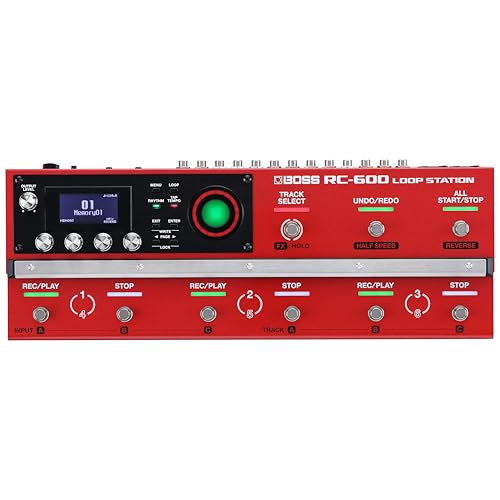
- Six simultaneous stereo phrase tracks
- 32-bit processing and extensive effects
- Nine assignable footswitches
Best For: Experienced worship musicians building complex live arrangements
Budget Practice Pick
AITONE AT-01 Looper and Drum Machine

- 20-minute loops with unlimited overdubs
- 16 grooves with tap tempo
- Compact 5.5-ounce metal housing
Best For: Beginners and musicians practicing chords, timing, and simple arrangements
Balanced Dual-Track Option

- Two tracks with 13 hours of stereo recording
- Onboard rhythm tracks
- XLR and 1/4-inch inputs plus USB
Best For: Worship musicians using vocals and instruments in two-track arrangements
Compact Rhythm Looper
SORAN JLP-01 Rhythm Loop Pedal

- 360-second stereo looping
- Eight drum styles with smart tempo sync
- USB-C WAV export and backing-track import
Best For: Guitarists needing portable practice and songwriting accompaniment
Professional Layering Power

- Five stereo phrase tracks for complex layering
- Dual effects sections with extensive sound-shaping options
- XLR microphone inputs, phantom power, and flexible routing
Best For: Musicians who need advanced tabletop control for layered worship arrangements
Simple Budget Foot Control

- 10 minutes of looping with unlimited overdubs
- Compact metal pedal with true bypass
- Stereo I/O and reverse or speed playback functions
Best For: Guitarists wanting a simple, compact looper for basic worship accompaniment
Versatile Dual-Track Choice

- Dual-track looping with 13 hours of stereo recording
- Built-in rhythms, color LCD, and Loop FX
- 99 phrase memories plus USB and MIDI support
Best For: Solo worship leaders seeking flexible two-track looping and onboard rhythms
Pedalboard Power

- 13 hours of stereo recording and 99 phrase memories
- 57 rhythms with A/B variations and seven drum kits
- Compact pedal with MIDI, USB, and external control support
Best For: Pedalboard-based worship musicians needing portable, feature-rich looping
Full Worship Arrangements
Boss RC-505 Mk2 Tabletop Looper
- Five stereo tracks for layered live arrangements
- Two XLR mic inputs with phantom power
- Stereo line inputs and an onboard rhythm generator
Best For: Worship leaders and multi-instrumentalists building complex tabletop loops
Hands-On Creative Control

- Two stereo tracks with 64 phrase memories
- Microphone, instrument, and auxiliary inputs
- Multiple input and track effects plus USB audio/MIDI
Best For: Solo worship creators seeking hands-on effects and stored loop presets
Flagship Choice – BOSS RC-600
For church musicians who need to build layered worship arrangements live, the BOSS RC-600 is a highly capable choice among loop stations for church musicians. Its six stereo tracks, extensive effects, and assignable foot controls support complex performances without requiring separate looping devices.
Best For: Worship leaders, multi-instrumentalists, and experienced performers creating elaborate live loop arrangements.
Pros:
- Records and edits up to six simultaneous stereo phrase tracks.
- Provides 32-bit AD/DA and 32-bit floating-point processing for class-leading sound quality.
- Includes 49 Input FX and 53 Track FX types, with up to four usable in each section.
- Nine freely assignable footswitches and three pedal modes offer flexible control.
Cons:
- Its extensive feature set may require more setup and practice than a basic looper.
- The large floor-based design weighs 8.2 pounds and occupies substantial pedalboard space.
The RC-600 is overbuilt for simple practice loops, but its routing, effects, and hands-free control make it particularly suitable for musicians leading layered church performances.
Budget Practice Pick – AITONE AT-01 Looper and Drum Machine
The AITONE AT-01 combines a looper and drum machine in a compact pedal, making it a practical entry point for church musicians exploring loop stations for church musicians. It can provide a chord progression and rhythmic backing for practice, songwriting, lessons, or simple solo playing.
Best For: Beginners, worship musicians practicing timing, teachers, and solo players who want basic drum-backed loops.
Pros:
- Offers up to 20 minutes of looping with unlimited overdubs within a loop.
- Includes 16 drum grooves, tap tempo, and two odd-meter Fusion patterns.
- Its mini metal housing weighs just 5.5 ounces and saves pedalboard space.
- One footswitch handles recording, playback, overdub, stop, and clear functions.
Cons:
- A compatible regulated 9V center-negative power supply is required but not included.
- There is no battery compartment or headphone output.
- The single-switch control sequence may take practice before live use.
With straightforward looping and built-in rhythms, the AT-01 is a useful low-cost practice tool, though its basic controls and connections make it less suited to elaborate worship-stage setups.
Balanced Dual-Track Option – BOSS RC-500 Loop Station
The BOSS RC-500 offers a middle ground for church musicians who want more structure than a single-track pedal without moving to a large flagship unit. Its two-track design, onboard rhythms, stereo recording, and XLR and 1/4-inch inputs suit vocal-and-instrument worship setups.
Best For: Singer-songwriters and worship musicians needing two-track looping, extended recording, and flexible input connections.
Pros:
- Provides two tracks and up to 13 hours of stereo recording time.
- Includes onboard rhythm tracks for adding a pulse to practice or performance.
- Offers XLR and 1/4-inch inputs for accommodating different sources.
- USB import/export and a color LCD support loop management and navigation.
Cons:
- It has fewer tracks than the six-track RC-600.
- The pedal weighs about 950 grams, so it is not the lightest compact option.
The RC-500 is a versatile choice when two independent loop tracks and microphone-friendly connectivity matter, giving many church musicians useful layering capacity without the RC-600’s larger track count.
Compact Rhythm Looper – SORAN JLP-01 Rhythm Loop Pedal
The SORAN JLP-01 is a compact rhythm looper for church musicians who want quick guitar-based practice and songwriting support. It combines 360-second stereo loops with built-in drum styles, smart tempo syncing, and USB-C transfer in a pedalboard-friendly metal enclosure.
Best For: Guitarists practicing worship parts, developing song ideas, and adding simple rhythmic backing in portable setups.
Pros:
- Records up to 360 seconds of 24-bit/44.1kHz stereo loops.
- Includes eight drum styles with smart tempo sync and tap tempo.
- USB-C supports WAV export and custom backing-track import.
- Separate loop and drum volume controls allow basic mix adjustment.
Cons:
- A standard 9V center-negative power adapter is required and not included.
- The single footswitch may be less convenient for complex live control.
- Its rhythm selection is more limited than a dedicated advanced drum system.
The JLP-01 offers useful features in a small footprint, especially for guitar practice and songwriting, but musicians leading intricate live loops may prefer a multi-switch, multi-track station.
Professional Layering Power – BOSS RC-505mkII
For church musicians who need extensive hands-on control, the BOSS RC-505mkII is a powerful choice among loop stations for church musicians. Its five stereo phrase tracks, independent faders, multiple effects sections, and broad connectivity support complex live arrangements.
Best For: Keyboardists, vocalists, beatboxers, and worship teams building layered arrangements from a tabletop setup.
Pros:
- Five simultaneous stereo phrase tracks with dedicated controls and faders.
- 32-bit AD/DA conversion and 32-bit floating-point processing.
- Two XLR microphone inputs with phantom power plus stereo line routing.
- Stores up to 99 memories with phrase tracks, effects, and control assignments.
Cons:
- Its tabletop design and extensive controls may require more setup time than a simple foot pedal.
- It is relatively large at 23.4 inches wide.
The RC-505mkII is best suited to musicians who value maximum layering and real-time sound shaping. It offers considerable flexibility for rehearsals and live services, but its feature-rich interface is more than needed for basic one-loop accompaniment.
Simple Budget Foot Control – VSN Twin Looper Pedal
The VSN Twin Looper is a compact option for church musicians seeking straightforward loop stations for church musicians. It provides stereo connectivity, 10 minutes of loop time, unlimited overdubs, and footswitch operation in a small metal enclosure.
Best For: Guitarists and other instrumentalists who want an affordable pedal for basic layered accompaniment.
Pros:
- Offers 10 minutes of looping time with unlimited overdubs.
- Includes undo/redo, reverse, and speed-related playback functions.
- Compact, full-metal construction with a heavy-duty footswitch and true bypass.
- Stereo input and output with individually adjustable left and right channel volume.
Cons:
- Power adapter is not included.
- USB is intended for computer software use, not power input.
- Its feature set is less extensive than the larger BOSS loop stations.
This pedal makes sense for a guitarist who needs uncomplicated looping without a large tabletop unit. The limited control set can be an advantage for quick setup, while musicians wanting extensive memory, effects, or advanced routing may prefer a more capable model.
Versatile Dual-Track Choice – BOSS RC-500
The BOSS RC-500 balances live control and manageable size for church musicians comparing loop stations for church musicians. Its dual-track design, onboard rhythms, color display, phrase memories, and external control options support structured worship arrangements without the footprint of a larger tabletop looper.
Best For: Solo worship leaders and instrumentalists who want two-track looping with built-in rhythms and room to expand their setup.
Pros:
- Dual-track looping with up to 13 hours of stereo recording time.
- Includes 16 drum kits and 57 preset rhythms with A/B variations.
- Stores up to 99 phrase memories and supports WAV file management over USB.
- Provides MIDI connectivity and support for external footswitches or an expression pedal.
Cons:
- Mini TRS MIDI connections require an adapter cable sold separately.
- It has fewer simultaneous phrase tracks than the RC-505mkII.
- Advanced external-control features may add setup complexity.
The RC-500 is a strong middle ground: more capable than a basic looper pedal, but more compact and focused than a five-track tabletop unit. Its rhythms, memory storage, and expansion options are particularly useful for solo musicians building full arrangements during services.
Pedalboard Power – BOSS RC-5 Loop Station
For church musicians seeking compact loop stations for church musicians, the BOSS RC-5 combines stereo recording, onboard rhythms, and practical MIDI and USB connectivity in a pedalboard-friendly format. Its 13-hour recording capacity and 99 phrase memories make it suitable for preparing repeatable worship arrangements or building layered parts during a service.
Best For: Guitarists and other pedalboard-based worship musicians who want extensive storage, rhythms, and hands-free expansion options.
Pros:
- 13 hours of stereo recording with 99 phrase memories.
- 57 rhythms with A/B variations and seven drum kits.
- 32-bit processing, a multi-color LCD, MIDI, USB, and external control support.
- Compact design with battery or optional PSA adapter power.
Cons:
- Single-track looping may be less flexible than multi-track tabletop units.
- Optional accessories are needed for expanded footswitch or expression-pedal control.
- Its broad feature set may take time to learn.
The RC-5 is a strong all-around choice when portability and reliable phrase storage matter more than having multiple independently controlled tracks. Its rhythm library and connectivity also leave room to grow in a more advanced worship setup.
Full Worship Arrangements – Boss RC-505 Mk2 Tabletop Looper
The Boss RC-505 Mk2 is a tabletop option for church musicians who need more hands-on control than a standard pedal can provide. With five stereo tracks, two XLR microphone inputs with phantom power, line inputs, and a rhythm generator, it is built for layered vocal, instrumental, and backing-part performances.
Best For: Worship leaders, vocalists, and multi-instrumental performers creating complex live arrangements from a tabletop station.
Pros:
- Five stereo tracks support detailed layered arrangements.
- Two XLR microphone inputs include phantom power.
- Two stereo line input pairs accommodate additional sources.
- Dedicated looping controls and a rhythm generator support live performance.
Cons:
- Tabletop operation is less compact than a pedal-format looper.
- Electric power is required rather than battery operation.
- The larger control layout may be more than needed for simple one-loop accompaniment.
Choose the RC-505 Mk2 when your church arrangements depend on several independently managed layers and multiple audio sources. Its tabletop design prioritizes immediate control and input flexibility over minimal stage footprint.
Hands-On Creative Control – BOSS RC-202 Tabletop Looper
The BOSS RC-202 offers a compact tabletop approach for church musicians exploring loop stations for church musicians with hands-on effects and phrase control. Its two simultaneous stereo tracks, 64 phrase memories, microphone input, instrument inputs, and USB audio/MIDI interface make it adaptable for creative worship textures and rehearsed arrangements.
Best For: Solo worship creators and electronic or beat-oriented performers who want hands-on looping, effects, and stored presets.
Pros:
- Two simultaneous stereo tracks with dedicated controls and status indicators.
- 64 phrase memories store tracks, effects, and playback settings.
- XLR microphone input with phantom power plus instrument and auxiliary inputs.
- Four input effects and four track effects support extensive sound shaping.
Cons:
- Two tracks provide less arrangement capacity than the RC-505 Mk2.
- It is corded electric rather than battery powered.
- Optional footswitch or expression-pedal control requires additional equipment.
The RC-202 is a compelling middle ground for performers who want more creative processing than a basic pedal while retaining a manageable two-track workflow. Its phrase memories and USB capabilities are especially useful for developing and recalling repeatable worship ideas.
How We Picked the Best Loop Stations for Church Musicians
We focused on features that matter in rehearsals, live worship, and small-team settings: recording quality, loop length, track organization, foot-control layout, rhythm tools, connectivity, memory, and ease of use. We also included products across several price and complexity levels so guitarists, vocalists, keyboard players, and solo worship leaders can find a suitable option.
For church use, reliability and fast operation are especially important. A looper should make it easy to start, stop, undo, redo, and switch phrases without distracting from singing or playing.
Quick Comparison
| Type | Best For | What to Prioritize |
|---|---|---|
| Compact single-pedal looper | Guitarists and beginners | Simple controls, storage, and clear timing |
| Dual-track pedal | Layered worship arrangements | Independent track control, rhythm, and memory |
| Advanced floor looper | Experienced live performers | Footswitch flexibility, routing, and presets |
| Tabletop looper | Vocalists, beatmakers, and electronic setups | Hands-on controls, inputs, and MIDI or USB |
Key Buying Factors for Loop Stations for Church Musicians
Track Control and Loop Timing
Single-track units are straightforward, while dual- and multi-track loopers provide more control over verses, choruses, pads, and instrumental layers. Look for quantization, overdub management, undo and redo, and clear visual feedback if you expect to build arrangements live.
Footswitch Layout
Worship musicians often need to keep both hands busy. Dedicated controls for record, play, stop, undo, and track selection reduce mistakes. An external footswitch connection can add flexibility as your setup grows.
Rhythm and Tempo Features
Built-in drum patterns, tap tempo, automatic tempo matching, and count-ins can help a solo performer maintain structure. If you play with a drummer or click track, MIDI sync and reliable external clock support may be more useful than onboard rhythms.
Inputs, Outputs, and Connectivity
Check whether the unit supports stereo instruments, microphones, auxiliary audio, headphones, MIDI, USB, or separate outputs. Vocalists and keyboard players should confirm that the input design suits their signal level and cabling needs.
Memory, Power, and Reliability
Phrase storage matters when you need repeatable arrangements for multiple songs. Also verify power requirements, bypass behavior, durability, and whether the display is readable under stage lighting. A compact model may be convenient, but larger units can be easier to operate during a service.
Who Should Buy Which Loop Stations for Church Musicians?
Beginners and occasional guitarists: Choose a compact, uncomplicated pedal with dependable record and overdub controls.
Solo worship leaders: Consider a dual-track model with rhythm patterns, stored memories, and enough foot control for hands-free transitions.
Experienced looping performers: An advanced floor unit offers deeper routing, more tracks, expanded control, and better support for complex arrangements.
Vocalists, beatmakers, and electronic musicians: A tabletop looper may be the better fit when hands-on controls, multiple inputs, MIDI, or USB audio are central to the performance.
Before buying, map out how you will use the looper in a real service: instrument or microphone input, number of layers, monitoring method, tempo source, and the controls you must reach without looking down. That workflow is usually more important than choosing the model with the largest feature list.