Choosing the right light meter for photography studio work can speed up setup, improve consistency, and help you dial in exposure with confidence.
Below, we’ve focused on reliable meters for flash, incident reading, and hybrid photo-video use, so you can match the right tool to your workflow.
Best 10 Light Meter for Photography Studio Picks for 2026
Compact All-Rounder

- Ambient and flash metering with tenth-stop accuracy
- Photo, Cine, and HD Cine modes
- Pocket-sized body for easy studio carry
Best For: Studio photographers who also shoot video
Vintage Cold-Shoe Pick

- Cold-shoe mount with 3-position flexibility
- Up to 60 hours of continuous metering
- Lightweight 34g aluminum body
Best For: Film shooters who prefer tactile manual controls
Video-Friendly Pocket Meter

- Ambient, flash, and reflected light metering
- Cine and HD Cine modes for video use
- Lux and foot-candle readouts included
Best For: Creators balancing studio lighting and filmmaking
Color-Aware Studio Tool

- Measures light plus color temperature and DUV
- Bluetooth app shows real-time readings
- Supports multiple meters up to 80 ft. away
Best For: Teams needing wireless light and color monitoring
Battery-Free Studio Meter
Sekonic L-398A Studio Deluxe III

- Battery-free amorphous photocell
- Incident and reflected ambient metering
- Swivel head with full dial readout
Best For: Studio shooters who want an analog, battery-free meter
Compact Digital Lux Meter

- Measures Lux or foot-candles
- Backlit 4-digit LCD display
- Compact with data hold and Max/Min
Best For: Portable studio brightness checks
Advanced Flash Meter
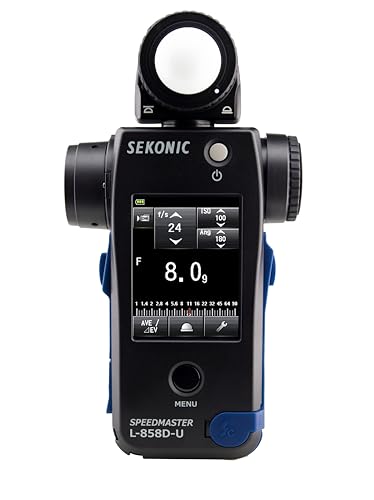
- Incident and flash metering
- Built-in 1° spot viewfinder
- Flash duration and HSS analysis
Best For: Advanced studio flash and spot-metering workflows
Retro Reflective Meter for Film Shooters

- 35-degree reflective metering
- A, S, M, and EV modes
- Rechargeable USB-C battery
Best For: Film photographers and studio shooters who want tactile control
Touchscreen Studio Meter with Flash Analysis
Sekonic LiteMaster Pro L-478D-U
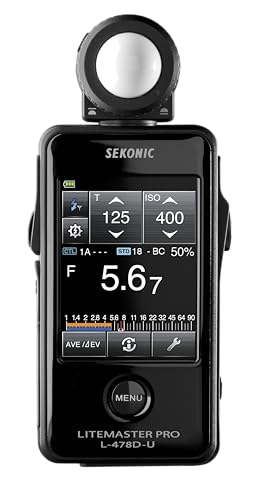
- Incident and flash metering
- Flash analyzing and cine mode
- Touchscreen color LCD
Best For: Studio photographers and filmmakers needing advanced light measurement
Compact Retro Meter in Silver

- 35-degree reflective metering
- Three dials with half-stop adjustment
- USB-C rechargeable, 20+ hour battery
Best For: Photographers wanting a compact silver meter with tactile controls
Compact All-Rounder – Sekonic L-308X-U Flashmate
If you need a light meter for photography studio work that can handle both ambient and flash readings, the Sekonic L-308X-U is a compact, practical choice. It adds photo, cine, and HD cine modes, making it useful for stills shooters who also work with video or hybrid setups.
Best For: Studio photographers who want a pocket-sized meter with photo, cine, and flash measurement support.
Pros:
- Measures ambient and electronic flash light accurately down to a tenth of a stop.
- Includes Photo, Cine, and HD Cine modes for stills and video workflows.
- Supports both cord and cordless flash measurement.
- Compact size makes it easy to keep in a studio bag or pocket.
Cons:
- Requires 2 AAA batteries.
- Smaller design may be less comfortable for users wanting a larger body.
For studios that need one meter to cover exposure readings across photography and video, this model is a versatile, no-fuss option. Its broad range and pocketable form make it especially convenient for quick checks on set.
Vintage Cold-Shoe Pick – TTARTISAN Light Meter II
For photographers looking for a light meter for photography studio use with a more analog feel, the TTARTISAN Light Meter II brings a compact cold-shoe design and manual-style controls. It is aimed at film-camera users who want straightforward exposure adjustment without extra bulk.
Best For: Film photographers and studio shooters who want a small cold-shoe meter with tactile controls.
Pros:
- Universal cold-shoe mount with 3-position flexibility.
- Up to 60 hours of continuous metering with power-saving design.
- Clicked aperture and shutter dials help prevent accidental changes.
- Lightweight aluminum construction keeps it at just 34g.
Cons:
- Battery is not included.
- Designed around manual, film-style operation rather than advanced digital features.
This meter is a strong fit if you value simplicity, portability, and a classic control layout. It is less feature-heavy than multi-mode meters, but that’s part of its appeal for analog workflows.
Video-Friendly Pocket Meter – Sekonic FLASHMATE L-308X
Sekonic FLASHMATE L-308X Photographers and Film Makers Exposure Meter - Black/Blue
Check Price On AmazonThe Sekonic FLASHMATE L-308X is a compact light meter for photography studio setups that also need fast video-friendly exposure tools. It measures ambient, flash, and reflected light, while the Cine and HD Cine modes make it especially useful on mixed photo and filmmaking sets.
Best For: Creators who want a pocket-sized meter for studio lighting, video, and cine work.
Pros:
- Measures ambient, flash, and reflected light.
- Cine and HD Cine modes support video and filmmaking workflows.
- Sliding lumisphere handles ambient and reflected readings.
- Includes lux and foot-candle readouts for broader light measurement.
Cons:
- Uses AA batteries instead of a rechargeable system.
- Compact design may feel basic if you need more advanced color tools.
If your studio needs a fast, reliable meter that can move between stills and set work, this one covers the essentials well. It is a straightforward choice for shooters who want accurate readings without extra complexity.
Color-Aware Studio Tool – Datacolor LightColor Meter
If you want more than a basic light meter for photography studio work, the Datacolor LightColor Meter adds color temperature and DUV readings alongside exposure data. It is built for photo, video, and cinema workflows where matching light quality matters as much as measuring brightness.
Best For: Production teams that need light and color readings with wireless app-based monitoring.
Pros:
- Measures ambient light, flash, lux, color temperature, chromaticity, and green-magenta balance.
- Bluetooth app sync streams readings in real time.
- Can connect multiple meters and work up to 80 ft. away.
- Compact, drop-resistant design with up to 40 hours of use.
Cons:
- Relies on the companion app for the full wireless experience.
- More feature-rich than a basic exposure meter, which may be more than some users need.
This is the most advanced option in the group if your priority is tracking both light intensity and color quality. It is especially appealing for larger productions that benefit from remote, shared monitoring.
Battery-Free Studio Meter – Sekonic L-398A Studio Deluxe III
If you want a light meter for photography studio work that stays simple and dependable, the Sekonic L-398A Studio Deluxe III is built around analog incident and reflected ambient readings. Its battery-free amorphous photocell makes it a practical choice when you want consistent exposure guidance without worrying about power.
Best For: Studio photographers and cinematographers who prefer a battery-free analog meter with incident and reflected ambient measurement.
Pros:
- Battery-free operation from the integrated amorphous photosensor
- Incident and reflected ambient metering with interchangeable accessories
- Swivel head helps position the incident dome more easily
- Full dial readout shows aperture and shutter speed combinations at a glance
Cons:
- Analog readout may feel less immediate than a digital display
- Uses a dial-based workflow instead of screen-based menus
This meter fits best in studios where repeatable ambient readings and straightforward controls matter more than advanced flash or wireless features. The included accessories add flexibility, making it a strong analog tool for varied lighting setups.
Compact Digital Lux Meter – UNI-T UT383
The UNI-T UT383 is a compact digital light meter for photography studio use when you need quick lux or foot-candle readings in a small, easy-to-carry package. Its large backlit LCD and fast sampling make it straightforward to check illumination levels during setup or routine light checks.
Best For: Users who want a portable, easy-to-read digital illuminance meter for quick studio light measurements.
Pros:
- Measures light in Lux or FC with a wide range up to 199,900 Lux
- Large 4-digit LCD with backlight improves readability
- Compact and lightweight for easy transport
- Includes Max/Min, data hold, overload indication, and auto shutdown
Cons:
- Designed for illuminance readings rather than advanced exposure functions
- Less specialized for flash or incident/reflected photography metering
For studios that mainly need a simple brightness-check tool, this meter offers useful core features without much complexity. It is a practical pick when portability and fast readings matter most.
Advanced Flash Meter – Sekonic L-858D-U Speedmaster
For a light meter for photography studio work that goes beyond basic ambient readings, the Sekonic L-858D-U Speedmaster adds incident and flash metering, 1° spot capability, and flash duration analysis. It is aimed at lighting setups where precise control of flash behavior and exposure balance is important.
Best For: Advanced photographers working with studio flash, HSS, and precise spot metering.
Pros:
- Measures incident ambient and flash exposure
- Built-in 1° spot viewfinder supports highlight and shadow analysis
- Flash duration measurement includes t.1 and t.5 evaluation
- Compatible with optional radio modules for wireless triggering
Cons:
- More specialized than a basic ambient lux meter
- Wireless radio features require optional modules
This is the most feature-rich option here, especially if your studio workflow includes flash, HSS, or detailed spot evaluation. It makes the most sense when you need measurement tools that support complex lighting control rather than simple ambient checks.
Retro Reflective Meter for Film Shooters – LightMate AirPro Black
If you want a light meter for photography studio work with a vintage-style workflow, the LightMate AirPro focuses on fast reflective readings and hands-on control. Its 35-degree metering angle, ±0.1EV accuracy, and multiple exposure modes make it a practical pick for film cameras and controlled lighting setups.
Best For: Film photographers and studio shooters who want a compact reflective meter with tactile dials and multiple exposure modes.
Pros:
- 35-degree reflective metering with ±0.1EV accuracy
- A, S, M, and EV modes with manual or auto trigger metering
- Three independent dials with half-stop adjustment
- Rechargeable USB-C battery with over 20 hours of use
Cons:
- Reflective metering may not suit users who specifically want incident readings
- Feature set may be more than casual users need
- Designed around a retro control layout, which adds a learning curve for some
Overall, this model stands out for photographers who value direct control and a compact metal build. If your studio or film workflow benefits from readable dials and flexible exposure settings, it offers a well-rounded balance of precision and portability.
Touchscreen Studio Meter with Flash Analysis – Sekonic LiteMaster Pro L-478D-U
For a light meter for photography studio setups that need more than basic exposure readings, the Sekonic LiteMaster Pro L-478D-U brings incident and reflected metering, flash analysis, and a touchscreen interface. It is built for photographers and motion creators who want a single meter that can handle studio flash, ambient light, and cine workflow settings.
Best For: Studio photographers, hybrid creators, and filmmakers who need incident flash metering with advanced exposure tools.
Pros:
- Measures incident ambient and flash light
- Flash analyzing helps evaluate flash-to-ambient ratios
- Touchscreen color LCD supports fast, intuitive operation
- Cine mode adds frame rate and shutter angle control
Cons:
- More advanced than a simple studio-only meter
- Optional spot capability requires an additional 5∞ attachment
- Requires two AAA batteries
This is the most feature-rich option in the group and makes sense when studio lighting control and production flexibility matter. If you work across photography and video, its measurement range and flash tools give you room to grow.
Compact Retro Meter in Silver – LightMate AirPro Silver
The LightMate AirPro Silver is another light meter for photography studio users who prefer a compact reflective meter with tactile controls. It offers the same 35-degree metering angle, ±0.1EV accuracy, and multiple shooting modes, making it useful for photographers who want quick exposure checks without a large meter body.
Best For: Photographers who want a compact silver reflective meter with manual-style controls and rechargeable convenience.
Pros:
- 35-degree wide-angle reflective metering with ±0.1EV accuracy
- A, S, M, and EV modes plus manual or auto trigger metering
- Independent aperture, ISO, and shutter dials with half-stop support
- Rechargeable USB-C battery rated for over 20 hours
Cons:
- Reflective metering only, not an incident studio meter
- Very similar to the black version, so color is the main difference
- Retro interface may not appeal to users who prefer app-style controls
In practice, this silver model is best viewed as a style-driven alternative to the black version with the same core capability set. If you want the same compact meter performance in a lighter finish, it is an easy choice.
How We Picked the Best Light Meter for Photography Studio
We prioritized accuracy, ease of use, meter type, and studio relevance. For a Light Meter for Photography Studio use, that means strong incident reading performance, dependable flash support, and clear controls that work quickly on set.
We also considered portability, display readability, battery approach, and whether the meter fits dedicated still photography, cine, or mixed studio environments.
Quick Comparison
Some meters in this roundup are compact and budget-friendly, making them better for simple flash setups or travel. Others add spot metering, color temperature tools, wireless features, or cine-focused modes for more advanced production work. If you only need basic exposure checks, a simpler meter may be enough; if you run commercial sessions or video shoots, a more advanced model can save time and improve repeatability.
Key Buying Factors for a Light Meter for Photography Studio
Metering Type
Incident metering is usually the most useful choice in studio lighting because it measures the light falling on the subject rather than relying on the scene itself. Reflected and spot metering can be helpful for troubleshooting contrast or checking specific areas.
Flash and Continuous Light Support
If you use strobes, make sure the meter can trigger and read flash accurately. For hybrid studios, look for models that handle both flash and continuous light so you do not need separate tools.
Display and Controls
Clear screens, intuitive dials, and fast operation matter during real sessions. Touchscreen meters and models with direct exposure settings can save steps, while analog-style designs may appeal to photographers who prefer simplicity.
Specialized Features
Advanced users may want HSS measurement, flash duration analysis, wireless triggering, cine frame rate tools, or color temperature reading. These extras are useful, but only if they match your actual workflow.
Build and Power
Studio gear should be durable and easy to rely on. Battery-free options reduce maintenance, while rechargeable models can be convenient if you use the meter often.
Who Should Buy Which Light Meter for Photography Studio?
Beginners and casual studio shooters should lean toward compact, straightforward meters that cover incident flash and ambient light well. Enthusiasts working with film or retro-inspired workflows may prefer analog or minimalist digital models.
Professional studio photographers, gaffers, and hybrid creators should consider higher-end meters with spot metering, flash analysis, wireless functions, or color temperature data. The best choice depends on how often you meter, how complex your lighting setups are, and whether you need speed, precision, or both.