The best headphone amplifiers with low noise deliver a cleaner, more controlled listening experience without adding hiss or distracting electrical noise. The right model depends on your headphones, source connections, output power, and whether you need one or several listening channels.
This roundup covers compact desktop amps, DAC-equipped models, portable options, and four-channel distribution amplifiers so you can match features and budget to your setup.
Best 10 Headphone Amplifiers with Low Noise Picks for 2026
Best Ultra-Low-Noise Pick

- 0.3uV noise and 144dB dynamic range
- High power for varied headphone loads
- Three gain settings for IEMs to over-ears
Best For: Quiet, high-power headphone amplification
Best All-in-One Desktop Option
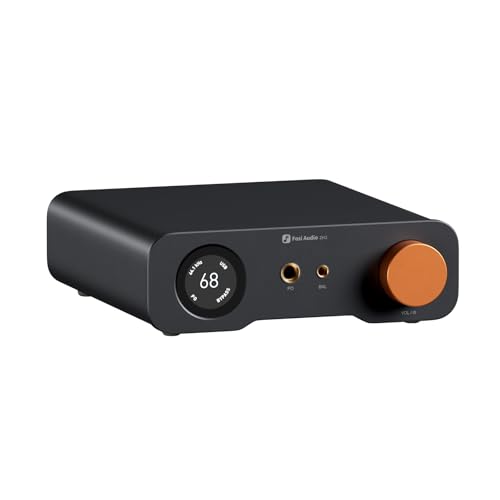
- DAC, headphone amp, and preamp in one
- Noise as low as 1.9μV
- Balanced output reaches 2570mW at 32Ω
Best For: Flexible desktop audio systems
Best for Multi-Headphone Monitoring

- Four stereo headphone amplifier channels
- 130mW per channel
- -98dB noise floor and monitor controls
Best For: Shared studio and control-room monitoring
Best for Difficult Headphone Loads

- Low-gain design targets inaudible noise
- 50V operation for high-impedance headphones
- High power and balanced outputs
Best For: Demanding and varied headphone collections
Flexible Monitoring Hub

- Four stereo headphone channels
- Individual volume controls
- Balanced and auxiliary inputs
Best For: Shared monitoring in small recording or rehearsal setups
Desktop Detail Specialist

- Stated excellent background-noise index
- Class A, up to 1300 mW output
- 3.5mm and 6.35mm headphone support
Best For: Desktop listening with high-impedance headphones
Simple Four-Listener Splitter

- Four independent headphone outputs
- Per-listener level controls
- Compact metal enclosure
Best For: Tracking sessions and rehearsals needing simple distribution
Best Gaming DAC
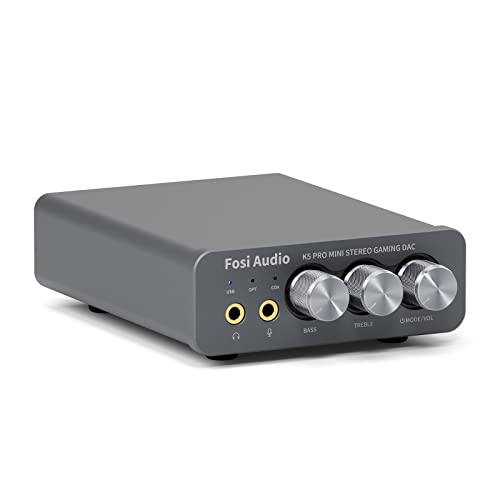
- Low-noise circuit with 110dB-plus SNR
- Supports 16- to 300-ohm headphones
- USB-C, optical, coaxial, and mic inputs
Best For: Gaming and desktop listening with flexible connectivity
Best Portable Option
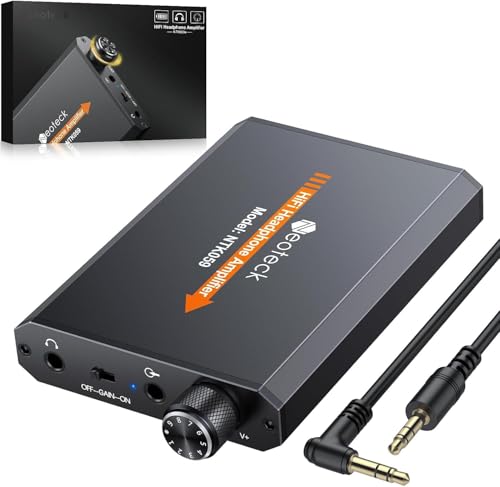
- 120dB-plus SNR and 0.0003% THD+N
- Supports 16- to 300-ohm headphones
- 12-plus hours of rechargeable battery life
Best For: Portable 3.5mm listening with smartphones and laptops
Best for Group Monitoring

- Powers up to four headphone pairs
- Separate volume control for every channel
- Ultra-low-noise amplifier sections
Best For: Studio sessions and shared playback monitoring
Best Ultra-Low-Noise Pick – TOPPING L30 II
For listeners specifically comparing headphone amplifiers with low noise, the TOPPING L30 II stands out with a 0.3uV noise figure, 144dB dynamic range, and very low distortion. Its three gain settings and high output capability help it accommodate both sensitive IEMs and demanding headphones.
Best For: Headphone enthusiasts who want exceptionally quiet, high-power amplification across a broad range of headphone types.
Pros:
- 0.3uV ultra-low noise and 144dB dynamic range
- High output power for low- and high-impedance headphones
- Three gain settings, including a -14dB option for sensitive IEMs
- Volume memory and dual outputs support flexible desktop use
Cons:
- Requires a separate DAC or source for digital audio
- Its feature set may be more than needed for a basic headphone setup
The L30 II is a strong choice when minimizing background noise is the priority. Its combination of extremely low noise, high power, and flexible gain makes it particularly versatile, while its clean feature set keeps the focus on amplification.
Best All-in-One Desktop Option – Fosi Audio ZH3
The Fosi Audio ZH3 combines a DAC, headphone amplifier, and preamp in one desktop component, making it a practical choice among headphone amplifiers with low noise. Its balanced circuitry reaches a stated noise level as low as 1.9μV, while multiple inputs and outputs support varied systems.
Best For: Desktop listeners who need a flexible DAC, headphone amp, and preamp with balanced connectivity and customization options.
Pros:
- Integrated DAC, headphone amplifier, and preamp
- Low noise as low as 1.9μV with balanced circuitry
- Powerful 4.4mm balanced and 6.35mm single-ended outputs
- USB, optical, coaxial, RCA, XLR, and trigger connections
Cons:
- EQ adjustments apply only to headphone output
- RCA and XLR output levels differ significantly
- Its many functions may add complexity to a simple setup
The ZH3 is best suited to users building a connected desktop system rather than adding a straightforward amp alone. Its low-noise design, strong balanced output, and broad connectivity provide considerable flexibility for headphones, active speakers, and gaming sources.
Best for Multi-Headphone Monitoring – PreSonus HP4
The PreSonus HP4 is a compact four-channel amplifier designed for sharing headphone monitoring among several listeners. Its stated -98dB noise floor makes it a practical option for buyers seeking headphone amplifiers with low noise in a studio or control-room setup.
Best For: Small studios, rehearsal spaces, and monitoring stations that need four headphone outputs from one compact unit.
Pros:
- Four stereo headphone amplifier channels
- 130mW per channel for loud monitoring
- -98dB noise floor for quiet operation
- Monitor level control, mute button, and balanced monitor outputs
Cons:
- Uses 6.35mm headphone connections rather than smaller headphone outputs
- Less suited to listeners seeking audiophile features or digital inputs
- Its four-channel design may be unnecessary for solo listening
The HP4 prioritizes practical distribution over advanced personal-audio features. If several people need simultaneous monitoring and a quiet, compact unit is more important than integrated DAC functionality, it is a focused and useful choice.
Best for Difficult Headphone Loads – Violectric V222
The Violectric V222 is built around powerful, low-gain amplification intended to keep inherent noise inaudible while driving a wide range of headphones. For shoppers evaluating headphone amplifiers with low noise, its high voltage, high power, and low output impedance are notable design priorities.
Best For: Owners of high-impedance, low-impedance, or demanding planar headphones who want powerful, quiet amplification.
Pros:
- Very small internal gain is designed to minimize audible noise
- 50V internal operating voltage suits high-impedance headphones
- High output power also supports low-impedance headphones and magnetostats
- Balanced XLR and Pentaconn outputs plus an unbalanced 6.3mm jack
Cons:
- Does not include a built-in DAC according to the supplied specifications
- Its powerful, specialized design may exceed the needs of easy-to-drive headphones
The V222 is a serious analog amplifier for listeners with varied or difficult headphone loads. Its low-noise approach and multiple balanced outputs make it a compelling upgrade when control, headroom, and compatibility matter more than convenience features.
Flexible Monitoring Hub – Samson QH4
The Samson QH4 is a practical choice for headphone amplifiers with low noise when several listeners need separate monitoring levels. Its four stereo channels, individual volume controls, balanced inputs, and auxiliary connections suit compact music-production and rehearsal setups.
Best For: Small recording sessions, rehearsals, and shared headphone monitoring.
Pros:
- Four independent 1/4-inch stereo headphone channels.
- Individual volume control for each listener.
- Balanced 1/4-inch inputs plus stereo 1/8-inch auxiliary input and output.
- Lightweight 1.5-pound design with a 2-year limited warranty.
Cons:
- It is a wired desktop amplifier rather than a portable wireless solution.
- The supplied notes list no dedicated noise-control feature.
The QH4 focuses on straightforward multi-listener control. It is a sensible pick when four people need their own level adjustment and your source equipment supports the available inputs.
Desktop Detail Specialist – Douk Audio U3 Headphone Amp
The Douk Audio U3 is a compact option for headphone amplifiers with low noise, combining a Class A output stage with a stated excellent background-noise index. Its RCA input, 3.5mm and 6.35mm headphone support, and high current output make it suited to desktop listening.
Best For: Home or office desktop listeners using demanding or high-impedance headphones.
Pros:
- Designed with an excellent background-noise index and wide frequency response.
- Class A transistor output stage with up to 1300 mW output power.
- Supports 3.5mm and 6.35mm headsets with an RCA input.
- Pluggable op-amp socket allows experimentation with compatible op-amps.
Cons:
- The supplied notes do not specify a power adapter; operating voltage is listed as 5–20V DC.
- It provides a two-channel output rather than multiple independently controlled headphone feeds.
The U3 is built around drive power and a clean, warm presentation in a very small enclosure. Its upgradeable op-amp design adds flexibility for listeners who enjoy desktop audio experimentation.
Simple Four-Listener Splitter – Mackie HM-4
The Mackie HM-4 is a straightforward pick among headphone amplifiers with low noise for tracking sessions and rehearsals. It accepts a source through a 1/4-inch or 1/8-inch output and gives four listeners independent level controls in a compact metal enclosure.
Best For: Rehearsals, tracking sessions, and simple four-person headphone distribution.
Pros:
- Drives four headphones from a 1/4-inch or 1/8-inch source output.
- Each of the four outputs has its own volume control.
- Compact 2.3-by-4.3-by-2-inch metal build can be attached to a desk, rack, or stand.
- Plug-and-play operation uses a corded electric power source.
Cons:
- The supplied notes do not provide a specific noise rating or dedicated noise-control feature.
- It uses 1/4-inch output connectors, so smaller headphones may require an adapter.
The HM-4 keeps shared monitoring uncomplicated: connect one source, power the unit, and let each listener set a personal level. It is best suited to practical multi-headphone distribution rather than advanced routing.
Best Gaming DAC – K5 Pro Headphone Amp
If you need headphone amplifiers with low noise for gaming and desktop listening, the Fosi Audio K5 Pro combines a DAC, headphone amp, microphone input, and tone controls in one compact unit. Its USB-C, optical, and coaxial inputs support connections to computers, PS5 systems, Macs, and other compatible sources.
Best For: Gamers and desktop listeners who want flexible digital inputs, microphone support, and adjustable bass and treble.
Pros:
- Low-noise circuit design with a Texas Instruments NE5532 op-amp and a stated SNR of at least 110dB.
- Drives 16- to 300-ohm headphones, with up to 1000mW output at 16 ohms.
- Includes USB-C, optical, coaxial, 3.5mm AUX, RCA, and microphone connectivity.
- Offers separate master volume, bass, and treble controls.
Cons:
- Its USB-C audio input requires the audio source to connect through the USB-A/C port.
- It is primarily a desktop unit rather than a battery-powered portable amplifier.
The K5 Pro is a versatile choice when low-noise performance and gaming features matter more than pocket portability. Its strong output range and multiple inputs also make it suitable for a mixed PC, console, and powered-speaker setup.
Best Portable Option – Neoteck 16-300 Ohm Amp
The Neoteck portable amplifier is a practical pick for listeners seeking headphone amplifiers with low noise on the go. It supports 16- to 300-ohm headphones, uses a two-stage gain switch, and connects through a standard 3.5mm audio jack.
Best For: Mobile listening with smartphones, laptops, MP3 players, and other devices using a 3.5mm connection.
Pros:
- Rated at over 120dB SNR with 0.0003% THD+N for a clean audio signal.
- Two-stage gain control helps match the amplifier to different headphone requirements.
- Rechargeable 1500mAh battery provides more than 12 hours of continuous use.
- Compact, 102g design with an aluminum matte surface is easy to carry.
Cons:
- It uses a 3.5mm wired connection rather than digital USB, optical, or coaxial inputs.
- Its feature set is focused on portable amplification rather than microphone or multi-user monitoring.
With its strong noise and distortion specifications, long battery life, and broad impedance support, the Neoteck is well suited to portable setups. The gain switch adds useful flexibility when moving between easier- and harder-to-drive headphones.
Best for Group Monitoring – Fosi Audio PH04 4-Channel Amp
The Fosi Audio PH04 is designed for shared listening rather than solo portability. As one of the more useful headphone amplifiers with low noise for recording and monitoring, it provides four independent stereo amplifier channels, each with its own output-level control.
Best For: Recording sessions, studio monitoring, and groups that need up to four listeners to hear the same playback.
Pros:
- Drives up to four pairs of headphones simultaneously.
- Each channel has an independent volume control for personalized monitoring levels.
- Uses ultra-low-noise operational amplifiers for clean performance, including at higher volume levels.
- Compact design includes a power switch and supports 3.5mm headphones.
Cons:
- It requires the included 12V DC power adapter and is not battery powered.
- Independent headphone volume controls are provided, but no microphone input or tone controls are listed.
- 6.35mm headphones require a separate 3.5mm-to-6.35mm adapter.
The PH04 makes the most sense when several people need simultaneous access to one stereo source. Its four-channel layout and individual level controls provide a straightforward, low-noise monitoring solution for home studios, rehearsals, and recording work.
How We Picked the Best Headphone Amplifiers with Low Noise
We focused on models with clearly stated noise, distortion, gain, power, or signal-quality specifications, while also considering connection flexibility and practical use. The selection includes dedicated headphone amplifiers, DAC/amp combinations, portable units, and multi-channel designs for studios, practice rooms, and shared listening.
We also looked for useful differences between products: balanced or unbalanced operation, multiple inputs, independent volume controls, impedance compatibility, compactness, and included power accessories. A low noise floor matters most with sensitive headphones and quiet recordings, but output power and system matching are equally important.
Quick Comparison
- Best for ultra-clean desktop amplification: TOPPING L30 II, with exceptionally low published noise and multiple gain settings.
- Best for a DAC and preamp setup: Fosi Audio ZH3, offering USB, optical, coaxial, and RCA connectivity.
- Best for four listeners: PreSonus HP4, Samson QH4, Mackie HM-4, or Fosi Audio PH04.
- Best for compact desktop use: Douk Audio U3 or Fosi Audio K5 Pro.
- Best for portable listening: Neoteck’s battery-friendly 3.5mm amplifier design.
- Best for premium headphone systems: Violectric V222, designed for demanding desktop listening setups.
Key Buying Factors for Headphone Amplifiers with Low Noise
Noise Floor and Gain
Look for a low noise specification, low output impedance, and gain settings suited to your headphones. Sensitive in-ear monitors can reveal hiss that is inaudible with high-impedance over-ear models. Multiple gain levels make it easier to achieve usable volume control without channel imbalance or excess background noise.
Power and Headphone Compatibility
Impedance alone does not determine amplifier requirements. Planar headphones and inefficient dynamic models may need more voltage or current than easy-to-drive headphones. Check the amplifier’s power ratings at your headphone’s impedance, and avoid assuming that a higher wattage figure automatically means better sound.
Inputs, Outputs, and Channel Count
Choose analog RCA or 3.5mm inputs for a simple source, or select a DAC/amp with USB, optical, or coaxial connections for digital devices. Four-channel amplifiers are useful when several people need to monitor the same source, but they are usually less specialized than a dedicated single-headphone amplifier.
Controls and Everyday Practicality
Consider front-panel volume controls, independent channel adjustment, preamp outputs, balanced connections, power requirements, and enclosure size. A compact model can suit a desk, while a heavier unit may offer better connectivity and drive capability for a permanent listening system.
Who Should Buy Which Headphone Amplifiers with Low Noise?
Choose the TOPPING L30 II or Violectric V222 if your priority is serious, low-noise desktop listening with demanding headphones. The Fosi Audio ZH3 is a better fit when you also need digital conversion and flexible source inputs. For gaming or computer listening, the Fosi Audio K5 Pro adds convenient desktop controls and DAC functionality.
Studio users and households sharing one source should consider the PreSonus HP4, Samson QH4, Mackie HM-4, or Fosi Audio PH04. Pick the model with the channel count, output controls, and connectors your setup requires. The Douk Audio U3 suits simple, inexpensive desktop amplification, while the Neoteck is the practical choice for portable 3.5mm listening.