The best headphone amplifier depends on how you listen. A compact splitter can serve a group in the studio, while a desktop DAC amp may better suit high-impedance headphones and serious music listening.
We selected 10 headphone amplifiers covering portable listening, gaming, guitar practice, multi-user monitoring, and high-fidelity desktop setups. Use the guide below to match features, power, and connectivity to your setup.
Best 10 Headphone Amplifier Picks for 2026
Best 4-Channel Splitter

- Four independent headphone outputs
- Individual volume controls for each listener
- Compact metal, plug-and-play design
Best For: Tracking sessions, rehearsals, and shared monitoring
Best Gaming DAC Combo
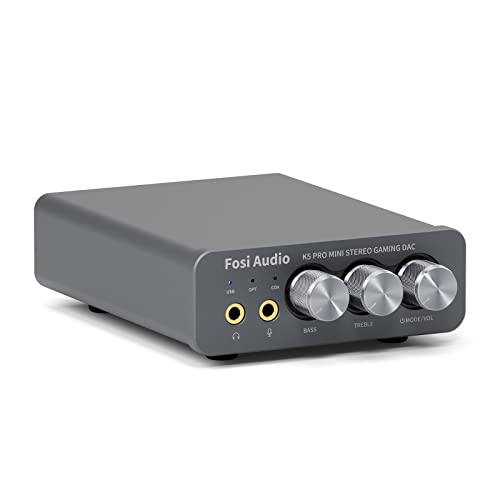
- USB-C, optical, and coaxial inputs
- Microphone input with bass and treble controls
- Supports headphones from 16 to 300 ohms
Best For: Gaming, PC audio, and multifunction desktop setups
Best Budget Studio Distributor
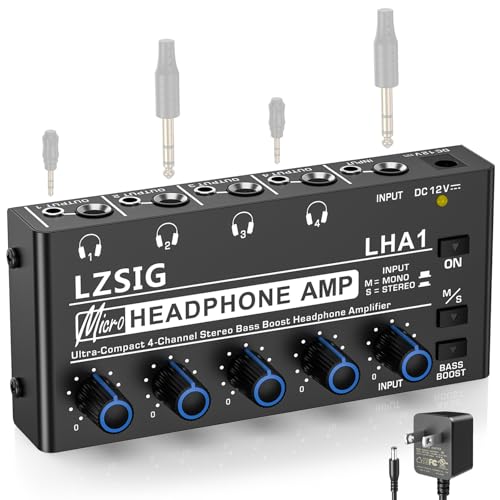
- Four independently controlled headphone outputs
- Stereo/mono switch and bass boost
- Metal chassis with 3.5mm and 6.35mm support
Best For: Home-studio and stage monitoring
Best High-Fidelity Desktop Amp

- Fully differential 24-bit R2R DAC
- Balanced XLR, RCA, 4.4mm, and 6.35mm outputs
- LDAC Bluetooth and 10-band PEQ
Best For: Feature-rich desktop hi-fi listening
Best Portable Pick
Neoteck 16-300 Ohm Headphone Amplifier
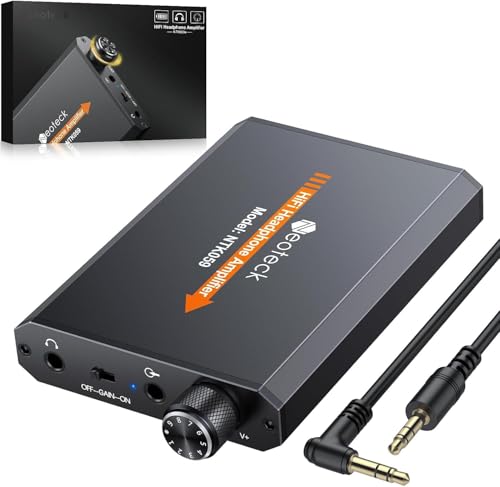
- Supports 16–300 ohm headphones
- 12+ hours of claimed battery life
- Compact aluminum design with gain control
Best For: Portable listening with phones, laptops, and other 3.5mm devices
Best for Shared Monitoring
FIFINE N6 Four-Channel Headphone Amplifier
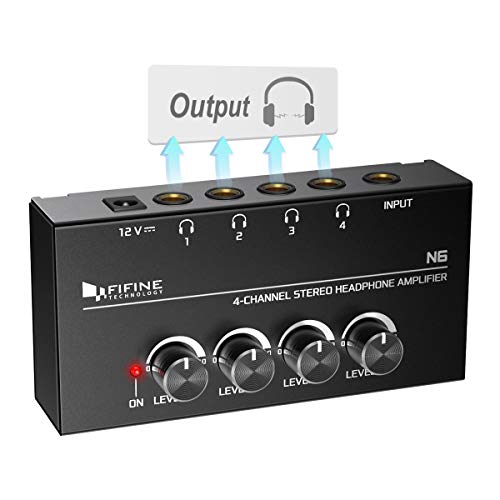
- Four quarter-inch headphone outputs
- Individual volume control per output
- Includes 12V power adapter
Best For: Studio tracking, stage use, and shared stereo listening
Best Desktop Hi-Fi Value
Douk Audio U3 Class A Headphone Amplifier

- Class A design with high-current output
- 3.5mm, 6.35mm, and RCA connectivity
- Pluggable op amp for upgrades
Best For: Desktop systems and high-impedance headphone listening
Best Modeling Amp

- 25 amp and 25 effect models with 100 editable presets
- Bluetooth streaming with video sync and USB recording
- Rechargeable, compact design for guitar and bass practice
Best For: Portable guitarists who want modeling, effects, and recording
Best Portable Hi-Fi Pick
LVY Rechargeable Headphone Amplifier
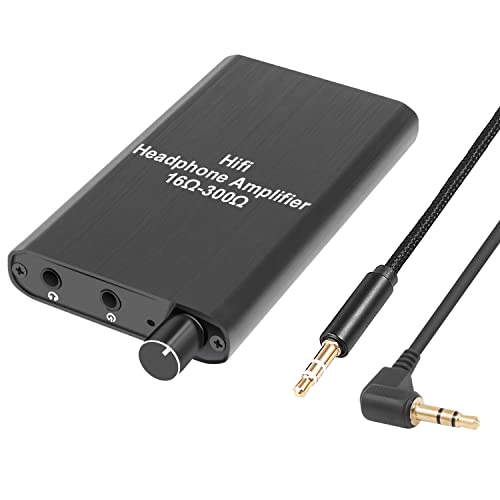
- Two-stage gain supports 16–300-ohm headphones
- 3.5mm input and output for common audio devices
- More than five hours of use in a compact body
Best For: Mobile listeners using wired 3.5mm headphones
Best Simple Pick

- Powers up to four headphones at once
- Independent volume control for every listener
- Four 1/4-inch outputs and one 1/4-inch input
Best For: Studios and rehearsals with multiple headphone listeners
Best 4-Channel Splitter – Mackie HM-4
The Mackie HM-4 is a straightforward headphone amplifier for rehearsals, tracking sessions, and shared listening. It drives up to four headphones from a 1/4-inch or 1/8-inch source, with a separate volume control for each listener.
Best For: Small recording sessions and rehearsals where multiple listeners need independent volume control.
Pros:
- Four independent headphone outputs and level controls
- Works with 1/4-inch and 1/8-inch outputs
- Compact metal enclosure can be mounted with Velcro
- Plug-and-play operation without complicated setup
Cons:
- Designed for multi-headphone distribution rather than advanced DAC features
- Requires a corded power connection
The HM-4 focuses on reliable, uncomplicated headphone distribution. Choose it when your priority is giving four people their own volume control from one audio source.
Best Gaming DAC Combo – Fosi Audio K5 Pro
The Fosi Audio K5 Pro combines a headphone amplifier, DAC, and microphone input for gaming and desktop audio. USB-C, optical, and coaxial inputs support connections to devices such as PCs, Macs, PS5 systems, and active speakers, while bass and treble controls allow quick sound adjustments.
Best For: Gamers and desktop listeners who need digital inputs, microphone support, tone controls, and strong headphone output.
Pros:
- Supports USB-C, optical, and coaxial input sources
- Includes microphone input plus bass and treble controls
- Drives 16-ohm to 300-ohm headphones
- Provides up to 24-bit/192kHz optical and coaxial support
Cons:
- Its feature set is more desktop-focused than portable
- USB audio requires connection through the USB-A/C port
With digital connectivity, microphone support, and up to 1000 mW at 16 ohms, the K5 Pro is a versatile headphone amplifier for a gaming or computer setup. It is a strong fit when one compact unit needs to handle both headphones and desktop audio sources.
Best Budget Studio Distributor – LZSIG LHA2 4-Channel Amp
The LZSIG LHA2 is a four-channel headphone amplifier built for shared monitoring in home studios and on stage. It offers independent channel volume controls, 1/4-inch and 1/8-inch compatibility, a stereo/mono switch, and a selectable bass-boost function.
Best For: Home studios, stage applications, and groups sharing one audio source through four headphone outputs.
Pros:
- Four outputs with independent level controls
- Compatible with 3.5mm and 6.35mm plugs
- Includes stereo/mono switching and bass boost
- Solid metal chassis with heavy-duty control knobs
Cons:
- It is a headphone distributor, not a mixer
- Specified headphone support is focused on 32- to 100-ohm models
The LHA2 emphasizes practical multi-listener monitoring, with useful controls and a durable metal build. Consider it when you need four independently adjustable headphone feeds without adding mixing functions.
Best High-Fidelity Desktop Amp – FiiO K13 R2R DAC & Amp
The FiiO K13 R2R is a premium desktop headphone amplifier and DAC for listeners who want extensive connectivity and sound customization. Its fully differential 24-bit R2R DAC supports high-resolution PCM and DSD playback, while balanced outputs, Bluetooth 5.4 with LDAC, and 10-band PEQ broaden its desktop capabilities.
Best For: Desktop hi-fi listeners who want balanced headphone outputs, high-resolution decoding, Bluetooth streaming, and detailed EQ control.
Pros:
- Powerful output rated up to 2400 mW
- Includes 4.4mm balanced and 6.35mm single-ended headphone outputs
- Supports PCM up to 384kHz/32-bit and DSD256
- Offers LDAC Bluetooth 5.4 and 10-band PEQ
Cons:
- Desktop design is less suited to portable use
- Its advanced feature set may be more than basic headphone setups require
The K13 R2R is designed as a comprehensive desktop audio hub rather than a simple volume booster. Choose it when balanced connections, high-resolution decoding, wireless streaming, and extensive EQ flexibility justify a more advanced headphone amplifier.
Best Portable Pick – Neoteck 16-300 Ohm Headphone Amplifier
If you want a portable headphone amplifier for a phone, laptop, or other personal device, the Neoteck combines broad impedance support with a compact rechargeable design. Its two-stage gain switch, volume control, and claimed 12-hour battery life make it practical for mobile listening.
Best For: Travelers and mobile listeners who need a lightweight amp for headphones ranging from 16 to 300 ohms.
Pros:
- Supports 16–300 ohm headphones and multiple portable source devices.
- Two-stage gain, volume adjustment, and 3.5mm input/output support flexible listening.
- Rechargeable 1500mAh battery provides over 12 hours of claimed use.
- Compact aluminum body weighs about 102g according to the product notes.
Cons:
- Uses 3.5mm connections, so it is not suited to setups requiring quarter-inch ports without an adapter.
- The battery must be recharged for extended use.
This is a versatile headphone amplifier for improving drive and control in a portable setup. Choose it when mobility and wide impedance compatibility matter more than multi-output studio distribution.
Best for Shared Monitoring – FIFINE N6 Four-Channel Headphone Amplifier
The FIFINE N6 is a headphone amplifier built to distribute one stereo source to as many as four listeners. Separate volume knobs for each output make it useful for tracking sessions, stage work, computer audio, or sharing TV sound.
Best For: Small studios, performers, and groups that need four independently controlled headphone outputs from one source.
Pros:
- Provides four quarter-inch stereo headphone outputs with separate volume controls.
- Designed to maintain the signal when all four outputs are connected.
- Compact metal construction suits studio and stage applications.
- Includes a 12V DC power adapter and power indicator light.
Cons:
- It has one input and four outputs; it is not a four-input mixer.
- All connections use 6.35mm ports, and the required TRS/TS cable is not included.
- It requires external power rather than battery operation.
Consider this headphone amplifier when the priority is multi-person monitoring rather than portability or headphone customization. Verify your cables and quarter-inch connector requirements before buying.
Best Desktop Hi-Fi Value – Douk Audio U3 Class A Headphone Amplifier
The Douk Audio U3 is a compact desktop headphone amplifier for listeners who want a stronger, more adjustable home or office setup. Its Class A design, RCA input, 3.5mm and 6.35mm headset support, and replaceable op amp make it appealing to hands-on audio enthusiasts.
Best For: Desktop audiophiles seeking a compact amplifier for high-impedance headphones and optional op-amp experimentation.
Pros:
- Class A circuit uses a TI NE5532 op amp and a high-current output transistor.
- Supports 3.5mm and 6.35mm headphones with RCA source input.
- Pluggable op-amp socket allows upgrades and DIY experimentation.
- Designed to drive many high-impedance models, including HD600, HD650, K701, and DT880.
Cons:
- Its desktop design is less convenient for portable listening.
- Power requirements vary from 5V to 20V DC, so the appropriate supply setup should be confirmed.
- The product notes emphasize a warm, mellow presentation, which may not suit every preference.
This is a strong choice for a stationary headphone amplifier system where drive power, RCA connectivity, and upgradeability are important. Its small footprint also makes it easy to integrate into a home or office desk.
Best Modeling Amp – Fender Mustang Micro Plus
The Fender Mustang Micro Plus is a versatile headphone amplifier for guitarists who want modeled tones, effects, and silent practice in a compact format. Its onboard presets, Bluetooth streaming, and USB recording make it useful for both practice and mobile music work.
Best For: Guitarists seeking portable amp modeling, effects, and recording features.
Pros:
- Includes 25 amp models, 25 effect models, and 100 editable preset slots.
- Bluetooth audio supports real-time jamming with video and music.
- USB recording, a built-in tuner, global EQ, and a rechargeable battery add practical flexibility.
- Rotating input plug works with most guitars and basses, and it supports wired earbuds or wireless headphones.
Cons:
- Its feature set is designed primarily for guitar and bass rather than general headphone amplification.
- Battery play time is listed at more than four hours, which may require regular recharging during extended use.
Choose this headphone amplifier if you want an all-in-one practice and recording companion with extensive tone shaping. It is less suited to buyers seeking a simple, source-only headphone amp.
Best Portable Hi-Fi Pick – LVY Rechargeable Headphone Amplifier
The LVY Portable Headphone Amplifier is a compact choice for improving headphone output from phones, computers, MP3 players, and other 3.5mm devices. Its two-stage gain switch and support for 16–300-ohm headphones make it practical for personal listening on the go.
Best For: Listeners who want a small rechargeable amp for compatible 3.5mm audio devices.
Pros:
- Supports headphones with load impedance from 16 to 300 ohms.
- Two-stage gain switching helps match the signal to different headphones.
- 3.5mm input and output, SNR above 120dB, and listed distortion of 0.004% support detailed playback.
- Compact 3.6 x 0.5 x 1.9-inch design and more than five hours of use suit portable listening.
Cons:
- Connectivity is limited to 3.5mm auxiliary devices.
- It is a headphone-focused amp and does not include Bluetooth or USB audio outputs.
This headphone amplifier is a straightforward fit for users who need extra drive and a gain option without adding much bulk. Check your source and headphone connections first, since it relies on analog 3.5mm compatibility.
Best Simple Pick – Pyle PHA40 4-Channel Amp
The Pyle PHA40 is a multi-channel headphone amplifier for studios, rehearsals, and other setups where several listeners need the same source. It powers up to four pairs of headphones and gives each listener an independent volume control.
Best For: Recording and rehearsal environments that need four-person headphone monitoring.
Pros:
- Drives up to four headphones simultaneously from one source.
- Each channel has a dedicated rotary volume control.
- Four 1/4-inch TRS headphone outputs and a 1/4-inch TRS input suit mixer-based setups.
- Compact dimensions make it convenient for studio, stage, or mobile use.
Cons:
- Its 1/4-inch connections may require adapters for headphones or sources using smaller plugs.
- The corded design is less convenient for battery-powered or highly portable listening.
- It is intended for distributing a shared mix rather than personal Bluetooth listening.
Pick this headphone amplifier when independent volume control for multiple performers matters more than wireless features. It is a practical monitoring hub for a mixer or other 1/4-inch source.
How We Picked These Headphone Amplifiers
We focused on practical differences that affect everyday use: output power, headphone compatibility, input and output connections, portability, controls, channel count, and extra features such as Bluetooth, bass boost, DAC functionality, or built-in effects. The selection includes simple multi-channel distribution amps, portable battery-powered models, desktop DAC/headphone amp combinations, and specialized practice devices.
Because specifications and package contents can vary by version, confirm the seller’s current listing before buying. In particular, check whether a model includes the required power supply, adapters, cables, or rechargeable battery.
Quick Comparison
| Best For | Look For | Featured Types |
|---|---|---|
| Sharing one source | Multiple outputs, independent volume controls | 4-channel headphone amplifiers |
| Desktop music listening | Strong output, DAC support, multiple inputs | FiiO K13 R2R, Douk Audio U3 |
| Gaming and chat | USB or analog connectivity, convenient controls | Fosi Audio K5 Pro |
| Travel | Compact size, battery power, 3.5mm input | Neoteck and LVY models |
| Guitar practice | Modeling, effects, Bluetooth streaming | Fender Mustang Micro Plus |
Key Buying Factors for a Headphone Amplifier
Power and Headphone Compatibility
Check the amplifier’s supported impedance and output power before pairing it with your headphones. Easy-to-drive earbuds and efficient closed-back headphones need less power, while high-impedance or planar-magnetic models may benefit from a stronger desktop unit. More power is useful only when the amplifier remains clean and controllable at your normal listening level.
Connections and DAC Features
Choose inputs that match your source. A 3.5mm connection suits phones, laptops, and portable players; RCA works well with traditional desktop equipment; and USB or Bluetooth can simplify computer and wireless listening. A DAC/headphone amp combination may reduce the need for separate equipment, but basic analog amplifiers are often the better choice for splitting one source among several listeners.
Channel Count and Controls
For group monitoring, confirm the number of outputs and whether each channel has its own volume control. Four-channel units are useful for podcasting, recording, rehearsals, and classrooms. A single-output amp is usually smaller and simpler, while multi-channel models generally require external power and more desk space.
Portability and Intended Use
Portable models should have a genuinely useful battery, sturdy controls, and the right cable for your device. For guitar practice, prioritize instrument compatibility, amp models, effects, and low-latency monitoring rather than conventional hi-fi specifications. Desktop units are preferable when you want consistent power, larger controls, and permanent connections.
Who Should Buy Which Headphone Amplifier?
- Choose a 4-channel model if several people need to monitor the same source during recording, rehearsal, or content production.
- Choose a desktop DAC headphone amp if you use demanding headphones and want higher output, digital inputs, or wireless streaming in a stationary setup.
- Choose a gaming-focused amp if convenient game audio, microphone-related controls, and desktop connectivity matter more than maximum audiophile flexibility.
- Choose a portable amp if your phone, laptop, or music player needs a compact analog boost while traveling.
- Choose a modeling practice amp if you play electric guitar and want quiet practice with built-in amp sounds, effects, or Bluetooth backing tracks.
Before ordering, verify connector sizes, output requirements, power-source details, and whether your headphones need balanced or standard single-ended operation. Those checks help ensure the amplifier fits your equipment rather than requiring additional adapters or upgrades.