Choosing the right effects processor can make worship guitar setups faster to manage, easier to reproduce, and more adaptable from song to song. The best units combine dependable sounds with practical controls for quiet stages, direct recording, and live church production.
This roundup compares 10 options across premium workstations, compact processors, and budget-friendly multi-effects units, with attention to presets, connectivity, control, portability, and expansion.
Best 10 Guitar Effects Processors for Church Musicians Picks for 2026
Setlist Command Center

- Amp and effect modeling
- Song/set list mode
- 7-inch touchscreen with IR manager
Best For: Worship players managing organized live setlists
Flagship Performance Rig

- 96 kHz processing
- Fast patch switching with delay carryover
- Ten footswitches and expression pedal
Best For: Experienced players needing deep live control
Flexible Value Workhorse

- 240-plus effects and amp/cab models
- Balanced XLR, MIDI, and FX loop
- Looper, drums, and USB-C recording
Best For: Worship players wanting stage and studio versatility
Touchscreen Tone Shaper

- 32 amp types and 170-plus effects
- Color touchscreen editing
- 15 assignable blocks and IR support
Best For: Players wanting visual editing and flexible routing
Flexible Tone Lab

- 200 presets with amp, cab, and IR support
- Four footswitches plus expression pedal
- Looper, drum machine, AUX, and USB-C recording
Best For: Worship players wanting broad tones and built-in practice tools
Compact Professional Control

- 32 amp types and 170 BOSS effects
- Up to 15 assignable signal blocks
- Touch display, three footswitches, and expression pedal
Best For: Guitarists or bassists needing flexible, portable processing
Pedalboard Command Center

- 100+ HX effects with up to nine at once
- Legacy effects from several Line 6 series
- Capacitive switches and scribble strips
Best For: Players integrating effects with an existing amp and pedal rig
Editor's Choice
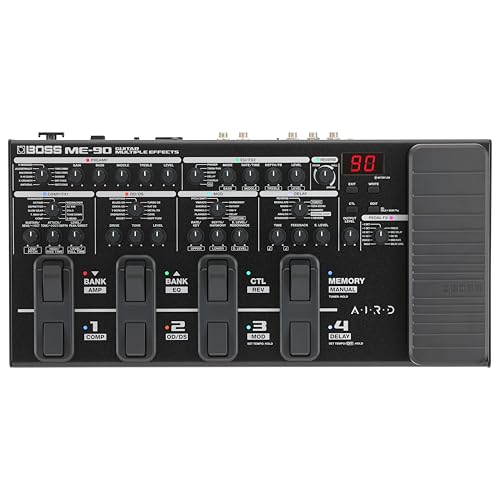
- 60 effects with 11 AIRD amp models and IR loading
- Eight footswitches plus expression pedal for live control
- 36 preset and 36 user patch locations
Best For: Worship guitarists needing broad effects and intuitive stage control
Practice Pick

- 71 effects and 13 amp models
- 30-second looper and 68 rhythm patterns
- Headphone, auxiliary, and Guitar Lab support
Best For: Practice, songwriting, and accessible tone exploration
Setlist Command Center – Tone Master Pro
For church musicians seeking guitar effects processors for church musicians, the Fender Tone Master Pro emphasizes organized live control. Its amp and effect modeling, song/set list mode, 7-inch touchscreen, and IR manager make it suited to services that require quick access to multiple programmed sounds.
Best For: Worship players managing structured song lists and varied modeled tones during live services.
Pros:
- Combines amp modeling and extensive effect modeling in one workstation.
- Song/set list mode supports organized service preparation and performance.
- 7-inch touchscreen and IR manager simplify sound navigation and cabinet-response management.
- Includes a two-year warranty.
Cons:
- At 15.3 pounds, it is less convenient for highly portable setups.
- Its corded-electric design requires access to mains power.
The Tone Master Pro is a strong choice when repeatable setlist workflow matters as much as tone variety. Its larger workstation format may be excessive for players who need only a few effects and a compact pedalboard.
Flagship Performance Rig – BOSS GT-1000
BOSS GT-1000 Guitar Effects Processor | Industry-Leading Guitar Effects Processor
Check Price On AmazonThe BOSS GT-1000 is a professional option among guitar effects processors for church musicians who want deep editing, detailed control, and high-fidelity processing. Its broad BOSS effects library, fast patch switching, expression pedal, and multiple external-control options support demanding live worship rigs.
Best For: Experienced guitarists who need comprehensive patch control and professional routing options for guitar or bass.
Pros:
- Uses 32-bit AD/DA conversion, 32-bit floating-point processing, and 96 kHz sampling.
- Offers a large library of BOSS effects, including MDP effects and newer algorithms.
- Fast patch switching includes delay carryover for smoother transitions.
- Provides ten footswitches, an integrated expression pedal, MIDI, USB, and Bluetooth editing.
Cons:
- Its professional feature set may require more setup time than simpler processors.
- The 24-inch length can be challenging for compact pedalboards.
With extensive control and strong processing specifications, the GT-1000 fits musicians building detailed, repeatable service presets. It is best suited to players willing to invest time in learning and programming a flagship processor.
Flexible Value Workhorse – Valeton GP-200
Valeton GP-200 Multi-Effects Processor for Guitar & Bass, Expression Pedal, MIDI, USB Interface
Check Price On AmazonThe Valeton GP-200 is a versatile pick among guitar effects processors for church musicians, covering guitar, bass, and acoustic applications. Its flexible effects blocks, balanced XLR outputs, MIDI, built-in expression pedal, looper, drum patterns, and USB-C interface make it practical for both stage and studio use.
Best For: Worship musicians wanting broad instrument support, direct outputs, and hands-on features in one processor.
Pros:
- Includes 140-plus amp and cab models, 100-plus effects, and up to 11 movable modules.
- Offers 256 patches, 20 user IR slots, and a built-in expression pedal.
- Balanced XLR outputs include ground lift, with MIDI and an FX loop for broader integration.
- Adds a 180-second looper, 100 drum patterns, and USB-C six-in/four-out audio with re-amping.
Cons:
- It requires corded power and does not support battery operation.
- The listed warranty information is limited to a 90-day free-return period.
The GP-200 offers an unusually wide feature set for players who want one unit to cover worship tones, practice tools, and recording duties. Its extensive options are valuable, though new users may need time to organize patches and routing.
Touchscreen Tone Shaper – BOSS GX-100
The BOSS GX-100 is a practical choice among guitar effects processors for church musicians who prefer visual editing and direct foot control. It combines AIRD-based tube amplifier tones, more than 170 BOSS effects, a color touch display, assignable controls, and speaker IR support.
Best For: Guitarists who want an intuitive touchscreen workflow with substantial amp, effect, and routing flexibility.
Pros:
- Provides 32 amp types and over 170 BOSS effects derived from the GT-1000.
- Uses a color touch display and modern interface for straightforward editing.
- Offers 15 assignable blocks, flexible routing, speaker types, and WAV IR loading.
- Includes assignable footswitches, an expression pedal with toe switch, and computer editing.
Cons:
- Bluetooth mobile editing and audio streaming require an optional adaptor.
- Its corded design and 23.7-inch length may not suit minimal or highly portable rigs.
The GX-100 balances a broad sound library with an approachable touchscreen interface, making it attractive for players who want detailed presets without relying solely on knob-based navigation. Consider it when visual control and expandable switching are priorities.
Flexible Tone Lab – MOOER GE150 Pro
For church musicians seeking guitar effects processors for church musicians, the MOOER GE150 Pro offers a broad set of tones and performance tools in a compact, foot-controlled unit. Its presets, amp and cabinet modeling, looper, drum machine, and expression pedal support both worship sets and practice.
Best For: Players who want extensive tone variety, looping, and built-in rhythm tools at a compact setup.
Pros:
- Includes 200 factory presets, 55 amp models, 26 cabinet simulations, and 20 IR slots.
- Four multifunction footswitches and an expression pedal provide flexible live control.
- Built-in 80-second stereo looper, drum machine, tuner, AUX input, and headphone output support practice and performance.
- USB-C and OTG connectivity allow tone management and recording to a computer or phone.
Cons:
- The standard version is corded rather than battery-powered.
- Its many modeling, routing, and control options may require setup time.
The GE150 Pro is a versatile choice for worship guitarists who value an all-in-one rig with strong practice features and plenty of programmable control.
Compact Professional Control – BOSS GX-10
The BOSS GX-10 is a compact option for church musicians comparing guitar effects processors for church musicians. It combines the GX-100 sound engine with a color touch display, flexible routing, extensive BOSS effects, and an integrated expression pedal for live sound shaping.
Best For: Guitarists and bassists who want professional processing, flexible signal routing, and a travel-friendly footprint.
Pros:
- Provides 32 amplifier types and 170 BOSS effects for extensive sound design.
- Supports up to 15 assignable blocks and flexible amp/effect routing.
- Includes three configurable footswitches, an expression pedal, and a color touch display.
- Offers 24-bit AD, 32-bit DA, 32-bit floating-point processing, and WAV speaker IR support.
Cons:
- Three footswitches provide fewer dedicated switches than some larger floor processors.
- The product’s extensive routing and control options may be more than a simple worship setup requires.
With its rugged metal chassis and GX-100-derived processing, the GX-10 suits players who need a compact but highly configurable unit for guitar or bass.
Pedalboard Command Center – Line 6 HX Effects
The Line 6 HX Effects is a focused choice for church musicians shopping for guitar effects processors for church musicians and building around an existing amp or pedal rig. It provides more than 100 HX effects, legacy effects, and controls designed to organize complex live signal chains.
Best For: Players who already use an amplifier and want a powerful effects hub for worship pedalboard control.
Pros:
- Offers more than 100 HX effects and runs up to nine simultaneously.
- Adds legacy effects from the M13, M9, M5, DL4, MM4, FM4, and DM4 families.
- Capacitive-sensing switches with LED rings and scribble strips support live navigation.
- Can serve as the command center for an entire amp and pedal rig.
Cons:
- Its supplied notes emphasize effects processing rather than onboard amp modeling.
- The unit requires a DC power supply.
- Players seeking built-in looping or rhythm tools may need additional equipment.
The HX Effects is especially compelling when your church setup already includes an amp and you want centralized access to a large, programmable effects library.
Editor's Choice – BOSS ME-90
BOSS ME-90 Guitar Multi-Effects Guitar Processor | All-In-One Guitar Processor
Check Price On AmazonFor church musicians looking for guitar effects processors for church musicians, the BOSS ME-90 offers a practical all-in-one setup with hands-on controls, extensive effects, and flexible patch storage. Its amp models, effects loop, expression pedal, and footswitch layout suit players who need quick tone changes during worship sets.
Best For: Worship guitarists who want intuitive live control and a broad, polished effects library.
Pros:
- Includes 60 effects, 11 AIRD amp models, and IR loading.
- Eight multi-function footswitches and an expression pedal support live changes.
- Stores 36 presets and 36 user patches for different songs or services.
- Offers USB-C, an effects loop, and optional Bluetooth editing and streaming.
Cons:
- Its large feature set may take time to learn.
- Bluetooth connectivity requires an optional adaptor.
The ME-90 is a strong choice when dependable stage control matters more than the smallest possible footprint. Its knob-based interface also makes last-minute tone adjustments straightforward.
Practice Pick – Zoom G1X Four
The Zoom G1X Four is a compact option for guitar effects processors for church musicians who also want strong practice features. It combines 71 effects, 13 amp models, a looper, rhythm patterns, and headphone or auxiliary connectivity in one pedal.
Best For: Church guitarists who prioritize practice, songwriting, and affordable access to varied tones.
Pros:
- Provides 71 built-in effects and 13 amp models.
- Includes a 30-second looper for layered practice or experimentation.
- Offers 68 rhythm patterns for timing and rehearsal.
- Supports auxiliary input, headphones, and Zoom Guitar Lab editing.
Cons:
- The notes do not specify an effects loop or extensive patch-memory capacity.
- Its practice-focused features may be less suited to complex live signal routing.
Choose the G1X Four if rehearsing, learning parts, and developing tones are central to your workflow. The built-in rhythms and looper can make individual preparation more engaging.
Feature-Packed Value – SONICAKE Matribox
The SONICAKE Matribox gives guitar effects processors for church musicians a wide range of routing and sound-design options, including 130 effects, amp models, cabinet IRs, a looper, and USB audio. It can also accommodate guitar, bass, and acoustic applications.
Best For: Musicians who want extensive modeling, adjustable signal chains, and recording-friendly connectivity.
Pros:
- Includes 130 effects, 40 amp models, and 38 cabinet IR simulations.
- Supports up to nine simultaneous effect blocks and adjustable signal chains.
- Offers 198 presets, a 90-second looper, and 100 drum rhythms.
- Provides third-party IR support, NAM A2 support, and stereo OTG USB audio.
Cons:
- The 90-day warranty is shorter than many competing options may provide.
- Its extensive editing and modeling features may feel complex for beginners.
- The notes identify a corded power source rather than battery operation.
The Matribox is appealing for worship players who also record, build detailed presets, or cover multiple instrument types. Its large feature set offers flexibility, though it rewards time spent learning the software and signal-chain controls.
How We Picked the Best Guitar Effects Processors for Church Musicians
We evaluated these processors by focusing on the demands of worship and church performance: quick preset changes, consistent direct tones, flexible signal routing, and easy integration with amplifiers, PA systems, audio interfaces, MIDI controllers, and expression pedals. We also considered the balance between sound-shaping depth and stage usability. A processor with hundreds of effects is not automatically the best choice if it takes too long to navigate during a service.
The selection includes advanced floorboards for players who need detailed routing and amp modeling, midrange units suited to regular gigging, and compact options for beginners, youth teams, rehearsal spaces, or backup rigs.
Quick Comparison
| Best For | Recommended Type | What to Look For |
|---|---|---|
| Complete direct worship rig | Multi-effects workstation | Amp modeling, cab or IR support, snapshots, and flexible outputs |
| Complex live setups | Advanced processor | Scenes, assignable footswitches, MIDI, and parallel routing |
| Simple song-based control | Floor multi-effects unit | Fast preset access, readable display, and built-in expression control |
| Small stages or travel | Compact processor | Low weight, USB audio, headphone output, and reliable presets |
| Budget-conscious players | Entry-level multi-effects unit | Useful core effects, tuner, looper, and straightforward editing |
Key Buying Factors for Guitar Effects Processors for Church Musicians
Preset Control and Transitions
Look for dedicated footswitches, scenes, snapshots, or patch spillover if you need seamless changes between verses, choruses, ambient sections, and lead parts. Clear displays and consistent preset levels are especially valuable when lighting is limited.
Direct Sound and Output Options
If you connect directly to a mixing console, prioritize convincing amp and cabinet modeling, impulse-response support, balanced outputs, and separate output controls. Headphone and USB audio connections can also simplify practice, recording, and late-night programming.
Effects, Routing, and Expansion
Worship players often need delays, reverbs, modulation, pitch effects, compression, and drive sounds in one patch. Check the available signal-chain blocks, parallel routing, external loop connections, MIDI, and expression-pedal compatibility before buying.
Ease of Programming and Reliability
A touchscreen or editor software can speed up sound design, while rugged switches and dependable power requirements matter on stage. Confirm whether updates, presets, and backups are handled through a computer or mobile device.
Who Should Buy Which Guitar Effects Processors for Church Musicians?
Choose a premium workstation if you run a complete direct rig, need sophisticated routing, or want extensive control over multiple amps and effects. Choose a midrange floor processor if you want strong modeling and practical live control without the largest footprint or learning curve.
Choose a compact unit for smaller platforms, travel, rehearsals, or a secondary board. Choose an entry-level processor if you are building your first worship rig and mainly need dependable clean, overdrive, delay, reverb, tuner, and looper functions. Before purchasing, map your typical set list and confirm that the processor has enough switches, outputs, and preset capacity for the way your church team actually performs.