Moving beyond a beginner instrument is an exciting step, but choosing among open-hole, closed-hole, offset-G, inline-G, and B-foot models can quickly become confusing. The right flute should match the player’s technique, goals, and budget.
We’ve gathered 10 strong options for students advancing through school band, private lessons, auditions, and early performance work. Use the guide below to compare features and identify the best fit.
Best 10 Flutes for Intermediate Players Picks for 2026
Reliable Student Upgrade
Yamaha YFL-222 Intermediate Flute
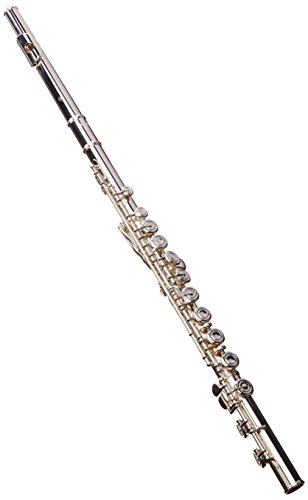
- Nickel-silver body and headjoint
- Offset G with silver-plated keys
- Case, cleaning supplies, and 2-year warranty
Best For: Students seeking a warm-sounding, familiar offset-G setup
Open-Hole Progression
Gemeinhardt Model 3OB Open-Hole Flute

- Open-hole intermediate design
- Offset G and B footjoint
- Silver-plated French-style keys
Best For: Players developing open-hole technique and seeking a B foot
Silver-Headjoint Upgrade
Yamaha YFL-362H Intermediate Flute

- Sterling silver headjoint and lip plate
- Nickel-silver body with offset G
- Case, carrying bag, and 2-year warranty
Best For: Intermediate players wanting a lighter tone and upgraded headjoint
Accessory-Rich Open-Hole Choice
Cecilio 17-Key C Flute with B-Foot

- Open-hole C flute with 17 keys
- B foot, offset G, and split E key
- Includes stand, hard case, and cleaning kit
Best For: Advancing players wanting features and accessories in one package
Balanced Intermediate Choice

- Sterling silver headjoint
- Inline G key system
- Includes case and 2-year warranty
Best For: Intermediate players wanting an inline G flute
Reliable Plateau Model
Gemeinhardt 2SP Straight Headjoint

- Closed-hole plateau model
- Offset G key
- 5-year limited warranty
Best For: Players wanting a conventional, easy-to-manage setup
Open-Hole Step-Up
Yamaha YFL-462H Intermediate Flute

- Open-hole key design
- B foot and offset G key
- Silver construction with pure, light tone
Best For: Intermediate players wanting an open-hole Yamaha flute
Best Overall
Jean Paul FL-430 Open-Hole Flute

- Open holes include removable plugs
- Offset G and split E mechanisms
- Technician set up and play-tested
Best For: Advancing players wanting a flexible open-hole design
Best Value Set

- Closed-hole 16-key C flute
- Offset G and split E keys
- Includes stand and maintenance accessories
Best For: Budget-conscious students wanting a complete package
Best Budget Open-Hole Option

- 16-key open-hole C flute
- Silver-plated cupronickel construction
- Leather pads and included case
Best For: Budget-minded players moving toward open-hole playing
Reliable Student Upgrade – Yamaha YFL-222 Intermediate Flute
The Yamaha YFL-222 is a practical option for players comparing flutes for intermediate players. It combines a nickel-silver body and headjoint with silver-plated keys, an offset G system, and a warm, rich sound profile.
Best For: Students moving beyond a beginner instrument who want a familiar offset-G setup and included cleaning supplies.
Pros:
- Offset G key system supports a comfortable student-oriented layout.
- Silver-plated keys and polished nickel-silver construction.
- Includes a case, cleaning supplies, and a 2-year warranty.
Cons:
- The supplied notes describe a student model rather than a fully open-hole design.
- Its 1.3 kg weight may matter to players prioritizing the lightest setup.
Choose this Yamaha when dependable student features, a warm tone, and included maintenance accessories matter more than advanced keywork options.
Open-Hole Progression – Gemeinhardt Model 3OB Open-Hole Flute
The Gemeinhardt Model 3OB is a focused choice among flutes for intermediate players who are ready for open-hole technique. Its silver-plated construction pairs an offset G, B footjoint, and French-style keys.
Best For: Intermediate players developing open-hole technique and looking for a B-foot instrument with French-style keywork.
Pros:
- Open-hole design encourages more advanced finger technique.
- B footjoint provides the supplied extended low range.
- Silver-plated construction with a polished finish.
- Includes a case.
Cons:
- Open holes can require more precise finger coverage than closed-hole models.
- The supplied notes do not list cleaning supplies or additional accessories.
This model makes the most sense for a developing player who specifically wants open holes, an offset G, and a B footjoint rather than a simpler student configuration.
Silver-Headjoint Upgrade – Yamaha YFL-362H Intermediate Flute
The Yamaha YFL-362H stands out among flutes for intermediate players with its sterling silver headjoint and lip plate, nickel-silver body, and silver-plated keys. Its offset G system and supplied carrying bag keep the setup practical for school, rehearsal, and performance use.
Best For: Intermediate players seeking a sterling silver headjoint and a light, pure tone in a portable outfit.
Pros:
- Sterling silver headjoint and lip plate add a notable material upgrade.
- Offset G key system offers a familiar playing layout.
- Includes a case, carrying bag, and 2-year warranty.
- Listed weight is 0.89 kg.
Cons:
- The body is nickel silver rather than sterling silver.
- The supplied notes do not specify an open-hole configuration.
Consider the YFL-362H if the headjoint is your priority: it offers a targeted material upgrade while retaining an accessible offset-G design and a pure, light tone.
Accessory-Rich Open-Hole Choice – Cecilio 17-Key C Flute with B-Foot
The Cecilio 17-key flute is an accessible option among flutes for intermediate players who want open holes and a broad accessory package. It features a C design, B-foot joint, offset G, split E key, and beveled embouchure for tone control.
Best For: Advancing school-band players and hobbyists who want open-hole features, practice accessories, and a hard case in one package.
Pros:
- Open-hole 17-key layout includes offset G, split E, and B-foot joint.
- Undercut beveled embouchure is designed for precise tone control.
- Includes a stand, hard case, gloves, grease, screwdriver, and cleaning tools.
- Suitable for practice, performance, and studio sessions according to the supplied notes.
Cons:
- Open holes may be less forgiving for players still refining finger coverage.
- The supplied notes identify metal construction but do not specify a more detailed alloy.
This Cecilio is compelling when value includes accessories as well as the instrument itself, particularly for players who want open-hole features and a split E key without assembling a separate kit.
Balanced Intermediate Choice – Yamaha YFL-382H with Inline G
The Yamaha YFL-382H is a strong option for flutes for intermediate players who want a pure, light tone and an inline G key system. Its sterling silver headjoint, nickel silver body and footjoint, and silver-plated keys provide a thoughtfully specified setup for advancing players.
Best For: Intermediate players seeking an inline G flute with a sterling silver headjoint.
Pros:
- Sterling silver headjoint
- Inline G key system
- Includes a carrying case and has a 2-year warranty
Cons:
- Inline G may not suit players who prefer an offset G key
- Listed weight is 3.5 pounds
The YFL-382H combines an intermediate-focused specification with a polished finish and included case. It is especially appealing if the inline G layout and sterling silver headjoint match your playing preferences.
Reliable Plateau Model – Gemeinhardt 2SP Straight Headjoint
The Gemeinhardt 2SP is a practical consideration among flutes for intermediate players who prefer a straightforward, closed-hole design. It features a straight headjoint, offset G key, silver-plated finish, and professionally padded construction.
Best For: Players who prefer a closed-hole flute with an offset G key and straight headjoint.
Pros:
- Closed-hole plateau model
- Offset G key
- Includes a case and offers a 5-year limited warranty
Cons:
- Designed as a beginning-oriented instrument in the supplied description
- Uses a straight headjoint rather than a curved design
The 2SP emphasizes reliability and ease of use through its plateau keys and offset G layout. Its stated quality-control process and long limited warranty add reassurance for players seeking a conventional setup.
Open-Hole Step-Up – Yamaha YFL-462H Intermediate Flute
The Yamaha YFL-462H is a compelling choice among flutes for intermediate players looking for an open-hole instrument with a B foot and offset G key. Its silver construction and pure, light sound profile suit players ready for a more advanced French-style configuration.
Best For: Intermediate players seeking an open-hole flute with a B foot and offset G key.
Pros:
- Open-hole key design
- B foot configuration
- Silver material with a polished finish
Cons:
- Open-hole keys may require more adjustment to the player’s technique
- Warranty information is not provided in the supplied details
The YFL-462H stands out for its open-hole design, B foot, and offset G key. Choose it when those specifications are more important to you than the simpler closed-hole layout of a conventional student model.
Best Overall – Jean Paul FL-430 Open-Hole Flute
For intermediate players seeking flutes with room to develop, the Jean Paul FL-430 combines an open-hole design with removable plugs, precise intonation, and features aimed at comfortable, flexible playing.
Best For: Advancing players who want an adaptable open-hole flute with helpful playability features.
Pros:
- Open-hole keys with removable plugs support progression as skills develop.
- Offset G key improves hand alignment, while the split E mechanism helps with third-octave E.
- Play-tested and set up by NAPBIRT-certified technicians before shipping.
- Includes a semi-hard case, cleaning rod, and cleaning cloth.
Cons:
- Open-hole keys may require an adjustment period for players accustomed to closed-hole flutes.
- The silver-plated finish may not suit shoppers specifically seeking a solid-silver instrument.
The FL-430 is a strong choice for intermediate players ready to explore open-hole technique without giving up setup support and ergonomic features.
Best Value Set – Cecilio Closed-Hole C Flute
Among flutes for intermediate players, the Cecilio closed-hole C flute stands out as a practical, cost-conscious package with essential accessories and a familiar layout for students continuing their band or orchestra work.
Best For: Students who prefer closed holes and want a complete starter-friendly package.
Pros:
- Closed-hole design offers a straightforward option for developing players.
- Offset G and split E keys are included in the 16-key layout.
- Package includes a case, gloves, cleaning supplies, joint grease, stand, and instruction booklet.
- Silver-plated nickel construction has a polished finish and beveled embouchure.
Cons:
- Its beginner-oriented design may offer less room for players specifically seeking advanced open-hole features.
- The supplied notes do not identify a warranty or technician setup service.
With its closed-hole configuration and broad accessory package, this Cecilio is a sensible option for players prioritizing affordability and convenience.
Best Budget Open-Hole Option – Glory 16-Key C Flute
For intermediate players comparing affordable flutes, the Glory 16-key C flute offers an open-hole design, silver-plated cupronickel construction, and leather pads intended to support durability and airtightness.
Best For: Players seeking a budget-friendly C flute with an open-hole configuration.
Pros:
- 16-key open-hole design supports continued development beyond a basic student layout.
- Real cupronickel construction is described as durable and tone-supporting.
- Leather pads are designed for water resistance and airtightness.
- Includes a carrying case.
Cons:
- The supplied notes do not mention offset G, split E, or other ergonomic mechanisms.
- Accessory coverage appears more limited than the Cecilio package.
- Open holes may be less immediately forgiving for players still building finger coverage.
The Glory is worth considering when an open-hole layout and low-cost cupronickel body matter more than an extensive accessory bundle.
How We Picked the Best Flutes for Intermediate Players
We selected these instruments by focusing on the features that matter most as players progress: dependable keywork, useful ergonomic options, tonal flexibility, construction materials, and suitability for lessons, ensemble playing, and performance. The list includes established Yamaha and Gemeinhardt models alongside accessible options from Cecilio, Jean Paul, and Glory.
Because “intermediate” can describe several different skill levels, we included both closed-hole instruments that ease the transition from beginner models and open-hole flutes that support more advanced technique. Specifications can vary by market, so confirm the exact configuration, warranty, and included accessories before ordering.
Quick Comparison
Yamaha’s YFL-222, YFL-362H, YFL-382H, and YFL-462H cover a broad range of advancing-player needs, with differences in headjoint design, G-key layout, and materials. Gemeinhardt’s Model 3OB is a traditional open-hole, offset-G choice, while the 2SP with straight headjoint offers a simpler configuration. Cecilio, Jean Paul, and Glory provide lower-cost ways to access features such as open holes, split E keys, and B-foot joints.
Key Buying Factors for Flutes for Intermediate Players
Open or Closed Holes
Closed-hole keys are generally easier for developing players and can be more forgiving during the transition from a beginner flute. Open-hole keys offer greater control for advanced techniques, but they require accurate finger placement and may need plugs while the player adapts.
Offset G or Inline G
An offset-G layout can feel more natural for many hands and is often a comfortable choice for students. Inline-G models may suit players with established technique or specific teacher recommendations. Neither layout is universally better; comfort and hand position should guide the decision.
B-Foot and Split E
A B-foot extends the instrument’s lowest range and can add weight and cost. A split-E mechanism can make high E more reliable, which may help players working on upper-register passages, auditions, and demanding ensemble music.
Materials and Maintenance
Silver-plated nickel silver is common at this level and can provide durability at a manageable price. More advanced models may use a sterling-silver headjoint or additional silver construction. Regardless of material, regular cleaning, professional adjustment, and careful storage have a major effect on playability.
Who Should Buy Which Flutes for Intermediate Players?
Choose a closed-hole model if the player is still refining finger coverage or wants a straightforward school-band instrument. Consider an open-hole, offset-G flute for an advancing student whose teacher recommends expanded technique. An inline-G or more extensively upgraded Yamaha may be appropriate for players preparing for auditions, higher-level ensembles, or continued long-term study.
For the safest purchase, ask the player’s teacher about key configuration and have the instrument inspected or adjusted by a qualified flute technician. A comfortable, well-regulated flute is usually a better investment than one with more impressive specifications but poor fit or setup.