Recording levels can change quickly in the field, and a clipped take may be impossible to recreate. A field recorder with 32-bit float helps preserve usable detail across sudden volume changes, making it easier to capture interviews, performances, ambience, and production audio with less level anxiety.
We selected 10 portable recorders ranging from simple handheld models to multitrack systems with professional inputs, timecode, and expandable workflows. Use the guide below to match features, connectivity, and recording capacity to the way you work.
Best 10 Field Recorder with 32 Bit Float Picks for 2026
Best Overall

- Up to 192kHz/32-bit float recording
- Eight-channel multitrack with four combo inputs
- Detachable mics and color touchscreen
Best For: Multitrack field recording and flexible creator setups
Best Accessible Handheld

- Clip-free 32-bit float recording
- Two XLR/TRS inputs and stereo mics
- USB-C recording plus SD backup
Best For: Guided handheld recording for creators and performers
Best for Video

- 32-bit float capture with dual ADCs
- Built-in timecode generator and sync
- Dual combo inputs plus 3.5mm input
Best For: Videographers needing synchronized production audio
Best Compact Stereo Recorder

- Three mics with nine recording patterns
- 32-bit float mono, stereo, and surround recording
- USB microphone mode with SD backup
Best For: Portable interviews, podcasts, and ambient field recording
Versatile Multitrack Pick
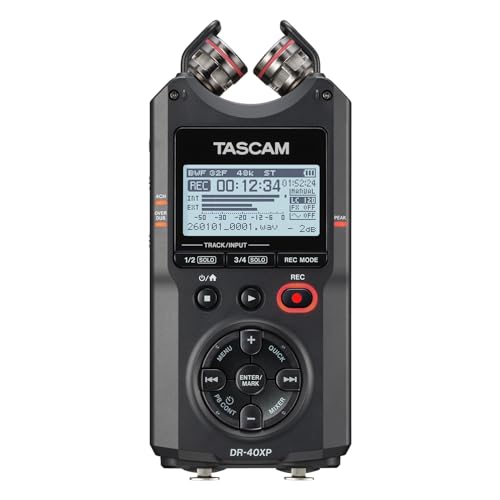
- 32-bit float and four-channel recording
- Adjustable A-B/X-Y stereo microphones
- USB-C interface with XLR/TRS inputs
Best For: Musicians, video creators, and interviews
Simple Content Companion

- 32-bit float stereo recording
- X/Y microphones for quick capture
- USB-C microphone mode
Best For: Creators, podcasters, musicians, and interviews
Professional Production Choice
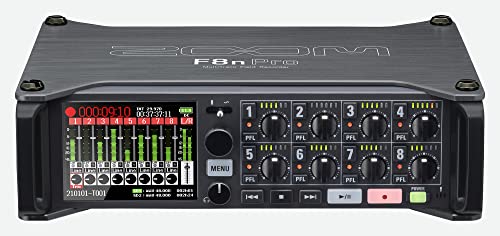
- Eight inputs and ten-track recording
- Dual SD slots for redundant recording
- Accurate timecode and professional preamps
Best For: Film sets and multichannel location audio
Best Bundle for Flexible Recording
Zoom H4essential 32-Bit Float Recorder
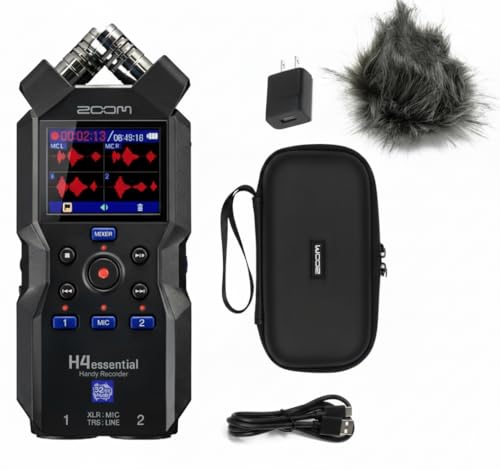
- 32-bit float WAV recording
- Accessory pack with windscreen and case
- Up to 20 hours of battery life
Best For: Mobile recordists who want a versatile, accessorized setup
Best Professional Compact Pick
Zoom F3 Professional Field Recorder

- 32-bit float with dual A/D converters
- Two locking XLR/TRS inputs
- Low-noise preamps and flexible power
Best For: Filmmakers and recordists using external microphones
Best Simple Two-Input Option

- 32-bit/96kHz recording
- Two XLR/TRS combo inputs
- SDXC support up to 1TB
Best For: Compact podcasting, interviews, and two-channel recording
Best Overall – Tascam Portacapture X8
The Tascam Portacapture X8 is a versatile field recorder with 32 bit float support, up to 192kHz recording, and eight-channel multitrack capability. Its color touchscreen, detachable condenser microphones, and four locking combo inputs make it well suited to varied recording setups.
Best For: Creators who need multitrack flexibility for field recording, podcasts, interviews, music, or ASMR.
Pros:
- Supports up to 192kHz/32-bit float recording.
- Eight-channel multitrack recording with four XLR/TRS inputs.
- Detachable microphones support A-B and X-Y positioning.
- Touchscreen Launcher interface offers dedicated recording applications.
Cons:
- At 1.6 pounds, it is heavier than compact handheld alternatives.
- Bluetooth adapter compatibility is limited to the AK-BT1.
The X8 is the strongest choice here for buyers who want a field recorder with 32 bit float recording and substantial input capacity. Choose it when multitrack expansion matters more than minimal size.
Best Accessible Handheld – Zoom H4 Essential
The Zoom H4 Essential combines a compact handheld design with clip-free 32-bit float recording, built-in stereo microphones, and two XLR/TRS inputs. It can record to an SD card while also connecting by USB-C to a phone, tablet, or computer.
Best For: Musicians, podcasters, filmmakers, and interviewers who want a guided handheld recorder with external-input support.
Pros:
- 32-bit float recording helps reduce concern about distorted takes.
- Built-in stereo microphones and two XLR/TRS inputs support different sources.
- Works as a USB audio device while saving a backup to SD card.
- Spoken menu guidance improves accessibility and navigation.
Cons:
- Records up to four tracks, fewer than the Portacapture X8.
- Requires two AA batteries.
The H4 Essential is a practical field recorder with 32 bit float capability for creators who value straightforward operation and connectivity. Its four-track design fits smaller productions better than large multitrack sessions.
Best for Video – Tascam FR-AV2
The Tascam FR-AV2 is a compact field recorder with 32 bit float recording designed specifically for videography workflows. Its internal timecode generator, dual XLR/TRS inputs, and timecode input/output help simplify synchronized production audio.
Best For: Videographers who need synchronized audio, no-clip capture, and a compact dual-input recorder.
Pros:
- 32-bit float recording with dual ADCs supports worry-free capture.
- Built-in timecode generation and timecode IN/OUT support video synchronization.
- Two XLR/TRS combo inputs and a 3.5mm input accommodate multiple sources.
- Supports 48kHz, 96kHz, and 192kHz recording.
Cons:
- Its two XLR/TRS inputs provide less multitrack capacity than the X8.
- Bluetooth monitoring requires the optional AK-BT2 adapter.
- Requires three AA batteries.
For video production, the FR-AV2 stands out because timecode is built in rather than requiring a separate device. It is a focused option for synchronized capture rather than a general-purpose multitrack recorder.
Best Compact Stereo Recorder – Zoom H2 Essential
The Zoom H2 Essential is a lightweight field recorder with 32 bit float recording, three built-in microphones, and nine selectable recording patterns. It captures mono, stereo, or surround audio and can operate as a USB microphone while recording a backup to an SD card.
Best For: Journalists, podcasters, musicians, and field recordists who prioritize portability and flexible built-in microphone patterns.
Pros:
- Three microphones provide nine selectable recording patterns.
- 32-bit float recording reduces the need for gain adjustments.
- USB microphone operation can run alongside SD card recording.
- Offers up to 20 hours of battery life according to the supplied details.
Cons:
- No XLR/TRS inputs are listed, limiting direct connection of external gear.
- Its smaller 1.3-inch screen may offer less visual control than touchscreen models.
- Requires two AA batteries.
The H2 Essential is an appealing field recorder with 32 bit float support when portability and built-in microphone coverage come first. Its selectable patterns make it especially useful for changing stereo and ambient recording situations.
Versatile Multitrack Pick – TASCAM DR-40XP
The TASCAM DR-40XP is a flexible field recorder with 32 bit float recording for musicians, video creators, and interview workflows. Its adjustable stereo microphones, two XLR/TRS inputs, and four-channel recording support more complex setups while USB-C connectivity helps streamline computer or mobile production.
Best For: Musicians, location creators, and video teams needing built-in and external microphone recording.
Pros:
- Four-channel recording can capture the built-in microphones and external inputs simultaneously.
- Adjustable A-B or X-Y microphones support flexible stereo recording and handle up to 125 dB SPL.
- Includes a 2-in/2-out USB-C audio interface and supports recording up to 96 kHz.
Cons:
- microSD card and batteries are not included.
- Its broader feature set may be more than casual users need.
The DR-40XP is a strong all-around choice when you want a field recorder with 32 bit float capability plus external inputs and multitrack flexibility in a compact handheld design.
Simple Content Companion – Zoom H1 Essential
The Zoom H1 Essential is a compact field recorder with 32 bit float recording designed for quick stereo capture. Its X/Y microphones suit videos, rehearsals, interviews, ambience, and voiceovers, while USB-C microphone mode adds a practical option for streaming, calls, and computer or mobile recording.
Best For: Content creators, musicians, podcasters, and anyone who wants straightforward stereo recording.
Pros:
- X/Y stereo microphones provide a simple setup for voices, music, and environmental sound.
- USB-C connectivity allows use as a microphone for calls, livestreams, and voiceovers.
- Offers up to 10 hours of digital recording time.
Cons:
- Uses two AAA batteries.
- Its stereo microphone design is less suited to multichannel recording than larger models.
Choose the H1 Essential if portability and ease of use matter most. It delivers the core benefits of a field recorder with 32 bit float recording without the added complexity of multiple inputs.
Professional Production Choice – Zoom F8n Pro
The Zoom F8n Pro is a professional field recorder with 32 bit float recording for film sets and demanding location work. With eight inputs, ten tracks, dual SD card slots, high-gain low-noise preamps, and accurate timecode, it is built for productions that need extensive routing and reliable capture.
Best For: Filmmakers and field-audio professionals managing multichannel production sound.
Pros:
- Eight-channel, ten-track recording with dual AD converters captures a broad dynamic range.
- Up to 75 dB of gain and -127 dBu EIN support quiet dialogue and dynamic scenes.
- Dual SD slots enable redundant recording, while timecode accuracy is rated to 0.2 ppm.
- Can function as an 8-in/4-out USB audio interface while recording to an SD card.
Cons:
- At 1.8 kg, it is substantially heavier than handheld recorders.
- Its professional feature set may be excessive for simple stereo recording.
- Battery life is listed at approximately 8.5 hours.
The F8n Pro is the specialist option in this roundup. Its input count, redundant storage, timecode, and interface capabilities make it appropriate for structured film and field-audio workflows rather than casual recording.
Best Bundle for Flexible Recording – Zoom H4essential 32-Bit Float Recorder
If you want a field recorder with 32 bit float recording plus useful accessories, the Zoom H4essential bundle is a practical all-in-one option. It combines 32-bit float WAV recording with XLR/TRS combo inputs, a stereo mini-jack input, and up to 20 hours of battery life.
Best For: Musicians, interviewers, and mobile recordists who want a versatile recorder with a windscreen, case, adapter, and USB-C cable included.
Pros:
- 32-bit float recording helps prevent clipping without constant gain adjustments.
- Includes the APH-4e accessory pack with a hairy windscreen and padded shell case.
- Offers XLR/TRS combo jacks plus a stereo mini-jack input.
- Provides up to 20 hours of continuous recording with lithium batteries.
Cons:
- The included accessories make this a larger bundle than the recorder alone.
- The 2-inch display may feel limited for users who prefer larger screens.
This bundle stands out when convenience matters as much as recording flexibility. It is a strong choice for buyers who want a ready-to-use field recorder with 32 bit float capability and practical location accessories.
Best Professional Compact Pick – Zoom F3 Professional Field Recorder
The Zoom F3 is a focused field recorder with 32 bit float recording for filmmakers and musicians who need dependable audio in changing conditions. Its dual locking XLR/TRS inputs, low-noise preamps, and flexible battery or USB workflows suit demanding location setups.
Best For: Filmmakers, sound recordists, and musicians using professional microphones or complex rigs.
Pros:
- 32-bit float recording with dual A/D converters supports clip-free audio capture.
- Dual locking XLR/TRS inputs help secure microphone connections.
- Ultra-low-noise preamps are designed for clean recordings in uncontrolled environments.
- Supports battery-powered, standalone, and USB recording workflows.
Cons:
- It relies on external microphones rather than offering a built-in stereo microphone setup.
- Only two XLR/TRS inputs are available for larger recording rigs.
With its compact design and professional-oriented connections, the F3 is especially appealing for run-and-gun production. Choose it when secure XLR connections and low-noise preamps matter more than built-in microphones.
Best Simple Two-Input Option – Zoom H1 XLR 32-Bit Recorder
The Zoom H1 XLR is a compact field recorder with 32 bit float recording aimed at straightforward setups. It provides two XLR/TRS combo inputs, a 3.5mm stereo input and headphone output, plus an OLED waveform display for quick level monitoring.
Best For: Podcasters, musicians, filmmakers, and interviewers who need two professional inputs in a compact recorder.
Pros:
- Records 32-bit float audio at up to 96kHz for detailed sound.
- Two XLR/TRS combo inputs support microphones, instruments, and other sources.
- OLED waveform display provides a quick view of recording levels.
- Supports SDXC cards up to 1TB for extended recording capacity.
Cons:
- Battery life is listed at up to 10 hours, less than some larger Zoom models.
- The 0.96-inch screen is compact and may be less convenient for detailed monitoring.
- It has two main XLR/TRS inputs, limiting larger multi-microphone setups.
The H1 XLR is a sensible fit for buyers who want professional two-channel connectivity without a complicated interface. Its small size, waveform display, and 32-bit float recording make it well suited to everyday mobile sessions.
How We Picked the Best Field Recorder with 32 Bit Float
We focused on recorders that offer 32-bit float capture or are especially relevant to buyers comparing modern no-clip audio workflows. We also considered microphone and input configuration, track count, portability, battery practicality, USB audio support, monitoring, and suitability for music, filmmaking, podcasting, interviews, and field sound.
The list includes compact handheld recorders for quick takes, dual-input models for microphones and instruments, and larger multitrack units for crews that need several isolated sources. The best choice depends less on the highest specification than on how many inputs, tracks, and controls you will actually use.
Quick Comparison
- Smallest and simplest: Choose a compact handheld recorder when portability and fast setup matter most.
- Flexible two-input recording: Look for XLR/TRS inputs when you need external microphones, line sources, or instruments.
- More channels: An eight-input recorder is better for ensembles, film crews, and multichannel production sound.
- Timecode workflows: Choose a model with timecode features when syncing separate cameras and production audio is important.
- Computer-based recording: USB audio interface support can let the recorder double as a desktop setup for streaming, voiceover, or music.
Key Buying Factors for a Field Recorder with 32-Bit Float
Inputs and Microphone Options
Built-in stereo microphones are convenient for ambience, rehearsals, and interviews. XLR/TRS inputs provide more flexibility for professional microphones, mixers, instruments, and balanced line-level sources. Check phantom-power support and connector count before buying.
Track Count and Workflow
A two-channel recorder is often enough for a single microphone pair or interview. Four-channel models add room for multiple sources, while eight-input recorders are better suited to ensembles and film production. Also check whether tracks can be recorded independently and how quickly gain, routing, and monitoring controls can be accessed.
32-Bit Float Benefits and Limits
32-bit float recording gives you more recovery headroom when levels are set poorly, but it does not eliminate microphone distortion, excessive noise, or bad placement. Use suitable microphones, monitor with headphones, and protect the recorder from wind and handling noise.
Power, Storage, and Durability
Field work rewards dependable battery life, accessible memory-card support, sturdy controls, and a screen that remains readable outdoors. Factor in spare batteries or external power, storage capacity, mounting options, and the size of the complete microphone-and-cable kit.
Who Should Buy Which Field Recorder with 32 Bit Float?
Musicians and casual creators will usually prefer a compact handheld recorder with built-in microphones and a straightforward interface. Interviewers and podcasters should prioritize clean external-mic connections, headphone monitoring, and USB interface functionality. Filmmakers may need multiple XLR inputs, timecode, robust monitoring, and reliable synchronization. Sound designers and ensemble recordists should consider higher input counts, multitrack recording, and flexible routing.
If you are unsure, choose based on your next real project rather than future possibilities. A smaller recorder is easier to carry and deploy, while a larger model is worthwhile when replacing it later would cost more than buying the required inputs and tracks now.