Choosing the right field recorder bag for audio equipment can make location work faster, safer, and far less stressful. The best options protect your recorder while keeping cables, batteries, and wireless gear organized and easy to reach.
In this roundup, we focused on bags that balance protection, accessibility, and real-world portability for recordists, mixers, and production teams.
Best 10 Field Recorder Bag for Audio Equipment Picks for 2026
Protective Recorder Case

- Water-resistant cover with clear viewing window
- Multiple access panels for top, side, and bottom use
- Front pouch and side pockets for extra storage
Best For: Zoom F-series users needing weather-aware protection and quick access
Structured Mixer Bag
K-Tek Stingray Small X for SD 833/888

- Rigid internal frame keeps the bag structured
- Built for SD 833/888 and SL-2 module support
- Front flap and accessory points aid field use
Best For: Mixers using SD 833/888 who want a purpose-built bag
Basic Carry Case
TASCAM CS-MODEL12 for Model 12

- Built for the TASCAM Model 12
- Zippered closure with top handle
- Simple transport-focused design
Best For: Model 12 owners who want straightforward carrying protection
Wearable Recorder Rig
K-Tek Stingray Action Belt for Zoom F3

- Hands-free waist-belt design for mobile recording
- Heavy-duty nylon with rain cover and kickstand
- Neoprene pockets hold essential accessories
Best For: Zoom F3 users doing active field recording
Accessory Organizer Bag

- Water-resistant 600D polyester build
- Transparent front for quick gear ID
- Dividers and pouches for small accessories
Best For: Organizing cables, batteries, cards, and SSDs in a larger audio kit
Recorder Rig Case
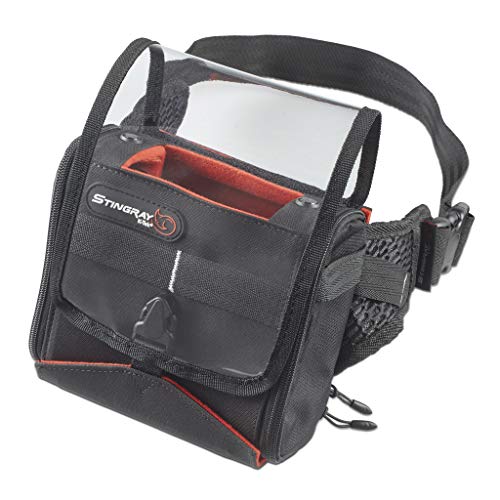
- Built specifically for Zoom F6 use
- Integrated frame and clear shield
- Kickstand, belt, and strap options
Best For: Zoom F6 owners needing a stable, purpose-built field recorder bag
Universal Padded Tote

- Padded universal design for audio gear
- Large 20 x 20 x 5-inch interior
- External pocket for cable storage
Best For: Transporting larger mixers, interfaces, and recorder gear in a padded tote
Field Mixer Cube

- Clear TPU top for visibility and rain protection
- Six-side access for knobs, ports, and batteries
- Includes divider, lifter, foam pads, and accessory pockets
Best For: Sound mixers and field recordists who need active access in transit
Gear Organizer Tote

- Five fixed divisions and three removable dividers
- Laptop pocket, mic pocket, and multiple accessory pockets
- Water-resistant nylon with padded handles and shoulder strap
Best For: Audio techs carrying cables, accessories, and a laptop
Rack-Ready Recorder Bag

- Fits 4U rack gear with 14-inch mounting depth
- Front and rear zip flaps for gear access
- Plywood and 600D nylon build with handles and strap
Best For: Recordists carrying rack-mounted wireless systems or processors
Protective Recorder Case – Zoom PCF-8n for F8/F8n/F4
If you need a field recorder bag for audio equipment that keeps a Zoom F-series unit protected while still easy to reach, the Zoom PCF-8n is built around that workflow. It offers multiple compartments, access to inputs and outputs, and a water-resistant cover with a clear window for visual monitoring.
Best For: Field recordists who want a protective, shoulder-carry bag with organized storage and quick access to a Zoom F8n, F8, or F4.
Pros:
- Detachable water-resistant cover helps guard against rain and dust.
- Removable panels, Velcro flaps, and drawstring sleeves support top, side, and bottom access.
- Zippered front pouch and side pockets add useful accessory storage.
- Adjustable strap and shoulder pad offer flexible carry positions.
Cons:
- Designed specifically around Zoom F8n, F8, and F4 use cases.
- At 2.5 pounds, it is not the lightest bag in the group.
This is a practical choice if your priority is protection plus fast operational access rather than a minimal carrying case. The layout is clearly tuned for production use, especially when you need to monitor the recorder while keeping it covered.
Structured Mixer Bag – K-Tek Stingray Small X for SD 833/888
For a field recorder bag for audio equipment that is centered on larger production recorders, the K-Tek Stingray Small X is tailored to the SD 833 and 888. Its rigid internal frame, front flap access, and accessory attachment points make it a strong pick for organized on-location mixing.
Best For: Sound mixers carrying an SD 833 or 888 who want a structured bag with accessory mounting options.
Pros:
- Optimized for SD 833 and 888 recorders.
- Rigid internal frame helps maintain structure.
- Accommodates the SL-2 Dual SuperSlot Module.
- Improved retractable soft grip and attachment points support field workflow.
Cons:
- At 4.2 pounds, it is heavier than simpler carry bags.
- Small size may be limiting for broader gear kits.
This bag stands out when recorder fit and field usability matter more than simple storage. The front flap access and frame-based design suggest a purpose-built tool for demanding production setups.
Basic Carry Case – TASCAM CS-MODEL12 for Model 12
If you want a field recorder bag for audio equipment that keeps a Model 12 easy to transport, the TASCAM CS-MODEL12 is a straightforward carrying option. It focuses on simple zippered closure and a top handle, which suits moving a single unit between setups.
Best For: Owners of the TASCAM Model 12 who mainly need a basic transport bag.
Pros:
- Designed specifically for the Model 12.
- Zipper closure keeps the unit enclosed during transport.
- Top handle makes grab-and-go carrying simple.
Cons:
- No pocket or compartment details are listed.
- Lacks the access features and weather protection found on more specialized recorder bags.
This is best viewed as a clean, no-frills carrying solution rather than a feature-rich field bag. If you only need to move a Model 12 safely, its simplicity may be exactly the point.
Wearable Recorder Rig – K-Tek Stingray Action Belt for Zoom F3
For a field recorder bag for audio equipment that prioritizes mobility, the K-Tek Stingray Action Belt turns the Zoom F3 into a hands-free setup. It combines a durable nylon build, neoprene pockets, and a rain cover with a kickstand for field recording and equipment protection.
Best For: Zoom F3 users who want a wearable, hands-free recording rig for active field work.
Pros:
- Hands-free waist-belt design keeps the recorder secure and accessible.
- Durable heavy-duty nylon exterior is made for demanding conditions.
- Neoprene pockets provide storage for essential accessories.
- Rain cover and kickstand add protection and setup flexibility.
Cons:
- Built specifically around the Zoom F3, so it is not a universal recorder bag.
- Only two pockets and two compartments are listed.
This belt is a smart fit for fast-moving recordists who need access without carrying a shoulder bag. The combination of protection, storage, and wearability makes it especially useful for dynamic field operations.
Accessory Organizer Bag – Production Zipper Bags
If you need a field recorder bag for audio equipment that leans more toward organization than hard-shell protection, this zipper bag is built to keep small gear sorted and easy to see. The 14-inch-wide layout, transparent front panel, and multiple dividers make it practical for cables, batteries, memory cards, SSDs, and other recorder-day essentials.
Best For: Keeping small audio accessories organized inside a larger kit or case.
Pros:
- 600D polyester with a laminated TPU water-resistant barrier
- Dividers and pouches help separate cables, batteries, memory cards, and SSDs
- Transparent front makes items easier to identify quickly
- Fits neatly in 1510 Pelican cases and similar camera bags
Cons:
- Not designed as a padded recorder-specific carry case
- Large format may be more bag-in-bag storage than standalone transport
- Only three compartments, so very large kits may need additional organizers
This is a smart utility pouch if your recorder setup needs better cable and accessory management rather than a dedicated padded shell. It works best as an organized insert or grab-and-go accessory bag.
Recorder Rig Case – KSF6 Stingray Bag
For a field recorder bag for audio equipment centered on the Zoom F6, this Stingray bag is built around stability, access, and extra mounting options. The integrated frame, clear shield, and openings to the recorder’s connecting points make it a purpose-made rig bag for mobile recording setups.
Best For: Zoom F6 users who want a more stable, feature-rich recorder bag.
Pros:
- Integrated frame adds stability and protection
- Clear Shield is included for added coverage
- Openings give access to all connecting points of the mixer/recorder
- Kickstand, waist belt, shoulderstrap, and Molle straps add flexibility
Cons:
- Designed specifically for the Zoom F6, so it is not a universal fit
- Single-compartment layout may not suit users needing lots of internal organization
- Bulkier than a simple pouch or organizer bag
This is the most specialized option in the group, and that focus is its strength. If your recorder workflow revolves around a Zoom F6, the stability and access features are a strong match.
Universal Padded Tote – SKB UB Series 2020 Bag
If you want a field recorder bag for audio equipment that can also handle mixers, interfaces, and controller boards, this SKB tote is a straightforward padded option. Its 20 x 20 x 5-inch interior and padded construction make it a practical travel bag for larger audio gear and related accessories.
Best For: Carrying larger audio gear when you need a padded universal tote.
Pros:
- Universal design works with mixers, recording interfaces, and studio gear
- Padded interior and 600 denier exterior add everyday protection
- Double zippered exterior compartment provides cable storage
- Adjustable padded shoulder strap and carrying handle improve portability
Cons:
- Not recorder-specific, so fit is more general than tailored
- At 20 x 20 x 5 inches, it may be larger than needed for compact field rigs
- Only one main compartment, so internal separation is limited
This bag makes sense when your setup is bigger than a handheld recorder but still needs cushioned transport. It is less specialized than the Stingray, but more broadly useful for mixed audio gear.
Field Mixer Cube – Proaim Audio Cine Cube Bag
If you need a field recorder bag for audio equipment that can stay in operation during transport, the Proaim Audio Cine Cube is built around that workflow. It fits professional audio mixers and wireless receivers with foam padding, adds a clear TPU top for visibility, and gives you six-side access so you can reach controls and ports without pulling the gear out.
Best For: Sound mixers, field recordists, and wireless receiver setups that need quick access and weather-aware protection.
Pros:
- Clear TPU top lets you see knobs, meters, and displays while also acting as a rain guard.
- Six-sided access makes it easier to reach ports, batteries, and controls from multiple angles.
- Includes an adjustable lifter, divider, and foam pads to help position and organize gear.
- Comes with an external pouch, back pocket, removable battery pockets, shoulder strap, and top handle.
Cons:
- Designed around mixer and receiver transport, so it is less like a general-purpose carry bag.
- The many access panels and internal parts may be more than you need for a minimal kit.
Overall, this is a strong pick if your priority is a field recorder bag for audio equipment that supports active use, organized storage, and fast access. Its layout is especially helpful when you want to keep the mixer protected but still ready to work on location.
Gear Organizer Tote – Large DJ Cable Bag
This large DJ cable bag can also work as a field recorder bag for audio equipment if your kit is cable-heavy and needs lots of compartments. It offers a padded laptop pocket, a microphone pocket, clear top pockets, side and front pockets, and removable dividers to keep accessories organized and easy to find.
Best For: Audio techs and musicians who carry lots of cables, accessories, and a laptop alongside gear.
Pros:
- Five fixed divisions with sealed bottoms plus three removable dividers for flexible organization.
- Large padded laptop pocket and microphone pocket expand its usefulness for mixed gear loads.
- Multiple clear top, side, front, and mesh pockets help keep small items visible and sorted.
- Water-resistant nylon build, bright zips, and top fixing straps add practical handling features.
Cons:
- Its DJ-oriented layout may be more compartment-heavy than some field recording setups require.
- At 24 inches long, it is fairly large for lighter, grab-and-go rigs.
As a storage-first option, this bag makes sense when your field recording kit includes lots of cables, power accessories, and a laptop. It is less specialized than a dedicated recorder bag, but the organization system is a real advantage for travel and studio carry.
Rack-Ready Recorder Bag – PROAIM Cube 4U Rack Bag
For a field recorder bag for audio equipment that needs rack-mounted hardware, the PROAIM Cube 4U Rack Bag is built to hold 4U-space gear with a 14-inch mounting depth. Its plywood and 600 denier nylon construction, front and rear zip flaps, and threaded rack rails make it a practical choice when you want organized, portable storage for wireless systems or other mounted audio devices.
Best For: Sound recordists and musicians carrying rack-mountable wireless systems or audio processors.
Pros:
- Supports 4U rack-mountable gear with a 14-inch mounting depth.
- Front and rear zip flaps provide access to equipment without removing it from the bag.
- Threaded rack rails help keep mounted devices secured in place.
- Shoulder strap, padded lift handles, and plastic feet improve portability and ground protection.
Cons:
- Single-compartment design is less flexible for loose accessories.
- Best suited to rack gear, so it is not the most versatile everyday carry option.
This is a focused solution for recordists who are moving rack-mounted audio systems rather than a broad organizer bag. If your workflow centers on mounted wireless systems or similar hardware, the sturdy build and easy access features are well aligned with that use case.
How We Picked the Best Field Recorder Bag for Audio Equipment
We prioritized bags that make everyday field use easier: sturdy construction, sensible padding, quick access to inputs and outputs, and layouts that support mixers, recorders, batteries, and accessories without turning setup into a hassle.
Compatibility also mattered. Some products are designed for specific recorders, while others work better as universal carry solutions. We also favored bags with useful extras such as clear tops, rain protection, dividers, and external pockets.
Quick Comparison
Dedicated models are best if you already know your recorder and want a snug fit. Universal cube-style or tote-style options are better if you carry multiple devices or need flexible storage for mixed kits. Belt-style and compact action bags suit minimalist rigs, while larger cube and rack-style bags work better for multi-device production setups.
Key Buying Factors for a Field Recorder Bag for Audio Equipment
Fit and Access
Check whether the bag is made for a specific recorder or a wider range of gear. The right fit should leave room for cables and power without making controls hard to reach. Easy access to ports, screens, and connection panels is essential during live recording.
Protection and Weather Resistance
Padding helps guard against bumps in transit, while shields, covers, and weather-resistant materials add confidence outdoors. If you record in changing conditions, look for a bag that offers some level of rain protection or a protective top panel.
Organization
Good internal dividers, pockets, and cable storage make a big difference in the Field Recorder Bag for Audio Equipment you choose. A well-organized bag reduces setup time and helps keep batteries, media, headphones, and wireless receivers from getting mixed together.
Portability
Consider how you travel. Shoulder carry, tote handles, belt support, or cube-style transport all suit different workflows. If you move quickly between locations, lighter and more compact designs are easier to live with.
Who Should Buy Which Field Recorder Bag for Audio Equipment?
If you use a specific recorder and want a secure fit, choose a purpose-built bag matched to that model. If you run a modular kit with mixers, receivers, and accessories, a universal cube or rack bag is usually the smarter choice. For smaller field rigs, compact action or belt-style bags keep weight down and speed up access. For larger production kits, look for more room, stronger padding, and better cable management so your bag works as part of the workflow instead of against it.