Choosing the right mic can make a huge difference in how your instruments sound on stage and in the studio. The best dynamic microphones for instruments deliver reliable gain, strong rejection of bleed, and rugged performance where condenser mics can be too sensitive.
Below, we’ve narrowed the field to 10 practical options for guitar cabinets, snare, toms, brass, percussion, and more, with a focus on sound, durability, and value.
Best 10 Dynamic Microphones for Instruments Picks for 2026
Studio & Stage Standard
Shure SM57 Dynamic Instrument Mic

- Presence boost improves attack and clarity.
- Cardioid pattern reduces bleed and background noise.
- Rugged XLR workhorse for many instruments.
Best For: Close-miking guitar amps, snare, brass, and everyday studio/stage use.
Amp-Focused Specialist

- Super-cardioid pattern focuses tightly on the source.
- Designed for guitar amps with wide frequency response.
- Lightweight low-profile body is easy to place.
Best For: Guitar cabinets and other loud instrument sources needing tight isolation.
Budget-Friendly Utility

- Affordable cardioid dynamic mic for general use.
- Rugged build suits live sound and studio recording.
- Includes clip, XLR cable, and pouch.
Best For: Budget-conscious buyers who need a versatile mic for instruments and vocals.
Low-Profile Amp Clip Pick
Superlux PRA628MKII Instrument Mic

- Purpose-built for guitar amps and bass cabs.
- Super-cardioid design rejects noise and feedback.
- Clamp and pouch included for close placement.
Best For: Close-miking loud cabinets where compact mounting and isolation matter.
Compact Drum Specialist

- Optimized for drum sets and percussion
- Handles over 160 dB SPL
- Compact design with low handling noise
Best For: Drums, percussion, brass, and woodwind
Flexible Amp Mic

- Designed for guitar amps, percussion, and brass
- Super-cardioid pattern reduces feedback
- Switchable tone settings for easy shaping
Best For: Amp miking and players who want tonal flexibility
Budget XLR Workhorse
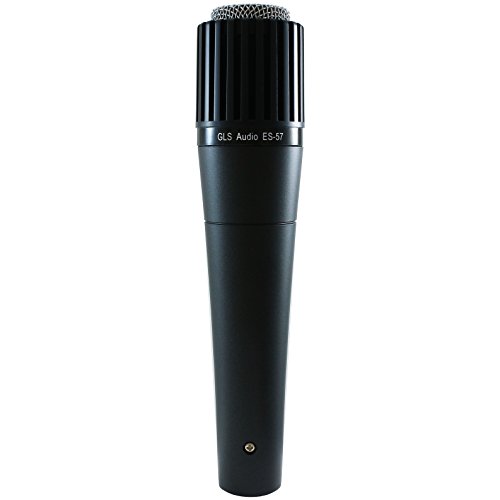
- Cardioid mic for instruments and vocals
- Supports XLR and 1/4-inch connections
- Includes mic clip for mounting
Best For: Budget-friendly multi-use setups and rehearsal rigs
Studio-Style Vocal Pick
Wm58 Classic Dynamic Instrument Microphone

- Supercardioid pickup pattern
- Vocal-tuned response with bass rolloff
- Metal body, XLR connection
Best For: Players and singers who want a focused handheld dynamic mic
Rack-Ready Amp Mic
Sennheiser E609 Silver Guitar Mic Bundle
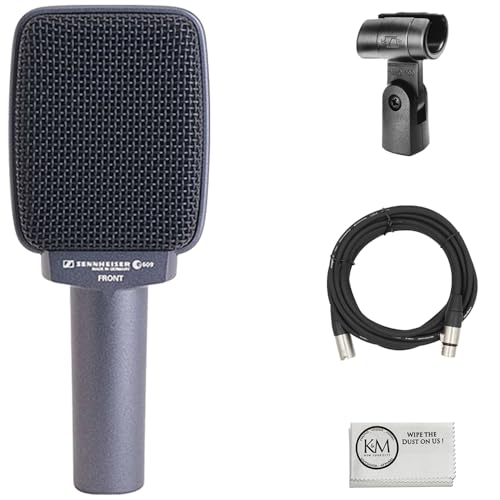
- Built for guitar amps and drums
- Super-cardioid pattern for isolation
- Includes 20ft XLR cable and cloth
Best For: Guitar amp and drum miking with a durable ready-made bundle
Budget Handheld Instrument Mic

- Unidirectional pattern for focused pickup
- Works for instruments, drums, percussion, and vocals
- Metal body with XLR connection
Best For: Budget-minded users needing a versatile handheld dynamic mic
Studio & Stage Standard – Shure SM57 Dynamic Instrument Mic
If you’re comparing dynamic microphones for instruments, the Shure SM57 is the classic pick for clean close-miking on guitar amps, snare drums, brass, and other sources that need definition without excess room noise. Its contoured response and presence boost help instruments cut through in both live sound and recording setups.
Best For: Close-miking guitar cabinets, snare, brass, percussion, and general studio/stage instrument work.
Pros:
- Contoured frequency response adds attack, detail, and clarity.
- Cardioid pattern helps reduce bleed and background noise.
- Handles a wide range of instruments, from amps to woodwinds.
- Legendary rugged build for frequent transport and demanding use.
Cons:
- Wired XLR design only.
- Not a specialty mic for one narrow instrument type.
For players and engineers who want one reliable workhorse, the SM57 remains a practical all-around option with proven results on stage and in the studio.
Amp-Focused Specialist – Sennheiser e 609 Silver
Sennheiser Professional e 609 Silver Super-Cardioid Instrument Microphone,Wired, Wireless
Check Price On AmazonAmong dynamic microphones for instruments, the Sennheiser e 609 Silver is built for targeted guitar amp capture and other loud sources. Its super-cardioid pattern and 40 Hz–18 kHz response make it a focused choice when you want controlled pickup near the speaker.
Best For: Guitar amplifier miking, especially when you want a tight, focused sound in live or recording setups.
Pros:
- Super-cardioid pickup helps isolate the source.
- Tailored for guitar amps with a wide 40 Hz–18 kHz response.
- Compact 6.43 oz design is easy to position near a speaker.
- Includes pouch and carries a 10-year parts and labor warranty.
Cons:
- Most useful for amp-focused applications rather than general-purpose use.
- Wired XLR connection only.
If your priority is a microphone that stays out of the way and focuses on the amp, the e 609 Silver is a strong instrument-specific option.
Budget-Friendly Utility – Mackie EM-89D Dynamic Mic
If you want dynamic microphones for instruments without spending on a specialty model, the Mackie EM-89D offers a practical cardioid option for live sound and studio recording. It’s positioned as a professional-quality dynamic microphone with a rugged build and enough flexibility for vocals and instruments alike.
Best For: Players who want an affordable all-purpose dynamic mic for instruments, vocals, and live sound.
Pros:
- Cardioid polar pattern helps with controlled pickup.
- Rugged construction suits live and studio use.
- Includes mic clip, XLR cable, and zipper pouch.
- Suitable for vocals and instruments in one package.
Cons:
- Not as specialized as amp- or drum-focused instrument mics.
- Handheld form factor may be less ideal for fixed close-miking.
The EM-89D is a straightforward choice if you need one affordable dynamic mic that can handle general instrument duties and still come ready with useful accessories.
Low-Profile Amp Clip Pick – Superlux PRA628MKII Instrument Mic
For dynamic microphones for instruments that are aimed squarely at guitar cabinets, the Superlux PRA628MKII stands out with a compact, low-profile design and a super-cardioid pickup pattern. Its 80 Hz–18 kHz response and 150 dB SPL handling make it well suited to loud amps and other high-volume sources.
Best For: Close miking guitar and bass cabinets, especially in live venues or studio sessions where placement control matters.
Pros:
- Optimized for guitar amplifiers with an 80 Hz–18 kHz response.
- Super-cardioid pattern helps reject background noise and feedback.
- Handles up to 150 dB SPL without distortion.
- Includes gooseneck clamp, mic clip, and pouch.
Cons:
- XLR cable is not included.
- Most useful for amp and cabinet miking rather than broad general use.
If you want a purpose-built cabinet mic with flexible mounting and strong rejection, the PRA628MKII is a practical fit for loud instrument rigs.
Compact Drum Specialist – Sennheiser E 604
Sennheiser Professional E 604 Compact Dynamic Cardioid Instrument Microphone,Charcoal
Check Price On AmazonIf you’re comparing dynamic microphones for instruments, the Sennheiser E 604 is built for close miking where compact size and high SPL handling matter. It is optimized for drum kits and percussion, but it also performs well on brass and woodwind, with low handling noise and a clear, low-distortion sound.
Best For: Drummers and instrumentalists who want a compact mic for drums, percussion, brass, or woodwind.
Pros:
- Handles very high sound pressure levels, rated in excess of 160 dB
- Compact design makes positioning easier on drum kits and other instruments
- Low sensitivity to impact and handling noise
- Balanced, clear sound with low distortion
Cons:
- Wired XLR mic only, so it needs compatible audio gear
- Designed mainly for instrument miking rather than general-purpose use
Overall, the E 604 is a practical choice when you need a small dynamic mic that can stay out of the way while still handling loud sources cleanly. Its drum-first design is the standout, but its brass and woodwind support adds useful flexibility.
Flexible Amp Mic – Behringer B 906
Among dynamic microphones for instruments, the Behringer B 906 is aimed at guitar amps, percussion, brass, and even vocals. Its super-cardioid pattern helps reduce background noise and feedback, while the switchable low-cut, flat, and high-frequency boost options let you tailor the sound to the source.
Best For: Guitar cabinets and players who want a flexible dynamic mic with quick tonal shaping.
Pros:
- Frequency response is designed for guitar amplifiers, percussion, and brass
- Super-cardioid pickup helps minimize noise and feedback
- Switchable low-cut, flat, and high-frequency boost settings
- High output helps the mic cut through the mix
Cons:
- Wired XLR connection only
- Primarily built around instrument and live applications, not studio versatility
The B 906 is a strong fit if you want one dynamic mic that can adapt to different instruments without a lot of setup fuss. Its onboard voicing options make it especially useful for live players who need dependable tone control.
Budget XLR Workhorse – GLS Audio ES-57
If you need dynamic microphones for instruments that can also handle vocals, the GLS Audio ES-57 is a straightforward wired option with a cardioid pickup pattern. It is positioned for drums, percussion, studio recording, rehearsals, and live performance, with balanced capture and support for both Lo-Z XLR and Hi-Z 1/4-inch connections.
Best For: Musicians and engineers who want an affordable, versatile wired mic for instruments, percussion, and vocals.
Pros:
- Cardioid pattern helps reduce off-axis sound
- Works with both Lo-Z XLR 3-pin and Hi-Z 1/4-inch connections
- Suitable for drums, percussion, studio, rehearsal, and live use
- Includes a mic clip for mounting
Cons:
- Wired-only design requires compatible audio equipment
- Sound specs are more modest than some higher-end instrument mics
The ES-57 is the most flexible all-rounder in this group, especially if you need one mic that can move between instruments, rehearsal spaces, and simple live setups. Its broad compatibility is a practical advantage for budget-conscious buyers.
Studio-Style Vocal Pick – Wm58 Classic Dynamic Instrument Microphone
If you want dynamic microphones for instruments that can also pull double duty on vocals, the WEYMIC WM58 is a straightforward, classic-style option. Its supercardioid pattern, brightened midrange, and bass rolloff control are aimed at keeping the sound focused while reducing proximity effect, making it a practical choice for simple live setups.
Best For: Players and singers who want a metal-bodied, XLR dynamic mic with a focused supercardioid pickup.
Pros:
- Supercardioid pattern helps isolate the source.
- Frequency response is tailored for vocals with brightened mids and bass rolloff control.
- Metal body keeps the mic lightweight at 0.23 kg.
- XLR connection fits standard stage and studio gear.
Cons:
- Does not include a cable.
- More vocal-oriented than some instrument-specific mics.
This is a simple, no-frills dynamic microphone for instruments or vocals when you want a classic handheld format and a focused pickup pattern. It is best suited to users who already have XLR accessories and want a mic with basic, practical tuning rather than extra features.
Rack-Ready Amp Mic – Sennheiser E609 Silver Guitar Mic Bundle
Sennheiser E609 Silver Instrument Microphone Bundle with 20ft XLR Cable + Cleaning Cloth (3 Items)
Check Price On AmazonThe Sennheiser E609 Silver is a strong pick if you need dynamic microphones for instruments, especially guitar amps and drums. Its super-cardioid pattern is designed for isolation, and the rugged metal construction makes it a practical live-use microphone when stage noise is a concern.
Best For: Guitar amp and drum miking, plus anyone who wants a rugged XLR bundle with cable included.
Pros:
- Super-cardioid pickup helps isolate the instrument from nearby sound.
- Designed for instrument miking, particularly guitar amps and drums.
- Rugged metal and alloy steel construction.
- Bundle includes a 20ft XLR cable and microfiber cleaning cloth.
Cons:
- Bundle is more specialized for instruments than general-purpose use.
- Only one mic is included.
For players and engineers who want a ready-to-go instrument mic, this bundle adds useful accessories without changing the core design. The E609 Silver focuses on isolation, durability, and practical stage performance, which makes it a dependable choice for amps and drum setups.
Budget Handheld Instrument Mic – Wm57 Classic Dynamic Mic
If you need dynamic microphones for instruments on a budget, the WEYMIC WM57 offers a classic handheld design with a unidirectional pattern. It is positioned as a professional dynamic mic for instruments, drums, percussion, and vocals, with XLR connectivity and a metal build for simple stage use.
Best For: Budget-minded users who want a general-purpose handheld mic for instruments, drums, percussion, and vocals.
Pros:
- Unidirectional pattern helps keep the pickup focused.
- Listed for instruments, drums, percussion, and vocals.
- Metal construction gives it a durable, straightforward feel.
- XLR connection works with standard pro audio setups.
Cons:
- Does not include a cable.
- Specifications are fairly basic compared with more specialized instrument mics.
The WM57 is a practical catch-all option if you want one handheld mic for multiple uses and do not need a highly specialized instrument model. Its simple build and focused pickup make it suitable for entry-level live applications where versatility matters more than extra features.
How We Picked These Dynamic Microphones for Instruments
We focused on models commonly used for real instrument duties, not just general-purpose mics. Priority went to proven stage and studio designs with durable construction, useful pickup patterns, and sensible placement options for loud sources like guitar amps and drums. We also weighed compatibility with typical XLR setups, included accessories, and overall value.
Quick Comparison
For most buyers, the right choice depends on the source. Classic side-address dynamic mics are often best for snare, guitar cabs, and brass, while compact body-style models can be easier to position around toms and tight drum setups. If you need one mic to cover multiple jobs, look for a versatile cardioid design with solid off-axis rejection.
Key Buying Factors for Dynamic Microphones for Instruments
Polar Pattern and Rejection
Cardioid and super-cardioid patterns help isolate the instrument and reduce room noise, monitor spill, and bleed from other instruments. That matters a lot on loud stages and in untreated rooms.
Frequency Response and Midrange Shape
Different instruments benefit from different voicings. Guitar cabinets often do well with a focused midrange, while drums may need a tighter low-end response and enough presence to cut through a mix. Don’t chase the widest frequency range; look for a response that suits your source.
Build Quality and Mounting
Because Dynamic Microphones for Instruments are often placed close to loud sound sources, rugged metal bodies, secure grilles, and dependable clips matter. Compact models can also make positioning easier in cramped setups.
Use Case Fit
A mic that excels on guitar amp may not be the best snare choice. Think about your main use: cabinet miking, drum shells, brass, percussion, or a do-it-all utility mic for rehearsals and live gigs.
Who Should Buy Which Dynamic Microphones for Instruments?
If you need a dependable all-rounder for amps and general instrument capture, choose a versatile cardioid dynamic. Players recording drums or working with tight stage setups should prioritize compact models with strong isolation and easy placement. Budget shoppers can still find solid options, but it pays to confirm that the mic is intended for instrument use rather than only vocals. If you’re building a small live rig or home studio, start with one strong utility mic, then add specialized models as your needs grow.