The best drawing tablets with tilt support make shading, angled strokes, and expressive linework feel more natural by responding to the way you hold the stylus. This roundup includes compact screenless tablets, pen displays, and standalone models for different budgets and workflows.
When choosing, consider more than pressure sensitivity. Screen size, shortcut controls, display quality, compatibility, portability, and whether you need a computer-free setup can have a bigger effect on everyday use.
Best 10 Drawing Tablets with Tilt Support Picks for 2026
Best Screen-Based Value

- 11.6-inch fully laminated anti-glare display
- 60° tilt support with 8,192 pressure levels
- Red dial and 8 customizable shortcut keys
Best For: Computer-connected drawing, editing, and digital annotation
Best Screenless Workflow

- 9-by-5-inch pen tablet with 8,192 pressure levels
- 60° tilt support with battery-free stylus
- Scroll wheel plus customizable shortcut keys
Best For: Portable computer- or Android-connected creative work
Best Advanced Pen Display

- 13.3-inch fully laminated 1080p display
- 16K pressure sensitivity with battery-free stylus
- Pen-display and pen-tablet modes with stand
Best For: Detailed illustration, animation, and color-focused design
Best Standalone Option

- Standalone Android 14 drawing tablet
- 16K stylus with 60° tilt recognition
- 12.2-inch 2160×1440 paper-like display
Best For: Portable drawing and creative apps without a computer
Best Large-Screen Value

- 15.6-inch Full HD IPS display
- Battery-free pen with 60° tilt support
- 10 customizable keys and adjustable stand
Best For: Artists wanting a spacious, adjustable pen display
Best Workflow Controls

- Full-laminated 15.6-inch Full HD display
- 16,384 pressure levels with tilt support
- Red dial and 8 customizable shortcut keys
Best For: Creators who want extensive on-device workflow controls
Best Compact Option
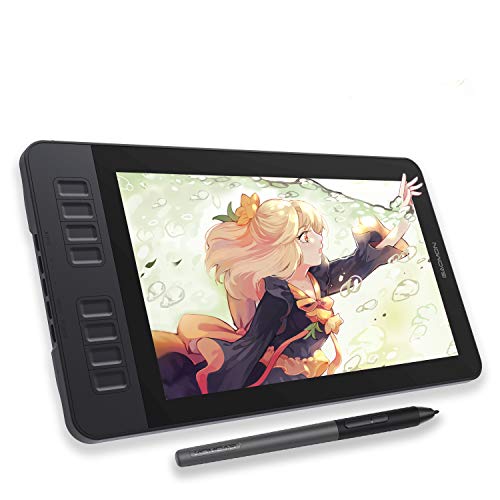
- 11.6-inch Full HD IPS display with matte film
- Battery-free pen with 8,192 levels and tilt
- 8 programmable keys plus 2 pen buttons
Best For: Beginners and students seeking a compact pen display
Best with Extra Features

- 16,384 pressure levels with 60° tilt support
- Portable 6.4-by-4-inch active area
- Eight customizable shortcut keys
Best For: Beginners, students, and portable computer-based drawing
Best Screened Value

- 13.3-inch full-laminated 1080p display
- 60° tilt support and 8,192 pressure levels
- 120% sRGB color gamut and foldable stand
Best For: Artists who want direct on-screen drawing
Best Simple Pick

- Standalone Android 14 drawing and note-taking tablet
- 10.95-inch anti-glare paper-like display
- 16,384 pressure levels with 90Hz refresh rate
Best For: Mobile sketching, notes, annotation, and app-based creativity
Best Screen-Based Value – XP-Pen Artist 12 Pro
The XP-Pen Artist 12 Pro is a practical choice among drawing tablets with tilt support for artists who want to draw directly on a compact screen. Its fully laminated 11.6-inch display, battery-free stylus, and customizable controls provide a focused setup for illustration, editing, and digital annotation.
Best For: Artists, students, and remote educators who want an affordable pen display for computer-connected creative work.
Pros:
- 60-degree tilt support and 8,192 pressure levels help produce natural shading and line variation.
- Fully laminated, anti-glare display minimizes parallax and harsh reflections.
- Red dial and eight customizable shortcut keys can speed up common workflows.
Cons:
- It is a monitor-style tablet and must connect to a computer or compatible host device.
- The 11.6-inch display may feel compact for users who prefer a larger canvas.
Choose this model if direct-on-screen drawing and practical shortcut controls matter more than standalone portability. Its broad operating-system compatibility also makes it flexible for common creative software setups.
Best Screenless Workflow – Huion Inspiroy 2 Medium
The Huion Inspiroy 2 Medium is a screenless option for shoppers comparing drawing tablets with tilt support. Its 9-by-5-inch working area, battery-free 60-degree tilt stylus, scroll wheel, and programmable keys are suited to drawing while viewing the canvas on a computer or mobile device.
Best For: Artists, designers, and students who prefer a lightweight pen pad with extensive shortcut controls.
Pros:
- PenTech 3.0, 8,192 pressure levels, and 60-degree tilt support offer precise stroke control.
- Scroll wheel, eight press keys, and three group keys support customized workflows.
- Works with Windows, macOS, Linux, ChromeOS, and compatible Android devices.
Cons:
- It has no built-in display, so you draw while looking at a connected screen.
- It is not standalone and requires a computer, laptop, or smartphone connection.
This is a strong fit when portability, shortcut access, and mobile compatibility are priorities. The medium active area balances desk space with enough room for general illustration and editing tasks.
Best Advanced Pen Display – XP-Pen Artist 13.3 Pro V2
The XP-Pen Artist 13.3 Pro V2 targets creators who want a larger, color-focused pen display with advanced pen performance. For buyers seeking drawing tablets with tilt support, it combines a fully laminated 13.3-inch screen, a 16K-pressure battery-free stylus, and flexible USB-C connectivity.
Best For: Illustrators, animators, manga artists, and designers seeking a feature-rich connected display.
Pros:
- 16,384 pressure levels and a battery-free stylus are designed for detailed line work.
- Fully laminated 1080p display offers reduced parallax and wide stated color coverage.
- Dual USB-C options, pen-display and pen-tablet modes, and an included foldable stand add flexibility.
- Red dial and eight shortcut keys support efficient software workflows.
Cons:
- It is not standalone and requires a compatible computer or laptop.
- Some connection setups may require a separate 3-in-1 cable.
Consider this model if you want advanced pen sensitivity without giving up a direct-on-screen workflow. Its included stand and dual operating modes make it adaptable for extended sessions and different workspace preferences.
Best Standalone Option – XP-Pen Magic Drawing Pad
The XP-Pen Magic Drawing Pad stands apart from other drawing tablets with tilt support because it works without a computer. Its Android 14 platform, 12.2-inch paper-like display, 16K-pressure stylus, and 13-hour stated battery life make it a portable all-in-one option for drawing and general tablet use.
Best For: Mobile artists and students who want to sketch, paint, and use creative apps away from a desktop.
Pros:
- Standalone Android 14 design needs no computer for drawing.
- 16,384 pressure levels and 60-degree tilt recognition support nuanced pen work.
- 2,160-by-1,440 display, AG-etched surface, and 97% sRGB coverage provide a paper-like color workspace.
- 8GB RAM, 256GB storage, expandable storage, and an 8,000mAh battery support mobile use.
Cons:
- Its Android ecosystem may not replace a desktop workflow for every creative application.
- The 12.2-inch screen and 590g weight are portable but still larger than a basic pen pad.
This is the clearest choice for creators who value mobility and independence from a computer. It also functions as a general Android tablet for reading, media, photography, and multitasking between drawing sessions.
Best Large-Screen Value – GAOMON PD1561
The GAOMON PD1561 is a practical choice for shoppers comparing drawing tablets with tilt support and wanting a spacious 15.6-inch display. Its Full HD IPS screen, battery-free pen, adjustable stand, and programmable shortcut keys suit digital art, design, annotation, and online teaching.
Best For: Artists and designers who want a large, direct-on-screen workspace with flexible positioning.
Pros:
- 15.6-inch Full HD IPS display with 178-degree viewing angle.
- Battery-free pen provides 8,192 pressure levels and 60-degree tilt support.
- Ten customizable shortcut keys and an adjustable stand support an efficient workflow.
- Includes a pre-applied protective film, pen holder, eight replacement nibs, and glove.
Cons:
- Must be connected to a Windows or Mac computer; it is not standalone.
- Requires HDMI and USB connectivity, or an additional adapter when needed.
Choose the PD1561 if screen size and a generous set of physical controls matter more than portability. The included film and adjustable stand add useful convenience for longer drawing sessions.
Best Workflow Controls – XPPen Artist 15.6 Pro
The XPPen Artist 15.6 Pro stands out among drawing tablets with tilt support for its full-laminated display, high pressure sensitivity, and workflow-focused controls. The 15.6-inch Full HD screen, red dial, and eight customizable keys are designed to make drawing and editing more efficient.
Best For: Digital artists and teachers who value shortcut customization, a dial control, and vivid on-screen detail.
Pros:
- 15.6-inch Full HD IPS display with full-laminated construction and 178-degree viewing angle.
- Battery-free stylus offers up to 16,384 pressure levels and tilt support.
- Eight customizable shortcut keys plus a programmable red dial streamline navigation.
- Reported 120% sRGB color coverage and compatibility with Windows, Mac, Chrome OS, and Linux.
Cons:
- Requires connection to a computer or laptop and is not a standalone tablet.
- Its larger 15.6-inch format may be less convenient for users prioritizing portability.
The Artist 15.6 Pro is a strong fit when control layout matters as much as pen performance. Its dial and full-laminated screen give it a workflow-oriented design for drawing, photo editing, presentations, and remote work.
Best Compact Option – GAOMON PD1161
The GAOMON PD1161 is a compact option for shoppers seeking drawing tablets with tilt support without moving up to a 15.6-inch display. Its 11.6-inch Full HD IPS screen, battery-free stylus, matte film, and programmable controls make it suitable for drawing, design, note-taking, and teaching.
Best For: Beginners, students, and artists who prefer a smaller direct-on-screen tablet for creative or educational work.
Pros:
- 11.6-inch Full HD IPS screen with pre-installed matte film for reduced glare and a paper-like feel.
- Battery-free AP50 stylus includes 8,192 pressure levels and tilt functionality.
- Eight side keys and two pen buttons can be customized through the driver.
- Supports Windows and macOS and works with software such as Krita, Photoshop, Blender, and SAI.
Cons:
- Must connect to a Windows or Mac computer and is not standalone.
- Computer needs available HDMI and USB ports, or an appropriate converter.
The PD1161 makes sense when desk space, a lower-profile setup, or a more approachable screen size is important. It retains core pen-display features while adding useful controls for creative work and online collaboration.
Best with Extra Features – XP-Pen IT640 Drawing Tablet
For shoppers seeking drawing tablets with tilt support, the XP-Pen IT640 is a compact, screenless option with a battery-free pen, 16,384 pressure levels, and 60° tilt recognition. Its portable design and Android compatibility make it practical for beginners, students, and artists who already work from a computer or compatible phone.
Best For: Beginners, students, mobile sketching, photo editing, and OSU gaming.
Pros:
- Battery-free stylus offers 16,384 pressure levels and 60° tilt support.
- Includes an OTG adapter for compatible Android devices.
- Eight programmable shortcut keys can speed up common workflows.
- Supports Windows, macOS, Android, Chrome OS, Harmony OS, and Linux.
Cons:
- It is not standalone and must connect to a computer or compatible device.
- The compact 6.4-by-4-inch active area may feel limited for broad gestures.
The IT640 is a sensible entry-level choice when portability, shortcut keys, and strong pen sensitivity matter more than having an integrated display.
Best Screened Value – GAOMON PD1320 Pen Display
The GAOMON PD1320 is one of the more immersive drawing tablets with tilt support because it places a 13.3-inch full-laminated display beneath the pen. Its 1920×1080 resolution, 120% sRGB gamut, and 60° tilt support are suited to artists who want to draw directly on the image while working from a computer.
Best For: Digital artists, illustrators, designers, students, and remote annotation.
Pros:
- Full lamination helps reduce perceived parallax between pen and image.
- 13.3-inch IPS display provides a direct drawing surface with 120% sRGB coverage.
- Battery-free pen includes 8,192 pressure levels and 60° tilt support.
- Lightweight, portable construction includes a foldable leather stand.
Cons:
- It requires a computer and cable connections rather than operating independently.
- Android support depends on a compatible device with the required display mode.
- A full-featured USB-C cable and extra power may be needed for Android use.
Choose the PD1320 if a built-in screen and reduced parallax are priorities. It offers a more natural on-screen workflow than a traditional screenless tablet, while remaining relatively portable.
Best Simple Pick – XP-Pen Magic Note Pad
Unlike computer-dependent drawing tablets with tilt support, the XP-Pen Magic Note Pad is a standalone Android 14 device. It combines a 10.95-inch anti-glare X-Paper display, a 90Hz refresh rate, and a 16,384-pressure-level stylus for sketching, handwritten notes, and app-based creative work without a separate computer.
Best For: Artists, students, professionals, note-taking, PDF annotation, and mobile creativity.
Pros:
- Standalone Android 14 tablet works without a connected computer.
- X-Paper display with AG nano-etching creates a paper-like drawing texture.
- Stylus provides 16,384 pressure levels and does not require charging.
- Three color modes, Google Play access, and a pre-installed notes app support varied tasks.
Cons:
- It is substantially heavier than a basic screenless drawing tablet at 495g listed weight and a 1.61kg detail entry.
- The supplied notes do not specify a dedicated desktop operating-system workflow.
- Its Android tablet format may be more than needed for users who only draw at a desk.
The Magic Note Pad is the most flexible pick here for drawing on the go. Its standalone design, paper-like surface, and Android apps make it better suited to mixed note-taking and creative use than conventional tethered tablets.
How We Picked the Best Drawing Tablets with Tilt Support
We selected these models based on their support for stylus tilt, drawing surface or display size, shortcut controls, pressure sensitivity, connection options, and suitability for common creative software. The list covers both screenless graphics tablets and pen displays, plus standalone tablets for artists who want to sketch without a connected computer.
We also considered practical differences such as battery-free pens, laminated screens, included stands or accessories, operating-system compatibility, and portability. Specifications can vary by configuration, so confirm the seller’s current listing before buying.
Quick Comparison
| Type | Best For | Main Advantage | Potential Trade-Off |
|---|---|---|---|
| Screenless tablet | Budget-conscious artists and desk setups | Usually affordable, compact, and durable | Requires looking at a separate monitor |
| Pen display | Illustrators, designers, and digital painters | Draw directly on the artwork | Needs more desk space and cable management |
| Standalone tablet | Portable sketching and note-taking | Works without a computer | Typically costs more and may use a more limited app ecosystem |
Key Buying Factors for Drawing Tablets with Tilt Support
Pen and Tilt Performance
Tilt support is most useful in applications that recognize angled input for shading, calligraphic strokes, or brush-direction changes. A battery-free stylus can reduce charging interruptions. Pressure sensitivity matters too, but software calibration and brush-engine support often affect the result as much as the advertised level.
Screen Size and Surface Feel
Compact 11- to 13-inch displays are easier to fit into small workspaces, while 15.6-inch models provide more room for panels and broad gestures. A fully laminated screen can reduce the visible gap between the pen tip and cursor. Screenless models may offer better value if you already have a good monitor.
Controls, Connectivity, and Compatibility
Shortcut keys, a scroll wheel, or a dial can speed up zooming and brush-size changes. Check USB requirements, included cables, driver support, and compatibility with your operating system and preferred apps. Chromebook and Android support may require specific cable or software arrangements.
Color and Portability
For painting, review color coverage, brightness, and calibration options rather than relying on resolution alone. If you travel frequently, compare weight, cable count, stand requirements, and whether the model is genuinely standalone.
Who Should Buy Which Drawing Tablets with Tilt Support?
- Choose a screenless tablet if you want the lowest-cost path to tilt-enabled drawing and already work at a desktop monitor.
- Choose a compact pen display if direct-on-screen drawing is important but desk space is limited.
- Choose a 15.6-inch pen display if you illustrate, paint, or edit for long sessions and want a larger canvas.
- Choose a standalone drawing tablet if portability, computer-free sketching, and note-taking matter more than maximum desktop-app flexibility.
For most buyers, the right choice comes down to workflow first: decide whether you want to draw on the screen, beside it, or away from a computer entirely, then match the size and controls to your workspace.