Choosing the right DJ mixer or controller depends on how you plan to perform, which software you use, and how much room you need to grow. This roundup compares 10 standout options, from compact beginner controllers to feature-rich four-channel systems.
Use the guide below to narrow the list by layout, connectivity, portability, software support, and performance features before you buy.
Best 10 Dj Mixer Picks for 2026
Versatile Workhorse
Numark M6 USB 4-Channel DJ Mixer

- Four channels with dedicated EQ and cue controls
- USB mixing and recording for Mac and PC
- Broad inputs and outputs for event or club setups
Best For: DJs needing flexible four-channel control and connectivity
Battle-Style Starter
Pioneer DJ DDJ-REV1 Serato Controller

- Open battle-style layout for scratch practice
- Serato DJ Lite included for Mac and PC
- Compact, affordable two-deck beginner design
Best For: Beginners focused on scratching and hip-hop mixing
Light-Up Beginner Pick
Numark Party Mix II DJ Controller
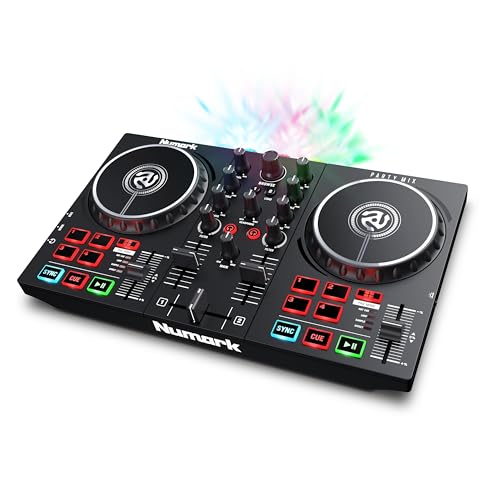
- Built-in DJ lights sync with the mix
- Two decks with jog wheels and performance pads
- Lightweight USB setup with Serato DJ Lite
Best For: First-time DJs and casual party mixing
Standalone Performance Hub
Pioneer DJ XDJ-RX3 All-In-One DJ System

- Standalone USB playback without a laptop
- 10.1-inch touchscreen and CDJ-style workflow
- Effects and 16 pads for expressive performances
Best For: DJs wanting a gig-ready standalone two-channel system
Best Beginner DJ Mixer Controller
Hercules DJControl Inpulse 500

- Two-deck controller for Serato and DJUCED
- Built-in audio interface with input mixer
- Beatmatch Guide, RGB pads, and large jog wheels
Best For: Beginner and intermediate DJs learning hands-on mixing
Best Pro-Style DJ Mixer Controller

- Four-channel club-standard performance layout
- Track Separation for live mashups
- Rekordbox, Serato DJ Pro, and DMX support
Best For: Experienced DJs and mobile performers needing advanced control
Best Portable DJ Mixer for Parties

- Compact 2.42-pound USB-powered design
- Bluetooth MIDI and included DJ software
- Built-in lights, pads, and beginner timing aids
Best For: Casual parties and beginners mixing from mobile devices
Best All-Rounder
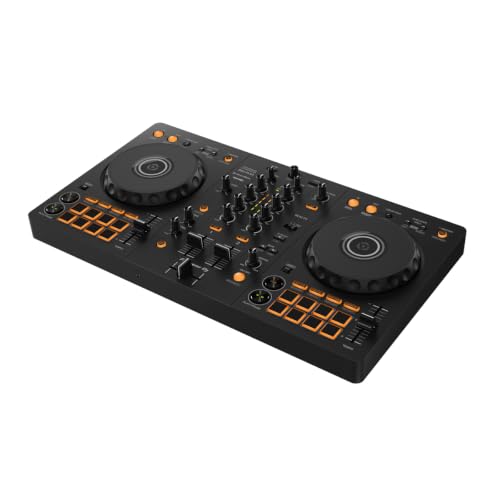
- Smart Fader simplifies beatmatching
- 16 performance pads for creative control
- USB and Bluetooth device compatibility
Best For: Beginners and improvers seeking a versatile, streaming-ready controller
Best Portable Starter
AlphaTheta Pioneer DJ DDJ-FLX2

- USB-C bus-powered compact design
- Smart Fader helps automate mixing
- Supports mobile music and headphone cueing
Best For: New DJs who prioritize portability and simple setup
Best White Finish

- Distinctive white two-channel design
- Smart Fader and Smart CFX included
- 16 pads plus livestream-ready connectivity
Best For: Learners wanting a capable controller with a white finish
Versatile Workhorse – Numark M6 USB 4-Channel DJ Mixer
The Numark M6 USB is a practical dj mixer for DJs who need four channels, broad connectivity, and straightforward control for settings ranging from parties and weddings to club-style setups. Its USB audio interface also supports mixing from a computer or recording a set.
Best For: DJs who want a full-featured four-channel mixer for home practice, events, or club-oriented setups.
Pros:
- Four channels with dedicated level faders, cue controls, and three-band EQ.
- Multiple phono, line, and microphone inputs plus master, record, booth, and headphone outputs.
- Plug-and-play USB connectivity for Mac and PC mixing or recording.
- Replaceable, slope-adjustable crossfader and LED monitoring.
Cons:
- Its corded, 9-pound design is less compact than entry-level controllers.
- It is a traditional mixer rather than an all-in-one deck-and-software controller.
The M6 USB stands out when flexible inputs and hands-on channel control matter more than portability. It is a strong choice for users building a conventional DJ setup around separate decks or audio sources.
Battle-Style Starter – Pioneer DJ DDJ-REV1 Serato Controller
The Pioneer DJ DDJ-REV1 is a compact dj mixer-style controller designed for beginners who want to learn scratching and battle techniques. Its open layout, tall pitch faders, and included Serato DJ Lite software make it easy to begin with a computer.
Best For: New hip-hop, scratch, and open-format DJs seeking an affordable two-deck controller.
Pros:
- Battle-style layout mirrors a classic turntable and mixer arrangement.
- Tall pitch faders and accessible effect controls support scratch techniques.
- Serato DJ Lite unlocks immediately for Mac and PC performance.
- Compact five-pound design is easy to fit into a beginner setup.
Cons:
- It is a two-deck controller rather than a standalone mixer.
- Computer connectivity is central to its operation.
The DDJ-REV1 is focused rather than feature-heavy, which can benefit beginners. Choose it when scratch-oriented control and a low-cost path into Serato are higher priorities than extensive standalone connectivity.
Light-Up Beginner Pick – Numark Party Mix II DJ Controller
The Numark Party Mix II is an approachable dj mixer-style controller that combines two decks, an integrated audio interface, and built-in party lights. Its plug-and-play USB connection, performance pads, and simple controls make it suited to first-time DJs using a laptop.
Best For: Beginners and casual party DJs who want a lightweight controller with visual lighting effects.
Pros:
- Built-in LED light show syncs with the DJ mix.
- Two decks include jog wheels, performance pads, filters, pitch sliders, and library controls.
- Serato DJ Lite and USB connectivity provide a straightforward starting system.
- Dedicated headphone and 1/8-inch main outputs support basic monitoring and speakers.
Cons:
- Two-band EQ and compact controls are aimed at beginner use.
- Its plastic construction and 1.76-pound weight suggest a lightweight setup rather than a club-focused build.
The Party Mix II prioritizes ease of use and fun over advanced mixing depth. It is a sensible entry point for home sessions, small casual gatherings, and anyone who wants integrated lights without adding separate equipment.
Standalone Performance Hub – Pioneer DJ XDJ-RX3 All-In-One DJ System
The Pioneer DJ XDJ-RX3 is an all-in-one dj mixer and performance system for DJs who want to run prepared rekordbox sets from USB drives without a laptop. Its 10.1-inch touchscreen, club-style layout, effects, and pro outputs make it suitable for home, mobile, and small-venue performance.
Best For: DJs seeking a standalone two-channel system with a club-oriented workflow and room to perform live.
Pros:
- Runs prepared rekordbox sets directly from USB drives.
- 10.1-inch touchscreen and CDJ-style layout provide a familiar performance workflow.
- Includes Beat FX, Sound Color FX, and 16 performance pads.
- Supports rekordbox Performance mode and Serato DJ Pro computer control.
Cons:
- At 21 pounds, it is substantially less portable than compact beginner controllers.
- Its two-channel configuration may not suit DJs needing four-channel mixing.
The XDJ-RX3 is designed for serious hands-on performance rather than basic practice. Its standalone USB operation and club-style controls make it a compelling fit for DJs preparing for mobile or small-venue work.
Best Beginner DJ Mixer Controller – Hercules DJControl Inpulse 500
The Hercules DJControl Inpulse 500 is a practical two-deck DJ mixer controller for learning and casual performance with Serato or DJUCED. It combines a built-in audio interface, hardware input mixer, large jog wheels, and guided beatmatching features in a sturdy desktop-friendly design.
Best For: Beginner and intermediate DJs who want a two-deck controller with helpful learning features and flexible software support.
Pros:
- Built-in audio interface and hardware input mixer support a straightforward setup.
- Beatmatch Guide, large touch-detecting jog wheels, and vinyl functionality aid hands-on mixing.
- Sixteen backlit RGB pads, loop controls, and filter/FX controls support creative transitions.
- Retractable feet and a metal backing plate add practical protection and stability.
Cons:
- Its two-channel layout is less suited to DJs who need a four-deck workflow.
- At 11.6 pounds, it is less lightweight than compact beginner controllers.
This DJ mixer controller offers a well-rounded path from basic beatmatching to more expressive performance. Choose it if its guided controls and sturdy design matter more than maximum portability or channel count.
Best Pro-Style DJ Mixer Controller – Pioneer DJ DDJ-FLX10
The Pioneer DJ DDJ-FLX10 is a four-channel DJ mixer controller designed for serious hobbyists, mobile DJs, and professionals. Its club-standard layout, track-separation controls, multicolor jog displays, and support for rekordbox and Serato DJ Pro make it a capable open-format performance tool.
Best For: Experienced DJs who want a four-channel controller with club-style workflow, live mashup tools, and lighting control.
Pros:
- Four-channel layout and professional FX translate well to CDJ and DJM-style booth setups.
- Track Separation enables live manipulation of vocals, drums, and instruments.
- Large jog wheels include multicolor displays for waveforms, artwork, and playback information.
- Works with rekordbox and Serato DJ Pro and includes built-in DMX output for lighting.
Cons:
- Its 14.8-pound build is less convenient for frequent transport than compact controllers.
- The advanced feature set may be more than casual or first-time DJs need.
As a DJ mixer controller, the DDJ-FLX10 is aimed at performance flexibility rather than simplicity. It is a strong fit when four channels, software choice, stems-style control, and a club-oriented layout justify the larger investment and footprint.
Best Portable DJ Mixer for Parties – Numark Party Mix III
The Numark Party Mix III is a compact two-deck DJ mixer controller built for first-time and casual DJs. USB-C power, Bluetooth MIDI, built-in beat-synchronized lights, beginner-oriented timing aids, and included software make it easy to start mixing from a laptop, tablet, or smartphone.
Best For: Casual DJs, parties, and beginners who prioritize portability, simple controls, and built-in visual effects.
Pros:
- Lightweight 2.42-pound design can run from USB power, including a standard power bank.
- Bluetooth MIDI supports wireless DJing from iOS and Android devices with the djay app.
- Built-in beat-synchronized LED lights add an instant party atmosphere.
- Includes eight performance pads per deck, stems controls, EQ, filters, and a built-in audio interface.
Cons:
- Its two-deck layout is less suitable for advanced multi-channel setups.
- The compact chassis may offer less physical workspace than larger controllers.
- Built-in lighting is geared toward casual party use rather than dedicated lighting systems.
This DJ mixer is a convenient entry point for portable, low-complexity performances. Pick it when quick setup, mobile-device compatibility, and party lighting are more important than a full club-style mixer layout.
Best All-Rounder – Pioneer DJ DDJ-FLX4 Graphite
The Pioneer DJ DDJ-FLX4 is a practical dj mixer controller for beginners who want a straightforward layout with room to develop. Its two-channel design, Smart Fader, performance pads, streaming support, and broad device compatibility make it suitable for home practice, casual sets, and livestreaming.
Best For: Beginners and improvers who want a versatile, streaming-ready controller.
Pros:
- Smart Fader adjusts volume, bass, and BPM to simplify mixing.
- Sixteen performance pads support Hot Cues, Pad FX, Beat Jump, and Sampler functions.
- Works with PC, Mac, iPhone, iPad, and Android devices through USB or Bluetooth.
- Includes a built-in sound card and mic input for livestreaming and MC use.
Cons:
- Its two-channel layout is designed for two-deck mixing rather than larger setups.
- At 2.8 kg, it is portable but not the lightest option in this group.
The DDJ-FLX4 is the strongest all-purpose choice here if you want beginner-friendly assistance without giving up useful controls for progressing beyond basic mixes.
Best Portable Starter – AlphaTheta Pioneer DJ DDJ-FLX2
The AlphaTheta Pioneer DJ DDJ-FLX2 is a compact dj mixer controller built for first-time users and casual, mobile mixing. USB-C bus power, Smart Fader, streaming support, and headphone or speaker options make it easy to start from a phone, tablet, or computer.
Best For: New DJs who prioritize portability and simple setup.
Pros:
- Smart Fader automatically matches volume, BPM, and bass while moving the crossfader.
- Runs from USB-C bus power supplied by a phone, tablet, PC, or Mac.
- Supports music from Apple Music, Spotify, Tidal, and other compatible services.
- Can play through a device speaker, external speakers via 3.5 mm output, or headphones.
Cons:
- Its feature set is aimed primarily at beginners rather than advanced performance workflows.
- Software compatibility depends on supported apps such as rekordbox, djay, and Serato DJ Lite.
The DDJ-FLX2 is the easiest pick for grab-and-go practice, especially if you want to learn with music already stored or streamed on a mobile device.
Best White Finish – Pioneer DJ DDJ-FLX4 White
The white Pioneer DJ DDJ-FLX4 delivers the same practical two-channel dj mixer approach as the graphite version, with a distinctive finish for a cleaner-looking setup. Smart Fader, Smart CFX, 16-pad control, multi-device support, and livestream readiness give beginners useful tools to learn and grow.
Best For: Learners and improvers who want a capable controller in a white finish.
Pros:
- Smart Fader and Smart CFX make early mixing and effects work more approachable.
- Two-channel, two-deck control provides a clear path for learning.
- Sixteen performance pads support Hot Cues, Pad FX, Beat Jump, and Sampler functions.
- Supports PC, Mac, iPhone, iPad, and Android use, plus mic and livestream applications.
Cons:
- The two-channel design may feel limiting for DJs who need more decks.
- Its white finish may require more visible care to keep clean than a darker controller.
If appearance matters as much as functionality, this white DDJ-FLX4 offers a distinctive alternative while retaining the beginner-friendly layout and growth potential of the platform.
How We Picked These Dj Mixers
We selected these models for practical differences in layout, price tier, portability, software compatibility, and learning curve. The list includes traditional four-channel mixers, two-deck controllers, all-in-one systems, and beginner-friendly units with built-in lighting. We also considered features that affect real-world use, including performance pads, jog-wheel feel, onboard effects, wireless connectivity, USB-C support, and expandability.
Because a DJ controller combines mixer controls with decks, the term “Dj Mixer” is often used broadly in beginner buying searches. Check the product type carefully: a standalone mixer requires separate media players or turntables, while a controller generally connects to a computer or mobile device.
Quick Comparison
| Best for | Look for | Recommended types |
|---|---|---|
| Learning at home | Simple software setup, clear controls, and two decks | DDJ-FLX2, DDJ-FLX4, Hercules Inpulse 500 |
| Parties and casual use | Built-in lights, portability, and easy connectivity | Numark Party Mix II, Party Mix III |
| Scratch-focused performance | Battle-style layout and responsive platters | DDJ-REV1 |
| Advanced four-deck mixing | Four channels, track separation, and extensive controls | DDJ-FLX10, Numark M6 USB |
| Computer-free performance | Integrated decks, display, and standalone operation | XDJ-RX3 |
Key Buying Factors for a Dj Mixer
Channel Count and Layout
Two channels are enough for learning, beatmatching, and most casual sets. Choose four channels if you expect to layer vocals, instruments, samples, or additional decks. A familiar layout matters as much as the channel count, especially when transitioning between brands.
Software and Device Compatibility
Confirm support for your preferred platform, such as Serato DJ, rekordbox, DJUCED, or a compatible mobile app. Also check whether the required software features are included or unlocked only after registration. USB-C can simplify newer laptop and mobile connections, while Bluetooth is convenient for casual playback but may not suit precision mixing.
Performance Controls and Audio Connections
Look for responsive jog wheels, cue controls, pitch faders, performance pads, filters, and effects that match your style. For a home setup, verify the outputs you need, such as RCA, 1/4-inch, XLR, or a dedicated booth output. Built-in lights are useful for parties but should not replace sound quality or reliable monitoring.
Portability and Upgrade Room
A compact controller is easier to carry and store, while a larger unit offers more hands-on control. Consider whether you will add speakers, headphones, microphones, turntables, or media players later. Buying a model with the right connections now can prevent an expensive replacement.
Who Should Buy Which Dj Mixer?
New DJs: Start with the DDJ-FLX2, DDJ-FLX4, or Hercules Inpulse 500 for approachable layouts and room to build basic mixing skills.
Party hosts: The Numark Party Mix II and Party Mix III prioritize simplicity, portability, and visual effects for casual gatherings.
Scratch and battle-style learners: The DDJ-REV1 is the better fit for users who want a scratch-oriented layout and Serato-focused workflow.
Growing performers: Choose the DDJ-FLX10 for deeper four-channel control and advanced performance features, or the Numark M6 USB if you need a traditional mixer format.
Mobile and standalone performers: The XDJ-RX3 is the strongest choice for DJs who want an integrated system with less dependence on a laptop.