Choosing a director monitor for multi camera studio work comes down to clarity, reliable inputs, and fast switching between sources. The right display helps you keep framing, exposure, and live composition under control.
Below, we’ve focused on monitors that make multi-camera production easier for streaming, broadcast, and small studio setups, with options for portable rigs and larger control stations.
Best 10 Director Monitor for Multi Camera Studio Picks for 2026
Ultra-Bright Multi-View Director Monitor
osee Mega 22S4 21.5" Multi-View Production Monitor
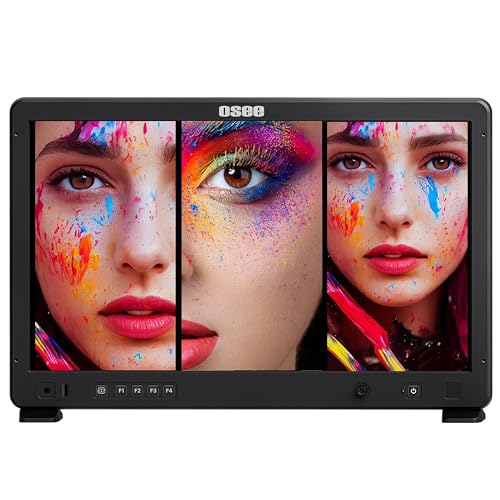
- 1500 nits for daylight viewing
- Single to quad split-screen modes
- 3 HDMI and 3 SDI inputs
Best For: multi-camera directors needing a bright studio or outdoor monitor
Compact Touchscreen Field Monitor
VILTROX DC-550 5.5" Touchscreen Camera Field Monitor
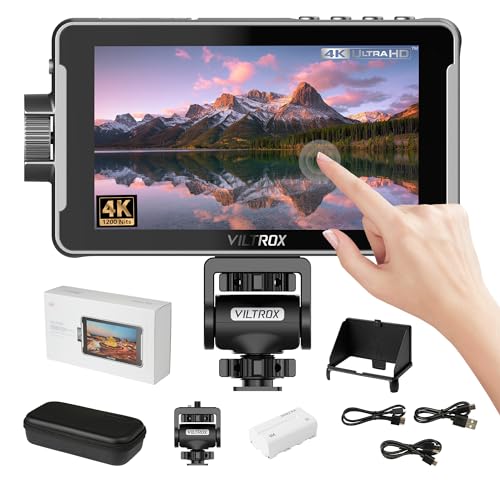
- 1200-nit 5.5-inch touchscreen
- 4K HDMI in/out with 3D LUT support
- Waveform, peaking, and false color tools
Best For: portable camera-side monitoring on compact studio or field rigs
Quad-Split Broadcast Director Display
FEELWORLD ATEM156 15.6" Quad-Split Monitor

- Quad split with 4 HDMI inputs
- Loop outputs for switcher workflows
- VESA mount and focus-assist tools
Best For: HDMI live-streaming setups and switcher monitoring
High-Brightness Multi-Camera Monitor
FEELWORLD M101S 10.1" 1200Nit Multi-View Field Monitor

- 1200-nit 10-bit IPS panel
- Dual/tri/quad split-screen modes
- Dual SDI and dual HDMI 2.0 inputs
Best For: compact multi-camera monitoring with studio and location flexibility
Broadcast Quad-View Pick
SEETEC ATEM156 15.6" IPS Director Monitor

- 4 HDMI inputs and outputs
- Quad, dual, and single view modes
- Peaking, false color, and framing tools
Best For: multi-camera studio switching and live broadcast monitoring
Bright Portable Monitoring Pick
NEEWER F700 7" 2000nit Touch Monitor

- 2000-nit IPS touchscreen
- 4K HDMI loop in and out
- Waveform, LUTs, and focus tools
Best For: portable camera monitoring in bright shooting environments
Affordable Broadcast Multiview Pick
FEELWORLD ATEM156 15.6" Director Monitor
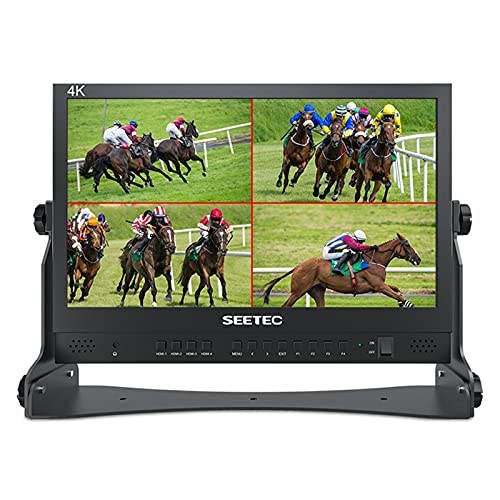
- Four 4K HDMI inputs and outputs
- Quad, dual, and single view modes
- Peaking focus and false color tools
Best For: affordable studio and event multi-camera monitoring
Compact 4-Input Carry-On Monitor
ATEM156-CO 15.6" 4 HDMI In/Out Broadcast

- 4 HDMI inputs and outputs for multi-camera monitoring
- 15.6-inch IPS Full HD panel with 250-nit brightness
- Peaking Focus, False Color, and Pixel to Pixel tools
Best For: Small studio crews and mobile productions needing four-source monitoring
Flexible Multi-Cam Director Display
ATEM156 15.6" Quad Split Broadcast Monitor
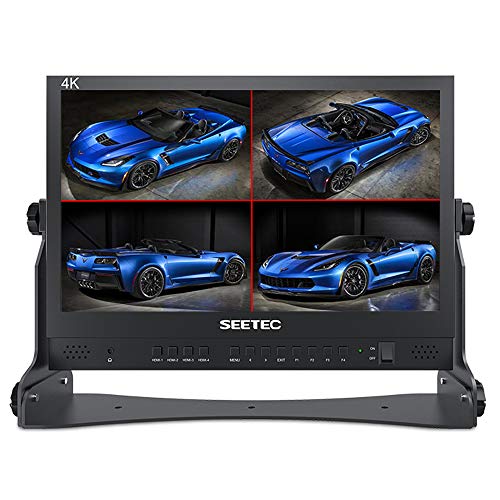
- 4 HDMI inputs and outputs for up to four sources
- Quad, dual, and single view monitoring modes
- Focus-assist tools plus 12V DC and V-mount power
Best For: Crews needing flexible viewing modes for live multi-camera production
Portable Quad-View Director Monitor
ATEM156 15.6" 250nit Live Broadcast Monitor

- 4 HDMI inputs and outputs for quad-view workflows
- 15.6-inch IPS Full HD panel with 170-degree viewing
- Focus-assist tools and U-shaped bracket included
Best For: Live streaming teams wanting a straightforward quad-view monitor
Ultra-Bright Multi-View Director Monitor – osee Mega 22S4 21.5" Multi-View Production Monitor
If you need a director monitor for multi camera studio work, the osee Mega 22S4 is built for switching between sources without losing screen space. Its 21.5-inch 10-bit IPS panel supports single, dual, triple, quad, and PIP/PBP layouts, while the 1500-nit brightness and included sun hood make it practical for daylight sets.
Best For: Directors and production teams who need a bright, multi-view monitor for studio or outdoor multi-camera shoots.
Pros:
- 1500-nit panel with a dedicated sun hood for clearer viewing outdoors
- Supports single, dual, triple, quad, PIP, and PBP monitoring modes
- 3x HDMI and 3x 3G-SDI inputs for flexible multi-source setups
- Includes V-Mount and Gold Mount battery plates for broad power compatibility
Cons:
- At 21.5 inches, it is better suited to carts, stands, or fixed setups than ultra-compact rigs
- Its feature set is more monitor-focused than lightweight field use
Overall, the Mega 22S4 is a strong pick when visibility, source flexibility, and layout options matter more than portability. It fits well into broadcast and studio workflows where a director needs a clear, dependable overview of multiple cameras at once.
Compact Touchscreen Field Monitor – VILTROX DC-550 5.5" Touchscreen Camera Field Monitor
For a director monitor for multi camera studio use that also needs to travel light, the VILTROX DC-550 keeps the footprint small without giving up core monitoring tools. The 5.5-inch touchscreen, 1200-nit brightness, and 4K HDMI input/output make it a practical on-rig display for checking framing and focus in brighter environments.
Best For: Shooters who want a compact, bright monitor for camera-side monitoring and lightweight production rigs.
Pros:
- 1200-nit IPS touchscreen for improved visibility in strong light
- Includes 3D LUT support plus peaking, waveform, histogram, and false color tools
- 4K HDMI input and output for flexible signal handling
- Triple power options via NP-F battery, Type-C, or DC input
Cons:
- 5.5-inch display is small for full multi-camera overview work
- Designed more as a field monitor than a large director station display
This model makes the most sense when portability is the priority and you still want a bright, feature-rich monitor. It is a smart match for compact rigs, mobile crews, or camera positions where space is limited.
Quad-Split Broadcast Director Display – FEELWORLD ATEM156 15.6" Quad-Split Monitor
The FEELWORLD ATEM156 is aimed squarely at director monitor for multi camera studio workflows where four sources need to stay visible at once. Its 15.6-inch IPS panel supports quad split viewing, dual or single image modes, and PiP, while the 4 HDMI inputs and loop outputs make it easy to integrate with switchers and live streaming setups.
Best For: Live production teams and streamers who need a quad-view monitor for HDMI-based switcher workflows.
Pros:
- Quad split support with 4 HDMI inputs and 4 loop outputs
- Works with ATEM switchers, OBS, and eCam Live per the supplied notes
- 15.6-inch IPS display with peaking and false color tools
- VESA mount support for cleaner studio placement
Cons:
- 250 cd/m² brightness is modest compared with brighter daylight monitors
- Built around HDMI workflows rather than SDI-first production setups
If your priority is a straightforward multi-view display for streaming or small studio production, the ATEM156 covers the basics well. It gives switcher operators a clear quad-view layout without adding unnecessary complexity.
High-Brightness Multi-Camera Monitor – FEELWORLD M101S 10.1" 1200Nit Multi-View Field Monitor
The FEELWORLD M101S is a strong choice when you want a director monitor for multi camera studio work in a smaller, tougher package. Its 10.1-inch 10-bit IPS screen offers 1200 nits of brightness, calibrated color, and support for dual, triple, and quad split viewing, making it useful for both studio and outdoor monitoring.
Best For: Multi-camera crews that need a compact monitor with serious viewing tools and flexible split-screen options.
Pros:
- 1200-nit brightness with factory CalMAN calibration and DCI-P3 coverage
- Supports dual, triple, quad, and picture-in-picture layouts
- Dual 3G-SDI and dual HDMI 2.0 ports for up to 4K60p input
- Includes waveform, HDR, 3D LUT, audio monitoring, and touch control
Cons:
- 10.1-inch screen is compact, so it is less ideal for large control-room viewing
- Best suited to monitoring rather than acting as a full-size director display
This monitor is well balanced for teams that want advanced monitoring features in a portable format. It is especially appealing for productions that move between studio, live events, and location shooting.
Broadcast Quad-View Pick – SEETEC ATEM156 15.6" IPS Director Monitor
If you need a director monitor for multi camera studio work, the SEETEC ATEM156 is built around a 15.6-inch IPS panel with 4 HDMI inputs and outputs, making it practical for quad-view monitoring and looping signals to other gear like an ATEM Mini. It also adds focus and framing tools so you can keep a close eye on every camera while switching live.
Best For: Studio teams and live producers who want a larger quad-view monitor for multi-camera switching and monitoring.
Pros:
- 4 HDMI inputs and 4 HDMI outputs for multi-camera setups and loop-out use
- Quad view, dual view, and single view monitoring modes
- Built-in peaking focus, false color, pixel-to-pixel, and framing markers
- Flexible 12V DC input plus V-mount battery plate for location use
Cons:
- 250 cd/m² brightness is lower than smaller high-brightness field monitors
- 15.6-inch size is less portable than compact camera monitors
- No touchscreen listed in the supplied specs
The ATEM156 is a straightforward choice when your priority is seeing multiple sources at once rather than packing light. Its broadcast-style layout and monitoring tools make it a solid fit for studio control rooms and live production carts.
Bright Portable Monitoring Pick – NEEWER F700 7" 2000nit Touch Monitor
For a director monitor for multi camera studio setups where brightness and quick access matter, the NEEWER F700 stands out with a 7-inch IPS touch screen and 2000-nit output. It supports 4K HDMI loop in/out and includes a wide set of exposure and focus tools, so it can work as a compact monitor for camera-side checking or a smaller production station.
Best For: Shooters who want a bright, portable monitor with touch control and strong exposure tools for fast-paced production.
Pros:
- 2000-nit brightness for clearer viewing in strong light
- Touchscreen control plus manual and automatic backlight adjustment
- 4K HDMI loop in/out with broad format support
- Includes waveform, vectorscope, HDR, zebras, false color, and 3D LUT support
Cons:
- 7-inch size is smaller than dedicated director-style multiview monitors
- Designed for HDMI camera monitoring rather than large control-room viewing
- Battery and accessory setup adds weight compared with a bare monitor
The F700 is better suited to bright, hands-on monitoring than to a central multiview desk. If you want a compact screen with advanced assist tools and flexible power options, it offers a strong mix of portability and features.
Affordable Broadcast Multiview Pick – FEELWORLD ATEM156 15.6" Director Monitor
If you’re shopping for a director monitor for multi camera studio use, the FEELWORLD ATEM156 focuses on the basics that matter: four 4K HDMI inputs and outputs, quad-view support, and a 15.6-inch IPS display. It is aimed at live production workflows where you need to watch several sources at once and quickly access focus-checking tools during a shoot.
Best For: Live production crews that need an affordable quad-view monitor for studio or event switching.
Pros:
- 4 HDMI inputs and outputs for connecting multiple cameras or devices
- Quad view, dual view, and single view monitoring modes
- Peaking focus, false color, and pixel-to-pixel tools for image checking
- 12V DC input plus V-mount battery plate for flexible power
Cons:
- Brightness is listed at 800:1 contrast, but no high-brightness rating is provided
- Large 15.6-inch format is less compact for mobile rigs
- Supplied notes do not mention touchscreen control
This model is a practical broadcast-style monitor for teams that want a larger multiview display without extra complexity. It makes the most sense in studios, event carts, or other setups where seeing all sources clearly is more important than extreme portability.
Compact 4-Input Carry-On Monitor – ATEM156-CO 15.6" 4 HDMI In/Out Broadcast
If you need a director monitor for multi camera studio work, this SEETEC ATEM156-CO is built around 4 HDMI inputs and outputs, so it can monitor up to four sources at once and loop signals to other devices like an ATEM Mini or ATEM Mini Pro. The 15.6-inch IPS panel delivers Full HD 1920 x 1080 resolution with 250 nits of brightness, making it a practical fit for live switching, studio setups, and on-location production.
Best For: Small studio crews and mobile productions that need a four-camera monitoring screen with carry-on portability.
Pros:
- 4 HDMI inputs and outputs support multi-camera monitoring and signal looping
- Quad view helps you watch several sources at the same time
- Focus-assist tools like Peaking Focus, False Color, and Pixel to Pixel help with sharp framing
- Includes a suitcase, V-mount plate, and 12V DC power option for flexible use
Cons:
- 250-nit brightness is modest compared with brighter field monitors
- Battery is not included with the V-mount plate
- HDCP input may require an HDMI splitter to strip the signal
This model makes sense if your priority is multi-input monitoring rather than maximum brightness or ultra-lightweight handling. For studio and live streaming workflows, it covers the core director-monitor features without adding unnecessary complexity.
Flexible Multi-Cam Director Display – ATEM156 15.6" Quad Split Broadcast Monitor
For a director monitor for multi camera studio production, this SEETEC ATEM156 focuses on the essentials: four 4K HDMI inputs and outputs, quad view, dual view, and single view monitoring, plus the same focus-assist tools used to keep shots sharp. Its 15.6-inch 1920 x 1080 IPS display and 170-degree viewing angle make it a straightforward option for live switching, broadcast rooms, and field use.
Best For: Crews that want a versatile four-input monitor with flexible viewing modes for live production.
Pros:
- 4 HDMI inputs and outputs support up to four cameras or other sources
- Quad, dual, and single view modes adapt to different production needs
- Peaking Focus, False Color, and Pixel to Pixel help with accurate focus checking
- 12V DC input and V-mount plate allow both stationary and mobile power setups
Cons:
- Brightness is not specified in the supplied notes
- Designed more for monitoring than for portability-first builds
- Battery is not included
This is a practical pick if your workflow changes often and you want multiple monitoring layouts without complicating the setup. It fits especially well in live sports, concerts, seminars, and other multi-camera environments.
Portable Quad-View Director Monitor – ATEM156 15.6" 250nit Live Broadcast Monitor
This SEETEC ATEM156 is aimed squarely at director monitor for multi camera studio setups, with 4 HDMI inputs and outputs, quad-view monitoring, and support for live previewing and switching through systems like ATEM Mini. The 15.6-inch IPS LCD panel uses a 1920 x 1080 native resolution, 250-nit brightness, and a 170-degree viewing angle, so it is built for practical viewing in broadcast and streaming workflows.
Best For: Live streaming and broadcast teams that want a simple quad-view monitor with focus-assist tools.
Pros:
- 4 HDMI inputs and outputs support multi-view monitoring and ATEM Mini workflows
- 15.6-inch IPS panel offers Full HD resolution and wide 170-degree viewing
- Peaking Focus, False Color, and Pixel to Pixel help sharpen focus decisions
- Includes a U-shaped bracket, V-mount plate, and 12V DC power input
Cons:
- 250-nit brightness may be limiting in very bright environments
- Battery is not included
- HDCP sources may need an HDMI splitter
Compared with more specialized monitors, this one keeps the workflow simple while still covering the core needs of live production. It is a strong fit when you want dependable multi-camera monitoring without extra complexity.
How We Picked the Best Director Monitor for Multi Camera Studio
For a Director Monitor for Multi Camera Studio use, we prioritized screen size, brightness, input flexibility, and multi-view support. We also looked for features that matter in live production, such as touch control, focus assist, LUT support, and compatibility with common switchers and camera outputs.
Quick Comparison
Smaller 5.5-inch and 7-inch monitors are best for portable camera rigs and field use, while 10.1-inch and 15.6-inch monitors offer a better balance for directing live shows. Large 21.5-inch displays are ideal when you want a more comfortable at-a-glance view of several sources at once.
Size and Viewing Needs
If you are monitoring multiple cameras from a desk or console, larger screens usually reduce eye strain and make split-screen layouts easier to read. If your setup moves frequently, a compact monitor may be the better fit even if it shows fewer details at once.
Connectivity and Multi-View Features
Check whether the monitor supports HDMI, SDI, or both, and confirm the number of inputs and outputs you need. For a Director Monitor for Multi Camera Studio workflows, quad-view or multi-view layouts are especially useful because they let you compare sources without a separate multiviewer.
Key Buying Factors for Director Monitor for Multi Camera Studio
Brightness: Higher nit ratings help in bright rooms or when the monitor is near windows and practical lights. This is especially important if the display may be used in both studio and field environments.
Resolution and panel size: A sharper panel makes it easier to spot focus issues and judge framing. Larger screens can be lower stress for long sessions, but only if the resolution is good enough for the size.
Controls and workflow: Touchscreen operation, tally support, focus peaking, false color, and LUT loading can speed up live decisions. These tools matter more when one person is directing while also managing cameras or switching.
Mounting and portability: Some buyers need a rack-style or carry-on solution, while others want a compact on-camera monitor that can double as a field display. Choose the form factor that matches how often the monitor will travel.
Who Should Buy Which Director Monitor for Multi Camera Studio?
Choose a large multi-view monitor if you direct live streams, church productions, podcasts, or studio interviews with several cameras. Pick a compact, bright touchscreen monitor if you need a flexible display for camera operators, handheld rigs, or mobile production kits. If you work mostly with ATEM-style switchers, prioritize models with the right HDMI layout and split-screen options to simplify your setup.