The best digital pianos for home combine convincing tone, realistic key response, and practical features without demanding the space or maintenance of an acoustic piano. This roundup compares 10 full-size options for beginners, returning players, families, and experienced pianists.
Use the guide below to narrow your choices by touch, sound, size, connectivity, and budget before choosing the model that fits your room and playing goals.
Best 10 Digital Pianos for Home Picks for 2026
Best Overall

- 88 weighted, touch-sensitive keys
- 10 voices with Dual Mode layering
- Sustain pedal and power supply included
Best For: Straightforward home practice and expressive piano playing
Best for Features

- PHA-4 weighted, ivory-feel keyboard
- 22-watt stereo speaker system
- Bluetooth audio and MIDI support
Best For: Connected practice, varied sounds, and fuller home-room output
Best Compact Yamaha
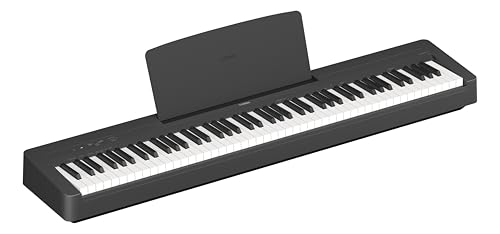
- 88 weighted keys with compact hammer action
- Bluetooth audio for play-along practice
- 24.5-pound slim design
Best For: Space-conscious home setups and portable practice
Best for Beginners

- 88-note authentic-feel keyboard
- Headphone output for quiet practice
- Twin Piano mode for lessons
Best For: First-time players and structured home learning
Best Complete Home Setup

- 88 weighted GHS keys and Yamaha CFX sound
- Bench and three-pedal unit included
- Bluetooth and dual headphone connectivity
Best For: Beginners seeking a traditional home piano package
Best for Feature-Rich Practice

- Graded hammer action with 128-note polyphony
- Partition mode supports one-on-one teaching
- Bluetooth, MIDI, recording, and dual headphones
Best For: Home learners wanting connectivity and lesson features
Best for Flexible Desk-Style Use
UISCOM 88-Key Home Digital Piano

- Weighted 88-key keyboard with triple pedals
- MIDI, recording, and USB MP3 playback
- Desk-style brown design with dual headphones
Best For: Beginners needing versatile practice features at home
Best Balanced Home Piano

- 88 velocity-sensitive keys with four response curves
- 128 tones, 83 rhythms, recording, and USB-MIDI
- Cabinet design with three pedals and multiple headphone jacks
Best For: Beginners and home learners seeking flexible practice features
Best Furniture-Style Piano
Eastar EUP-100 Weighted Digital Piano

- 88-key weighted hammer-action keyboard
- Wireless MIDI, recording, rhythms, and built-in songs
- Includes cover, headphones, stickers, and three pedals
Best For: Beginners wanting a polished home centerpiece and complete starter bundle
Best Feature-Packed Portable Set
Donner DEP-20 Lite Weighted Digital Piano

- 88 weighted hammer-action keys with adjustable touch
- 185 tones, 128-note polyphony, and 116 rhythms
- Wireless connectivity, display, stand, and pedal accessories
Best For: Learners and hobbyists wanting broad sounds and flexible connectivity
Best Overall – Yamaha P71
The Yamaha P71 is a practical starting point for shoppers comparing digital pianos for home. Its 88 weighted, touch-sensitive keys provide an acoustic-style feel, while the straightforward controls and built-in speakers keep everyday practice simple.
Best For: Beginners, returning players, and home musicians who want a full-size weighted keyboard with uncomplicated operation.
Pros:
- 88 weighted, touch-sensitive keys support expressive playing.
- Includes 10 voices, including a Yamaha grand-piano sound.
- Dual Mode blends voices such as piano and strings.
- Includes a sustain pedal and power supply.
Cons:
- Its feature set is intentionally streamlined.
- USB connectivity is provided, but wireless connectivity is not listed.
For a home setup focused on piano practice rather than extensive production features, the P71 offers a full-size playing experience, useful layering, and simple controls in a 25-pound design.
Best for Features – Roland FP-30X
The Roland FP-30X is a strong option among digital pianos for home when sound, connectivity, and speaker output all matter. Its PHA-4 Standard keyboard, SuperNATURAL engine, and 22-watt stereo system support both quiet practice and room-filling playing.
Best For: Players who want an expressive weighted action, versatile sounds, and Bluetooth-enabled practice or recording features.
Pros:
- PHA-4 Standard keyboard has 88 weighted, ivory-feel keys.
- SuperNATURAL technology provides responsive acoustic-style piano sound.
- Bluetooth audio and MIDI support mobile-device integration.
- Includes electric piano, organ, strings, and synthesizer sounds.
Cons:
- Bluetooth headphones are not supported.
- At 32.7 pounds, it is heavier than the Yamaha P71 and P145BT.
The FP-30X balances portability with stronger onboard amplification and broader connectivity, making it particularly appealing if your home practice includes apps, streamed music, or varied instrument sounds.
Best Compact Yamaha – Yamaha P145BT
The Yamaha P145BT is a compact choice for digital pianos for home, especially when space or occasional transport is a concern. It combines 88 weighted keys with Bluetooth audio, built-in speakers, and a slim 24.5-pound body.
Best For: Home players who need a lightweight full-size piano that can also stream songs for play-along practice.
Pros:
- Graded Hammer Compact action gives the 88 keys an acoustic-style feel.
- Bluetooth audio supports playing along with favorite songs.
- Works with Yamaha Smart Pianist and Rec’n’Share apps.
- Includes music rest, sustain foot switch, and AC adapter.
Cons:
- The included sustain accessory is a foot switch rather than a full pedal unit.
- Its compact design prioritizes portability over a furniture-style setup.
With its slim profile, balanced sound, and app-friendly Bluetooth connection, the P145BT is well suited to apartments, multipurpose rooms, and players who may move their instrument between home and travel locations.
Best for Beginners – Roland FP-10
The Roland FP-10 is a beginner-friendly pick among digital pianos for home, combining an 88-note authentic-feel keyboard with quiet headphone practice. Its USB/MIDI connectivity and Twin Piano mode also make it useful for lessons and basic recording.
Best For: Beginners and developing players who want realistic key feel, silent practice, and lesson-friendly features.
Pros:
- SuperNATURAL piano tones deliver responsive acoustic-style sound.
- 88-note keys have an authentic feel and ivory-style texture.
- Headphone output supports quiet practice at home.
- Twin Piano mode helps student-and-teacher sessions.
Cons:
- The matching KSCFP10 stand is optional.
- The included DP-2 is a foot switch, not a three-pedal unit.
- Its 27-pound body is portable but still requires suitable support.
The FP-10 keeps the core piano experience front and center while adding useful app, USB/MIDI, and lesson functions. It is a sensible choice when realistic touch and quiet practice are higher priorities than extensive onboard sounds.
Best Complete Home Setup – Yamaha Arius YDP-146B
The Yamaha Arius YDP-146B is a strong choice among digital pianos for home, combining an upright cabinet design with 88 weighted keys, a three-pedal unit, bench, and built-in speakers. Its acoustic-style action and quiet-practice features suit beginners building technique in a living room or apartment.
Best For: Beginners and families wanting a complete, traditional-style home piano setup.
Pros:
- 88-key GHS weighted action supports acoustic-style technique.
- Yamaha CFX grand piano sound includes damper and string resonance.
- Includes bench, three pedals, lesson songs, and classical songs.
- Bluetooth Audio/MIDI and dual headphone jacks support learning and quiet practice.
Cons:
- Its 56-inch-wide upright cabinet requires dedicated floor space.
- It has 10 instrument voices, fewer than some feature-focused alternatives.
Choose this model when a furniture-style appearance and ready-to-play package matter more than portability. The built-in lessons, Bluetooth connectivity, and headphone support make it particularly practical for home practice.
Best for Feature-Rich Practice – Donner DDP-300 Digital Piano
The Donner DDP-300 offers a full-size 88-key setup for digital pianos for home, with graded hammer action, Bluetooth, recording, and multiple connection options. Its partition mode and two headphone jacks are useful for lessons, while the speaker system is designed for a fuller home-listening experience.
Best For: Players who want teaching features, recording, and broad connectivity in a cabinet-style piano.
Pros:
- Graded hammer action varies key weight from bass to treble.
- 128-note polyphony and 10 HD timbres support layered playing.
- Partition mode can divide the keyboard into two equal-pitch sections.
- Bluetooth, MIDI, audio output, and two headphone jacks expand flexibility.
Cons:
- At 43.8 kg, it is not an easy piano to move frequently.
- The supplied details list a power adapter and manual, but not a bench.
The DDP-300 is a practical fit for a dedicated practice area, especially if you plan to use apps, record performances, or share lessons. Its substantial weight and cabinet dimensions favor a permanent home setup.
Best for Flexible Desk-Style Use – UISCOM 88-Key Home Digital Piano
The UISCOM 88-Key Weighted Home Digital Piano brings a wooden desk-style design to the digital pianos for home category. It combines weighted keys and triple pedals with MIDI, recording, USB playback, and dual headphone jacks, giving beginners several ways to practice and explore sounds.
Best For: Beginners who want a modern brown desk-style piano with MIDI and media-playback features.
Pros:
- 88 weighted keys and triple pedals provide a more complete piano interface.
- French Dream5704 sound chip, eight tones, and 40 demo songs support practice.
- MIDI allows connection to computers and other MIDI equipment.
- USB MP3 playback, recording, and dual headphone jacks add convenience.
Cons:
- The supplied notes do not specify Bluetooth connectivity.
- It offers eight tones, fewer than some competing digital pianos.
This model makes sense for a home office, bedroom, or multipurpose room where a desk-like appearance is useful. Its USB and MIDI functions are especially appealing if you want to combine piano practice with computer-based music activities.
Best Balanced Home Piano – Donner OURA DDP-60
The Donner OURA DDP-60 is a practical choice for shoppers seeking digital pianos for home use, especially beginners who want a full-size instrument with a furniture-friendly light-oak design. Its 88 velocity-sensitive keys, recording functions, and included three-pedal unit support both practice and casual performance.
Best For: Beginner players, shared lessons, and home practice in spaces where a minimalist cabinet-style design matters.
Pros:
- 88 full-size keys with four adjustable velocity-sensitive curves.
- Includes 128 tones, 83 rhythms, 47 demo songs, and eight reverb effects.
- Dual mode, recording, USB-MIDI, and three headphone connections add flexibility for learning and quiet practice.
- Includes a three-pedal system and a light-oak cabinet-style finish.
Cons:
- The supplied notes describe velocity-sensitive keys rather than fully weighted hammer action.
- Its 53.5-inch width and cabinet design require a dedicated space.
The DDP-60 emphasizes accessible features and home-friendly styling. It is a well-rounded option for beginners who value teaching functions, varied sounds, and private practice connections over a highly portable setup.
Best Furniture-Style Piano – Eastar EUP-100 Weighted Digital Piano
The Eastar EUP-100 combines a full-size weighted keyboard with a retro-wood cabinet, making it a strong contender among digital pianos for home settings. It includes useful beginner accessories, wireless connectivity, recording, and a three-pedal system for a more complete practice setup.
Best For: Beginners who want weighted hammer action, quiet practice accessories, and a piano that can double as a stylish living-room or office centerpiece.
Pros:
- 88-key weighted hammer-action keyboard is designed to simulate the touch of a grand piano.
- Includes 13 voices, 128 rhythms, 31 built-in songs, recording, and a metronome.
- Wireless connectivity and MIDI IN/OUT support educational apps and music software.
- Bundle includes a cover, headphones, stickers, and three pedals.
Cons:
- At 25 kg, it is substantially heavier than a portable keyboard.
- Assembly is recommended for two people.
- The desk-style cabinet requires more permanent floor space.
The EUP-100 is geared toward buyers who want the feel and appearance of a traditional upright piano without giving up digital conveniences. Its included cover and headphones also reduce the need for immediate accessory purchases.
Best Feature-Packed Portable Set – Donner DEP-20 Lite Weighted Digital Piano
The Donner DEP-20 Lite is a versatile option for digital pianos for home, rehearsal, and learning spaces. It pairs 88 full-weighted hammer-action keys with a stand, wireless connectivity, a display, and a broad selection of tones and rhythms, while its streamlined design is intended to remain relatively portable.
Best For: Beginners, teens, and players who want weighted keys plus extensive sound options and device connectivity.
Pros:
- 88 full-weighted hammer-action keys with adjustable touch response.
- Offers 185 tones, 128-note polyphony, and 116 rhythms.
- Wireless connections support iOS, Android, and USB-MIDI computers.
- Includes a stand, sustain pedal, furniture stand, and three-pedal unit.
Cons:
- The included accessories and multiple functions may require more setup than a basic keyboard.
- The supplied dimensions vary between the item-dimensions fields, so verify available space before ordering.
The DEP-20 Lite stands out for sound variety and connectivity rather than a traditional cabinet presentation. Its adjustable touch response and display make it a flexible choice for practice, experimentation, and home performance.
How We Picked the Best Digital Pianos for Home
We focused on 88-key instruments with weighted or hammer-action keyboards, since full-size layouts provide the most natural transition from acoustic piano and enough range for lessons and advanced pieces. We also considered sound quality, touch sensitivity, speaker performance, pedal support, portability, recording tools, Bluetooth or wireless connectivity, included accessories, and overall value.
Because home setups vary widely, the list includes compact slab-style pianos, portable bundles with stands, and cabinet-style models with integrated pedal units. Product specifications and included accessories can vary by seller, so confirm the current package contents before ordering.
Quick Comparison
| Best for | What to prioritize | Models to consider |
|---|---|---|
| Beginners and lessons | Reliable weighted action, clear speakers, simple controls | Yamaha P71, Roland FP-10, Eastar EUP-100 |
| More expressive playing | Responsive action, stronger piano sounds, pedal control | Roland FP-30X, Yamaha Arius |
| Compact spaces | Portable cabinet, modest depth, headphone output | Yamaha P71, Roland FP-10, Donner DEP-20 Lite |
| Furniture-style home setup | Integrated stand, bench, and three-pedal unit | Yamaha Arius, UISCOM 88 Key, Donner OURA DDP-60 |
| Feature-focused value | Recording, voices, Bluetooth, and bundled accessories | Donner DDP-300, Donner OURA DDP-60, Yamaha Bluetooth model |
Key Buying Factors for Digital Pianos for Home
Key Action and Touch Sensitivity
Weighted keys are essential if you want piano-like resistance. Graded hammer action is generally preferable because the lower keys feel heavier than the upper keys. Touch sensitivity should also respond to playing force, allowing soft and loud dynamics instead of producing the same volume for every note.
Sound, Speakers, and Headphones
Listen for a natural acoustic-piano tone with enough dynamic range for quiet practice and stronger passages. Built-in speakers are convenient, but check their power and placement if the piano will fill a larger room. A good headphone output is especially useful for apartments, late-night practice, or shared homes.
Size, Stand, and Pedals
Measure both the instrument and the space needed for a bench and comfortable playing posture. Portable models are easier to move but may require a separate stand and pedal setup. Cabinet-style instruments take more floor space yet provide a cleaner appearance and usually include a stable three-pedal unit.
Connectivity and Practice Tools
Bluetooth can support wireless audio or app-based lessons, while USB or MIDI connections help with recording and music software. Built-in recording, metronomes, layering, and multiple voices are useful extras, but they should not outweigh a good key action and piano sound.
Who Should Buy Which Digital Pianos for Home?
Choose the Yamaha P71 or Roland FP-10 if you want a straightforward, compact instrument for lessons and daily practice. Step up to the Roland FP-30X if stronger speakers, richer features, and more expressive performance matter. The Yamaha Arius is a better fit for players seeking a polished, furniture-style home piano with an integrated pedal system.
For shoppers prioritizing included accessories and extra sounds, Donner’s DDP-300, OURA DDP-60, and DEP-20 Lite offer feature-heavy alternatives. The UISCOM and Eastar models suit buyers who want a full-size home setup, while Yamaha’s Bluetooth-equipped option is worth considering for app practice and wireless listening. In every case, prioritize the best action and cabinet fit you can afford, since those factors most directly affect long-term satisfaction.