The right DI box can eliminate hum, match instrument-level signals to a mixer or interface, and make live or studio connections more dependable. The 10 options in this roundup cover passive single-channel, stereo, dual-channel, and budget-friendly designs.
Use the buying guide below to compare connection formats, signal-handling features, build quality, and the best fit for your setup before choosing a DI box.
Best 10 Di Boxes Picks for 2026
Rugged Passive Pick

- Passive mono design with custom transformer
- Rugged stainless-steel I-beam construction
- Suitable for live or studio instrument setups
Best For: Durable mono DI use with guitars, basses, keyboards, or drum machines
Simple Signal Converter

- Converts 1/4-inch TS to balanced XLR3M
- Passive and requires no external power
- Metal build for live-performance use
Best For: Affordable instrument-to-mixer and PA connections
Stereo Multimedia Solution

- Passive two-channel DI design
- RCA, 1/4-inch, 3.5mm, and XLR connectivity
- Compact enclosure for multimedia setups
Best For: Stereo multimedia signal routing with varied connector types
Budget Instrument Workhorse
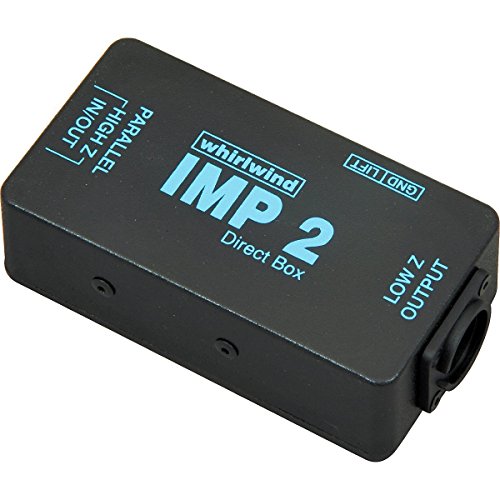
- Economical one-channel passive DI
- Converts unbalanced signals to balanced mic level
- Compact body with riveted TRHL transformer
Best For: Affordable, durable instrument and line-level signal conversion
Versatile Hum Control
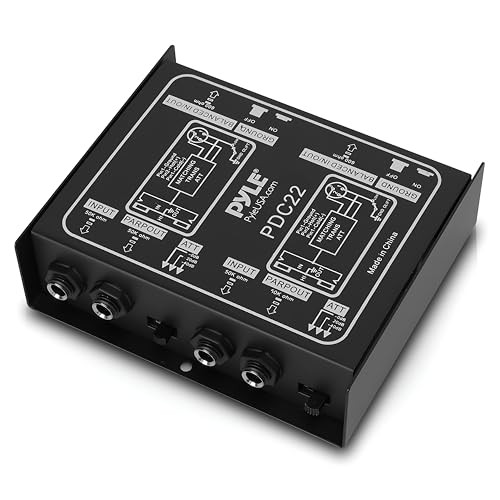
- Two-channel DI design
- Hum cancellation and ground lift
- Steel chassis with broad source compatibility
Best For: Flexible live and recording connections
Stereo Passive Pick

- Two-channel passive design
- Transformer isolation with lift switch
- 15 dB pad for input flexibility
Best For: Stereo sources and passive signal isolation
Adjustable Attenuation

- Variable attenuation control
- Balanced floating XLR output
- Lift and GND modes
Best For: Flexible passive instrument connections
Versatile Passive DI

- Passive 1/4-inch impedance transformer
- Hum and buzz cancellation support
- Handles instruments and consumer sources
Best For: Flexible live and home-recording connections
Tour-Ready Transformer DI
Radial Engineering ProDI Bundle

- 140kΩ high-impedance input
- Transformer-isolated output
- Includes Pig Hog mic cable
Best For: Stage and studio users wanting a bundled, plug-and-play DI
Heavy-Duty Passive DI

- All-steel chassis
- Hum-cancellation and ground-lift support
- Can power up to 10 effects pedals
Best For: Musicians needing a durable, flexible live-rig DI
Rugged Passive Pick – Radial Pro DI
The Radial Pro DI is a sturdy passive option for musicians and engineers comparing di boxes for live or studio use. Its custom transformer, stainless-steel enclosure, and I-beam construction are designed for dependable signal connection with guitars, basses, keyboards, drum machines, and professional snake systems.
Best For: Live and studio setups needing a rugged mono passive DI for musical instruments.
Pros:
- Passive mono design with a custom transformer
- Rugged I-beam construction and stainless-steel enclosure
- Works with guitars, basses, keyboards, and drum machines
- Backed by a 2-year warranty
Cons:
- Mono operation limits stereo applications
- Requires a wired connection and does not provide wireless communication
Choose this model when durability and straightforward passive operation matter more than stereo flexibility or extra controls.
Simple Signal Converter – Hosa Sidekick DIB-443
The Hosa DIB-443 is a practical choice for shoppers comparing di boxes on a budget. This passive unit converts an unbalanced 1/4-inch TS signal to a balanced XLR3M output, helping connect instruments to mixers, PA systems, and other audio equipment while reducing noise on long cable runs.
Best For: Plug-and-play instrument connections to mixers, PA systems, and amplifying equipment.
Pros:
- Converts unbalanced 1/4-inch TS to balanced XLR3M
- Passive design requires no external power
- Metal construction is suited to live-performance use
- Supports guitars, basses, and keyboards
Cons:
- Single-channel operation
- Intended for indoor use according to the supplied details
The DIB-443 keeps the setup simple: connect an instrument on one side and send a balanced XLR signal to the receiving audio equipment.
Stereo Multimedia Solution – Radial ProAV2
The Radial Engineering ProAV2 stands out among di boxes for stereo and multimedia connections. Its passive two-channel design includes RCA, 1/4-inch, 3.5mm, and XLR connectivity, making it a useful fit for setups that need to route consumer or multimedia sources into professional audio equipment.
Best For: Stereo multimedia systems requiring multiple input connector options.
Pros:
- Two-channel passive DI design
- Supports RCA, 1/4-inch, 3.5mm, and XLR connections
- Compact 3 x 6.4 x 4.2-inch dimensions
Cons:
- Heavier than some compact single-channel options at 1.43 pounds
- The supplied details do not list a warranty or included accessories
For stereo or multimedia signal routing, the ProAV2 offers broader connector coverage than the mono instrument-focused options in this roundup.
Budget Instrument Workhorse – Whirlwind IMP 2
The Whirlwind IMP 2 is an economical option for anyone comparing di boxes for basic instrument or line-level connections. Its in-line TRHL transformer converts an unbalanced signal to a low-impedance, balanced mic-level signal, while the compact footprint and riveted transformer construction support dependable everyday use.
Best For: Budget-conscious musicians and engineers needing a compact one-channel passive DI.
Pros:
- Inexpensive one-channel passive instrument DI
- Converts unbalanced line or instrument signals to balanced mic level
- Compact footprint with an 8.8-ounce weight
- TRHL transformer is riveted to the chassis rather than glued
Cons:
- Single-channel design is not suited to stereo sources
- Supplied details do not list a warranty
The IMP 2 is a sensible pick when you want professional-oriented signal conversion and durability without moving to a more feature-rich or stereo DI.
Versatile Hum Control – Pyle-Pro PDC22
The Pyle-Pro PDC22 is a practical choice among DI boxes for connecting guitars, basses, keyboards, submixers, effects processors, and other unbalanced sources to a PA or recording mixer. Its impedance transformer, ground-lift functionality, and hum-cancellation design focus on delivering cleaner connections in live and recording setups.
Best For: Musicians and home or live-sound users who need flexible two-channel connectivity and buzz or hum reduction.
Pros:
- Supports guitars, basses, keyboards, outboard processors, and consumer stereo sources.
- Provides buzz and hum cancellation for unbalanced signals.
- Includes a 1/4-inch device connector, detachable AC power cord, and two channels.
- Steel chassis offers durable construction.
Cons:
- Its feature set may be more than needed for a simple single-instrument setup.
- The supplied notes do not specify detailed output or frequency-response performance.
With broad source compatibility and a rugged steel enclosure, the PDC22 stands out as a flexible DI box for users who regularly switch between instruments and other unbalanced audio devices.
Stereo Passive Pick – Radial ProD2
The Radial ProD2 is a straightforward passive stereo option among DI boxes, built for two-channel signal conversion with transformer isolation. Its 15 dB pad and lift switch add practical control when integrating stereo sources into a larger audio system.
Best For: Users who need a passive two-channel or stereo DI with transformer isolation and attenuation.
Pros:
- Provides two passive DI channels for stereo applications.
- Uses an isolation transformer and lift switch.
- Includes a 15 dB pad for handling stronger input signals.
- Supports 1/4-inch and XLR connections.
Cons:
- As a passive DI, it does not provide active gain or powered signal boosting.
- The supplied notes do not identify additional routing or connector features beyond 1/4-inch and XLR connections.
The ProD2 is a focused choice when stereo operation, transformer isolation, and a useful input pad matter more than an extensive feature set.
Adjustable Attenuation – Livewire SPDI
The Livewire SPDI is a practical passive choice among DI boxes when you want flexible attenuation and straightforward instrument connections. It combines a high-impedance 1/4-inch input and throughput with a balanced, floating XLR output that ignores +48V phantom power.
Best For: Players and small audio setups needing adjustable input handling, instrument throughput, and ground-connection control.
Pros:
- Offers a 1/4-inch high-impedance instrument input and output.
- Balanced, floating XLR output ignores +48V phantom power.
- Variable attenuation provides input flexibility.
- Lift and GND modes control the connection between input and XLR output.
Cons:
- It is a passive direct box, so the supplied notes do not indicate active gain.
- The notes do not specify the attenuation range or detailed audio-performance figures.
For users who value adjustable attenuation and selectable ground behavior, the SPDI offers a focused set of controls in a passive DI format.
Versatile Passive DI – Pyle PDC21
For musicians and home-recording users comparing DI boxes, the Pyle PDC21 is a straightforward passive option for routing guitars, basses, keyboards, and other unbalanced sources to balanced or unbalanced equipment. Its impedance transformer, input attenuation, and hum-cancellation features support cleaner connections in live or recording setups.
Best For: Musicians and recording setups needing a compact passive DI box with flexible source connections and buzz reduction.
Pros:
- Connects 1/4-inch instrument and line-level sources to XLR equipment.
- Transformer-based design helps reduce buzz and hum.
- Works with instruments, keyboards, effects processors, and consumer stereo outputs.
Cons:
- Passive design may offer fewer features than an active DI box.
- The supplied notes do not specify detailed input or output specifications.
The PDC21 is a practical choice when you want basic DI functionality, ground-lift assistance, and broad source compatibility without a complicated setup.
Tour-Ready Transformer DI – Radial Engineering ProDI Bundle
Among DI boxes, the Radial Engineering ProDI Bundle stands out for its custom-wound transformer and included accessories. The passive direct box is designed to handle strong signals across the frequency range while transformer isolation helps address ground-loop noise.
Best For: Performers and recording users who want a plug-and-play passive DI with a high-impedance input, bundled cable, and touring-oriented accessories.
Pros:
- Custom transformer has a 140kΩ input impedance.
- Designed to handle extreme signal levels without distortion across all frequencies.
- Includes a Pig Hog microphone cable and polishing cloth.
- Transformer-isolated output helps eliminate ground-loop noise.
Cons:
- The bundle weighs more than the compact Pyle options listed here.
- The supplied notes do not identify additional controls or attenuation settings.
This bundle is a strong fit for users who value simple operation, transformer isolation, and a cable-inclusive package for stage or studio work.
Heavy-Duty Passive DI – Pyle PDC21.5
The Pyle PDC21.5 is one of the more versatile DI boxes for connecting guitars, basses, keyboards, effects processors, and other unbalanced sources to a PA or recording mixer. It combines passive signal conversion with hum-reduction features and an all-steel chassis for regular musician use.
Best For: Musicians who need an affordable passive DI with broad source compatibility, a sturdy steel enclosure, and support for powering up to 10 effects pedals.
Pros:
- Connects instrument and line-level sources to balanced or unbalanced XLR equipment.
- Ground-lift and impedance-transformer functions help address buzz and hum.
- All-steel chassis is designed for durable use.
- Can power up to 10 effects pedals, according to the supplied notes.
Cons:
- The supplied notes do not provide detailed power requirements or pedal-power specifications.
- Passive operation may be less feature-rich than an active DI solution.
Choose the PDC21.5 if durability and connection flexibility matter more than advanced controls. Its steel construction and pedal-related capability make it especially practical for musicians building a compact live rig.
How We Picked These Di Boxes
We selected these models for their practical usefulness across live performance, rehearsal, recording, installation, and home audio applications. The lineup includes established professional designs from Radial and Whirlwind, compact budget options from Hosa, Pyle, and Livewire, and stereo or dual-channel units for keyboards, playback systems, and other two-output sources.
Our comparison focuses on passive signal conversion, input and output formats, attenuation options, hum-isolation benefits, channel count, portability, and the level of reliability expected for repeated use. Because product names and bundles can vary by retailer, confirm the included accessories and exact specifications before ordering.
Quick Comparison
| Best For | Recommended Type | What to Look For |
|---|---|---|
| Guitar or bass | Single-channel passive DI | Thru output, ground lift, and durable connectors |
| Keyboard or stereo playback | Stereo or dual-channel DI | Two independent channels and appropriate input headroom |
| Long cable runs | Balanced-output DI | Low-noise XLR output and transformer isolation |
| Budget rehearsals | Basic passive DI | Simple attenuation and reliable input/output jacks |
| Touring or frequent gigs | Road-ready professional DI | Strong enclosure, quality switches, and dependable construction |
Key Buying Factors for Di Boxes
Passive Versus Active Design
Passive Di Boxes typically need no battery or phantom power and are simple to deploy. They work especially well with active instruments, keyboards, mixers, and many line-level sources. An active DI can provide more headroom or better performance with passive guitar and bass pickups, but it requires a power source. The products in this roundup are passive models, so check source output and gain requirements carefully.
Inputs, Outputs, and Channel Count
Most single-channel Di Boxes accept a 1/4-inch TS instrument connection and send a balanced XLR signal to a mixer or interface. A thru output lets you feed an amplifier while sending a separate balanced signal to front of house. Stereo or two-channel models are better for keyboards, electronic instruments, and playback devices with left and right outputs.
Ground Lift, Attenuation, and Isolation
A ground-lift switch can help reduce hum caused by ground loops, while an input pad or attenuator prevents distortion when connecting hotter sources. Transformer isolation is also valuable for keeping long cable runs quieter. These features are particularly useful in venues with complicated power and signal paths.
Build Quality and Portability
For regular gigs, prioritize a sturdy metal enclosure, firmly mounted connectors, clear switches, and a layout that is easy to operate in low light. Home users may prefer a smaller, less expensive unit, but avoid sacrificing basic electrical isolation and connector quality when the box will be used on stage.
Who Should Buy Which Di Boxes?
Choose a compact single-channel model for a guitar, bass, or mono instrument that needs a balanced feed to a mixer. Pick a stereo or dual-channel DI for keyboards, DJ playback, drum machines, or other sources where preserving left and right channels matters. A model with attenuation is a sensible choice for high-output instruments and consumer playback equipment, while a more robust professional unit is worth considering for touring, venues, and frequent recording sessions.
If you are unsure, match the DI box to the source first: count the outputs, check whether you need an amplifier thru connection, and confirm that the unit provides the isolation and headroom your signal chain requires.