The right direct box can make guitars, keyboards, basses, and other unbalanced sources easier to record cleanly at home. It converts instrument-level signals to balanced outputs while helping reduce hum, noise, and cable-related signal problems.
These 10 options cover compact passive models, stereo and dual-channel designs, USB-compatible setups, and rack-friendly solutions. Use the guide below to match features and connectivity to your studio rather than choosing on price alone.
Best 10 Di Boxes for Home Studios Picks for 2026
Reliable Passive Pick
Radial Pro DI Passive Direct Box

- Passive mono transformer design
- Rugged I-beam construction
- Works with guitars, bass, keyboards, and drum machines
Best For: Mono instrument tracking and live/studio setups
Stereo Keyboard Specialist
Mackie MDB-2P Passive Stereo DI Box

- Dual 1/4-inch stereo inputs
- Ground lift for loop-buzz control
- 15 dB pads handle hot signals
Best For: Stereo keyboards, DJ rigs, and backing tracks
Multi-Channel Studio Hub
Behringer DI800 V2 Signal Direct Box

- Eight-channel active circuitry
- Mains or phantom-powered operation
- XLR, TRS, and TS connectivity
Best For: Multi-source recording studios and live setups
USB Stereo Convenience
OnStage DB2150 Passive Stereo USB DI Box
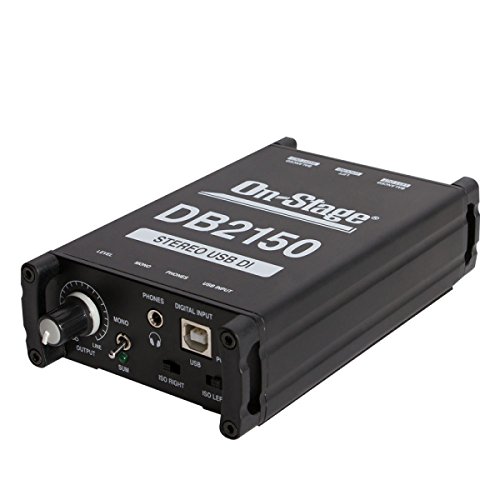
- USB connectivity for computers
- 3.5mm headphone output
- Mono sum, ground lift, and isolation switches
Best For: Windows-based stereo computer setups
Best for Buzz-Free AV Connections

- Passive design for multimedia, audio, and video use
- Helps reduce ground-loop buzz and hum
- Handles large transients without distortion
Best For: Home studios and AV setups needing isolated, clean connections
Best Dual-Channel Value
StudioMan DI-2 Dual Passive DI Box

- Two isolated channels for simultaneous source connections
- Per-channel ground switches and -30 dB pads
- 20 Hz–20 kHz response with 115 dB SNR
Best For: Home studios recording two instruments or sources at once
Best for Simple Instrument Routing
Samson S-Max MD1 Passive DI Box

- Passive operation needs no battery or phantom power
- Ground lift helps fight buzz and hum
- Thru output supports pedals, amps, or parallel tracking
Best For: Single-instrument home studio routing with amp monitoring
Budget Studio Essential
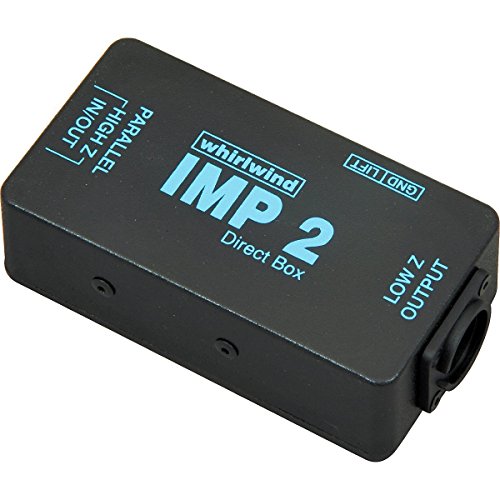
- Compact single-channel passive DI
- Riveted TRHL transformer
- Economical balanced-signal conversion
Best For: Affordable one-channel home-studio setups
Flexible Dual-Channel Choice

- Two passive DI channels
- Three-level input attenuation
- Phase, filter, and ground-lift switches
Best For: Home studios needing flexible two-channel signal matching
Rugged Two-Input Solution

- Two-input DI/merge functionality
- Ground lift and attenuation switches
- High-strength housing
Best For: Home studios that also support live or PA setups
Reliable Passive Pick – Radial Pro DI Passive Direct Box
For home studios needing dependable di boxes for home studios, the Radial Pro DI is a straightforward passive mono option for instruments such as acoustic guitars, bass, keyboards, and drum machines. Its transformer-based design and rugged I-beam construction suit both studio and live use.
Best For: Mono instrument tracking and live or studio setups using guitars, bass, keyboards, or drum machines.
Pros:
- Passive mono direct box with a built-in transformer
- Rugged stainless-steel I-beam construction
- Designed for musical instruments, consoles, and professional snake systems
Cons:
- Mono operation rather than stereo
- Passive design may be less flexible than an active multi-channel unit
The Radial Pro DI is a focused choice when you want a durable, no-frills mono DI for common studio instruments and a simple XLR-based signal path.
Stereo Keyboard Specialist – Mackie MDB-2P Passive Stereo DI Box
The Mackie MDB-2P is a practical choice for home studios that need di boxes for home studios with two channels. Its dual 1/4-inch inputs accommodate stereo keyboards, DJ controllers, and backing-track rigs, while the ground lift and pads help address hum and hot signals.
Best For: Stereo keyboards, DJ rigs, and backing-track setups that need passive operation and noise-control features.
Pros:
- Dual 1/4-inch high-impedance inputs for stereo sources
- Ground lift helps stop ground-loop buzz
- 15 dB pads accommodate hot signals
- Passive design requires no power
Cons:
- Focused on stereo sources rather than eight-channel expansion
- Steel enclosure may be less compact than a minimal single-channel DI
Choose the MDB-2P when stereo connectivity is more important than a single-channel format, especially if your setup includes keyboards or DJ equipment and occasional hum problems.
Multi-Channel Studio Hub – Behringer DI800 V2 Signal Direct Box
For larger recording setups, the Behringer DI800 V2 offers eight channels, making it a useful contender among di boxes for home studios that need to connect several sources. It supports XLR and 1/4-inch interfaces, with optional mains or phantom-powered operation.
Best For: Recording studios, film sets, and live events requiring multiple channels and flexible input connections.
Pros:
- Eight-channel active circuitry
- Supports XLR, TRS, and TS connectivity
- Can operate from mains power or phantom power
- Servo-balanced operation provides an ultra-flat frequency response
Cons:
- Five-pound weight may be excessive for compact setups
- More channels and features than needed for a simple one-instrument rig
The DI800 V2 makes the most sense when your studio regularly handles multiple instruments or sources. Its eight-channel layout can reduce the need for several separate direct boxes.
USB Stereo Convenience – OnStage DB2150 Passive Stereo USB DI Box
The OnStage DB2150 combines stereo DI functionality with USB connectivity, giving home-studio users another practical option among di boxes for home studios. It includes a 3.5mm headphone output, mono sum, ground lift, and independent isolation switches.
Best For: Computer-based stereo setups that benefit from USB connectivity, headphone monitoring, and flexible isolation controls.
Pros:
- USB hardware connectivity for personal-computer setups
- 3.5mm headphone output
- Mono sum and ground lift switches
- Independent ISO left and ISO right switches with a custom-wound transformer
Cons:
- Listed platform support is Windows
- Its stereo feature set may be unnecessary for a basic mono instrument rig
The DB2150 is a versatile fit for computer-centered stereo workflows. Its monitoring and isolation controls are particularly useful when integrating a personal computer into a studio signal chain.
Best for Buzz-Free AV Connections – Radial Engineering Pro AV1
For home studios handling multimedia, audio, or video sources, the Radial Engineering Pro AV1 is a straightforward passive DI box designed to convert and isolate signals while addressing common connection noise. Its passive design and transformer-based isolation make it a practical choice when ground-loop buzz or sudden signal peaks are concerns.
Best For: Home studios, multimedia setups, and audio/video connections where hum reduction and transient handling are priorities.
Pros:
- Passive operation suits simple audio and AV signal routing.
- Helps eliminate buzz and hum caused by ground loops.
- Handles large transients without distortion.
- Includes a three-year warranty.
Cons:
- Its single-unit configuration may be limiting for multi-instrument setups.
- The supplied notes do not specify additional routing features such as a thru output.
The Pro AV1 is a focused option among DI boxes for home studios, especially when isolation and dependable peak handling matter more than extra controls or multiple channels.
Best Dual-Channel Value – StudioMan DI-2 Dual Passive DI Box
The StudioMan DI-2 is built for home studios that need to connect two instruments or line-level sources at once. Its independent channels provide balanced XLR outputs, per-channel ground switches, and -30 dB pads for managing hum and high-output sources during recording, streaming, or live use.
Best For: Home studios recording guitar, bass, keyboards, or synths through two simultaneous channels.
Pros:
- Two isolated channels support simultaneous instrument connections.
- Independent ground switches help target ground-loop hum.
- -30 dB pads help accommodate high-output devices.
- Wide 20 Hz–20 kHz response, less than 0.03% THD+N, and 115 dB SNR support detailed signal transfer.
Cons:
- At 1.41 pounds, it is heavier than some compact single-channel options.
- The supplied specifications do not mention a passive thru output for monitoring or amp feeds.
With dual channels and practical noise-control features, the DI-2 is a flexible pick for home studios expanding beyond one instrument input without adding separate DI boxes.
Best for Simple Instrument Routing – Samson S-Max MD1 Passive DI Box
The Samson S-Max MD1 is a compact passive DI box for turning an unbalanced 1/4-inch instrument or line signal into a balanced mic-level XLR output. For home studios, its ground-lift switch and passive thru output make it useful for routing a dry signal to an interface or mixer while also feeding pedals or an amplifier.
Best For: Guitar, keyboard, and single-source studio setups that need balanced output plus a thru connection.
Pros:
- Passive signal path requires no batteries or phantom power.
- Ground lift helps address buzz and hum.
- Thru output supports parallel tracking or amplifier monitoring.
- Steel chassis and Mu-Metal shielding are designed for stage and studio use.
Cons:
- It is a single-channel DI box.
- The supplied notes list a 0 dB/-15 dB configuration but do not detail a broader pad range.
The MD1 is a practical choice among DI boxes for home studios when you want uncomplicated passive operation, balanced XLR output, and a dedicated thru path for an amp or pedals.
Budget Studio Essential – Whirlwind IMP 2
For home studios seeking dependable DI boxes for home studios, the Whirlwind IMP 2 is a compact, economical option for converting an unbalanced line- or instrument-level signal into a low-impedance, balanced mic-level output. Its passive, single-channel design keeps the setup straightforward.
Best For: Home-studio musicians who need one affordable DI channel with a small footprint and professional-oriented construction.
Pros:
- Compact and lightweight at 8.8 ounces.
- Converts unbalanced instrument or line signals to balanced mic level.
- Uses a riveted Whirlwind TRHL transformer for durability.
- Offers an economical way to get professional-quality DI performance.
Cons:
- Provides only one channel.
- Its passive design does not offer the additional switching features found on more configurable models.
The IMP 2 is a sensible pick when simplicity, low cost, and a compact footprint matter more than extra controls. It is especially practical for a single instrument or line-level source.
Flexible Dual-Channel Choice – ART DualZDirect
The ART DualZDirect is a versatile option among DI boxes for home studios, combining two passive channels with useful signal-management controls. It requires no battery and can convert 50k-ohm inputs to 600-ohm balanced outputs for a range of studio and performance connections.
Best For: Home studios needing two DI channels plus attenuation, filtering, phase, and ground-isolation options.
Pros:
- Provides two channels in one tabletop unit.
- Fully passive design requires no battery.
- Offers switchable 0, -20, and -40 dB input attenuation.
- Includes low-pass filter, phase-invert, and ground-lift controls.
Cons:
- Its additional controls may be more than a basic one-channel setup needs.
- The supplied notes do not specify a rack-mount format.
For creators recording stereo sources or two instruments, the DualZDirect delivers more routing flexibility than a basic passive DI. Its ground isolation and attenuation switches are useful when matching different sources and connections.
Rugged Two-Input Solution – Passive DI Box/Merge
This passive DI box is designed for users comparing DI boxes for home studios who want two-input functionality in a rugged housing. It converts high-impedance unbalanced signals to low-impedance balanced XLR outputs and includes controls intended to help with level matching and hum reduction.
Best For: Home studios and small audio systems handling multiple instruments or sources with occasional live-sound use.
Pros:
- Supports two inputs and DI/merge functionality.
- Ground-lift switch can help reduce hum from multiple connections.
- Attenuation switch assists with signal-level matching.
- High-strength housing is intended for steady, extended use.
Cons:
- At 1.2 pounds, it is heavier than the Whirlwind IMP 2.
- The supplied notes do not list specific attenuation values.
- Its broader live-sound features may be unnecessary for a very simple studio rig.
The unit makes sense for a flexible setup that may move between home recording, PA, DJ, or live-sound applications. Ground lift and attenuation add practical control, while the rugged housing supports regular handling.
How We Picked the Best Di Boxes for Home Studios
We focused on practical studio requirements: dependable signal conversion, balanced XLR outputs, useful input and output connections, ground-lift controls, build quality, and suitability for common home-recording sources. Passive models generally need no power and work well with many instruments, while active or multi-channel designs can offer additional headroom, flexibility, or integration options.
Because home studios vary widely, the selection includes simple single-channel boxes, stereo units, dual-channel models, and products with merge or USB-oriented functionality. Always confirm the exact specifications and included accessories before buying.
Quick Comparison
| Best For | Recommended Type | Useful Features |
|---|---|---|
| Electric guitar or bass | Single-channel passive DI | Thru output, ground lift, rugged enclosure |
| Stereo keyboards and playback devices | Passive stereo DI | Two inputs and balanced left/right outputs |
| Multiple instruments | Dual-channel or multi-channel DI | Independent channels and ground switches |
| Complex routing | DI with merge or flexible outputs | Signal combining and reliable isolation |
Key Buying Factors for Di Boxes for Home Studios
Passive or Active Design
Passive DI boxes are simple, durable, and do not require batteries or phantom power. They are often the easiest choice for guitar, bass, keyboards, and general recording. Active designs can better accommodate some lower-output or high-impedance sources, but they add power requirements and another specification to manage.
Inputs, Outputs, and Channel Count
Choose a mono box for a single instrument and a stereo or dual-channel model for keyboards, mixers, drum machines, and playback gear that must retain left-right separation. A thru output is valuable when you need to send the unbalanced signal to an amplifier while feeding the interface or mixer through XLR.
Ground Lift and Isolation
Ground loops can create persistent hum when several devices are connected. A ground-lift switch and transformer isolation can help break that loop, although they should not be treated as a substitute for safe electrical practices. Look for accessible, clearly labeled controls.
Impedance, Headroom, and Build
Check input impedance and maximum input level when pairing a DI with passive instruments or strong line-level sources. Metal housings, protected connectors, and firm switches are worthwhile in a working studio, especially if the unit will also travel to rehearsals or performances.
Who Should Buy Which Di Boxes for Home Studios?
Choose a straightforward passive mono DI if you mainly record guitar, bass, or one unbalanced source. A stereo model is the better fit for keyboards, electronic instruments, and consumer playback equipment. Pick a dual-channel unit when you regularly record two sources or need separate control over each signal. For larger setups, prioritize multiple channels, flexible routing, and dependable isolation over the smallest footprint.
Before ordering, verify connector types, channel requirements, power needs, and whether the box supports the signal level of your equipment. The best Di Boxes for Home Studios are the ones that solve your specific noise and routing problems without adding unnecessary complexity.