Desktop microphone preamps can make a big difference when your mic sounds too quiet, thin, or noisy through a basic interface or mixer. The right unit adds clean gain, improves signal quality, and helps you get more usable volume without pushing your gear too hard.
In this roundup, we focus on practical options for home studios, streaming, podcasting, and recording setups that need a simple boost without unnecessary complexity.
Best 10 Desktop Microphone Preamps Picks for 2026
Ultra-Low-Noise Budget Option

- -120dB EIN for low-noise recording
- 19–66dB gain range is realistic and usable
- Type-C power and 1MΩ instrument input
Best For: Budget-conscious users wanting cleaner desktop preamp gain
Dual-Mode Streaming Mic

- USB and XLR connection options
- Cardioid dynamic design for noise rejection
- USB mode adds mute, monitoring, and RGB
Best For: Streamers wanting a flexible mic for USB or interface use
Compact High-Gain Helper

- ALC automatic control for weak signals
- Can drive headphones directly
- Tiny aluminum-alloy housing is portable
Best For: Portable users needing a simple mic boost and headphone listening
Inline Signal Booster
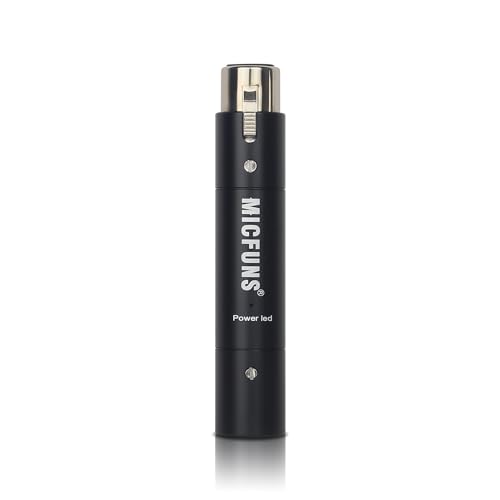
- Adds 28dB gain for passive mics
- Buffer amp helps long cable runs
- Requires 48V phantom power to operate
Best For: Passive mic users needing an inline boost from existing phantom power
Ultra-Low-Noise Studio Pick
MIC-1 Mic Preamp, 75dB Gain for Dynamic and Condenser Mics

- Up to +75dB clean gain for low-output microphones
- Claimed -120dB EIN with dedicated DC analog power
- XLR output plus 3.5mm Mic Out and Line Out
Best For: Home studios and vocal recording with quiet microphones
Simple Inline Booster
Bolanle NK1 In-Line Mic Preamp, 28dB Gain

- 28dB Class A gain for low-sensitivity microphones
- Works with 48V phantom power and XLR devices
- Metal shielded case helps reduce interference
Best For: Dynamic mic users wanting a simple XLR boost
Budget Balanced Booster
Microphone Preamplifier, 20dB Gain with 48V Power

- 20dB balanced gain for basic microphone boosting
- 48V power support for dynamic and condenser mics
- Compact black metal case with low-noise design
Best For: Home recording, podcasting, and live streaming
Dynamic Mic Inline Booster
StudioMan DPM1 XLR Dynamic Mic Preamp

- Adds +29dB clean gain for dynamic and ribbon mics.
- Requires 48V phantom power from the host device.
- Rugged metal body helps block interference.
Best For: Users who need a simple inline gain boost for low-output dynamic or ribbon mics
High-Gain Multi-Output Pick
VBESTLIFE Mic Gain Booster with 48V Power
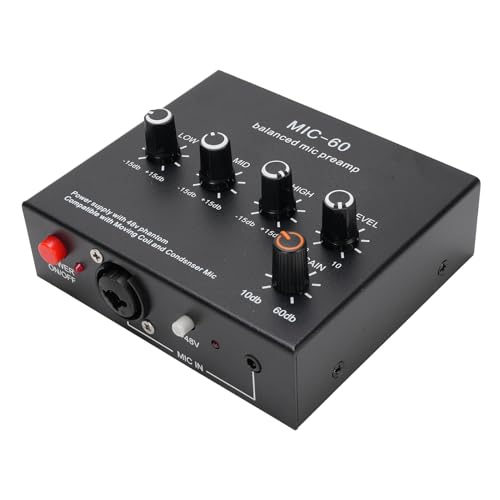
- Delivers up to +60dB gain for dynamic mics.
- Includes XLR, 3.5mm, 6.35mm, and line outputs.
- Supports both dynamic and condenser microphones.
Best For: Users who want maximum gain and flexible output connections
Simple Low-Noise Pick
Rechargeable Mic Preamp with 48V Power

- Offers 20dB balanced gain for cleaner vocal boosts.
- Supports both dynamic and condenser microphones.
- Compact metal case helps reduce interference.
Best For: Users who want a small, clean mic booster for everyday recording
Ultra-Low-Noise Budget Option – RO03 66dB Mic Preamp
If you want desktop microphone preamps with a focus on cleaner gain rather than hype, the RO03 is built around low-noise operation and practical real-world use. Its updated gain range, Type-C power input, and instrument-friendly 1MΩ input make it a flexible choice for desktop recording setups, streaming, and simple DI-style duties.
Best For: Creators who want a low-budget preamp with very low noise and versatile desktop connectivity.
Pros:
- Updated design targets -120dB EIN for very low noise performance.
- Realistic 19–66dB gain range avoids the unusable top-end behavior of the older version.
- 1MΩ instrument input is better suited for guitars and other instruments.
- Type-C power input improves portability for mobile or outdoor recording.
Cons:
- The two input ports cannot be used at the same time.
- Best noise performance depends on connecting to an audio interface’s TRS line input.
- Some earlier-version complaints about noise and gain were specifically addressed, so expectations should be based on this updated model.
Overall, the RO03 stands out as a practical desktop microphone preamp for users who care most about low noise and simple, budget-friendly recording. It is especially appealing if you can follow the recommended TRS connection path for the cleanest results.
Dual-Mode Streaming Mic – FIFINE AM8 USB/XLR Mic
For desktop microphone preamps used alongside a mic, the FIFINE AM8 is a flexible pick because it can run over USB or XLR. In USB mode it adds convenience features like mute, monitoring, and RGB, while XLR mode is aimed at cleaner integration with an audio interface or mixer for more traditional desktop recording.
Best For: Streamers and beginners who want a dynamic mic that can grow into an XLR desktop setup.
Pros:
- USB and XLR connectivity offer two very different workflow options.
- Cardioid dynamic design helps reject off-axis noise during voice recording.
- USB mode includes tap-to-mute, monitoring, gain control, and RGB lighting.
- Fits common mic stands with built-in 3/8-inch and 5/8-inch metal threads.
Cons:
- RGB and several function keys do not work in XLR mode.
- XLR cable is not included.
- Best positioning is fairly close, with the tips suggesting 2 to 6 inches from the source.
The AM8 is less a standalone preamp and more a versatile desktop mic option for people building an XLR or USB workflow. If you want flexibility now and upgrade potential later, it fits that role well.
Compact High-Gain Helper – YWBL-WH Mic Power Amp
If you are comparing desktop microphone preamps for very small recording or listening setups, this compact mic power amp is aimed at boosting weak signals and driving headphones. Its ALC automatic control, small footprint, and 3.5mm interface make it a simple utility piece for mobile recording or listening tasks.
Best For: Users who need a tiny signal booster for headphone listening or phone-based recording.
Pros:
- High-sensitivity design with ALC automatic control.
- Claims very high amplification for weak sounds.
- Can directly drive headphones for listening.
- Compact aluminum-alloy build is easy to carry.
Cons:
- Uses a 3.5mm interface, so it is less of a traditional desktop XLR preamp.
- Product details are limited compared with more studio-oriented options.
- Best suited to specific recording or listening use cases rather than full-featured studio work.
This model is best viewed as a compact utility amplifier rather than a full desktop microphone preamp. If your priority is portability and simple signal boosting, it may fit; if you need broader studio connectivity, look elsewhere.
Inline Signal Booster – M1 +28dB Mic Preamp
Among desktop microphone preamps and inline boosters, the M1 is designed to add 28dB of gain to a passive microphone without extra coloration. It also includes an output buffer amplifier to help with long cable runs and interference, making it a straightforward utility for stage or studio signal cleanup.
Best For: Passive mic users who need a simple inline gain boost with strong noise resistance.
Pros:
- 28dB of gain boosts passive mic level before the main preamp.
- Output buffer amplifier helps drive long cable runs.
- Metal housing helps reject noise and electrical interference.
- Compact, lightweight design is easy to add to an existing setup.
Cons:
- Requires 48V phantom power from a preamp, mixer, or audio interface.
- Does not function as a standalone preamp by itself.
- Maximum output and current specs are useful, but the unit is still purpose-built rather than feature-rich.
The M1 is a focused inline gain solution for people who already have the right phantom-power source. If you need a compact way to lift passive mic output and reduce cable-related issues, it is a practical fit.
Ultra-Low-Noise Studio Pick – MIC-1 Mic Preamp, 75dB Gain for Dynamic and Condenser Mics
If you need desktop microphone preamps for low-output mics, this MIC-1 focuses on clean gain and flexible routing. It offers up to +75dB of transparent amplification, a claimed -120dB EIN noise floor, and 48V phantom power for dynamic and condenser microphones.
Best For: Home studios, vocal recording, and users who need lots of clean gain for quiet microphones.
Pros:
- Up to +75dB gain for extra headroom with low-output dynamic microphones.
- Claimed -120dB EIN and dedicated DC analog power for low-noise operation.
- Balanced XLR output plus separate 3.5mm Mic Out and Line Out.
- Includes a 1MΩ high-impedance TS instrument input for DI-box setups.
Cons:
- The two input ports cannot be used at the same time.
- More features than a basic inline booster, so it may be more than some setups need.
This is the most flexible option in the group if you want a desktop-style preamp with strong gain, multiple outputs, and a rugged metal shell. It is especially appealing when noise control and connection options matter as much as raw boost.
Simple Inline Booster – Bolanle NK1 In-Line Mic Preamp, 28dB Gain
For buyers comparing desktop microphone preamps and inline boosters, this Bolanle NK1 keeps the job simple: add gain, stay balanced, and avoid unnecessary complexity. Its Class A transistor circuit provides 28dB of gain, and it is designed to work with 48V phantom power and XLR gear.
Best For: Dynamic mic users who want a straightforward XLR gain booster with phantom-power compatibility.
Pros:
- 28dB gain from a Class A transistor amplification circuit.
- Compatible with 48V phantom power supplies, mixers, and audio interfaces.
- Gold-plated pure copper pins and ferrules for stable signal transmission.
- Alloy-shielded metal case helps block electromagnetic noise.
Cons:
- Only offers 28dB gain, so it is less powerful than higher-gain preamps.
- Designed around XLR connections, so it is less flexible than multi-output units.
This is a practical pick if you want a compact XLR signal boost without extra controls or output options. It looks best for clean, compatible integration into existing mixer or interface chains.
Budget Balanced Booster – Microphone Preamplifier, 20dB Gain with 48V Power
If you are shopping for desktop microphone preamps on a tighter budget, this compact mic preamplifier offers a basic but useful gain stage. It provides 20dB of balanced amplification, supports 48V power, and uses a fully balanced circuit design aimed at low-noise recording.
Best For: Home recording, podcasting, and live streaming with dynamic or condenser microphones.
Pros:
- 20dB gain with balanced amplification circuitry.
- Compatible with dynamic and condenser microphones using 48V power.
- Fully balanced circuit design aims for ultra-low noise and minimal coloration.
- Compact, lightweight black metal case for easy transport and storage.
Cons:
- Lower gain than the other options in this roundup.
- Lacks the extra output and connectivity features of more advanced preamps.
This is the most stripped-down option here, but it still covers the core job of adding clean boost with a small footprint. It makes the most sense when you want a simple, portable microphone preamp rather than a feature-heavy desktop unit.
Dynamic Mic Inline Booster – StudioMan DPM1 XLR Dynamic Mic Preamp
If you’re shopping for desktop microphone preamps to lift a quiet dynamic or ribbon mic, the StudioMan DPM1 is a simple inline gain booster that adds a clean +29dB before your interface has to work harder. It is built for XLR dynamic mics only, and it requires 48V phantom power from the mixer or interface to operate, while not passing that power to the microphone itself.
Best For: Podcasters, streamers, and studio users with low-output dynamic or ribbon microphones who want cleaner gain without cranking an interface preamp.
Pros:
- Provides a strong +29dB boost for low-output dynamic and ribbon microphones.
- Helps reduce hiss by improving signal-to-noise ratio at the source.
- Rugged metal housing offers durability and interference shielding.
- Compact plug-and-play XLR design fits easily into studio or stage setups.
Cons:
- Not compatible with condenser microphones.
- Requires 48V phantom power to function.
- Gain amount is lower than some other boosters in this roundup.
The DPM1 makes the most sense if your main issue is weak output from a dynamic mic and noise from pushing your interface too hard. If you need a straightforward inline booster for XLR setups, it is a focused and practical option.
High-Gain Multi-Output Pick – VBESTLIFE Mic Gain Booster with 48V Power
For buyers comparing desktop microphone preamps that can do more than one job, this VBESTLIFE unit stands out for its +60dB gain and flexible outputs. It supports dynamic and condenser microphones, includes 48V power, and offers XLR balanced plus 3.5mm, 6.35mm, and line outputs for connecting to interfaces, mixers, consoles, speakers, and similar gear.
Best For: Home studios, live streamers, and users who want a higher-gain preamp with multiple output options.
Pros:
- Up to +60dB of gain for stronger microphone boosting.
- Works with both dynamic and condenser microphones.
- Multiple outputs make it flexible for interfaces, mixers, and speakers.
- Fully balanced circuit aims for low noise and no coloration.
Cons:
- More complex than a simple inline mic activator.
- Bulky compared with compact single-purpose boosters.
- Assorted connections may be more than some desktop setups need.
This is the most flexible option here if you need stronger gain and several ways to route audio. It suits users who want a desktop-friendly preamp that can handle different mic types and output paths.
Simple Low-Noise Pick – Rechargeable Mic Preamp with 48V Power
If you’re looking at desktop microphone preamps for a small studio or streaming desk, this rechargeable booster focuses on simplicity: low noise, clean gain, and a compact metal build. It offers 20dB of balanced amplification, includes 48V power, and is designed for both dynamic and condenser microphones, making it a straightforward add-on for common vocal recording setups.
Best For: Creators who want a small, low-noise mic booster for home studios, podcasting, and live streaming.
Pros:
- Fully balanced circuit is designed for ultra-low noise and clean sound.
- Provides 20dB of transparent gain for basic mic boosting.
- Works with both dynamic and condenser microphones.
- Compact black metal case helps reduce EMC interference.
Cons:
- Only 20dB of gain, so it is less powerful than some alternatives.
- No detailed output flexibility is listed.
- Limited product information compared with the other options.
This model is a good fit if your priority is a simple, low-noise desktop booster rather than maximum gain or extensive routing features. It keeps the feature set focused on clean amplification and portability.
How We Picked the Best Desktop Microphone Preamps
We focused on Desktop Microphone Preamps that offer a useful balance of gain, noise performance, compatibility, and everyday usability. Priority went to models that support common mic types, provide enough clean headroom for low-output dynamics or ribbons, and keep setup straightforward for desktop recording chains.
We also considered power options, input/output flexibility, and whether the design makes sense for creators who want a compact boost rather than a full studio channel strip.
Quick Comparison
If you want the simplest path to better mic level, in-line preamps are usually the easiest choice. If you need more routing options, phantom power, or multiple inputs, a more feature-rich desktop unit may be a better fit. The best option depends on whether you are mainly boosting one microphone, connecting several sources, or powering condenser mics directly.
Key Buying Factors for Desktop Microphone Preamps
Gain and Noise Floor
Look for enough gain to bring your microphone to a healthy recording level without adding hiss. Dynamic and ribbon microphones often need more clean boost than condensers, so advertised gain range and EIN figures are worth checking.
Phantom Power
If you use condenser microphones, make sure the preamp provides stable 48V phantom power. Some Desktop Microphone Preamps are designed mainly as inline boosters, while others can power the mic directly.
Connectivity and Workflow
Match the output to your setup. XLR-only designs are simple and reliable, while units with multiple outputs or extra inputs may suit hybrid recording rigs, mixers, and stream setups. Compact form factor matters too if desk space is limited.
Compatibility
Check whether the preamp is intended for dynamic, condenser, or ribbon microphones, and confirm whether it works with your audio interface, recorder, or mixer. A good match should improve level without creating gain-staging problems downstream.
Who Should Buy Which Desktop Microphone Preamps?
Choose a basic in-line booster if you want an affordable, low-fuss gain upgrade for one microphone. Pick a desktop preamp with phantom power if you record condensers and need a more flexible all-in-one solution. If you stream, podcast, or switch between sources often, look for extra inputs and output options so your Desktop Microphone Preamps can fit your workflow instead of limiting it.