Choosing the right vocal mic can make an immediate difference in clarity, presence, and confidence at the mic.
These picks focus on condenser microphones for singing that balance sound quality, setup simplicity, and value for home studios, creators, and serious vocalists.
Best 10 Condenser Microphones for Singing Picks for 2026
Studio-Ready Vocal Choice
RODE NT1 Signature Series Black
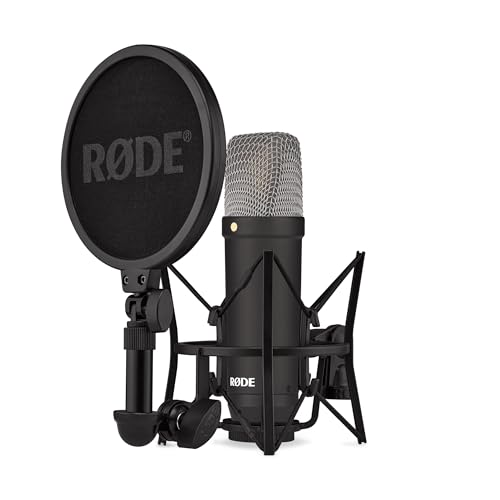
- Legendary NT1 vocal voicing
- Very low self-noise design
- Includes shock mount and pop filter
Best For: Singers who want a quiet XLR mic with a full starter bundle
Most Flexible Starter Kit

- USB and XLR connectivity
- All-in-one accessory bundle
- Software controls in USB mode
Best For: Beginners who want easy USB recording now and XLR flexibility later
Budget Studio Pick

- Affordable vocal-focused condenser
- Includes shock mount and XLR cable
- Cardioid pattern reduces ambience
Best For: Budget-minded singers setting up a simple home or project studio
Classic Home-Studio Standard
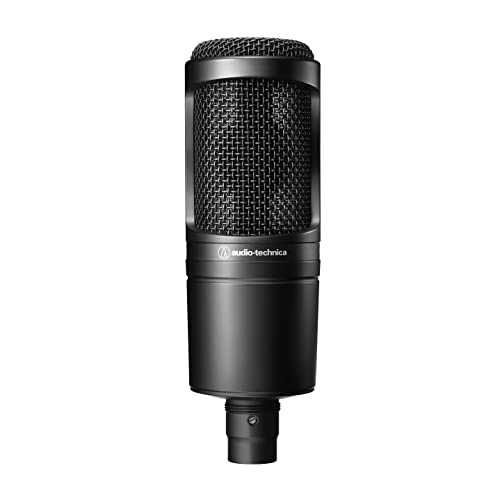
- Proven home-studio favorite
- Cardioid pattern improves isolation
- Wide dynamic range and SPL handling
Best For: Home-studio singers who want a versatile, established XLR mic
Budget Studio Kit
MAONO PM320S XLR Condenser Kit

- Includes boom arm, shock mount, pop filter, and cable
- Cardioid pickup helps reduce room noise for vocals
- 16mm capsule aims for clean, studio-style sound
Best For: Singers and beginners building a complete home vocal setup
Pro Vocal Workhorse
Audio-Technica AT2035 Studio Mic

- Large diaphragm for smooth, natural vocal capture
- Cardioid pattern helps isolate the singer
- High-pass filter and pad improve recording flexibility
Best For: Home and project studio singers needing a reliable XLR condenser
Premium Mix-Ready Pick

- Dual-diaphragm capsule for smooth, detailed audio
- RF shielding and cardioid pattern improve noise rejection
- Integrated and detachable pop filters help tame plosives
Best For: Singers wanting a premium, mix-ready XLR vocal mic
Budget Project Studio Pick

- Clear, detailed vocal capture
- Handles loud sources up to 150 dB SPL
- Cardioid pattern helps reduce room spill
Best For: Singers who want an affordable, reliable XLR condenser for home recording
All-in-One Vocal Kit

- 26mm cardioid capsule with balanced vocal tone
- Includes shock mount, foam filter, and XLR cable
- Solid metal build for studio use
Best For: Vocalists who want a ready-to-go condenser bundle for singing
Premium Voice Detail Choice
512 Audio Skylight Large Diaphragm Mic

- 34mm capsule tuned for warmth and clarity
- Includes pop filter and shockmount
- Cardioid pattern helps reduce room noise
Best For: Singers who want a polished XLR condenser with useful accessories
Studio-Ready Vocal Choice – RODE NT1 Signature Series Black
If you want condenser microphones for singing with a polished, studio-style sound, the RØDE NT1 Signature Series is built around vocals first. Its large-diaphragm cardioid design helps focus on the singer while rejecting more of the room, and the included shock mount, pop filter, and XLR cable make it easy to start tracking right away with an audio interface.
Best For: Singers who want a quiet, studio-focused XLR mic with a complete starter bundle.
Pros:
- Legendary NT1 voicing tailored for vocal recording
- Very low self-noise for cleaner takes
- Cardioid pattern helps reduce room pickup
- Includes shock mount, pop filter, XLR cable, and dust cover
Cons:
- Requires an audio interface to use
- Not a plug-and-play USB option
This is a strong pick if your priority is a refined vocal capture and you want the accessories included in the box to keep setup simple. It’s especially appealing for singers building a dedicated home or project studio around XLR gear.
Most Flexible Starter Kit – MAONO A04 Gen2 XLR/USB
The MAONO A04 Gen2 is a flexible option among condenser microphones for singing because it can run over USB or XLR. That makes it useful whether you want easy plug-and-play recording on a PC or phone, or you plan to move into an audio interface or mixer later. The included arm stand, shock mount, pop filter, and foam windscreen also make it a practical all-in-one vocal kit.
Best For: Beginners and creators who want one mic that can work by USB now and XLR later.
Pros:
- Dual USB and XLR connectivity
- Includes arm stand, shock mount, pop filter, and foam windscreen
- Cardioid pattern helps cut down off-axis noise
- USB mode adds software controls and noise reduction options
Cons:
- XLR use requires phantom power
- Not compatible with Xbox
If you want a vocal mic that can adapt to different setups, this one offers a lot of value. It’s best suited to users who want convenience now without locking themselves out of a more traditional studio workflow later.
Budget Studio Pick – Mackie EM-91C Condenser Mic
The Mackie EM-91C is a straightforward choice for condenser microphones for singing if you want studio-style performance without a complicated setup. It uses a large-diaphragm cardioid design for vocal and instrument recording, and the included shock mount plus XLR cable help you get started with an interface or mixer.
Best For: Budget-minded singers who want a simple, reliable XLR condenser for home or project studios.
Pros:
- Affordable professional-quality condenser microphone
- Cardioid pattern helps reduce ambience
- Includes shock mount and XLR cable
- Rugged, reliable construction
Cons:
- Requires XLR gear to use
- Limited to a more basic included package compared with fuller kits
For singers building a home studio on a budget, the EM-91C covers the essentials without extra complexity. It’s a practical pick when you want the core condenser experience and already have, or plan to get, the rest of the recording chain.
Classic Home-Studio Standard – Audio-Technica AT2020
The Audio-Technica AT2020 remains a dependable name in condenser microphones for singing, especially for project and home studio use. Its cardioid pattern helps isolate the voice, while the low-mass diaphragm, wide dynamic range, and high SPL handling make it a versatile option for vocals and other recording tasks.
Best For: Home-studio singers who want a proven XLR condenser with strong overall versatility.
Pros:
- Long-running price/performance standard
- Cardioid pattern improves isolation from side and rear sounds
- Wide dynamic range and high SPL handling
- Low-mass diaphragm supports extended frequency response
Cons:
- Needs phantom power and an audio interface
- Microphone-only package, so accessories are minimal
If you want a well-known studio mic that has stayed popular for home recording applications, the AT2020 is still easy to recommend. It’s a solid all-around vocal tool when you want one microphone that can handle more than just singing.
Budget Studio Kit – MAONO PM320S XLR Condenser Kit
If you want condenser microphones for singing with a full starter setup, the MAONO PM320S is a practical XLR option that includes a boom arm, pop filter, shock mount, and XLR cable. Its 16mm condenser capsule, cardioid pickup, and low-noise design are aimed at capturing clean vocal detail while reducing room sound.
Best For: Singers, streamers, and home-recording beginners who want an affordable all-in-one XLR vocal kit.
Pros:
- Includes boom arm, shock mount, pop filter, windscreen, and XLR cable
- Cardioid pattern helps reject off-axis noise for cleaner vocal capture
- 16mm condenser capsule is tuned for studio-style vocal and recording use
- Metal build and included accessories make it easy to set up and move
Cons:
- Requires 48V phantom power from an interface, mixer, or preamp
- Best results depend on having the right external audio gear
- Not as stripped-down or portable as a basic standalone mic
Overall, the PM320S stands out if you want a complete entry-level vocal kit rather than just a bare microphone. It offers a lot of value for singers building a home setup and need a ready-to-use bundle.
Pro Vocal Workhorse – Audio-Technica AT2035 Studio Mic
The Audio-Technica AT2035 is a dependable choice if you want condenser microphones for singing with a smooth, natural sound and low noise. Its large-diaphragm cardioid design is built for critical studio work, and the included shock mount adds isolation for cleaner vocal takes.
Best For: Home and project studio singers who want a proven XLR vocal mic with flexible recording use.
Pros:
- Large diaphragm delivers smooth, natural vocal tone with low noise
- Cardioid pattern improves isolation from side and rear sounds
- Includes a custom shock mount for better vibration control
- 80 Hz high-pass filter and 10 dB pad add useful recording flexibility
Cons:
- Requires XLR setup and external audio hardware
- No bundled boom arm or pop filter in the notes provided
- More of a studio mic than a simple plug-and-play desktop option
For singers who want a classic studio-style condenser without unnecessary extras, the AT2035 is a strong middle-ground option. It combines controlled pickup, useful switches, and solid construction in a package that fits serious home recording.
Premium Mix-Ready Pick – Shure SM4 Recording Kit
If you’re comparing condenser microphones for singing and want a polished, mix-ready result, the Shure SM4 is built around clean reproduction and strong noise rejection. Its dual-diaphragm capsule, integrated pop filter, and RF shielding make it a serious studio option for vocal recording.
Best For: Singers and creators who want a premium XLR condenser with strong rejection and included recording accessories.
Pros:
- Brass 1-inch dual-diaphragm capsule supports smooth, detailed vocal sound
- Uniform cardioid pattern helps reject unwanted off-axis noise
- Integrated pop filter and magnetic pop filter help reduce plosives
- RF interference shielding is designed to block noise from phones, laptops, and Wi-Fi
Cons:
- Requires phantom power and an XLR audio interface
- More premium than a basic starter mic, so it may be overkill for casual use
- Best value depends on needing the included kit accessories
The SM4 is the most refined option here for singers who care about clean capture and consistent results. With its mix-ready design and strong shielding, it fits well in modern home studios where control and clarity matter.
Budget Project Studio Pick – AKG P120 for Clear Vocals
If you want condenser microphones for singing that stay affordable without feeling flimsy, the AKG P120 is a straightforward XLR option for home and project studios. Its low-mass diaphragm is tuned for clear vocal detail, and the cardioid pattern helps keep the focus on your voice while reducing pickup from the sides.
Best For: Singers building a basic studio setup who want a reliable, clear-sounding condenser mic for vocals and general recording.
Pros:
- Clear vocal and instrument capture with a low-mass diaphragm
- Handles up to 150 dB SPL, so louder sources are less likely to distort
- Cardioid pickup helps isolate the voice in a typical room
- Includes a stand adapter for simple setup
Cons:
- Requires phantom power and an XLR interface to use
- No bundled shock mount, cable, or pop filter
The P120 is a practical entry-level mic if you want clean results and solid build quality without paying for extras you may not need. It is best suited to singers who already have, or plan to add, the rest of a basic recording chain.
All-in-One Vocal Kit – Melon Audio MA-87 for Singing
For singers who want condenser microphones for singing with useful accessories right away, the Melon Audio MA-87 is an easy starter package. Its large 26mm cardioid capsule is designed for a balanced low end, silky mids, and clear highs, while the included shock mount, foam filter, and XLR cable make it simpler to get recording quickly.
Best For: Vocalists who want a ready-to-use bundle for home studio recording and podcast-style vocal work.
Pros:
- Large 26mm cardioid capsule for balanced vocal tone
- Includes shock mount, foam filter, and 4ft XLR cable
- Solid metal body and grill for durable everyday use
- Requires 48V phantom power, as expected for a studio condenser
Cons:
- Needs an audio interface or other phantom-power source
- Included cable is only 4 feet long
The MA-87 is appealing if you want a practical package rather than a bare microphone. It focuses on vocal recording value by combining a singing-friendly capsule with the basics needed to start tracking immediately.
Premium Voice Detail Choice – 512 Audio Skylight Large Diaphragm Mic
If you are comparing condenser microphones for singing and want a more polished studio sound, the 512 Audio Skylight is built around a large 34mm gold-plated capsule and a custom-tuned response for warmth and clarity. Its cardioid pattern helps keep the recording focused, and the included pop filter and shockmount make it easier to capture cleaner vocals in a home or project studio.
Best For: Singers who want a refined, modern vocal mic with included accessories for cleaner recordings.
Pros:
- 34mm gold-plated large diaphragm capsule for rich, modern sound
- Custom-tuned response designed to capture voice detail with warmth and clarity
- Includes metal mesh pop filter and low-profile shockmount
- Cardioid pickup helps reduce ambient room noise
Cons:
- Requires an XLR setup with interface or mixer
- Heavier than many compact studio mics
The Skylight is a strong step up if your priority is a more polished vocal presentation. It combines a classic large-diaphragm design with practical accessories, making it a sensible pick for singers who want cleaner, more controlled recordings.
How We Picked These Condenser Microphones for Singing
We prioritized vocal clarity, self-noise, build quality, and the versatility singers actually need. That means looking at capsule size, polar pattern, included accessories, and whether each mic is better suited to a quiet studio or a more flexible home setup.
We also considered how easy each model is to use with common recording gear, especially XLR interfaces and hybrid USB/XLR options for beginners.
Quick Comparison: What Stands Out
In broad terms, the strongest Condenser Microphones for Singing here separate into three groups: premium studio choices for the cleanest vocal capture, affordable XLR models for first-time buyers, and bundled kits that reduce the extra cost of accessories. If you already have an audio interface, an XLR mic is usually the best path for long-term quality and upgrade potential.
Key Buying Factors for Condenser Microphones for Singing
Polar Pattern
A cardioid pattern is the most common choice for vocals because it focuses on your voice and helps reject room noise from the sides and rear.
Self-Noise and Sensitivity
Singing microphones should capture detail without adding hiss. Lower self-noise matters most for intimate vocals, quiet passages, and layered recordings.
Diaphragm Size and Voice Character
Large-diaphragm Condenser Microphones for Singing often deliver a fuller, more polished vocal tone, while smaller designs can feel a bit tighter and more precise.
Included Accessories
Shock mounts, pop filters, and boom arms can save money and improve results right away, especially for new home studio setups.
Connection Type
XLR microphones remain the standard for recording quality and flexibility. USB/XLR combo models are worth considering if you want a simpler setup or plan to record from both a computer and an interface.
Who Should Buy Which Condenser Microphones for Singing?
If you want the cleanest possible studio vocal, choose a higher-end XLR condenser and pair it with a good interface and acoustic treatment. If you are starting out, a budget condenser microphone kit can get you recording quickly without extra purchases.
For singers who stream, podcast, or move between devices, a dual-connection model is often the most practical choice. If you need one mic that can do vocals and general content creation well, look for a versatile cardioid condenser with solid accessories and strong noise control.