The best compact DI boxes make it easier to connect instruments and playback sources to mixers, audio interfaces, and stage systems without adding unnecessary bulk. The right model can reduce hum, balance an unbalanced signal, and provide the outputs or controls your setup requires.
This roundup compares 10 compact options, including passive and active designs, stereo and dual-channel units, ground-lift features, attenuation pads, and splitter functionality. Use the guide below to narrow your choice by source, power availability, and performance needs.
Best 10 Compact Di Boxes Picks for 2026
Best Stereo Passive Pick

- Dual 1/4-inch inputs for stereo sources
- Ground lift and 15 dB pads
- Passive, power-free steel construction
Best For: Stereo keyboards, DJ controllers, and backing-track rigs
Best Active Guitar DI
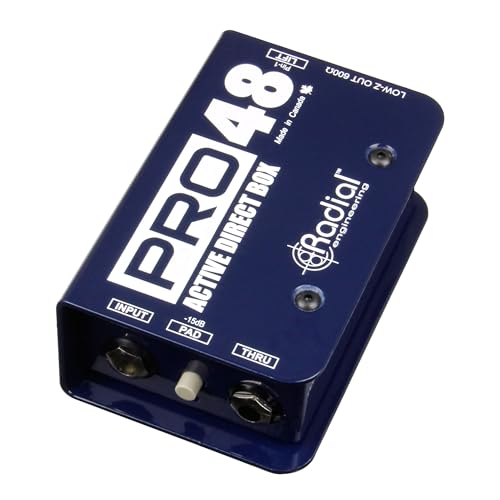
- 48-volt phantom-powered active design
- -15 dB pad for passive guitars and basses
- Steel enclosure with balanced mono XLR output
Best For: Phantom-powered guitar and bass rigs
Best Simple Passive Converter

- 1/4-inch TS to balanced XLR3M conversion
- No external power required
- Metal construction for live use
Best For: Single-instrument connections to mixers and PA systems
Best Two-Channel Splitter

- Two-channel balanced XLR output
- Mono, stereo, dual, and Link modes
- Phantom or 9-volt battery power
Best For: Stereo and dual-channel line-level setups
Rugged Passive Pick

- Passive mono design with custom transformer
- Rugged I-beam and stainless-steel construction
- Suitable for instruments, snakes, and consoles
Best For: Live and studio setups needing a durable passive DI
Economical Workhorse
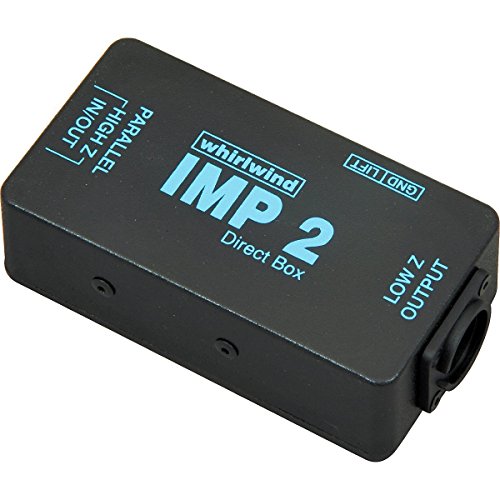
- Compact one-channel passive design
- Balances instrument or line-level signals
- Riveted TRHL transformer and durable build
Best For: Budget-conscious live and studio signal conversion
Flexible Budget Choice

- Passive impedance and signal matching
- Thru/Out connection for an amplifier
- Metal enclosure with TRS and XLR connectivity
Best For: Affordable guitar, bass, mixer, and amplifier setups
Simple Signal Matching

- No power required
- Pad and ground-lift switches
- 1/4-inch through jack and XLR output
Best For: Guitar, keyboard, and basic stage setups
Flexible Attenuation Control

- Variable attenuation for input flexibility
- Balanced floating XLR output
- Lift and GND ground modes
Best For: Live performance setups with varied input levels
Hum-Reduction Specialist
Donner Special-I Passive DI Box

- Transformer isolation helps reduce ground-loop noise
- Ground lift and thru output
- Compact 7.87 x 2.76 x 2.76-inch design
Best For: Stage and studio rigs feeding both an amp and PA
Best Stereo Passive Pick – Mackie MDB-2P
The Mackie MDB-2P is a practical choice when you need compact di boxes for stereo keyboards, DJ controllers, or backing-track rigs. Its dual 1/4-inch inputs, ground lift, and passive design keep setup straightforward without requiring power.
Best For: Stereo keyboard, DJ, and backing-track setups that need hum reduction and flexible signal handling.
Pros:
- Dual high-impedance 1/4-inch inputs support stereo sources.
- Ground lift helps address ground-loop buzz.
- 15 dB pads accommodate hot signals without distortion.
- Passive operation requires no power.
Cons:
- Designed for stereo applications rather than a single-channel setup.
- Passive operation may be less suitable when an active DI circuit is preferred.
With a steel case and no power requirement, the MDB-2P is a convenient road-ready option for stereo rigs where noise control and simple connectivity matter.
Best Active Guitar DI – Radial Pro48
The Radial Pro48 is one of the more compact di boxes for guitar and bass players who want an active, phantom-powered signal path. Its high-resolution design and -15 dB pad are aimed at cleanly handling passive instrument sources.
Best For: Guitar and bass setups using phantom power and requiring an active direct box with input attenuation.
Pros:
- Active circuit is powered by 48-volt phantom power.
- -15 dB pad helps accommodate stronger passive guitar and bass signals.
- Provides balanced mono output through XLR.
- Steel enclosure is suited to regular stage use.
Cons:
- Requires phantom power rather than operating entirely passively.
- Its balanced mono output is less suited to stereo sources.
The Pro48 is a focused option for instrument rigs that can supply phantom power and benefit from an active, low-noise direct-box circuit.
Best Simple Passive Converter – Hosa DIB-443 Sidekick
The Hosa DIB-443 Sidekick keeps compact di boxes simple: connect an unbalanced 1/4-inch TS instrument output and send a balanced XLR signal to a mixer or PA. Its passive, plug-and-play design requires no external power.
Best For: Guitars, basses, and keyboards needing straightforward 1/4-inch-to-XLR conversion for mixers or PA systems.
Pros:
- Converts unbalanced 1/4-inch TS signals to balanced XLR3M.
- Passive operation requires no external power.
- Helps reduce noise on long cable runs.
- Metal construction is built for live-performance use.
Cons:
- Provides a single-channel conversion rather than stereo operation.
- Does not list attenuation or a ground-lift control in the supplied specifications.
The DIB-443 is a no-frills choice when basic signal balancing and rugged construction are more important than extra controls or stereo routing.
Best Two-Channel Splitter – Behringer Ultra-DI DI20
The Behringer Ultra-DI DI20 adds two-channel flexibility to the compact di boxes category. It accepts two unbalanced 1/4-inch TRS line inputs, provides balanced XLR outputs, and can operate in mono, dual-channel, or stereo mode.
Best For: Users needing two-channel DI operation, switchable linking, attenuation, and battery or phantom-powered flexibility.
Pros:
- Two inputs and two balanced XLR outputs support dual-channel use.
- Switchable mono, 2-channel, stereo, and Link modes add routing flexibility.
- Input attenuation handles outputs rated up to 3,000 watts.
- Ground lift and phantom or 9-volt battery power are included.
Cons:
- Its broader feature set may be unnecessary for a basic single-channel setup.
- Battery operation requires a 9-volt battery when phantom power is unavailable.
The DI20 stands out when a compact setup needs more than simple conversion, particularly for stereo sources, linked channels, or demanding line-level outputs.
Rugged Passive Pick – Radial Pro DI
The Radial Pro DI is a compact di box for players and engineers who want a durable passive mono solution. Its transformer-based design supports acoustic guitars, bass, keyboards, drum machines, and professional snake systems or consoles in live and studio settings.
Best For: Live and studio setups needing a rugged passive direct box for varied musical instruments.
Pros:
- Passive mono operation with a custom transformer
- Rugged I-beam construction and stainless-steel enclosure
- XLR connectivity for professional audio systems
Cons:
- Passive design may not suit users seeking an active DI with additional controls
- Listed as a single-channel unit
Choose the Radial Pro DI when build quality and dependable transformer-based signal conversion matter more than extra features. Its broad instrument compatibility makes it a flexible compact di box for stage or studio use.
Economical Workhorse – Whirlwind IMP 2
The Whirlwind IMP 2 is a compact di box built around a straightforward passive transformer design. It converts an unbalanced line- or instrument-level signal to a low-impedance, balanced mic-level signal while keeping the footprint and cost practical.
Best For: Musicians and audio users who need an economical, durable one-channel DI for everyday setups.
Pros:
- Compact footprint measuring 7.35 x 6.85 x 2 inches
- Converts instrument or line-level unbalanced signals to balanced mic level
- TRHL transformer is riveted to the chassis rather than glued
- Designed for professional quality and durability at an economical price
Cons:
- Single-channel design
- Passive operation offers a simpler feature set
The IMP 2 is a sensible choice when you want reliable passive signal conversion without paying for a more elaborate feature set. Its compact form and riveted transformer construction suit utility-focused live or studio rigs.
Flexible Budget Choice – Behringer DI400P
The Behringer DI400P is a compact di box for connecting guitars, basses, and other unbalanced sources to mixers or amplifiers. It provides impedance and signal matching, balanced mic-level output, and a Thru/Out jack for sending the original signal to an onstage amplifier.
Best For: Guitarists, bassists, and small audio setups needing affordable passive instrument-to-mixer connectivity.
Pros:
- Converts unbalanced line-level signals to balanced mic-level output
- Helps support long cable runs without losing high frequencies
- Thru/Out jack can feed an amplifier while the balanced signal goes to a mixer
- Metal enclosure with TRS and XLR connectivity
Cons:
- Passive design does not provide active DI features
- Listed as a mono direct box despite specifications showing two audio channels
- Not waterproof or water resistant
The DI400P is a practical budget option when you need basic impedance matching and an amplifier-through connection. Its metal enclosure and flexible output arrangement make it useful for straightforward stage and audio applications.
Simple Signal Matching – Compact Passive DI Box
This compact DI box provides a straightforward way to connect a guitar or keyboard to balanced and unbalanced equipment. Its passive design requires no power, while the pad and ground-lift switches add useful flexibility for hot sources and grounding-related buzz.
Best For: Guitarists, keyboard players, and simple stage or studio setups that need passive signal conversion without a power supply.
Pros:
- Requires no power, making setup simple.
- Includes 1/4-inch input and through jacks for sending a signal onward.
- Pad switch helps soften hot sources.
- Ground lift can help address electrical grounding-related buzz.
Cons:
- Passive operation offers no active gain or signal boosting.
- Provides one output channel.
With its metal enclosure, balanced XLR output, and compact 2 x 6.5 x 3.5-inch footprint, this Yovus model is a practical choice when you want uncomplicated DI functionality in a small package.
Flexible Attenuation Control – Livewire SPDI Passive DI
The Livewire SPDI is one of the more flexible compact DI boxes for managing different input levels. It combines a high-impedance 1/4-inch input and throughput with a balanced, floating XLR output, plus variable attenuation for accommodating a broader range of sources.
Best For: Live performers and small setups that need adjustable input handling, signal throughput, and ground-connection control.
Pros:
- Variable attenuation provides input flexibility.
- 1/4-inch high-impedance input and throughput support instrument connections and signal pass-through.
- Balanced, floating XLR output ignores +48V phantom power.
- Lift and GND modes allow control over the input-to-output ground connection.
Cons:
- The supplied notes do not specify a dedicated pad range or additional outputs.
- Its listed dimensions are relatively broad for a compact DI box at 6.93 x 6.73 x 2.05 inches.
For players who value attenuation adjustment and clear ground-routing choices, the SPDI offers more control than a bare-bones passive box while retaining a simple passive design.
Hum-Reduction Specialist – Donner Special-I Passive DI Box
The Donner Special-I is a compact passive DI box designed for stage and studio use, with transformer isolation aimed at reducing hum and buzz from ground loops. It converts an unbalanced instrument- or line-level signal to a low-impedance balanced microphone-level signal while preserving a clean, flat response.
Best For: Guitar, bass, and keyboard setups that need transformer isolation, PA connectivity, and a through signal for an amplifier.
Pros:
- Donner LAB-S1 transformer supports ultra-flat frequency response and input/output isolation.
- Ground-lift switch helps address typical ground-loop noise.
- Thru output can feed an amplifier while the balanced output goes to a PA system.
- Heavy-duty design is intended for stage and studio applications.
Cons:
- The body uses plastic materials rather than a metal enclosure.
- Passive operation does not provide active signal gain.
- The supplied specifications do not list an attenuation pad.
Its transformer isolation and simultaneous amp/PA routing make this Donner a strong option when hum control and flexible signal distribution matter more than extra controls.
How We Picked These Compact Di Boxes
We selected models that suit common recording, rehearsal, live-performance, and installation needs. Our comparison focuses on signal type, active versus passive circuitry, channel count, input and output flexibility, ground isolation, attenuation, phantom-power compatibility, build practicality, and overall ease of integration. Because a DI box is often placed on the floor or transported frequently, compact dimensions and straightforward controls also matter.
Passive units are generally simple, durable, and well suited to keyboards, playback devices, and many active instruments. Active boxes can better accommodate passive pickups and may offer additional gain, headroom, or routing flexibility, but they typically depend on phantom power or batteries.
Quick Comparison
| Best For | Recommended Type | Useful Features |
|---|---|---|
| Passive instruments and simple stage rigs | Passive DI | Transformer isolation, ground lift, rugged operation |
| Passive guitar or bass pickups | Active DI | Higher input impedance, phantom-power operation |
| Keyboards and stereo sources | Stereo or dual-channel DI | Two inputs, stereo routing, channel flexibility |
| Long cable runs or noisy environments | Isolated DI with ground lift | Hum reduction and balanced XLR output |
| Very hot instrument or line-level signals | DI with attenuation pad | Input level control and overload protection |
Key Buying Factors for Compact Di Boxes
Active or Passive Design
Choose passive when you want a low-maintenance solution with no battery or phantom-power requirement. Choose active when the source has a weak or passive pickup, or when you need a higher-impedance input and additional signal flexibility. Check your mixer or interface before relying on phantom power.
Inputs, Outputs, and Channel Count
A single-channel DI is enough for most guitars, basses, microphones with suitable routing, and mono playback sources. Keyboards, stereo outputs, and dual-source setups may benefit from a stereo or two-channel model. Confirm whether the box provides a through output for sending the original signal to an amplifier.
Ground Lift, Pad, and Isolation
A ground-lift switch can help address hum caused by differing electrical grounds, while a pad is useful for keyboards, active basses, and other high-output sources. Transformer isolation and balanced XLR output are especially valuable when signals travel long distances to a stage box or mixing console.
Compatibility and Construction
Verify the input connector, required cables, phantom-power behavior, and expected signal level. Metal housings, protected switches, and secure jacks are preferable for touring or frequent floor use. Compact size is helpful, but not if it makes controls difficult to access or leaves connectors vulnerable.
Who Should Buy Which Compact Di Boxes?
For a straightforward instrument-to-mixer connection, a compact passive model is usually the best starting point. Guitarists using passive pickups should consider an active DI if the passive input loads the instrument or produces a weak signal. Keyboard players and DJs should prioritize stereo or dual-channel operation, while live engineers may prefer ground lift, attenuation, and a through output for flexible routing. If your setup regularly includes multiple sources, a two-channel active unit can reduce the number of boxes required. For small home studios, choose the model that matches your interface inputs and power options rather than paying for features you will not use.