Finding the right chromatic harmonica means balancing tone, response, comfort, and long-term reliability. This roundup compares 10 C-key models with different hole counts, layouts, valve designs, and price points.
Whether you are learning slide technique, practicing blues and jazz, or upgrading to a professional instrument, the guide below highlights the features that matter most before you buy.
Best 10 Chromatic Harmonicas Picks for 2026
Best Heavy-Duty Value
Professional Grade 10-Hole Chromatic Harmonica
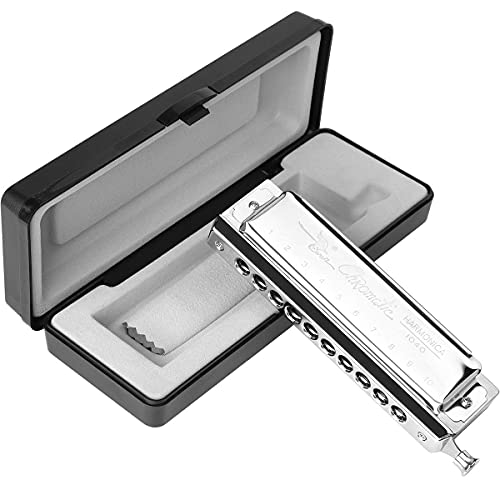
- 40 tones in the key of C
- Stainless-steel body with case
- Compact design for travel
Best For: Beginners and advanced players wanting a durable, portable C-key model
Best Ergonomic Upgrade
Suzuki SCX-48 Chromatix 12-Hole Harmonica

- Ergonomic mouthpiece
- Smooth, precise slide
- Durable ABS comb
Best For: Players seeking comfortable handling in a 12-hole C-major model
Best Budget Gift Set
East top 10-Hole 40-Tone Harmonica

- 40 tones in C key
- Comfortable round mouthpiece
- Includes bag, cloth, and instruction
Best For: Beginners, students, and gift buyers
Best Extended Range

- Four-octave C3–D7 range
- Maintenance-friendly screw assembly
- Left-hand slide conversion
Best For: Players needing broad range and serviceable construction
Best Maintenance-Friendly Pick

- 12 holes and 48 tones in C
- Valveless design supports easier cleaning
- Includes pouch and color box
Best For: Beginners and students wanting a full-range, easy-care harmonica
Best Compact Blues-Style Pick

- 10-hole Richter/blues tuning
- Slider adds a semitone
- Only about 0.28 lb
Best For: Blues players seeking a portable, bend-friendly chromatic design
Best Beginner-Friendly 10-Hole Pick

- 10 holes and 40 tones in C major
- Phosphor bronze reeds and slider
- Case, cleaning cloths, and instructions included
Best For: Beginners and students starting with a practical 10-hole chromatic harp
Rich-Tone Pick

- Rich phosphor bronze reed sound
- Rounded, comfortable mouthpiece
- Compact and includes accessories
Best For: Portable practice and performance in C
Stainless-Steel Build

- Stainless-steel comb construction
- Rich sound from phosphor bronze reeds
- Compact rounded-mouthpiece design
Best For: Players wanting a durable stainless-steel C-key model
Best Heavy-Duty Value – Professional Grade 10-Hole Chromatic Harmonica
For shoppers comparing chromatic harmonicas, this 10-hole, 40-tone model offers a practical combination of portability, durability, and full chromatic range. Its slide button provides the notes between the standard C-major scale tones, while the included case and cleaning cloth make it convenient for practice and travel.
Best For: Beginners, ambitious players, and advanced players seeking a compact C-key chromatic harmonica for varied musical styles.
Pros:
- 40 tones with a slide for accessing half-steps.
- Phosphor bronze reeds and a thicker copper plate are designed for rich, clear notes.
- Heavy-duty stainless-steel construction with a case and cleaning cloth.
- Compact 5.12-inch design suitable for pocket or travel use.
Cons:
- Its 10-hole design has a smaller range than larger chromatic models.
- The supplied notes do not specify a formal warranty.
This is a versatile entry-to-intermediate option when portability and included accessories matter. Players wanting a broader range may prefer a 12- or 16-hole instrument.
Best Ergonomic Upgrade – Suzuki SCX-48 Chromatix 12-Hole Harmonica
The Suzuki SCX-48 is a polished 12-hole choice for shoppers seeking chromatic harmonicas with a comfortable playing design. It combines an ergonomic mouthpiece, a smooth slide mechanism, phosphor bronze reeds, and a durable ABS comb in a C-major instrument.
Best For: Players who prioritize comfortable handling, smooth slide operation, and a 12-hole format.
Pros:
- Ergonomically designed mouthpiece for comfortable playing.
- Precise, smooth slide mechanism.
- Phosphor bronze reed plates and a resilient ABS comb.
- Chrome-plated covers and a polished finish.
Cons:
- The supplied notes do not include a case or cleaning cloth.
- It is listed in C Major only.
With its 12-hole layout and player-focused mouthpiece, the SCX-48 is a strong fit for those who value playability and established construction over a larger 16-hole range.
Best Budget Gift Set – East top 10-Hole 40-Tone Harmonica
This East top model gives beginners and students an approachable way to explore chromatic harmonicas. The 10-hole, 40-tone design includes a slide, a comfortable round mouthpiece, and a compact package with a canvas bag, instruction, and cleaning cloth.
Best For: Beginners, students, and gift buyers looking for a portable C-key chromatic harmonica with useful starter accessories.
Pros:
- 40 tones and a slide in a compact 10-hole format.
- Plastic comb and phosphor bronze reeds are designed for responsive, rich sound.
- Round mouthpiece is intended to feel comfortable while playing.
- Includes instruction, cleaning cloth, and canvas bag.
Cons:
- The listed 10-hole range may not suit players seeking a broader instrument.
- Its plastic comb may feel less substantial than metal-bodied alternatives.
This is a practical starter package for casual playing, lessons, or gifting. The included accessories and 30-day unconditional money-back support add convenience for first-time buyers.
Best Extended Range – Hohner The 64 Chromonica
For players comparing chromatic harmonicas by range, Hohner’s The 64 Chromonica stands out with four octaves from C3 to D7. Its resilient plastic comb is designed for reliable performance across climates, and the screw-assembled construction supports maintenance and left-hand slide conversion.
Best For: Players who need an extended four-octave range and value serviceability or left-hand slide conversion.
Pros:
- Four-octave tonal range from C3 to D7.
- Resilient plastic comb for dependable performance under changing climate conditions.
- Screw assembly makes maintenance easier.
- Slide can be converted for left-hand use.
Cons:
- Its 7.6-inch length is less pocket-friendly than compact 10-hole models.
- The supplied notes do not mention a cleaning cloth.
- The listed warranty is 90 days.
The 64 Chromonica is the range-focused choice in this group. It makes the most sense for experienced players or repertoire that benefits from four octaves rather than maximum portability.
Best Maintenance-Friendly Pick – East Top Forerunner 2.0
The EAST TOP FORERUNNER 2.0 is a practical choice among chromatic harmonicas for players who want a full 12-hole, 48-tone C-key instrument with simpler cleaning. Its valveless design can be washed directly, while the compact zip pouch makes it convenient for travel, practice, or casual playing.
Best For: Beginners, students, and players who prioritize easy maintenance and a full chromatic range.
Pros:
- 12 holes and 48 tones provide a broad playing range.
- Valveless construction simplifies washing and avoids winter membrane concerns noted by the manufacturer.
- Transparent ABS comb, smooth matte stainless-steel covers, and stable cylindrical cover supports.
- Includes a zip pouch and color box; the compact design weighs 240 g.
Cons:
- The C key may not suit players seeking another key.
- Its modern painted finish may require careful handling to retain its appearance.
With its 48-tone layout, revised slider and mouthpiece structure, and washable valveless build, the Forerunner 2.0 is a well-rounded option for everyday practice and portable playing.
Best Compact Blues-Style Pick – JDR Trochilus
The JDR Trochilus stands out among chromatic harmonicas with its compact 10-hole blues/Richter layout. Its slider raises the instrument by a semitone, while the valveless design is intended to preserve a traditional blues-harmonica feel and allow bending.
Best For: Blues players and travelers who want chromatic flexibility in a smaller instrument.
Pros:
- Richter/blues tuning retains the arrangement and bending approach of a traditional blues harmonica.
- Slider raises the full harmonica by a semitone and provides a three-octave vocal range.
- Compact 5.28-inch body weighs about 0.28 lb and has one row of mouthpiece holes.
- Includes a protection box, dust cloth, and introduction manual.
Cons:
- Its 10-hole blues-oriented layout differs from a conventional full-size chromatic harmonica.
- The included warranty coverage is shorter than the one-year coverage listed for some alternatives.
The Trochilus is a specialized choice rather than a standard chromatic layout, but its small size, bend-friendly response, and semitone slider make it appealing for blues-focused playing on the move.
Best Beginner-Friendly 10-Hole Pick – Conjurer 1040
The CONJURER 1040 is a straightforward option among chromatic harmonicas for players starting with a 10-hole, 40-tone C-major instrument. It combines a tone-change slider with phosphor bronze reeds, a stainless-steel cover, and accessories intended to support practice and care.
Best For: Beginners, students, and intermediate players who want a gift-ready C-major harmonica with included care supplies.
Pros:
- 10 holes and 40 tones with a slider for expanded range.
- Phosphor bronze reeds are tuned using professional equipment according to the manufacturer.
- Food-grade stainless steel and ABS resin materials are specified for the body and cover.
- Includes a protective case, cleaning cloths, and instructions.
Cons:
- It offers fewer holes and tones than the 12-hole, 48-tone Forerunner 2.0.
- Care instructions prohibit hot water, so cleaning requires cold water and drying.
- The C-major key may be limiting for players who need a different key.
The Conjurer 1040 balances accessible specifications with useful starter accessories, making it a sensible entry point for learning chromatic technique and slider control.
Rich-Tone Pick – Easttop King Dream 48K
The Easttop King Dream is a practical choice among chromatic harmonicas for players who want a rich sound, responsive action, and a compact 12-hole, 48-tone design. Its phosphor bronze reeds, brass reedplate, and rounded mouthpiece suit practice, performance, and travel.
Best For: Adults, students, and professionals seeking a rich-sounding C-key chromatic harmonica with portable storage.
Pros:
- Phosphor bronze reeds and brass construction provide a rich sound profile.
- Rounded mouthpiece is designed for comfortable playing.
- Compact size fits easily in a pocket for travel, school, or casual sessions.
- Includes a case, manual, and cleaning cloth.
Cons:
- The 12-hole, 48-tone layout is limited to the C key.
- The product is backed by a 30-day unconditional money-back offer and a one-year manufacturer warranty, so buyers should review coverage details.
Choose this model if rich tone, portability, and a gift-ready package matter most. Its brass build and rounded mouthpiece make it a well-rounded option for regular practice and performance.
Beginner-Friendly Choice – JDR GM0648
The JDR GM0648 is one of the more beginner-friendly chromatic harmonicas in this group, combining a 12-hole, 48-tone C-key layout with a smooth mouthpiece, responsive slider, and anti-squeal design. Its ABS comb and protective case add practical durability for learning and regular use.
Best For: Beginners and intermediate players who want comfortable handling, clear notes, and guided features for learning.
Pros:
- Phosphor bronze reeds are designed for resonant, full-bodied sound.
- Chrome-plated copper mouthpiece supports smooth lip movement.
- Anti-squeal comb design and streamlined airflow promote clear notes.
- Includes a case and cloth, with a lifetime warranty, 30-day refund, and 180-day replacement service listed.
Cons:
- Like the other models here, it is limited to the C key and 48 tones.
- The feature-rich construction may be more than a casual player needs.
This JDR model stands out for its learning-oriented details, including engraved scale markings and a high-sensitivity slider. It is a sensible pick when ease of use and support coverage are priorities.
Stainless-Steel Build – Easttop SR 48-Tone Chromatic
The Easttop SR offers a stainless-steel comb and polished silver finish for players comparing chromatic harmonicas by construction and feel. Its phosphor bronze reeds, 12-hole 48-tone range, and rounded mouthpiece are designed for responsive playing with a rich sound profile.
Best For: Players who prefer a stainless-steel comb, rich tone, and a compact C-key instrument for practice or travel.
Pros:
- Stainless-steel comb provides a durable, polished construction.
- Phosphor bronze reeds and a 1.2 mm reed plate support rich sound and higher pitches.
- Electroplated reed plate, holes, and reed gaps are designed for improved airtightness and response.
- Includes a cleaning cloth and compact design for portability.
Cons:
- The instrument is available in the C key with 48 tones.
- The supplied package details list a cleaning cloth but do not mention a protective case.
- Warranty coverage is listed as one year, with a separate 30-day money-back offer.
The SR is the better fit for shoppers prioritizing a stainless-steel comb and traditional rich tone. Its portable size and comfortable mouthpiece also make it suitable for carrying between lessons, rehearsals, and casual playing.
How We Picked These Chromatic Harmonicas
We selected models that represent the main choices buyers face: 10-hole and 12-hole layouts, 40- and 48-tone ranges, valveless and traditional designs, and beginner-friendly through professional-grade construction. We also considered materials, included accessories, stated tuning, portability, and suitability for different playing styles.
All of the instruments use the common key of C, making them easier to compare and practical for lessons, standard instructional material, and ensemble playing. Product descriptions and specifications should still be checked before purchase, especially for hole layout, range, and valve configuration.
Quick Comparison
| Type | Best suited to | Typical advantage |
|---|---|---|
| 10-hole, 40-tone | Beginners and compact setups | Simple layout and easy portability |
| 12-hole, 48-tone | Intermediate and advanced players | Extended range for more repertoire |
| Valveless | Players wanting a different response | Simpler airflow design and distinctive feel |
| Professional-grade metal models | Frequent performers | Durability, projection, and refined control |
Key Buying Factors for Chromatic Harmonicas
Hole Count and Range
A 10-hole model is compact and less intimidating for new players, while a 12-hole instrument offers four octaves or a broader practical range depending on its layout. Choose the smaller format for portability and straightforward learning; choose 12 holes if you expect to play more demanding melodies or need additional upper notes.
Slide, Valves, and Response
The slide should move smoothly without excessive looseness or sticking. Traditional chromatic designs use valves to direct airflow, while valveless models may feel more open and can appeal to players who prefer simpler maintenance. Neither design is automatically better—the best choice depends on embouchure, breath control, and playing preference.
Materials and Maintenance
Stainless-steel covers and durable comb materials can improve resistance to corrosion and everyday wear. A case and cleaning cloth are useful extras, but regular drying, careful storage, and occasional cleaning matter more than accessories alone. Avoid sharing the instrument and follow the manufacturer’s cleaning instructions.
Tuning and Comfort
Confirm whether the instrument uses standard chromatic tuning or a blues/Richter-style layout. Mouthpiece shape, weight, cover edges, and slide placement also affect comfort during long sessions. If possible, prioritize a design with replacement parts or established manufacturer support.
Who Should Buy Which Chromatic Harmonicas?
- Beginners and students: Start with a responsive 10-hole C model that includes a case and has a clear, conventional layout.
- Players expanding their repertoire: Choose a 12-hole, 48-tone chromatic harmonica for extra range and greater flexibility.
- Blues-focused players: Consider a model specifically labeled for blues or Richter tuning, while checking that its slide operation matches your technique.
- Frequent performers: Look for sturdy stainless-steel construction, consistent slide action, comfortable ergonomics, and dependable replacement-part availability.
- Players curious about alternative designs: A valveless model can provide a different response and maintenance experience, but it may require an adjustment period.