Vertical video is now essential for social content, mobile-first campaigns, and fast-paced client work—but not every camera gimbal makes portrait orientation simple. The best models combine reliable three-axis stabilization with practical vertical-shooting controls, useful payload capacity, and broad camera compatibility.
We compared 10 camera gimbals with vertical shooting across DJI, FeiyuTech, and ZHIYUN to help you match the right stabilizer to your camera body, lens setup, shooting style, and budget.
Best 10 Camera Gimbal with Vertical Shooting Picks for 2026
Smart Tracking Pick

- Built-in AI tracking
- Fast vertical-shooting setup
- 2.5kg payload and touchscreen
Best For: Solo creators and compatible DSLR or mirrorless users
Heavy-Duty Pro Pick

- 4.5kg payload capacity
- Second-generation native vertical shooting
- Focus, zoom, and LiDAR ecosystem
Best For: Professional filmmakers with heavier camera rigs
Fast-Switch Value Pick

- Native vertical and horizontal modes
- Built-in adjustable fill light
- 11.5-hour battery life
Best For: Travel, vlog, wedding, and short-form creators
High-Payload Tracking Pick

- 3.5kg tested payload
- Built-in AI tracking
- Native vertical shooting
Best For: Solo creators with larger DSLR or mirrorless setups
Best Lightweight Pick
- 795g design for travel and extended handheld shooting
- Native vertical shooting for social-media content
- Supports camera setups up to 2kg
Best For: Traveling creators and lightweight mirrorless-camera setups
Best Battery Life

- Native horizontal and vertical mounting
- Up to 12 hours of battery life
- Manual control wheel and focus-system support
Best For: Long shoots and accessory-equipped camera rigs
Best Higher-Payload Option

- Second-generation native vertical shooting
- 3kg payload with extended tilt axis
- RSA port and smoother Teflon-coated axes
Best For: Heavier mirrorless camera and lens combinations
AI-Tracking Pro Pick

- Built-in AI subject tracking
- Native vertical shooting
- 7.7 lb payload and 13-hour battery
Best For: Solo creators and advanced compatible camera setups
Fast-Switch Favorite

- Vertical switch in about 10 seconds
- Automated axis locks
- Supports cameras and phones up to 2 kg
Best For: Fast-paced solo and mobile-content shooting
Lightweight High-Payload Pick

- Native vertical shooting
- 3 kg payload in a 1.05 kg body
- Up to 16-hour battery life
Best For: DSLR and mirrorless users with larger camera setups
Smart Tracking Pick – FeiyuTech SCORP 2
If you want a camera gimbal with vertical shooting support and hands-free framing, the FeiyuTech SCORP 2 combines native vertical setup with built-in AI tracking. Its 2.5kg payload, touchscreen, and wired or Bluetooth camera control make it a practical option for compatible DSLR and mirrorless setups.
Best For: Solo creators, vloggers, and photographers who want integrated subject tracking and quick vertical filming.
Pros:
- Built-in AI tracking works without an extra tracking accessory.
- Quick-release system supports fast vertical shooting.
- 1.3-inch touchscreen and multifunction control knob simplify adjustments.
- Supports wired or Bluetooth camera control.
Cons:
- Maximum payload is 2.5kg, lower than some heavier-duty options.
- It is not water resistant.
- Tracking and advanced controls depend on compatible camera and app connections.
The SCORP 2 is a well-rounded choice when vertical content, automated tracking, and straightforward camera control matter more than carrying the heaviest cinema rigs.
Heavy-Duty Pro Pick – DJI RS 4 Pro
For demanding camera builds, the DJI RS 4 Pro is a camera gimbal with vertical shooting designed around larger DSLR and cinema-camera setups. It supports up to 4.5kg, offers second-generation native vertical shooting, and adds options for focus, zoom, LiDAR, and video-transmission workflows.
Best For: Professional filmmakers and creators using heavier camera-and-lens combinations.
Pros:
- 4.5kg payload accommodates mainstream mirrorless and cinema setups.
- Horizontal-to-vertical switching uses the existing horizontal plate.
- Supports remote dual focus and zoom motor control.
- Optional high-capacity battery grip can extend runtime up to 29 hours.
Cons:
- At 1.84kg, it is heavier than the other listed gimbals.
- Advanced LiDAR and motor functions involve additional ecosystem components.
- It is not water resistant.
The RS 4 Pro stands out for payload capacity and production-oriented expandability, making it better suited to professional rigs than lightweight run-and-gun shooting.
Fast-Switch Value Pick – ZHIYUN Weebill 3S
The ZHIYUN Weebill 3S is a camera gimbal with vertical shooting built into its native horizontal-and-vertical design. It switches to vertical mode in about three seconds, while its fill light, Bluetooth shutter control, and 11.5-hour battery target creators who want an efficient everyday setup.
Best For: Vloggers, wedding shooters, travel creators, and short-form video makers using compatible cameras.
Pros:
- Native horizontal and vertical shooting requires no added vertical arm.
- Built-in 1000-lux dual-color-temperature fill light helps in darker scenes.
- 11.5-hour battery life supports extended shooting.
- PD fast charging and Bluetooth shutter control improve convenience.
Cons:
- Camera compatibility should be checked before relying on Bluetooth controls.
- The supplied notes do not specify a payload rating.
- The 0.96-inch screen is smaller than the displays on some alternatives.
The Weebill 3S is a practical choice for creators who prioritize quick vertical transitions, built-in lighting, and long battery life in a versatile camera stabilizer.
High-Payload Tracking Pick – FeiyuTech SCORP 3
The FeiyuTech SCORP 3 pairs a camera gimbal with vertical shooting and built-in AI tracking with a tested 3.5kg payload. Its OLED touchscreen, detachable remote handle, and native vertical mode make it suited to solo filming with larger mirrorless or DSLR combinations.
Best For: Solo creators, livestreamers, event shooters, and filmmakers using heavier camera-and-lens setups.
Pros:
- Built-in AI tracking needs no external tracking module.
- 3.5kg tested payload supports larger camera and lens combinations.
- Native vertical shooting works without additional accessories.
- Detachable underslung handle can function as a wireless remote controller.
Cons:
- At 1368g, it is not the lightest gimbal for travel.
- It is not water resistant.
- AI tracking and camera controls may depend on supported devices and setup.
The SCORP 3 is a strong fit when you need more payload than the SCORP 2 while still wanting integrated tracking and fast vertical content creation.
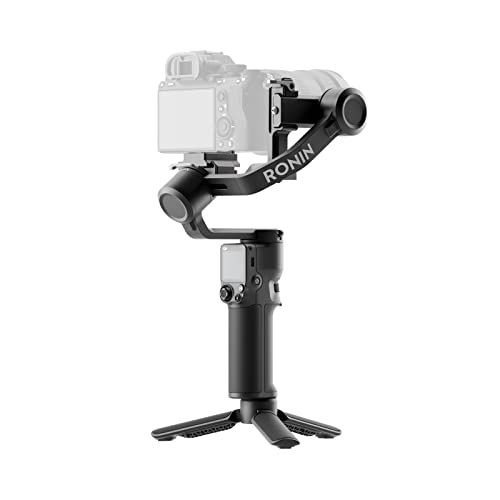
Best Lightweight Pick – DJI RS 3 Mini
If you want a camera gimbal with vertical shooting capability that remains easy to carry, the DJI RS 3 Mini is a practical choice. Its 795g design supports camera and lens combinations up to 2kg, while the native vertical-shooting setup helps you switch to social-media-ready framing without extra accessories.
Best For: Travelers, solo creators, and mirrorless-camera users who prioritize low weight and straightforward vertical shooting.
Pros:
- Lightweight 795g design is convenient for extended handheld use.
- Native vertical shooting uses the included quick-release plate and vertical arm.
- Supports payloads up to 2kg and includes Bluetooth shutter control.
- Features a 1.4-inch full-color touchscreen and 3rd-generation RS stabilization.
Cons:
- Its 2kg payload limit may not suit heavier camera and lens combinations.
- Not water resistant.
- DJI Ronin app activation and full functionality require downloading the app from DJI’s website rather than Google Play.
The RS 3 Mini stands out when portability matters most. It offers the key vertical-shooting functionality creators need while keeping the overall rig substantially lighter than the other options here.
Best Battery Life – ZHIYUN Crane 4E
The ZHIYUN Crane 4E is a camera gimbal with vertical shooting built into its integrated quick-release structure. It switches between horizontal and vertical mounting without additional accessories, and its 12-hour battery supports longer shoots for vlog, video, and action-oriented production.
Best For: Creators who want long runtime, integrated vertical mounting, and hands-on camera controls for more demanding shoots.
Pros:
- Native horizontal and vertical mounting requires no additional accessories.
- 12-hour battery life with support for use while charging.
- Bluetooth shutter control helps trigger camera functions wirelessly.
- Built-in control wheel adjusts shutter, aperture, and ISO, with support for up to two servo focusers.
Cons:
- At 1.63kg, it is substantially heavier than the DJI RS 3 Mini.
- Its maximum recommended payload is 2.4kg, less than the DJI RS 4.
- Not water resistant.
Choose the Crane 4E if battery endurance and built-in control options outweigh the need for a lightweight rig. Its accessory-ready design is particularly useful for creators building a more involved camera setup.
Best Higher-Payload Option – DJI RS 4
For creators needing a camera gimbal with vertical shooting and more capacity, the DJI RS 4 combines second-generation native vertical shooting with a 3kg payload rating. Its extended tilt axis, Teflon-coated arms, and accessory-friendly RSA port make it suited to larger mirrorless camera and lens combinations.
Best For: Advanced creators using heavier camera setups who want fast vertical switching and room to expand their rig.
Pros:
- Second-generation native vertical shooting switches through the horizontal plate without extra accessories.
- 3kg payload capacity accommodates a wider range of camera and lens combinations.
- Teflon-coated axis arms support smoother, more precise balancing.
- Includes a 2-mode joystick switch and RSA port for expanded control options.
Cons:
- At 1.55kg, it is heavier than the RS 3 Mini.
- The BG70 high-capacity battery grip is sold separately.
- Not water resistant, and DJI Ronin app setup requires downloading the app from DJI’s website rather than Google Play.
The RS 4 is the strongest fit when payload capacity and future expansion matter more than minimum weight. It offers a more capable platform for larger setups while keeping vertical shooting quick and integrated.
AI-Tracking Pro Pick – FeiyuTech SCORP-C2
The FeiyuTech SCORP-C2 is a strong camera gimbal with vertical shooting for creators who want built-in subject tracking without an app or extra module. Its 7.7-pound maximum payload, OLED touchscreen, and Magic Wheel support more advanced camera setups and hands-on control.
Best For: Solo creators, vloggers, interview shooters, and filmmakers using compatible Canon, Sony, Nikon, Panasonic, Fujifilm, or other supported cameras.
Pros:
- Built-in AI tracking works without an app or external module.
- Native vertical shooting supports social-media-friendly framing.
- 7.7-pound payload, Arca-compatible quick release, and five-way balancing adjustment.
- Up to 13 hours of battery life with 18W fast charging.
Cons:
- Camera control features depend on compatibility with the specific camera model.
- The larger payload and feature set may be more than casual users need.
The SCORP-C2 stands out when tracking, payload capacity, and built-in controls matter more than keeping the setup minimal. Check camera compatibility before buying to ensure the desired control functions work with your equipment.
Fast-Switch Favorite – DJI RS 4 Mini
The DJI RS 4 Mini is a compact camera gimbal with vertical shooting designed for quick transitions between landscape and mobile-friendly portrait footage. Automated axis locks, responsive follow mode, and optional intelligent tracking make it useful for fast-moving solo shoots.
Best For: Vloggers, mobile-content creators, and mirrorless-camera users who value quick setup and a lightweight design.
Pros:
- Switches from horizontal to vertical shooting in about 10 seconds.
- Automated axis locks help speed up setup.
- Supports cameras and smartphones up to a 2 kg/4.4 lb payload.
- Responsive Follow Mode and optional intelligent tracking support dynamic shots.
Cons:
- Its 2 kg payload is lower than the heavier-duty options in this roundup.
- It is not water resistant.
- The DJI Ronin app must be downloaded from DJI’s official website rather than Google Play.
Choose the RS 4 Mini if fast vertical switching and travel-friendly operation are priorities. Its payload is best suited to compatible mirrorless, vlog, and smartphone setups rather than larger camera-and-lens combinations.
Lightweight High-Payload Pick – ZHIYUN Weebill 3E
The ZHIYUN Weebill 3E combines a 3 kg payload with native vertical shooting, making it a practical camera gimbal with vertical shooting for DSLR and mirrorless users. Its compact body, Bluetooth shutter control, and up to 16-hour battery help support longer shooting days.
Best For: DSLR and mirrorless shooters who need more payload capacity while keeping the stabilizer relatively light and portable.
Pros:
- Native vertical shooting uses the vertical arm without extra accessories or dismantling.
- 3 kg/6.6 lb tested payload supports substantial camera-and-lens combinations.
- Up to 16 hours of battery life with 14W PD fast charging.
- Bluetooth shutter control can start and stop recording or trigger photos.
Cons:
- The included control cable is for Panasonic; other brands may require an additional cable.
- The sling grip and wrist rest for Sling Mode 2.5 are sold separately.
- Camera compatibility should be checked before purchase.
The Weebill 3E is a balanced choice for users who need a higher payload without moving to a much heavier gimbal. Its included accessories are limited for non-Panasonic camera control, so verify the required cable and supported model first.
How We Picked the Best Camera Gimbal with Vertical Shooting
We focused on gimbals that support portrait-orientation filming while accommodating DSLR, mirrorless, or cinema-style camera setups. Our comparison considers payload capacity, camera and lens compatibility, stabilization design, control layout, portability, battery practicality, and features that can improve solo shooting. Models with tracking, multiple mounting options, or more advanced balancing controls may be especially useful for creators who frequently switch between horizontal and vertical formats.
Because advertised payload ratings do not tell the whole story, treat them as a starting point. Camera weight distribution, lens length, accessories, and balance affect real-world performance.
Quick Comparison
| Best For | Look For | Recommended Type |
|---|---|---|
| Travel and lightweight mirrorless kits | Compact body, simple balancing, low carry weight | DJI RS 3 Mini or DJI RS 4 Mini |
| General mirrorless production | Moderate payload and broad compatibility | DJI RS 4, SCORP 3, or Weebill 3S |
| Large lenses and cinema accessories | Higher payload and stronger motors | DJI RS 4 Pro or Crane 4E |
| Solo creators and presenter-style filming | Tracking or convenient control features | FeiyuTech SCORP 2 or a comparable tracking-ready model |
Key Buying Factors for a Camera Gimbal with Vertical Shooting
Vertical Mounting Method
Check whether portrait shooting uses a dedicated vertical mode, a repositioned camera plate, or an included accessory. A fast, secure transition matters when you regularly alternate between landscape and portrait footage.
Payload and Balance
Choose a gimbal with comfortable headroom above your fully accessorized camera weight. Include the lens, battery, cage, microphone, monitor, transmitter, and filter when estimating the load. A gimbal that is technically strong enough but difficult to balance can still be frustrating to use.
Camera Compatibility and Controls
Verify support for your exact camera model before buying. Compatible cables and firmware may enable record, focus, zoom, or parameter controls, while unsupported combinations may limit the gimbal to stabilization only.
Size, Grip, and Battery Life
A heavier gimbal can provide more capacity, but it also increases fatigue during long handheld sessions. Consider handle design, optional briefcase or underslung positions, charging convenience, and whether the battery lasts through a typical shoot.
Tracking and Creative Features
Tracking sensors, subject-following modes, built-in lights, and multiple shooting modes can help solo operators. They are useful extras, but smooth motors and dependable balancing should remain the priority.
Who Should Buy Which Camera Gimbal with Vertical Shooting?
Choose a mini model if you use a compact mirrorless camera and value low weight, quick setup, or travel portability. Choose a standard full-size gimbal for a flexible everyday kit with a moderately sized zoom or prime lens. Choose a high-payload model if you use cinema cameras, large lenses, cages, or external accessories. Choose a tracking-focused option if you often film yourself, presenters, products, or moving subjects without a dedicated camera operator.
Before ordering, confirm your camera-and-lens combination in the manufacturer’s compatibility list, then leave room for future accessories. The best Camera Gimbal with Vertical Shooting is the one that balances your complete setup quickly and remains comfortable enough to use throughout the entire production.