Choosing the right camera gimbal for video production studio work can make handheld shots look more polished, stable, and professional. The best option depends on your camera weight, shooting style, and whether you need vertical capture, AI tracking, or extended control.
Below, we focus on models that balance stabilization, payload capacity, and workflow-friendly features for modern production setups.
Best 10 Camera Gimbal for Video Production Studio Picks for 2026
Flagship Cinema Control
DJI RS 4 Pro for DSLR & Cinema Cameras

- 4.5 kg payload for heavier mirrorless/cinema rigs
- LiDAR focusing and dual motor control
- Native vertical shooting for social deliverables
Best For: Studio filmmakers and solo creators using advanced camera rigs
Creator Bundle Value
DJI RS 5 Combo for Mirrorless Cameras

- Up to 6.6 lb payload for mirrorless rigs
- Includes wireless mic set and core accessories
- Touchscreen and long battery life simplify shoots
Best For: Creators who want an all-in-one stabilization and audio bundle
Compact Travel Rig
DJI RS 3 Mini for Lightweight Camera Builds
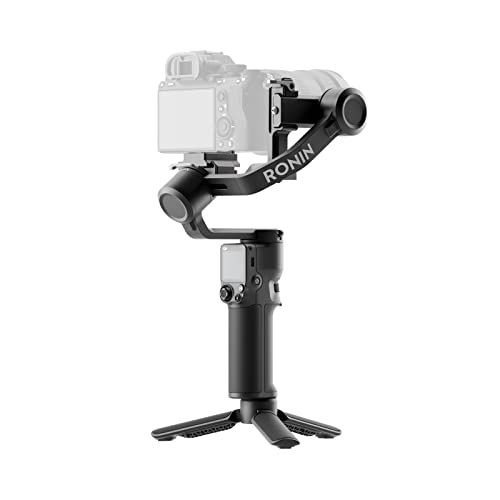
- 795 g body is easy to carry and hold
- Supports up to 2 kg of camera and lens gear
- Bluetooth shutter control and vertical shooting
Best For: Solo shooters and compact mirrorless setups
Phone Production Kit
DJI Osmo Mobile 7P for iPhone & Android

- 3-axis phone stabilization with native tracking
- Built-in extension rod and tripod for flexible framing
- Multifunction module adds lighting and mic support
Best For: Mobile creators filming with iPhone or Android
Studio-Ready Versatility
FeiyuTech SCORP-C for DSLR and Mirrorless

- 5.5 lb payload for many camera/lens combos
- Three-axis lock and balance tools speed setup
- Includes cables and accessories for common systems
Best For: Mainstream mirrorless and DSLR creators who want practical gimbal control.
High-End Workflow Pick
DJI RS 5 for Fast Professional Balancing
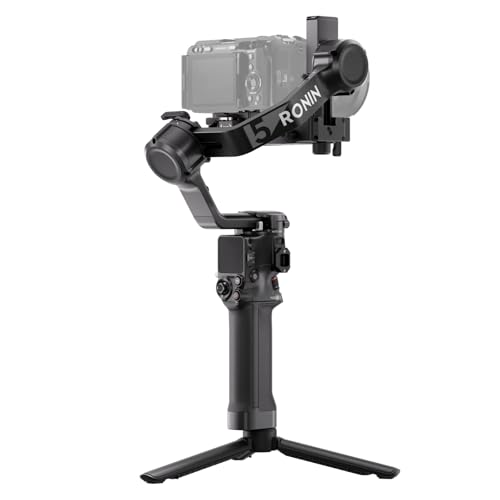
- Automated axis locks speed up setup
- Fine-tuning knobs help dial in balance
- AI tracking and 14-hour standby support longer shoots
Best For: Production teams that need fast setup and polished motion control.
Creator-Focused Stabilizer
FeiyuTech SCORP C2 with AI Tracking

- AI 4.0 face tracking works without an app
- 7.72 lb payload suits larger camera builds
- Native vertical shooting and quick-release plates save time
Best For: Solo creators who want tracking, vertical shooting, and heavier payload support.
Editor's Pick
DJI RS 4 Mini for Fast, Lightweight Solo Shoots

- Auto axis locks speed up setup
- 10-second vertical shooting switch
- Supports cameras and smartphones up to 2kg
Best For: solo creators and fast-turnaround studio shooting
Flex Choice
FeiyuTech SCORP Mini-3-Pro for Versatile Tracking

- Works with cameras, smartphones, and action cams
- AI Tracking reaches up to 18 meters
- Detachable handle doubles as a remote control
Best For: multi-device creators and solo filming with tracking
Studio Workhorse
DJI RS 4 for Heavier Mirrorless Camera Rigs

- 3kg payload for larger camera and lens setups
- Native vertical shooting without extra accessories
- RSA port supports expanded accessory control
Best For: studio rigs needing higher payload and accessory expansion
Flagship Cinema Control – DJI RS 4 Pro for DSLR & Cinema Cameras
If you need a camera gimbal for video production studio work that can handle serious mirrorless or cinema setups, the DJI RS 4 Pro is built for that higher-end workflow. Its 4.5 kg payload, dual focus and zoom motor support, and LiDAR focusing system make it a strong fit for controlled studio shoots where precision matters.
Best For: Studio filmmakers and solo creators using DSLR or cinema cameras who want advanced control and subject focusing.
Pros:
- 4.5 kg payload supports many mainstream mirrorless and cinema camera builds
- Native vertical shooting makes it easy to switch for social content
- Dual focus and zoom motor control adds precise lens operation
- LiDAR focusing offers a more intelligent autofocus experience at greater distances
Cons:
- Advanced features may be more than casual users need
- Battery grip for the longest runtime is sold separately
- Not water resistant
The RS 4 Pro is the most production-focused option here, especially if your studio work depends on accurate camera control and lens management. It is better suited to demanding shooting setups than basic handheld content creation.
Creator Bundle Value – DJI RS 5 Combo for Mirrorless Cameras
The DJI RS 5 Combo is a practical camera gimbal for video production studio use when you want a stabilized mirrorless setup with useful extras in one package. With up to a 6.6 lb payload, touchscreen control, long battery life, and an included wireless microphone set, it is geared toward creators who want to shoot and capture audio without building a kit from scratch.
Best For: Creators, filmmakers, and interview shooters who want an all-in-one mirrorless gimbal bundle.
Pros:
- Supports mirrorless camera setups up to 6.6 lb
- Includes quick-release plates, grip tripod, wireless mic set, and USB wall plug
- Integrated touchscreen helps with setup and mode changes
- Long battery life suits longer production days
Cons:
- Heavier and bulkier than compact travel gimbals
- More kit than a basic stabilization-only buyer may need
- Designed for mirrorless systems, not phones
For studio and location creators who value convenience, the RS 5 Combo stands out because it combines stabilization, audio, and essential accessories in one bundle. That makes it a smart pick when efficiency matters as much as smooth footage.
Compact Travel Rig – DJI RS 3 Mini for Lightweight Camera Builds
If you want a camera gimbal for video production studio work that is easy to move between sets, the DJI RS 3 Mini is a lightweight option with real stability features. At just 795 g, it supports up to 2 kg of gear, adds Bluetooth shutter control, and includes native vertical shooting for fast content turnaround.
Best For: Solo shooters and small camera setups that need a compact, portable gimbal.
Pros:
- Very lightweight at 795 g for easy handheld use
- 2 kg payload covers many mirrorless camera and lens combinations
- Bluetooth shutter control helps start capture from the gimbal
- Native vertical shooting supports social content
Cons:
- Lower payload than larger pro-grade gimbals
- Not intended for heavier cinema-style rigs
- Not water resistant
The RS 3 Mini is best when portability and simplicity matter more than maximum payload. For lightweight studio work, run-and-gun filming, or travel production, it offers a practical balance of size and stabilization.
Phone Production Kit – DJI Osmo Mobile 7P for iPhone & Android
For creators who need a camera gimbal for video production studio work on a smartphone, the DJI Osmo Mobile 7P focuses on speed, tracking, and all-in-one convenience. Its 3-axis stabilization, built-in extension rod and tripod, and multifunction module make it a flexible tool for filming content, adding lighting, and improving phone-based shoots.
Best For: Mobile creators who film with iPhone or Android and want a quick, feature-packed gimbal.
Pros:
- 3-axis stabilization keeps phone footage steady
- Built-in extension rod and tripod add framing flexibility
- Multifunction module includes tracking, lighting, and mic reception
- Up to 10 hours of use supports longer shooting sessions
Cons:
- Designed for phones, not dedicated cameras
- Maximum load is limited to 300 g
- Requires the DJI Mimo app for full experience
The Osmo Mobile 7P is a strong fit when your production setup revolves around a smartphone and you want quick setup with extra creative tools. It is less about heavy camera support and more about fast, polished mobile content creation.
Studio-Ready Versatility – FeiyuTech SCORP-C for DSLR and Mirrorless
If you need a camera gimbal for video production studio work that can also move easily between rigs, the FeiyuTech SCORP-C is built around broad camera compatibility and practical setup features. Its 3-axis stabilization, 5.5 lb payload, and included lens support make it a strong fit for balanced, controlled shooting with common Sony, Canon, Nikon, Panasonic, and Fujifilm bodies.
Best For: Studio creators using mainstream mirrorless or DSLR setups who want a capable, flexible gimbal with strong payload support.
Pros:
- 5.5 lb payload supports many popular mirrorless and DSLR camera/lens combinations.
- Three-axis motor lock, center-of-gravity adjustment, and memory slider simplify balancing.
- Integrated hanging handle and folding bracket help with upright, underslung, and set-down shooting.
- Includes multiple cables and accessories for a broad range of camera connections.
Cons:
- Heavier full-size rigs may push closer to the payload limit.
- Feature set is geared more toward control and setup than ultra-light portability.
This is a solid utility-focused pick for studios that need dependable stabilization without narrowing camera choice too much. The SCORP-C leans into practical handling and workflow helpers rather than flashy extras.
High-End Workflow Pick – DJI RS 5 for Fast Professional Balancing
For a camera gimbal for video production studio teams that value speed and precision, the DJI RS 5 focuses on fast setup, fine balancing, and subject tracking. The automated axis locks, fine-tuning knobs, and included battery grip make it suited to professional workflows where you want to move quickly between shots without losing stability.
Best For: Studio and production users who want a fast, polished gimbal workflow with tracking and professional balancing tools.
Pros:
- 2nd-gen automated axis locks help the gimbal go from storage to shooting quickly.
- Fine-tuning knobs and Teflon interlayers support precise balancing on each axis.
- Enhanced Intelligent Tracking can frame and follow people, vehicles, or pets from the touchscreen.
- Up to 14 hours of standby time and one-hour charging support long work sessions.
Cons:
- Not water resistant, so it is best kept for controlled indoor or protected shoots.
- Tracking and advanced features may be more than simple one-person setups need.
The RS 5 is a strong fit when speed and repeatability matter in a production environment. It is designed to reduce setup friction while giving you more control over framing and motion.
Creator-Focused Stabilizer – FeiyuTech SCORP C2 with AI Tracking
If you want a camera gimbal for video production studio use with more built-in automation, the FeiyuTech SCORP C2 adds AI tracking, gesture control, and native vertical shooting to a 3-axis stabilizer. Its 7.72 lb payload and quick-release system make it suitable for mirrorless and DSLR setups that need stable movement plus flexible content formats.
Best For: Solo creators and studio shooters who want AI-assisted tracking, vertical shooting, and a higher payload capacity.
Pros:
- Built-in AI 4.0 tracking follows faces without needing an app.
- 7.72 lb payload supports full-frame DSLR and mirrorless camera setups with larger lenses.
- Native vertical shooting and dual-layer quick release plates speed orientation changes.
- Magic Wheel and motion-path modes add creative control for timed or stylized shots.
Cons:
- At 1320 g, it is not the lightest option for handheld all-day use.
- Advanced tracking and mode options may be more than basic stabilization users need.
The SCORP C2 stands out if your studio work includes social content, portrait framing, or solo operation. It combines stabilization with automation in a way that can save time when you are working without a dedicated camera operator.
Editor's Pick – DJI RS 4 Mini for Fast, Lightweight Solo Shoots
If you want a camera gimbal for video production studio use that moves quickly from setup to shooting, the DJI RS 4 Mini is built for that kind of workflow. Its auto axis locks, Teflon-enhanced balancing, and 10-second vertical switch make it easy to reset between takes, while the responsive follow mode and intelligent tracking help keep motion smooth and subjects framed.
Best For: Solo creators and studio shooters who need a lightweight gimbal with fast setup and flexible tracking.
Pros:
- Auto axis locks help the gimbal get ready in about 1 second.
- Switches from horizontal to vertical shooting in about 10 seconds.
- Intelligent Tracking and Responsive Follow Mode support dynamic shots.
- Lightweight design supports cameras and smartphones up to 2kg/4.4lbs.
Cons:
- Maximum payload is limited to 2kg, so heavier rigs are out.
- Not water resistant.
- DJI Ronin app access requires downloading from DJI’s official website.
Overall, the RS 4 Mini is a strong pick when speed and portability matter more than heavier camera support. It fits well in a production studio that needs quick transitions, mobile-friendly vertical output, and simple solo operation.
Flex Choice – FeiyuTech SCORP Mini-3-Pro for Versatile Tracking
The FeiyuTech SCORP Mini-3-Pro is a practical camera gimbal for video production studio workflows that need broad device support and built-in tracking. It works with mirrorless, compact, action cameras, and smartphones, while the detachable remote handle and 18-meter AI tracking give you more control for solo filming and creative angle changes.
Best For: Creators who want one gimbal for multiple camera types, remote control, and tracking support.
Pros:
- Supports mirrorless cameras, compact cameras, smartphones, and action cameras.
- AI Tracking offers up to 18 meters of tracking distance with fast response.
- Detachable handle can be used as a remote control for longer-distance operation.
- 2kg/4.4lbs payload and modular design support quick horizontal/vertical switching.
Cons:
- Maximum payload is capped at 2kg.
- Not water resistant.
- Some users may not need the detachable remote-handle complexity.
For studios that need flexibility across different camera types, the SCORP Mini-3-Pro brings a lot of utility in one package. Its tracking tools and modular design make it especially appealing for solo creators who want efficient, adaptable shooting.
Studio Workhorse – DJI RS 4 for Heavier Mirrorless Camera Rigs
If your camera gimbal for video production studio use needs more payload and room to grow, the DJI RS 4 is the most robust option here. It supports up to 3kg, adds Teflon-coated axis arms for smoother balancing, and uses native vertical shooting plus mode switching to keep production moving efficiently.
Best For: Studio setups with mirrorless camera and lens combinations that need a stronger payload limit.
Pros:
- 3kg payload supports larger mirrorless camera and lens combinations.
- Native vertical shooting makes portrait-format work more efficient.
- Teflon-coated axis arms help reduce friction during balancing.
- RSA communication port expands accessory and control options.
Cons:
- Heavier than the RS 4 Mini at 1.55 kg.
- Not water resistant.
- Battery grip for longer runtime is sold separately.
The RS 4 is the best fit when your studio setup needs more stability headroom than a compact gimbal can offer. It keeps the workflow focused on efficient balancing, flexible control, and support for more demanding camera builds.
How We Picked the Best Camera Gimbal for Video Production Studio
For a Camera Gimbal for Video Production Studio use, we prioritized payload capacity, stabilization quality, axis-lock convenience, battery life, and compatibility with mirrorless, DSLR, cinema, and even smartphone workflows where relevant. We also looked for features that matter in production environments, such as native vertical shooting, quick-release systems, and accessory support.
Quick Comparison
If you want the most capable option for heavier rigs, look at the higher-payload DJI RS models and the FeiyuTech SCORP-C. For lighter mirrorless setups, the DJI RS 4 Mini and RS 3 Mini are easier to travel with and faster to balance. If your studio work includes creator content or mobile capture, the DJI Osmo Mobile 7P is the clear outlier for phones rather than cameras.
Key Buying Factors for a Camera Gimbal for Video Production Studio
Payload and Camera Size
Match the gimbal to your full build, not just the body. Lens weight, microphones, cages, follow-focus motors, and monitors all affect balance. Higher-payload models are safer for cinema-style rigs and future upgrades.
Control Features and Workflow
Features like automated axis locks, quick-release plates, fine-tuning knobs, and dual motors can save setup time during repeated studio sessions. If you frequently switch between horizontal and vertical framing, native vertical shooting is especially useful.
Tracking and Smart Functions
AI tracking can help solo creators, presenters, and small teams capture more consistent movement without a dedicated operator. That said, it should complement, not replace, manual control for planned studio shots.
Portability Vs. Rigidity
Compact gimbals are easier to carry and quicker to deploy, while larger models usually offer better load support and more advanced control. Choose based on whether your studio work is mostly run-and-gun, seated interviews, product demos, or multi-camera production.
Who Should Buy Which Camera Gimbal for Video Production Studio?
Buy a higher-end DJI RS model if you need maximum payload, accessory expansion, and a more complete studio control setup. Choose a mid-range FeiyuTech or DJI RS option if you want a strong balance of stability and value for mirrorless production. Pick a mini gimbal if you work with lighter cameras and want fast setup. If your content is mostly smartphone-based, the DJI Osmo Mobile 7P is the most practical fit.
In short, the best Camera Gimbal for Video Production Studio work is the one that matches your heaviest typical camera build, supports your preferred framing style, and speeds up your production workflow rather than slowing it down.