The right compressor can make a live mix more controlled, intelligible, and consistent without flattening the energy of a performance. The best choice depends on your signal sources, available rack space, routing needs, and comfort with manual setup.
We’ve gathered 10 options spanning dual-channel rack units, channel strips, FET-style designs, pedal-format compressors, and versatile preamp processors so you can match the hardware to your stage, touring, streaming, or hybrid setup.
Best 10 Audio Compressors for Live Sound Picks for 2026
Best Overall Control

- Compression and gating in one 1U unit
- Program-adaptive gates with smooth releases
- Dedicated LED setup displays
Best For: Portable live rigs and flexible dynamics control
Best Two-Channel Value
Behringer Composer Pro-XL MDX2600

- Two-channel compressor, limiter, and gate
- Portable rack-style design
- Also supports mixing and mastering
Best For: Budget-conscious systems needing two channels
Best Vocal Channel Strip

- Compression, de-essing, enhancement, and gating
- XLR mic and 1/4-inch line inputs
- 1U rack-mountable design with loop-out
Best For: Single-channel vocal and instrument processing
Best Classic FET Character

- Discrete FET-style compression design
- Class-A amplifier and Midas transformers
- Selectable ratios with adjustable timing
Best For: Professional setups seeking classic FET-style response
Rackmount Control

- Dual-channel compression with auto attack/release
- XLR/TRS connectivity plus sidechain insert
- Noise gate and LED gain-reduction monitoring
Best For: Live racks, streaming setups, and multi-source dynamics control
Pedalboard Simplicity

- Compact phase 90-sized compressor pedal
- Ten gain-reduction status LEDs
- True bypass and 1/4-inch analog connection
Best For: Portable pedalboards and simple live instrument chains
Flexible Rack Dynamics
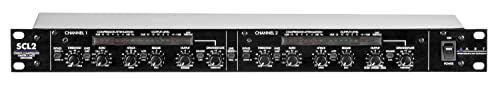
- Dual-channel or linked stereo operation
- Compression, limiting, expansion, and gating
- Balanced XLR/TRS I/O with LED level meters
Best For: Stereo racks and users needing several dynamics functions
Classic FET Control
WA76 Single-Channel Compressor

- Fully discrete signal path with CineMag transformers
- Classic ’76-style design and all-buttons-in mode
- Single channel for focused dynamics control
Best For: Professional audio setups needing classic-style compression
Pedalboard Preamp and Compression

- Models 1176, LA-2A, and Dyna Comp compressors
- Adds 610-style preamp and EQ emulation
- Stereo I/O, silent switching, and app control
Best For: Bassists and performers building a compact pedal-based rig
Dual-Channel Live Rack Control
Vocal Compressor/Limiter with Gate

- Dual-channel VCA compression for varied sources
- Built-in noise gate and LED metering
- XLR/TRS I/O with sidechain insert
Best For: Live racks needing compression, gating, and sidechain control
Best Overall Control – dbx 266xs Compressor/Gate
The dbx 266xs is a versatile choice for audio compressors for live sound, combining two-channel compression with program-adaptive gating in a tour-ready 1U rack format. Its separate LED displays help speed up setup when you need to manage changing levels quickly.
Best For: Live rigs, portable systems, and users who want compression and gating in one rack unit.
Pros:
- Smooths uneven levels, adds sustain, and can tighten mixes.
- Program-adaptive expander/gates provide smooth release characteristics.
- Separate LED displays show gain reduction, compression threshold, and gate threshold.
Cons:
- Analog, corded operation requires rack space and mains power.
- Its broad feature set may be more than needed for a simple single-source setup.
Choose the 266xs when flexible dynamics control matters more than minimal setup. It is especially practical for live engineers who need visible metering and both compression and gate functions in one unit.
Best Two-Channel Value – Behringer Composer Pro-XL MDX2600
The Behringer Composer Pro-XL MDX2600 is a practical two-channel compressor, limiter, and gate for audio compressors for live sound. Its dual-channel design suits systems where you want to process more than one signal from a single rack unit.
Best For: Budget-conscious live setups, mixing, and users needing two channels of dynamics processing.
Pros:
- Combines compressor, limiter, and gate functions.
- Provides two channels in a portable rack-style format.
- Also suited to audio production, mixing, and mastering applications.
Cons:
- The supplied notes provide limited control and connectivity information.
- Its 100-volt power specification should be checked against the intended system.
The MDX2600 makes sense when channel count and multiple dynamics functions are priorities. Confirm the power requirements and available connections before integrating it into a particular live rack.
Best Vocal Channel Strip – dbx 286s Preamp/Processor
The dbx 286s is a single-channel microphone and instrument preamp with compression, de-essing, enhancement, and expander/gate functions. For audio compressors for live sound, it is a useful front-end option when vocal clarity and several processing stages are needed before the mixer.
Best For: Vocals, microphones, instruments, and single-channel live input processing.
Pros:
- Combines compression, de-essing, enhancer, and expander/gate sections.
- Supports XLR microphone input and 1/4-inch line input.
- LED status metering helps monitor levels and processor activity.
- Rack-mountable 1U design includes a loop-out for additional processors.
Cons:
- It processes one channel rather than multiple channels.
- Its channel-strip features may be unnecessary for users who only need compression.
The 286s is a strong fit for a dedicated vocal or instrument channel where shaping, de-essing, and gating are as important as compression. Its loop-out also leaves room for expanding the processing chain.
Best Classic FET Character – Klark Teknik 76-KT Compressor
The Klark Teknik 76-KT brings a classic FET-style approach to audio compressors for live sound, with a discrete signal path, Class-A line-level amplifier, and Midas transformers. Its selectable ratios and adjustable attack and release controls support hands-on dynamics shaping.
Best For: Professional audio applications and engineers seeking classic FET-style compression with flexible timing controls.
Pros:
- Classic FET-style design modeled after iconic 1176 revisions.
- Completely discrete signal path with Class-A output amplification.
- Custom-built Midas input and output transformers.
- Offers 4:1, 8:1, 12:1, and 20:1 ratios plus all-button mode.
Cons:
- The supplied notes do not specify separate metering or gating functions.
- Its vintage-focused feature set may not suit users seeking an all-in-one processor.
The 76-KT is best viewed as a characterful compressor rather than a general-purpose channel processor. Select it when FET-style response, transformer-based design, and manual attack and release adjustment are central to your live setup.
Rackmount Control – Dual-Channel Live Compressor
For audio compressors for live sound, this 1U dual-channel processor offers flexible dynamics control for vocals, guitars, drums, and other sources. Its XLR/TRS connectivity, visual metering, noise gate, and sidechain insert make it suited to more involved live and streaming setups.
Best For: Performers and operators who need two-channel compression with routing flexibility, vocal enhancement, gating, and sidechain control.
Pros:
- Dual-channel design with Overeasy compression and auto attack/release settings.
- XLR and 1/4-inch TRS inputs and outputs support professional signal paths.
- Built-in noise gate, LED monitoring, and sidechain insert add useful live-sound control.
- Classic VCA circuitry is designed to enhance vocal warmth and detail.
Cons:
- The 1U rackmount format is less portable than a compact pedal.
- Its broad feature set may be more than needed for a simple single-source setup.
This is the most routing-focused option in the group, particularly if you need gate and sidechain functions alongside compression. The two-year manufacturer warranty is an additional consideration for buyers building a rack system.
Pedalboard Simplicity – MXR Studio Compressor
Among audio compressors for live sound, the MXR Studio Compressor is the compact pedal option. It combines analog compression, constant headroom technology, true bypass, and front-panel gain-reduction LEDs in a phase 90-sized enclosure.
Best For: Musicians who want a compact compressor pedal for a pedalboard or straightforward live signal chain.
Pros:
- Small phase 90-sized format is easy to integrate into a pedalboard.
- Constant Headroom Technology is designed for clear, clean performance.
- Ten gain-reduction LEDs provide visual feedback during setup and use.
- True bypass preserves a direct signal path when the effect is disengaged.
Cons:
- Its 1/4-inch audio interface is less flexible than a rack unit with XLR and TRS connections.
- The single-pedal format does not provide dual-channel, gate, or sidechain features.
- It requires a 9-volt power source.
The M76 is the most portable and streamlined choice here. It makes sense when pedalboard space and simple operation matter more than rack-style routing or multiple channels.
Flexible Rack Dynamics – ART SCL2 Compressor/Limiter
This ART unit is a versatile choice among audio compressors for live sound, combining compression, limiting, expansion, and gating in a dual-channel rack-style design. It can operate in dual-channel or linked stereo mode and provides balanced XLR and 1/4-inch TRS connections.
Best For: Live and studio users who need stereo linking, multiple dynamics functions, and balanced rack connectivity.
Pros:
- Supports dual-channel operation or linked stereo use.
- Combines compressor, limiter, expander, and gate functions.
- Balanced 1/4-inch TRS and XLR inputs accommodate professional setups.
- Offers selectable automatic or manual attack and release with LED level meters.
Cons:
- Its rack-style dimensions are less convenient for highly portable setups.
- The broad compressor, limiter, expander, and gate feature set may require more setup time.
- The supplied specifications list a 240-volt power requirement, which may need attention depending on the user’s power system.
The SCL2 is a strong fit when one processor needs to handle more than basic compression. Stereo linking and multiple dynamics tools make it especially useful for users managing complex live or studio signal paths.
Classic FET Control – WA76 Single-Channel Compressor
The Warm Audio WA76 is a single-channel discrete compressor suited to professional audio applications where dependable, classic-style dynamics control is useful in a live or studio rack. Its transformer-coupled, fully discrete design follows the familiar ’76 approach and includes the distinctive all-buttons-in ratio setting.
Best For: Engineers who want one channel of classic-style compression for vocals, instruments, or other professional audio sources.
Pros:
- Fully discrete signal path with custom CineMag USA transformers.
- Designed to stay true to the classic ’76 compressor style.
- Supports the famous all-buttons-in ratio setting.
- Compact 1.1-inch by 9.7-inch by 6.5-inch metal chassis.
Cons:
- Single-channel design limits simultaneous processing compared with dual-channel units.
- Requires a DC power supply and operates at 24 volts.
- Its classic feature set may be less flexible than a compressor with integrated gating or sidechain tools.
The WA76 is a focused choice among audio compressors for live sound when you value a traditional ’76-style circuit and need one dedicated channel rather than a multifunction dynamics processor.
Pedalboard Preamp and Compression – Max Preamp & Dual Compressor
The Universal Audio Max combines a 610 tube preamp and EQ emulation with modeled 1176, LA-2A, and Dyna Comp compressors. For live sound applications, it offers stereo I/O, silent switching, buffered bypass, and app-based configuration in a compact pedal format.
Best For: Bassists and performers who want layered preamp and compression sounds with stereo operation and pedalboard-friendly control.
Pros:
- Combines preamp, EQ, and multiple classic compressor emulations.
- Allows compressor stacking and configurable footswitch functions.
- Includes a sidechain bass filter and UAFX Control app support.
- Provides two 1/4-inch inputs and two 1/4-inch outputs for stereo operation.
Cons:
- Requires an isolated 9VDC, center-negative supply rated at 400 mA or higher, sold separately.
- Its pedal format may be less convenient for fixed rack installations.
- Advanced configuration depends on the UAFX Control app and USB-C connection for updates.
The Max is a flexible option among audio compressors for live sound when compression is part of a broader pedal-based preamp and tone-shaping rig, especially for bass and stereo setups.
Dual-Channel Live Rack Control – Vocal Compressor/Limiter with Gate
This professional dual-channel rackmount compressor is built for live sound, studio, streaming, and stage use. It combines VCA compression, adjustable attack and release, a noise gate, LED metering, and a sidechain insert, with XLR and 1/4-inch TRS connectivity for integration with mixers and PA systems.
Best For: Live engineers and vocal-focused setups needing two channels of compression plus gating and sidechain control.
Pros:
- Dual-channel design supports multiple sources such as vocals, guitars, or drums.
- Built-in noise gate helps reduce ambient or background noise.
- Sidechain insert enables frequency-based ducking and low-end shaping.
- LED indicators provide visual feedback for compression, gain reduction, and gate thresholds.
Cons:
- The 19-inch rackmount format requires suitable rack or equipment space.
- Uses 110V AC corded power, which may require consideration when traveling internationally.
- Its analog VCA feature set is more hardware-focused than app-based processors.
With two channels, practical metering, gating, and sidechain connectivity, this unit is a strong fit among audio compressors for live sound when a rackmount processor must handle varied sources and vocal cleanup.
How We Picked the Best Audio Compressors for Live Sound
We focused on practical live-use features rather than specifications alone: transparent gain control, useful metering, dependable construction, flexible I/O, sidechain access, and straightforward operation. The lineup includes processors for main vocals, instruments, buses, monitors, and small-format rigs, with attention to both portability and rack-based systems.
Because live environments vary widely, we also considered whether each design supports stereo linking, gating or expansion, de-essing, limiting, channel-strip duties, or fast hands-on adjustment. These features can reduce the need for additional outboard gear, but they should not replace a suitable mixer, microphone, or sound system.
Quick Comparison
| Best For | Look For | Useful Features |
|---|---|---|
| Vocals | Channel strip or dedicated compressor | De-essing, gate, adjustable attack and release |
| Drums and instruments | Fast, flexible dynamics control | Sidechain insert, strong metering, wide ratio range |
| Stereo buses | Dual-channel or stereo-linked unit | Channel linking, balanced I/O, limiter |
| Touring racks | Durable 1U processor | Clear controls, reliable bypass, rack mounting |
| Small or hybrid rigs | Compact or multifunction processor | Preamp, compression, expansion, and simple routing |
Key Buying Factors for Audio Compressors for Live Sound
Channel Count and Routing
A single-channel unit suits a lead vocal, bass, or individual instrument. Dual-channel models provide better value for stereo sources, multiple mono channels, or a compact rack. Check whether channels can be linked and whether the unit offers balanced XLR or TRS connections that match your console and stage box.
Controls and Metering
Look for threshold, ratio, attack, release, and output gain controls when you need precise shaping. LED gain-reduction meters make setup faster in a dark venue. Auto modes can help beginners, while manual controls are preferable when you need consistent results across different performers.
Extra Dynamics Features
A gate or expander can reduce bleed between phrases, while a limiter adds protection against sudden peaks. De-essing is especially useful for vocal channels. Sidechain inserts let you filter or externally trigger detector behavior, which can improve control on bass, kick, and broadcast-style sources.
Compression Character and Headroom
Transparent VCA-style compression is often practical for buses and general reinforcement. FET-style circuits can add punch and color to vocals or instruments. Prioritize adequate input and output headroom, low noise, and a bypass mode that allows honest A/B comparisons.
Who Should Buy Which Audio Compressors for Live Sound?
- Live-sound operators: Choose a rugged dual-channel rack processor with clear metering, flexible I/O, and sidechain access.
- Vocal-focused users: Consider a channel strip or compressor with de-essing, gating, and a microphone preamp.
- Touring musicians: Favor compact, road-ready hardware with simple controls and dependable bypass operation.
- Engineers seeking character: A FET-style compressor can add presence and controlled aggression when used carefully.
- Small venues and streamers: A multifunction preamp or dual compressor can consolidate several pieces of processing into one unit.
Before buying, confirm rack depth, power requirements, connector compatibility, and whether the compressor will sit before or after your console’s own processing. Start with moderate gain reduction—often around 3 to 6 dB—and adjust by ear while monitoring the full mix.