The best audio compressors for home studio recording help control dynamics, add punch, and make vocals and instruments sit more confidently in a mix. The right choice depends on your workflow, available connections, and whether you need a dedicated rack processor or a broader recording system.
We selected 10 options spanning hardware compressors, channel strips, tube and optical designs, audio interfaces, and integrated production consoles. Use the guide below to narrow the list by application, controls, connectivity, and budget.
Best 10 Audio Compressors for Home Studio Picks for 2026
Rack Dynamics Workhorse

- Compression and gating in one 1U rack unit
- LED metering for thresholds and gain reduction
- Useful for vocals, guitars, drums, and mixes
Best For: Home studios needing dedicated rackmount dynamics control
All-in-One Tone Shaper

- Tube preamp, VCA compressor, and EQ
- Supports mic, line, and instrument inputs
- Includes flexible filtering and compressor controls
Best For: Project studios wanting a complete single-channel recording strip
Two-Channel Studio Utility
Behringer Composer Pro-XL MDX2600

- Two channels of compressor, limiter, and gate
- Designed for production, mixing, and mastering
- Includes de-esser functionality
Best For: Home studios needing multi-channel dynamics processing
Recording Interface with Compression

- Built-in analog compressor based on the 1176
- Vintage-mode UA 610-style preamps
- 2x2 USB-C interface for computer and mobile recording
Best For: Compact home studios needing recording I/O and input compression
Versatile Channel Strip

- Preamp with compression, de-esser, enhancer, and gate
- XLR and 1/4-inch inputs plus loop-out
- LED metering and 1U rack-mount format
Best For: Vocal and instrument front-end processing
Optical Character
Warm Audio WA-1B Optical Compressor

- Single-channel tube optical compressor
- Warm, balanced, versatile sound profile
- Includes rackmount chassis
Best For: Dedicated analog compression on one signal
Dual-Channel Control
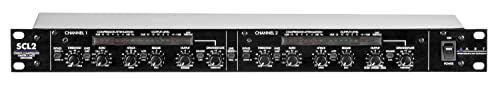
- Dual-channel or linked-stereo operation
- Compression, limiting, expansion, and gating
- XLR/TRS I/O with LED metering
Best For: Stereo buses and two-channel studio processing
All-in-One Studio Hub

- Four XLR mic inputs with integrated processing
- Standalone and multitrack recording options
- Eight SMART pads for live production control
Best For: Podcasters and streamers building a compact home studio
Tube-Infused Dynamics Control

- Single-channel analog compression
- Selectable tube and solid-state control
- Blend control and switchable signal levels
Best For: Home studios seeking flexible analog vocal or instrument processing
Dual-Channel Rack Dynamics

- Two channels with VCA compression and limiting
- Built-in noise gate and LED metering
- Sidechain insert with XLR/TRS connectivity
Best For: Home studios needing flexible two-channel rack processing
Rack Dynamics Workhorse – dbx 266xs Compressor/Gate
The dbx 266xs is a practical choice for audio compressors for home studio setups that need hands-on control over two common dynamics tasks: compression and gating. Its front-panel controls and separate LED displays make it easier to monitor gain reduction, compression threshold, and gate threshold while shaping tracks.
Best For: Home studios that want a dedicated rackmount compressor/gate for vocals, guitars, drums, or mix tightening.
Pros:
- Helps smooth uneven levels, add guitar sustain, fatten drums, and tighten mixes.
- Includes program-adaptive expander/gates with smooth release characteristics.
- Separate precision LED displays support quick, accurate setup.
- Fits a standard 1U rack space.
Cons:
- Its 1U rackmount design is less convenient than a compact desktop unit.
- It uses an analog signal format and 1/4-inch audio hardware interface, so system compatibility should be checked.
For buyers who prefer visible, dedicated hardware controls, the 266xs offers straightforward compression and gating in a studio-oriented rack format.
All-in-One Tone Shaper – PreSonus STUDIOCHANNEL
The PreSonus STUDIOCHANNEL combines a tube preamplifier, compressor, and EQ, making it a versatile option among audio compressors for home studio recording chains. It accepts mic, line, and instrument sources and provides tone shaping before the signal reaches the rest of the setup.
Best For: Project studios recording vocals, guitars, bass, keyboards, synths, piano, and other sources through a single channel strip.
Pros:
- Combines a high-voltage Class A 12AX7 tube preamp, VCA compressor, and three-band EQ.
- Offers tube drive, high-pass filtering, a -20 dB pad, phantom power, and polarity reverse.
- Compressor includes auto attack/release and soft or hard knee options.
- Rugged 1U rack-mountable steel chassis supports studio installation.
Cons:
- It is a full channel strip rather than a compressor-only unit.
- The 1U rackmount format may be more equipment than a minimalist home setup needs.
The STUDIOCHANNEL is a strong fit when compression is only one part of the desired signal path and you also want preamp color and flexible EQ in the same rack space.
Two-Channel Studio Utility – Behringer Composer Pro-XL MDX2600
The Behringer Composer Pro-XL MDX2600 is a two-channel compressor, limiter, and gate designed for audio production, mixing, and mastering. For home studios comparing audio compressors for home studio use, its dual-channel layout can provide a practical way to process more than one signal in a rack-based setup.
Best For: Home recording and mixing setups that need two-channel compression, limiting, and gating in one unit.
Pros:
- Provides two channels of compressor, limiter, and gate processing.
- Designed for audio production, mixing, and mastering applications.
- Includes a de-esser function according to the product title.
- Portable corded design and a two-year manufacturer warranty are listed.
Cons:
- The supplied notes provide limited detail about individual controls and metering.
- As a dedicated hardware processor, it requires a compatible connection and external audio setup.
The MDX2600 is worth considering when channel count matters and you want compression-related processing, including limiting, gating, and de-essing, from one hardware device.
Recording Interface with Compression – Universal Audio Volt 276
The Universal Audio Volt 276 takes a different approach to audio compressors for home studio recording by integrating an analog compressor into a 2×2 USB audio interface. Its Vintage mode preamps and onboard compression can add clarity and punch to vocals and instruments while you record through a computer or supported mobile device.
Best For: Home studio beginners and mobile creators who need an audio interface with built-in preamps and analog compression.
Pros:
- Includes an analog compressor based on the renowned 1176.
- Offers Vintage mode with the character of classic UA 610 preamps.
- Provides 2×2 USB-C connectivity and supports Mac, Windows, iPad, and iPhone use.
- Works with common software including Ableton, and includes access to recording and production tools.
Cons:
- The compressor is integrated into the interface rather than provided as a separate rack processor.
- Mobile iPad or iPhone use may require an external Volt power supply and, depending on the device, an Apple Lightning to USB Camera Adapter.
The Volt 276 is a convenient choice for recording setups that prioritize a compact interface, recognizable preamp character, and input compression over extensive standalone compressor controls.
Versatile Channel Strip – dbx 286s
For home studio owners looking for audio compressors for home studio vocals and instruments, the dbx 286s combines a microphone preamp with compression, de-essing, enhancement, and expander/gate processing. Its straightforward controls and status LEDs make it a practical front-end processor for recording or mixdown.
Best For: Vocalists, podcasters, and home studios wanting several front-end processors in one rack unit.
Pros:
- Combines microphone preamp, compressor, de-esser, enhancer, and expander/gate.
- Supports XLR microphone input and 1/4-inch line input for instruments or prerecorded tracks.
- Loop-out and insert connections allow integration with additional processing.
- LED metering provides at-a-glance monitoring of levels and processor status.
Cons:
- It is a single-channel processor.
- Its broad feature set may be more than needed if you only want compression.
The dbx 286s is a strong all-in-one choice when your home studio needs vocal shaping as well as compression. Choose it over a standalone compressor if flexible input and channel-strip processing are priorities.
Optical Character – Warm Audio WA-1B Optical Compressor
The Warm Audio WA-1B is a single-channel tube optical compressor aimed at home studio users who want dedicated analog compression. Its listed sound profile is warm, balanced, and versatile, making it a focused option for shaping one signal at a time.
Best For: Home studios seeking a dedicated, single-channel optical compressor with a warm analog character.
Pros:
- Dedicated one-channel tube optical compression.
- Offers a warm, balanced, and versatile sound profile.
- Includes a rackmount chassis for studio installation.
Cons:
- Only one channel is provided.
- Its dedicated compression design offers fewer listed functions than a channel strip.
- The supplied dimensions and weight suggest it may require more rack or workspace planning.
The WA-1B fits buyers who want a purpose-built compressor rather than an all-in-one channel strip. Its single-channel tube optical design makes it best suited to studios prioritizing focused analog compression.
Dual-Channel Control – ART SCL2 Compressor/Limiter
For home studio users comparing audio compressors for home studio tracking and stereo work, the ART SCL2 provides dual-channel or linked-stereo compression, limiting, expansion, and gating. Balanced XLR and 1/4-inch TRS connections, selectable attack and release modes, and LED meters support flexible signal control.
Best For: Home studios needing two-channel processing or linked stereo control for mixes and instruments.
Pros:
- Supports dual-channel operation or linked stereo operation.
- Combines compression, limiting, expansion, and gating.
- Accepts balanced XLR and 1/4-inch TRS connections.
- Offers selectable automatic or manual attack/release and LED level meters.
Cons:
- Its wider range of controls may take more setup than a basic compressor.
- The supplied notes list a 240-volt power specification, so buyers should verify compatibility with their electrical setup.
The SCL2 is the most flexible choice of these three for stereo or two-channel duties. It makes sense when you need gating and expansion alongside compression, rather than compression alone.
All-in-One Studio Hub – RØDECaster Pro II
For creators who want audio compressors for home studio workflows without assembling a separate interface and mixer setup, the RØDECaster Pro II combines four XLR mic inputs, APHEX processing, recording, and monitoring in one desk unit. It is designed for podcasting, streaming, and multitrack production, including computer-free operation.
Best For: Podcasters, streamers, and home-studio users who want an integrated production console with simple voice processing.
Pros:
- Four studio preamps with microphone, line, and instrument input support.
- APHEX voice-processing presets can make voices broadcast-ready with one tap.
- Records multitrack to a computer, microSD card, or USB drive and can work standalone.
- Eight customizable SMART pads support music, effects, and live call-control functions.
Cons:
- It is an all-in-one production console rather than a dedicated standalone compressor.
- The unit has four XLR mic inputs, so larger microphone setups may need additional equipment.
The RØDECaster Pro II is a practical choice when streamlined control matters more than a traditional rack-compressor workflow. Its integrated processing and recording features make it especially convenient for spoken-word home studios.
Tube-Infused Dynamics Control – ART Solo VLA
The ART Solo VLA is a single-channel option for audio compressors for home studio setups that need analog dynamics processing and tonal flexibility. Its selectable tube/solid-state design, optical isolators, and blend control let you shape compression while retaining some of the original signal.
Best For: Home-studio users who want one analog compressor channel with tube/solid-state voicing and parallel-style blend control.
Pros:
- Provides a mastering-quality audio signal path according to the supplied product notes.
- Selectable MultiVoice tube/solid-state control offers different processing character options.
- Uses analog optical isolators and includes a variable uncompressed/compressed blend.
- Switch-selectable +4 dBu and -10 dBV level modes support different signal-level environments.
Cons:
- It is a single-channel compressor, limiting simultaneous processing capacity.
- Its tube-based construction and corded-electric power may not suit users seeking a compact digital workflow.
The Solo VLA fits a home studio that values analog signal shaping and flexible compression character. Choose it when one carefully selected channel is more useful than a multi-channel rack unit.
Dual-Channel Rack Dynamics – Professional Vocal Compressor
This dual-channel rack unit is aimed at home studios comparing audio compressors for home studio vocals, instruments, and streaming. It combines VCA compression, limiting, noise gating, LED metering, sidechain control, and XLR/TRS connectivity for more hands-on dynamics shaping.
Best For: Home-studio, live, and streaming users who need two channels of analog compression with gating and sidechain flexibility.
Pros:
- Dual-channel design can manage vocals, guitars, drums, and other sources.
- Adjustable attack and release controls support detailed dynamic shaping.
- Built-in noise gate helps reduce ambient or background noise.
- Sidechain insert enables frequency-based ducking, while XLR/TRS connections support studio integration.
Cons:
- The 19-inch rackmount format requires suitable rack or studio space.
- It uses a 110-volt AC power source, which may limit compatibility in some regions.
- The supplied notes do not specify detailed compression-ratio or threshold ranges.
For users who want dedicated hardware control over two signal paths, this compressor offers a broad feature set in a conventional rack format. Its gate and sidechain functions are useful additions for vocals, low-end instruments, and noisier recording environments.
How We Picked the Best Audio Compressors for Home Studio Use
We evaluated these products for the needs of home recordists, including dynamic control, ease of setup, connection options, flexibility, and practical value. The selection includes single- and dual-channel processors, channel strips with additional voice-shaping tools, and integrated devices that combine compression with recording or mixing functions.
We also considered whether each unit suits tracking, mixing, live streaming, podcasting, or multiple applications. A compressor that excels on vocals may not be the best choice for stereo buses, while a rackmount unit may offer more routing flexibility than an interface-based solution.
Quick Comparison
| Best For | Look For | Product Types |
|---|---|---|
| Vocal tracking | Preamp, compressor, de-esser, and gate | Channel strips |
| Stereo instruments or mix bus | Matched dual channels and stereo linking | Dual-channel compressors |
| Hands-on studio control | Dedicated threshold, ratio, attack, and release controls | Rack compressors |
| Recording and streaming | USB connectivity, routing, and built-in processing | Audio interfaces and production consoles |
| Color and character | Tube or optical circuitry | Color compressors |
Key Buying Factors for Audio Compressors for Home Studio
Channels and Intended Use
A single-channel compressor is usually enough for one vocal or bass track, while a dual-channel model can handle stereo keyboards, drum overheads, or a mix bus. If you regularly record vocals, a channel strip may provide better value by combining a microphone preamp with compression and other processing.
Controls and Compression Style
Check whether the unit offers the controls you need: threshold, ratio, attack, release, makeup gain, and an output meter. Fast controls help manage peaks, while slower attack and release settings can preserve punch. Optical and tube designs are often chosen for smoother, more characterful compression; VCA-style designs typically offer precise, versatile control.
Connectivity and Routing
Confirm that the inputs and outputs match your interface or mixer. XLR and TRS connections are common, while sidechain inserts can be valuable for ducking, frequency-conscious compression, or external key signals. USB-equipped products may replace or extend an audio interface, but verify driver, input, output, and monitoring requirements before buying.
Size, Noise, and Workflow
Rack units suit permanent setups and multi-device routing, whereas compact or integrated products may be easier for smaller desks. Consider fan noise, bypass behavior, metering, stereo linking, and whether the controls are easy to adjust while recording. Built-in gates, de-essers, and expanders can simplify vocal and spoken-word chains, but they may be unnecessary if you already work primarily with plug-ins.
Who Should Buy Which Audio Compressors for Home Studio?
Choose a channel strip if you want a complete vocal front end with preamp gain and additional processing. Choose a dual-channel rack compressor if you record stereo sources or need flexible hardware for mixing. Choose a tube or optical compressor if smooth dynamics and analog color matter more than maximum control precision.
Choose an audio interface or production console if you need recording connectivity, monitoring, and compression in one device. Choose a budget rack compressor if you want hands-on hardware for learning compression, managing peaks, or expanding an existing home studio without relying entirely on plug-ins. Before purchasing, match the processor to your main source, available routing, and whether you need one channel, two channels, or an all-in-one workflow.