If you want to build beats without relying on a laptop, a standalone sampler can streamline your workflow and keep you focused on sound, timing, and performance.
Below, we’ve grouped the best options for different studio needs, from portable sketchpads to full-featured production machines.
Best 10 Standalone Sampler for Beat Production Studio Picks for 2026
Portable MPC Starter
Akai MPC Sample Portable Sampler

- Battery-powered standalone sampler
- Built-in speaker and microphone
- USB-C, microSD, and MPC pads
Best For: Beginners and portable beatmakers who want an easy-entry standalone MPC.
Performance Sampler
Roland SP-404MKII Creative Sampler

- OLED display and fast sample editing
- 17 RGB pads with low-latency feel
- Deep onboard effects for sound shaping
Best For: Beatmakers and performers who want a fast, effects-heavy SP workflow.
Standalone Production Hub
Akai MPC One G2 Next-Gen Production Center

- 7-inch touchscreen with 16 MPC pads
- 8-core power for tracks and plugins
- USB-C audio, MIDI, and DAW integration
Best For: Producers who want a standalone MPC for full song creation and studio integration.
Mini Creative Sampler
Roland AIRA Compact P-6 Creative Sampler

- Built-in mic for instant sample capture
- 64-step sequencer with motion recording
- USB-C plus audio, MIDI, and sync I/O
Best For: Mobile beatmakers who want a tiny sampler for quick capture and sequencing.
Flagship standalone sampler
Akai Professional MPC Live III Portable Music Production Center
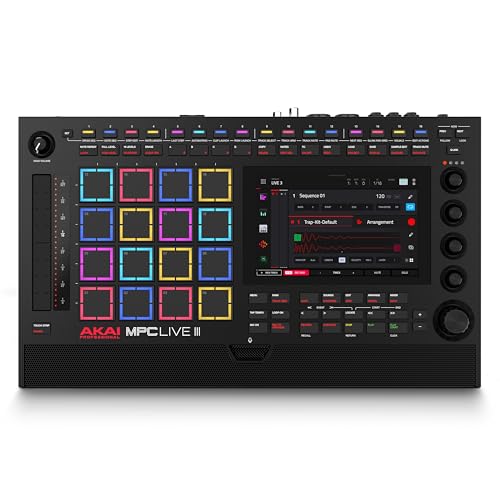
- 8-core processor with 8GB RAM
- MPCe pads with pressure and X/Y control
- Built-in speakers, mic, and battery
Best For: Producers wanting an all-in-one MPC for serious beatmaking and performance
Compact tabletop sampler recorder
Zoom R8 Multi-Track Tabletop Recorder

- 8-track simultaneous recording
- Built-in stereo condenser microphones
- Pad sampler plus USB audio interface
Best For: Users wanting a compact recording and sampling tool for a small studio
Portable groovebox sampler
Ableton Move Standalone Instrument with Live 12 Intro

- Standalone battery-powered design with speaker and mic
- 32 pads with polyphonic aftertouch
- Sample slicing, resampling, and Wi-Fi Ableton integration
Best For: Ableton-centered beatmakers who want portable sampling and quick sketching
Compact Beat Maker
Novation Circuit Rhythm Standalone Sampler

- Records from external sources for slicing and resampling.
- Eight sample tracks with chainable patterns up to 256 steps.
- Built-in performance FX help shape and animate beats.
Best For: Producers who want a portable sampler for hands-on beat building.
Portable Sketchpad
Polyend Tracker Mini Audio Workstation
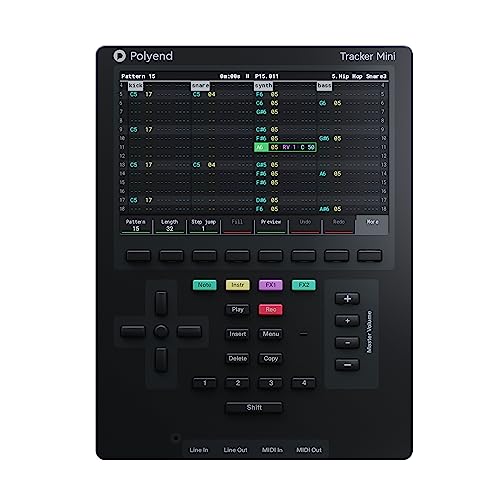
- Standalone workstation with 4,000 preloaded samples.
- Adds wavetable and granular synthesis for sound design.
- Portable form factor for making beats away from the desk.
Best For: Beatmakers who want a compact workstation with built-in samples and synthesis.
Live Performance Pick
Pioneer DJ DJS-1000 Standalone DJ Sampler

- Standalone sampler and sequencer with no laptop required.
- 16 pads plus a 7-inch touchscreen for hands-on control.
- PRO DJ LINK syncs with CDJs and DJM mixers.
Best For: DJs and live performers who want booth-friendly sampling and sequencing.
Portable MPC Starter – Akai MPC Sample Portable Sampler
If you want a standalone sampler for beat production studio use that stays simple, portable, and fully self-contained, the Akai MPC Sample is built around quick sampling and classic MPC workflow. Its built-in speaker, internal microphone, rechargeable battery, and microSD storage make it easy to capture ideas and build beats without a computer.
Best For: Beginners, DAWless creators, and portable beatmakers who want an easy-entry MPC with onboard capture tools.
Pros:
- Complete standalone operation with battery power, built-in speaker, and internal microphone
- 16 responsive MPC pads with a 2.4" full-color display for hands-on beatmaking
- Instant Sample Chop Mode, timestretch/repitch, resampling, and 100+ factory kits
- USB-C audio/MIDI, stereo I/O, and microSD storage for flexible studio use
Cons:
- MIDI DIN connection requires a separate 1/8" to MIDI adapter, not included
- Compact format may feel limited if you want a larger production surface
This is a strong pick if you want a portable MPC-style workflow that gets you sampling quickly and keeps the setup minimal. It leans more toward fast creativity and self-contained beatmaking than deep desktop-style complexity.
Performance Sampler – Roland SP-404MKII Creative Sampler
The Roland SP-404MKII is a strong standalone sampler for beat production studio work if you care about fast performance workflow and expressive sample mangling. With an OLED display, responsive RGB pads, 16 GB internal storage, and a deep effects section, it is designed to move quickly from sample capture to finished beat.
Best For: Beatmakers and performers who want a compact SP with fast editing, strong effects, and battery-friendly portability.
Pros:
- Vivid OLED display for waveform editing and menu access
- 17 velocity-sensitive RGB pads with quick startup and low-latency response
- 32-voice polyphony, 160 samples per project, and 16 internal projects
- Extensive effects, including Vinyl Simulator, DJFX Looper, Lo-fi, Cassette Simulator, and Resonator
Cons:
- Workflow is performance-focused, so it may feel less like a traditional desktop production center
- Storage and project structure are fixed to the platform’s compact format
This model stands out for creators who want the SP experience refined for speed and hands-on playing. If your process leans on sampling, effects, and live-style beat building, it is an efficient and inspiring choice.
Standalone Production Hub – Akai MPC One G2 Next-Gen Production Center
If your goal is a standalone sampler for beat production studio sessions that can also handle full song creation, the MPC One G2 is built as a compact desktop center with serious processing power. It combines touchscreen control, large pad workflow, USB-C connectivity, and standalone sequencing so you can sample, arrange, and finish tracks without a laptop.
Best For: Producers and small-studio users who want a standalone MPC with deeper arranging, plugin support, and hybrid DAW integration.
Pros:
- 7" touchscreen and 16 MPC pads for modern hands-on control
- 8-core processor with support for up to 16 stereo audio tracks and 32 plugin instruments
- USB-C one-cable connectivity with 24×24 audio streaming and expanded MIDI
- Standalone workflow includes Linear Arranger, sampling, sequencing, and project import/export
Cons:
- Desktop form factor is less portable than compact battery-powered samplers
- Feature depth may be more than casual beat sketchers need
This is the most studio-oriented pick in the group, especially if you want one machine to bridge sampling, arrangement, and hybrid computer workflows. It feels aimed at users who expect their standalone gear to function like the center of a small production setup.
Mini Creative Sampler – Roland AIRA Compact P-6 Creative Sampler
Roland AIRA Compact P-6 Creative Sampler Bundle with Audio Cable and Austin Bazaar Polishing Cloth
Check Price On AmazonThe Roland AIRA Compact P-6 is a compact standalone sampler for beat production studio ideas when portability and quick capture matter most. Its built-in microphone, 64-step sequencer, and USB-C connectivity make it a practical sketch tool for recording sounds and shaping patterns on the go.
Best For: Mobile beatmakers and idea-capture users who want a tiny sampler with built-in recording and sequencing.
Pros:
- Built-in microphone for effortless sample capture
- 64-step sequencer with motion recording and micro-timing
- Audio, MIDI, sync I/O, and USB-C for broad connectivity
- Very compact and lightweight format for travel or desk use
Cons:
- Smaller size means less hands-on surface than larger samplers
- Best suited to quick sequencing and sampling rather than full production depth
The P-6 makes sense if you want a pocketable tool for capturing sounds and building short patterns without a complicated setup. It is a smart fit for sketching beats fast, then moving ideas into a bigger studio system later.
Flagship standalone sampler – Akai Professional MPC Live III Portable Music Production Center
If you want a standalone sampler for beat production studio use that can handle writing, recording, mixing, and performance without a computer, the MPC Live III is built for that role. It combines a touchscreen workflow, expressive pads, onboard speakers, a built-in mic, and battery power so you can move from idea to finished beat in one unit.
Best For: Producers who want a powerful all-in-one standalone MPC for beatmaking, sampling, and live performance.
Pros:
- Fully standalone operation with an 8-core processor, 8GB RAM, and MPC3 OS.
- MPCe pads add velocity, pressure, and X/Y control for more expressive programming.
- Built-in stereo speakers, microphone, and rechargeable battery support portable sessions.
- Strong studio connectivity with USB-C, CV/Gate, MIDI I/O, combo inputs, and multiple outputs.
Cons:
- Likely more machine than needed if you only want a basic sample sketchpad.
- Its deep feature set may take time to learn for first-time MPC users.
For beat producers who want a serious standalone sampler at the center of the studio, this model stands out for power, connectivity, and performance-focused control. The included factory library and expanded workflow tools make it especially suited to users building complete tracks on hardware.
Compact tabletop sampler recorder – Zoom R8 Multi-Track Tabletop Recorder
The Zoom R8 is a practical standalone sampler for beat production studio setups when you want a compact recorder, interface, and rhythm tool in one box. With built-in stereo condenser microphones, pad sampling, and 8-track simultaneous recording, it suits writers who want to capture ideas quickly on SD media.
Best For: Home studio users who want an affordable tabletop unit for sketching beats, recording takes, and sampling on the go.
Pros:
- Combines multi-track recording, USB audio interface functions, and a pad sampler.
- Built-in stereo condenser microphones make it easy to record ideas immediately.
- Supports up to 8 tracks of simultaneous recording and 16-track playback.
- Compact tabletop design is easy to fit into a small studio or portable rig.
Cons:
- Limited to 44.1kHz recording according to the supplied specs.
- Smaller feature set than modern premium groovebox-style samplers.
The R8 is best viewed as a straightforward, space-saving production tool rather than an advanced performance workstation. If your priority is quick sampling, basic beat construction, and multitrack capture in a compact format, it offers a lot in a small footprint.
Portable groovebox sampler – Ableton Move Standalone Instrument with Live 12 Intro
For a standalone sampler for beat production studio work that stays portable, Ableton Move focuses on fast sketching, sampling, and arranging without needing a computer. It offers a built-in battery, speaker, microphone, 32 pads, and on-device sample slicing, making it useful for building ideas anywhere and moving them into Live later.
Best For: Ableton users and portable beatmakers who want a hands-on standalone instrument for sampling and track sketching.
Pros:
- Standalone design with battery, speaker, microphone, and processor for untethered use.
- 32 velocity-sensitive pads with polyphonic aftertouch support expressive playing.
- Built-in sample slicing, resampling, and four flexible tracks support fast beat creation.
- Includes Live 12 Intro and wireless Ableton integration through Wi-Fi and Ableton Cloud.
Cons:
- Live 12 Intro is a limited version of the software, not the full DAW package.
- Only four tracks on the device may feel restrictive for larger arrangements.
This is a strong choice if you want a sampler-first workflow that connects naturally to Ableton’s ecosystem. It is especially appealing for users who like building loops, chopping samples, and transferring ideas into Live with minimal friction.
Compact Beat Maker – Novation Circuit Rhythm Standalone Sampler
If you’re shopping for a standalone sampler for beat production studio use, the Novation Circuit Rhythm is built for quick sampling, hands-on sequencing, and fast idea building. It lets you record from a phone, turntable, or synth directly into the machine, then slice, resample, and shape sounds into full beats with eight flexible sample tracks.
Best For: Producers who want a portable, hands-on standalone sampler for chopping samples and building beats without a laptop.
Pros:
- Records external audio directly for slicing, resampling, and beat making.
- Eight sample tracks with 32-step patterns, chainable up to 256 steps per track.
- Performance FX like lo-fi tape, beat repeat, stutter, reverb, delay, and sidechain.
- Can capture grooves quantized or off-grid for flexible sequencing.
Cons:
- Focused on sampling and groovebox-style workflow rather than deep multitrack production.
- No display or pad count details beyond its sequencer-based workflow in the supplied notes.
The Circuit Rhythm is a strong fit if you want a compact way to turn sampled sounds into complete beats. Its combination of recording, resampling, and performance effects makes it especially useful for sketching ideas and playing them live.
Portable Sketchpad – Polyend Tracker Mini Audio Workstation
The Polyend Tracker Mini is a standalone sampler for beat production studio workflows when you want a portable audio workstation with lots of built-in content. It comes with 4,000 preloaded samples and also includes wavetable and granular synthesis, so you can move from sample-based ideas to more experimental sound design on the same device.
Best For: Beatmakers who want a compact standalone workstation with a large sample library and synthesis options.
Pros:
- Standalone audio workstation with 4,000 preloaded samples.
- Includes wavetable synthesis and granular synthesis.
- Portable design makes it easier to work away from a studio desk.
- USB-powered setup and microSD-to-USB-A adapter included.
Cons:
- Workflow is geared toward workstation-style creation rather than pad-based performance.
- Notes do not list pad count or other tactile sampling controls.
If you want a self-contained sketchpad for samples and synthesis, the Tracker Mini offers a broad starting point. It makes sense for producers who value portability and a preloaded sound library over a traditional drum-machine feel.
Live Performance Pick – Pioneer DJ DJS-1000 Standalone DJ Sampler
The Pioneer DJ DJS-1000 is a standalone sampler for beat production studio users who also perform live DJ sets. It combines 16 velocity-sensitive pads, a 7-inch touchscreen, and a classic step sequencer, making it a practical tool for building and triggering patterns without a laptop.
Best For: DJs and performers who want a hands-on standalone sampler that syncs into a club-style setup.
Pros:
- Standalone sampler and sequencer for laptop-free live performance.
- 16 velocity-sensitive pads and a 7-inch touchscreen for tactile control.
- PRO DJ LINK syncs with CDJs and DJM mixers to match tempo.
- Good for live remixes, edits, and original elements in a DJ set.
Cons:
- Heavier than the other options at 15 pounds.
- More performance-oriented than a general-purpose studio sampler.
The DJS-1000 stands out when your sampling workflow needs to fit a DJ booth as much as a studio. Its hands-on pads, touchscreen, and sync features make it a natural choice for live construction and performance.
How We Picked the Best Standalone Sampler for Beat Production Studio
We prioritized machines that make sense as a Standalone Sampler for Beat Production Studio use: dependable sampling, fast sequencing, practical hands-on controls, and enough connectivity to fit into a real writing or recording setup. We also considered portability, storage, expandability, and how quickly each unit can move from idea to finished beat.
Quick Comparison
At a high level, the field splits into three groups. MPC-style units are best for deep beat construction and all-in-one production. Groovebox and performance samplers emphasize speed, pattern-based writing, and live manipulation. More specialized devices, like track-based or DJ-oriented samplers, are better if your workflow leans toward arrangement tricks, performance sets, or loop-based experimentation.
Key Buying Factors for a Standalone Sampler for Beat Production Studio
Workflow and Pad Layout
Look for a layout that matches how you build beats. Large pads and a clear touchscreen can speed up sample chopping, drum programming, and arrangement. If you value performance, prioritize responsive pads and tactile controls over deep menu systems.
Sampling and Editing Depth
A good sampler should handle recording, trimming, slicing, resampling, and pitch or time manipulation without forcing you into a computer. If you work with vocal chops, one-shots, or loop resampling, editing tools matter as much as raw track count.
Connectivity and Expansion
For studio use, check for USB audio, MIDI I/O, line inputs, and storage options. These details determine whether the unit can integrate with synths, controllers, turntables, microphones, and external effects.
Portability and Power
If your beats happen everywhere, battery power, built-in speakers, and a compact footprint may be worth more than sheer feature depth. For a fixed studio, larger screens, more inputs, and better monitoring usually win.
Who Should Buy Which Standalone Sampler for Beat Production Studio?
Choose a full-featured MPC-style platform if you want the most complete Standalone Sampler for Beat Production Studio work and need a centerpieces device for writing entire songs. Pick a performance-focused sampler if you care most about fast sampling, slicing, and live beat flipping. Go with a portable or compact option if you want a travel-friendly sketchpad, a secondary idea machine, or a lower-friction entry point into hardware beatmaking.
In short, the best choice depends on whether you want maximum production depth, immediate hands-on speed, or the smallest setup that still lets you make polished beats without a DAW.