Choosing a large production monitor for studio filming is about more than screen size. You need the right mix of brightness, connectivity, color tools, and workflow features for reliable set use.
This roundup focuses on monitors that can handle studio monitoring, live switching, multiview, and on-set review without slowing down production.
Best 10 Large Production Monitor for Studio Filming Picks for 2026
Daylight-ready multiview director monitor
osee Mega 22S4 21.5" Multi-View Production Monitor
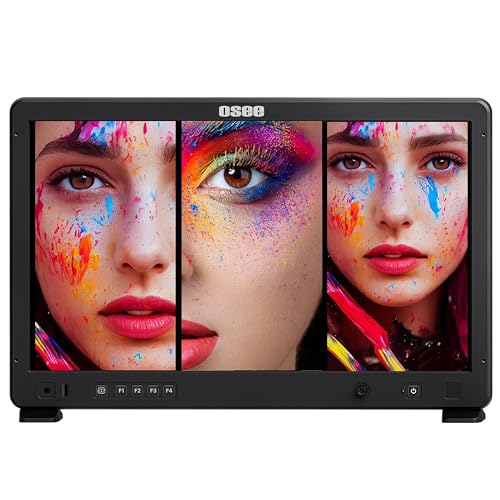
- 1500 nits for bright set visibility
- Single to quad multiview with PIP/PBP
- 3x HDMI and 3x SDI inputs
Best For: Directors and crews needing bright multi-camera monitoring
Record-and-switch production monitor
Atomos Sumo PRO-19 4K HDR Monitor-Recorder-Switcher

- 4K HDR panel with 1200 nits brightness
- Records up to four ISOs plus program output
- Quad-view and live switching support
Best For: Multicam teams needing a monitor, recorder, and switcher
Rack-mount studio monitor solution
SEETEC SC173-HSD-56 17.3" Pull-Out Monitor
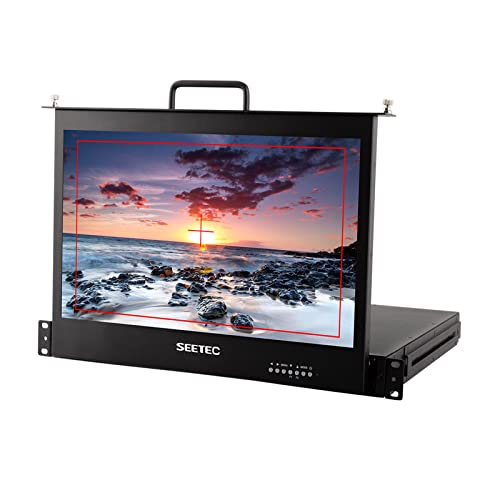
- 1RU pull-out rack design for studio integration
- Full HD IPS display with wide viewing angles
- Many inputs plus focus and marker tools
Best For: Studio racks and control rooms with limited space
Bright portable touch monitor
FEELWORLD LUT11S 10.1" Touch Monitor

- 2000 nits for daylight visibility
- Touchscreen with custom buttons and LUTs
- 4K 60Hz HDMI plus SDI I/O
Best For: Camera-side monitoring with bright portable control
Premium Large-Format 4K Director Monitor
LILLIPUT BM230-4KS 23.8" 4K carry-on monitor

- 23.8-inch 4K 3840 x 2160 display
- 3G-SDI, four HDMI inputs, dual/quad view
- 3D LUT, HDR, level meters, carry-on design
Best For: Directors and studio crews needing a flexible 4K monitor
Rack-Mount Studio Monitoring Pick
SEETEC P173-9HSD-RM 17.3" rack-mount monitor
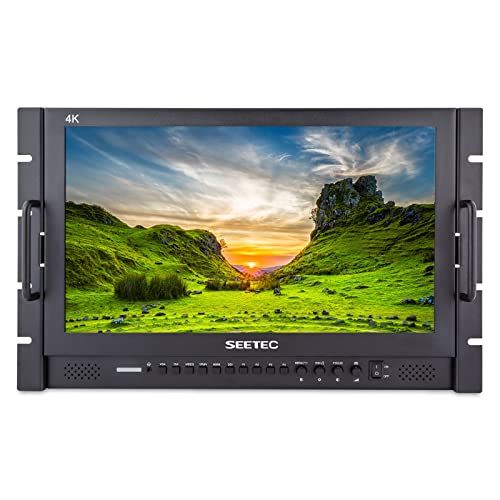
- 7RU rack-mount design for studios
- Full HD IPS panel with Rec.709 color
- Focus assist, freeze, flip, and tally lights
Best For: Rack-mounted studio and post-production monitoring
Flagship Large Production Display
LILLIPUT Q28-8K 28" 4K 12G-SDI production monitor

- 28-inch 4K UHD 3840 x 2160 display
- 12G-SDI, 12G-SFP, and HDMI 2.0 inputs
- Quad view, 3D-LUT, HDR, and audio vectoring
Best For: Professional studio teams needing a large broadcast-style monitor
High-Brightness Studio Pick
FEELWORLD FVM215 21.5" 1000nit Broadcast Monitor

- 21.5-inch panel with 1000-nit brightness
- HDMI and 3G-SDI inputs for flexible setups
- Focus assist, waveform, and 3D LUT support
Best For: Studio crews needing a bright, tool-rich monitor
4K Quad-View Workhorse
LILLIPUT Q28-VBP 28" 12G-SDI 4K Monitor
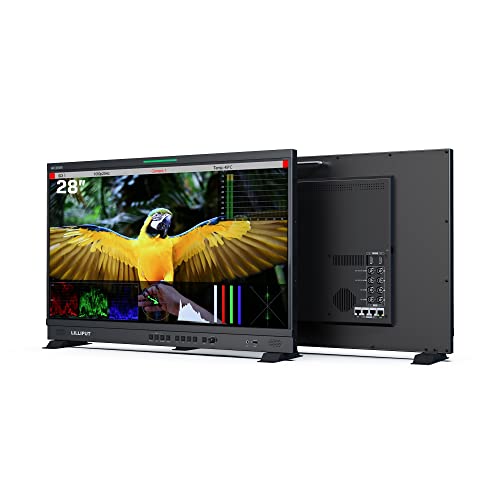
- 28-inch 4K UHD panel with 3840 x 2160 resolution
- Quad-split multiview plus tally light support
- 12G-SDI and HDMI 2.0 connectivity
Best For: Teams needing a big 4K monitor with multiview
Compact 4K Studio Monitor
LILLIPUT Q18 17.3" 12G-SDI HDR Display

- 17.3-inch 4K UHD monitor with 3840 x 2160 resolution
- Dual 12G-SDI plus HDMI connectivity
- HDR and 3D-LUT support for image review
Best For: Smaller studios needing 4K and broadcast inputs
Daylight-ready multiview director monitor – osee Mega 22S4 21.5" Multi-View Production Monitor
If you need a large production monitor for studio filming that can handle fast-paced multi-camera work, the osee Mega 22S4 is built for exactly that job. Its 21.5-inch 1080p IPS panel, 1500 nits brightness, and H/V rotation support make it a practical choice for modern sets, especially when you want a flexible split-screen layout without losing usable viewing space.
Best For: Directors, video village, and crews needing bright multi-view monitoring for studio or daylight shoots.
Pros:
- 1500 nits brightness makes it usable in daylight and bright set environments.
- Supports single, dual, triple, quad, and PIP/PBP split-screen monitoring.
- 3x HDMI and 3x SDI inputs help manage multiple camera sources.
- Includes professional tools like waveform, vectorscope, false color, and focus peaking.
Cons:
- Native resolution is Full HD rather than 4K.
- At 9.5 kg, it is not the lightest option to move frequently.
- Best suited to monitoring workflows, not recording or switching.
Overall, this monitor stands out when your priority is flexible on-set viewing with strong brightness and professional analysis tools. The included sun hood and battery plate support make it especially well suited to serious production environments.
Record-and-switch production monitor – Atomos Sumo PRO-19 4K HDR Monitor-Recorder-Switcher
The Atomos Sumo PRO-19 is a strong large production monitor for studio filming when you want monitoring, recording, and switching in one unit. Its 19-inch 4K HDR display, quad-view support, and ISO recording features make it a practical fit for on-set review, video village, and multicamera production workflows.
Best For: Productions that want a single monitor for live switching, ISO recording, and high-quality HDR review.
Pros:
- 4K UHD HDR display with 1200 nits brightness for detailed viewing.
- Records ProRes, ProRes RAW, and Avid DNx to CFexpress Type B or USB-C storage.
- Can record up to four isolated camera feeds plus a fifth program output.
- Includes quad-view monitoring and live switching support.
Cons:
- Smaller than some 21- to 22-inch director monitors.
- Heavier at 24.3 pounds, so it is less portable.
- Higher-end feature set may be more than basic monitoring jobs need.
For productions that want more than a display, the Sumo PRO-19 brings together monitoring, recording, and switching in a single workflow-friendly package. It is especially compelling when multicam capture and fast review matter as much as the screen itself.
Rack-mount studio monitor solution – SEETEC SC173-HSD-56 17.3" Pull-Out Monitor
SEETEC 17.3 Inch 1RU Pull Out Rack Mount Monitor Full HD 1920x1080 SC173-HSD-56(HDMI/SDI)
Check Price On AmazonIf you need a large production monitor for studio filming that fits neatly into a rack setup, the SEETEC SC173-HSD-56 is designed with that workflow in mind. Its 17.3-inch Full HD IPS panel, 1RU pull-out drawer design, and broad input support make it a solid choice for control rooms, studio racks, and post-production environments.
Best For: Studio racks, broadcast trucks, and post-production rooms that need an integrated pull-out monitor.
Pros:
- 1RU rack drawer design saves space and folds away for transport.
- Wide input support includes HDMI, DVI, VGA, YPbPr, video, audio, and optional SDI.
- Built-in monitoring aids include focus assist, image zoom, freeze, and screen markers.
- Full HD IPS panel offers wide 178-degree viewing angles.
Cons:
- 300 cd/m² brightness is much lower than daylight-focused monitors.
- Not intended for outdoor or sunlit monitoring use.
- Screen size is smaller than 19- to 22-inch director-style monitors.
This model makes the most sense when space efficiency and rack integration matter more than brightness. For indoor studio and engineering setups, it offers a practical all-in-one monitor that can stay mounted and ready to use.
Bright portable touch monitor – FEELWORLD LUT11S 10.1" Touch Monitor
The FEELWORLD LUT11S is a smaller but very bright option if you want a large production monitor for studio filming in a portable form factor. With a 10.1-inch IPS touch screen, 2000 nits brightness, and 4K 60Hz HDMI support, it is well suited to camera-side monitoring when you need clear visibility and fast access to tools.
Best For: Camera operators and assistants who want a bright portable monitor with touch control and LUT support.
Pros:
- 2000 nits brightness helps the screen stay visible in direct sunlight.
- Touchscreen interface makes monitoring controls quick to access.
- Supports 4K 60Hz HDMI, SDI I/O, HDR, and 3D LUT loading.
- Includes focus peaking, waveform, and custom button shortcuts.
Cons:
- 10.1-inch screen is much smaller than a true director monitor.
- Best for camera-side use rather than video village viewing.
- More of a field monitor than a studio centerpiece.
While it is not as large as the other monitors in this roundup, the LUT11S delivers a strong mix of brightness, portability, and image tools. It is a useful choice when you need a compact monitor that can still handle demanding on-set conditions.
Premium Large-Format 4K Director Monitor – LILLIPUT BM230-4KS 23.8" 4K carry-on monitor
If you need a large production monitor for studio filming, the LILLIPUT BM230-4KS is built around a 23.8-inch 4K panel with 3G-SDI and four HDMI inputs, so it fits well in multi-source video workflows. It adds production-focused tools like 3D LUT support, HDR, level meters, and dual/quad view, making it easier to judge exposure and color on set or in a studio.
Best For: Directors, camera teams, and studio crews that want a carry-on style 4K monitor with rich monitoring tools and flexible installation options.
Pros:
- 23.8-inch 3840 x 2160 4K display for detailed image review
- 3G-SDI plus four HDMI inputs for broad production compatibility
- 3D LUT, HDR, level meters, and dual/quad view for monitoring
- Supports suitcase carry-on, stand-alone, and rackmount-style use
Cons:
- Smaller than a true 28-inch class monitor if you want maximum screen area
- Feature set may be more than basic camera monitoring needs
This is a strong choice when you want a large-format production monitor that balances 4K detail with practical broadcast features. Its carry-on design and installation flexibility make it especially appealing for studios, field shoots, and director stations.
Rack-Mount Studio Monitoring Pick – SEETEC P173-9HSD-RM 17.3" rack-mount monitor
The SEETEC P173-9HSD-RM is a practical large production monitor for studio filming when rack integration matters more than sheer panel size. Its 17.3-inch Full HD IPS screen uses Rec.709 color standards and includes monitoring tools like focus assist, image freeze, and image flip, plus 3G-SDI, HDMI, YPbPr, and video inputs for flexible setup.
Best For: Studio and post-production racks that need an easy-to-integrate monitoring screen with broadcast-style inputs and assist tools.
Pros:
- 7RU rack-mount design for studio or post-production integration
- Full HD IPS panel with Rec.709 color reproduction
- Focus assist, image freeze, and image flip help on-set monitoring
- 3G-SDI, HDMI, YPbPr, and video inputs broaden compatibility
Cons:
- 17.3-inch screen is smaller than some other production monitors
- 300 cd/m² brightness may be modest for very bright environments
For rack-based workflows, this monitor is more about reliability and integration than oversized screen real estate. It is a sensible fit for studios that want accurate color viewing and multiple signal formats in one mounted unit.
Flagship Large Production Display – LILLIPUT Q28-8K 28" 4K 12G-SDI production monitor
If you want a large production monitor for studio filming with a bigger screen and high-end signal options, the LILLIPUT Q28-8K is a strong fit. It combines a 28-inch 3840 x 2160 panel with 12G-SDI, 12G-SFP fiber optic input, and HDMI 2.0, plus production tools like quad view, 3D-LUT, HDR, gammas, and audio vectoring for detailed review.
Best For: Professional filmmakers, videographers, and studio teams that need a 28-inch monitor with broadcast-grade connectivity and advanced monitoring features.
Pros:
- 28-inch 4K UHD 3840 x 2160 display for a spacious viewing area
- 12G-SDI, 12G-SFP, and HDMI 2.0 inputs for pro workflows
- Quad view, 3D-LUT, HDR, gammas, and audio vectoring support
- Remote control options include RS422, GPI, and LAN
Cons:
- 300 nits brightness is not especially high for intense ambient light
- Feature depth may be more than basic production setups require
This model stands out when screen size and advanced monitoring tools both matter. It is best suited to studio environments where 4K detail, multiple input paths, and remote control options can be fully put to use.
High-Brightness Studio Pick – FEELWORLD FVM215 21.5" 1000nit Broadcast Monitor
If you need a large production monitor for studio filming that stays visible under strong lighting, the FEELWORLD FVM215 is built for that job. Its 21.5-inch 1000-nit panel, HDMI and 3G-SDI inputs, and built-in exposure and focus tools make it a practical on-set reference display for camera monitoring and live production.
Best For: Studio crews and creators who need a bright, easy-to-read monitor with professional monitoring tools.
Pros:
- 21.5-inch screen with 1000-nit brightness for better visibility in bright environments
- HDMI and 3G-SDI connectivity for flexible camera and recorder setups
- Focus assist, false color, waveform, RGB parade, vector scope, and 3D LUT support
- Factory color calibration via CALMAN software for more accurate color handling
Cons:
- 1080p native resolution, so it is not a 4K display
- 8-bit color depth and 1000:1 contrast are more modest than higher-end studio panels
- Large 21.5-inch size may be less convenient for compact rigs
This monitor stands out when brightness and monitoring tools matter more than ultra-high resolution. For studio filming where quick exposure checks and dependable visibility are the priority, it is a strong practical choice.
4K Quad-View Workhorse – LILLIPUT Q28-VBP 28" 12G-SDI 4K Monitor
For a large production monitor for studio filming with a true 4K canvas, the LILLIPUT Q28-VBP brings a 28-inch UHD display, 12G-SDI, and 4K HDMI 2.0 support. Its quad-split multiview layout and built-in monitoring tools are useful when you need to keep multiple sources visible at once during production.
Best For: Studio teams that want a big 4K monitor with multiview and broadcast-style connectivity.
Pros:
- 28-inch 4K UHD display with 3840 x 2160 native resolution
- 12G-SDI and HDMI 2.0 inputs for high-bandwidth production workflows
- Quad-split multiview display helps monitor multiple sources together
- HDR, 3D-LUT, waveform, histogram, vector, and tally light support
Cons:
- 300 cd/m² brightness is lower than some high-bright studio monitors
- Large size may be less suitable for small carts or tight sets
- More feature-heavy than needed for simple single-camera monitoring
This model is a strong fit when your studio workflow benefits from 4K resolution and multiview monitoring. It is especially appealing if you need a larger production screen to track several signals or cameras at once.
Compact 4K Studio Monitor – LILLIPUT Q18 17.3" 12G-SDI HDR Display
If you want a large production monitor for studio filming but prefer a more compact footprint, the LILLIPUT Q18 fits the role well. Its 17.3-inch 4K UHD panel, dual 12G-SDI connectivity, HDR support, and 3D-LUT processing make it a capable on-set monitor for editing, playback, and camera review.
Best For: Smaller studio setups that still need 4K monitoring and pro video connections.
Pros:
- 17.3-inch 4K UHD display with 3840 x 2160 native resolution
- Dual 12G-SDI input support plus HDMI connectivity
- 3D-LUT and HDR support for more advanced image review
- Includes VESA mount plate and gold mount plate in the package
Cons:
- Smaller than 21- to 28-inch studio monitors if you need a very large screen
- Only one HDMI port listed in the details
- Designed more as a production monitor than a general-purpose display
The Q18 is a balanced option when you need broadcast-style features without jumping to a much larger monitor. It makes sense for studios that want 4K clarity, 12G-SDI, and HDR tools in a more manageable size.
How We Picked the Best Large Production Monitor for Studio Filming
We looked for monitors that make sense in real studio environments: strong visibility, dependable video inputs, practical mounting options, and tools that help crews judge exposure and focus quickly. We also favored models with broadcast-friendly features such as SDI, HDMI, HDR, waveform, LUT support, and multiview where relevant.
Quick Comparison
For a Large Production Monitor for Studio Filming, size is only one part of the decision. Smaller 10.1-inch field monitors can be ideal for camera-side focus and operator portability, while 17-inch, 21.5-inch, 23.8-inch, and 28-inch displays are better suited to director stations, control rooms, and rack or cart setups. Higher brightness matters for well-lit stages, and larger panels usually make multiview and image evaluation easier at a glance.
Key Buying Factors for a Large Production Monitor for Studio Filming
Brightness and Viewing Conditions
If your studio uses strong practical lighting or you work near windows, prioritize a brighter panel. Around 1000 nits and above is useful for daylight-viewable or high-ambient-light situations, while lower-brightness rack monitors can still work well in controlled control-room environments.
Inputs and Signal Flexibility
Check for the connections your production actually uses. HDMI is common, but SDI is often the better choice for longer runs and broadcast-style workflows. Models with 12G-SDI, 3G-SDI, or multiple HDMI ports are more flexible for switching, routing, and multiview setups.
Monitoring Tools
Look for features like waveform, focus assist, false color, zebra, HDR support, and 3D LUTs. These tools help a crew make faster decisions during recording, live production, and camera matching.
Mounting and Integration
Think about how the monitor will live in your space. Rack-mount options suit control rooms and fly packs, V-mount support helps with mobile studio carts, and portable carry-on designs work well for compact production teams that need to move gear often.
Who Should Buy Which Large Production Monitor for Studio Filming?
Choose a smaller high-brightness monitor if you need a camera-side tool for focus, exposure checks, or lightweight travel. Go with a 17-inch or 21.5-inch display if you want a balanced director or assistant station monitor. Pick a 23.8-inch or 28-inch model if you need a true Large Production Monitor for Studio Filming with better multiview visibility, easier client review, or more comfortable long-session use. If your workflow includes live switching or multiple camera feeds, prioritize larger screens with multiview and robust SDI support.
In short, the best choice is the one that matches your room, signal chain, and crew workflow. A well-matched monitor improves speed, confidence, and consistency across every shoot day.