Choosing the right hdmi switcher for multi camera studio work can make live production faster, cleaner, and far easier to manage.
Whether you are streaming interviews, classes, events, or panel discussions, the best switcher should fit your camera count, workflow, and output needs.
Best 10 Hdmi Switcher for Multi Camera Studio Picks for 2026
FEELWORLD LIVEPRO L1 V1 4x HDMI

- 4 HDMI inputs with 1080p support
- USB 3.0 streaming output works like a webcam
- Compact body with preview/PGM monitoring
Best For: solo creators and small multi-camera streams
Osee GoStream Duet Hybrid Mixer

- 4 SDI and 4 HDMI inputs with NDI HX source support
- Landscape and portrait handling for inputs and outputs
- Built-in GUI, software, and Companion control options
Best For: mid-sized studios and hybrid camera setups
RGBlink Mini V3 4K Touchscreen Switcher
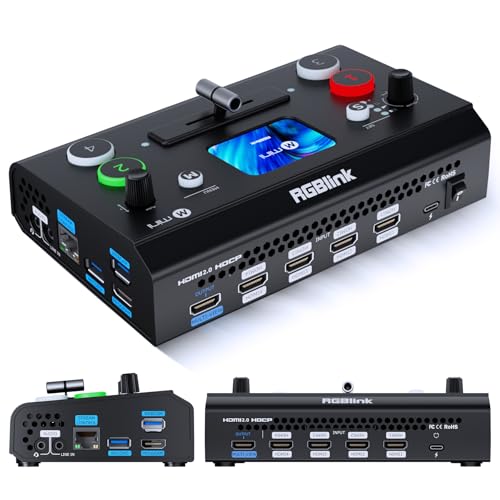
- 4 HDMI inputs with dual HDMI output
- 2.1-inch touch screen plus T-bar control
- UVC webcam mode and optional cloud features
Best For: entry-level studios wanting compact touchscreen control
FEELWORLD L4 10.1" Touchscreen Mixer

- 4 HDMI inputs plus 1 SDI input
- 10.1-inch touchscreen for easier monitoring
- USB 3.0 streaming with PTZ controller support
Best For: larger productions needing a big touchscreen
SPROLINK Neolive R5S PRO 4K60FPS Video Switcher Mixer

- 4 HDMI + 4 SDI inputs for mixed-camera setups
- PTZ joystick with 5.5-inch preview screen
- Streaming, recording, NDI, and multiview in one unit
Best For: Large studios that need HDMI/SDI flexibility and PTZ control
Osee GoStream Deck HDMI Pro Live Streaming Multi Camera Video Mixer Switcher

- 4 HDMI inputs plus 2 HDMI outputs
- Ethernet streaming with NDI HX and 3-platform support
- USB-C, SD card, and audio controls built in
Best For: Small HDMI studios that want tactile control and streaming extras
RGBlink Mini Video Mixer Switcher 4 HDMI Inputs

- 4 HDMI inputs with preview/program output
- USB 3.0 appears as a webcam for streaming
- 9 PiP layouts and 14 transition effects
Best For: Solo streamers and small teams on a budget
4K HDMI Mixer with PTZ Control

- 4 HDMI 2.0 inputs with 4K@60Hz support
- USB 3.0 output for live streaming workflows
- PTZ control with VISCA and 8 presets
Best For: Small studios and streamers who want touchscreen control
Multi-Signal 4K HDMI Mixer

- Multiple inputs including HDMI, USB, webcam, and NDI HX
- Records to USB and SD cards at the same time
- Audio mixing, delay control, and noise reduction built in
Best For: Multi-camera creators and event producers needing an all-in-one unit
4 HDMI with Built-In Screen

- Built-in 4-inch screen for multiview monitoring
- 4 HDMI inputs with zero-latency switching
- PTZ, chroma key, PIP, and logo overlay support
Best For: Portable multi-camera productions needing built-in monitoring
Compact 4-Input Live Mixer – FEELWORLD LIVEPRO L1 V1 4x HDMI
If you want an HDMI switcher for multi camera studio setups that stays simple and portable, the FEELWORLD LIVEPRO L1 V1 is built around 4 HDMI inputs, HDMI output, and USB 3.0 streaming. It is a practical choice for small live productions where one person needs to switch between cameras, slides, or playback without a complicated workflow.
Best For: Solo creators, small studios, and basic multi-camera live streams that need a compact switcher with webcam-style USB output.
Pros:
- 4 HDMI inputs with 1080p support on all inputs
- USB 3.0 output works with streaming software as a built-in webcam
- Compact design with tripod-mount screw hole for easier solo operation
- Preview/PGM monitoring plus multiple transition effects
Cons:
- No SDI input for SDI-based camera rigs
- 2-inch display is smaller than larger studio switchers
- Fewer advanced workflow options than higher-end production mixers
The LIVEPRO L1 V1 makes sense when you need a straightforward switching box rather than a feature-heavy control center. It covers the basics well for multi-camera streaming and keeps setup lean.
Hybrid SDI/HDMI Broadcast Mixer – Osee GoStream Duet Hybrid Mixer
Osee GoStream Duet Multiple Camera SDI and HDMI Live Stream Video Mixer Switcher
Check Price On AmazonThe Osee GoStream Duet is a strong HDMI switcher for multi camera studio builds when you need both HDMI and SDI flexibility. With 4 SDI, 4 HDMI, USB-C, NDI HX source support, and multiple control methods, it is aimed at more demanding live event workflows that may also need portrait output or direct streaming options.
Best For: Mid-sized studios and live event teams that want a hybrid SDI/HDMI mixer with flexible control and streaming options.
Pros:
- Supports 4 SDI and 4 HDMI inputs plus USB-C and NDI HX source options
- Landscape and portrait support for both inputs and outputs
- Multiple control methods: built-in GUI, computer software, and Bitfocus Companion
- Rich keying and transition tools, including chroma key, PIP, DSK, and T-bar control
Cons:
- More complex than a simple HDMI-only switcher
- Best suited to users who can take advantage of its deeper feature set
- Port count and feature depth may be more than basic streamers need
For productions that mix camera types and need broadcast-style flexibility, the GoStream Duet stands out. It is designed to be a more complete switching and streaming hub rather than a basic entry-level unit.
Compact 4K Touchscreen Switcher – RGBlink Mini V3 4K Touchscreen Switcher
If you want an HDMI switcher for multi camera studio work with a modern compact layout, the RGBlink Mini V3 combines 4 HDMI inputs, dual HDMI output, and a 2.1-inch touch screen. It is positioned as a flexible live streaming switcher for entry-level productions, with UVC webcam mode and optional cloud-activated features for users who want to expand later.
Best For: Entry-level streamers and small studios that want a compact 4K-capable switcher with touchscreen control.
Pros:
- 4 HDMI inputs plus dual HDMI output for program and preview
- 2.1-inch touch screen with T-bar control for hands-on switching
- UVC webcam mode for easy connection to streaming platforms
- Direct recording to USB drives with PIP, chroma key, and transition effects available
Cons:
- Some advanced functions require TAO Cloud activation
- Stable UVC streaming on Mac or PC calls for the included USB 3.0 cable
- Needs a 35W+ USB-C power adapter for reliable performance
The Mini V3 is appealing if you want a small switcher that can grow with your workflow. Its compact size and touch interface make it easy to place in a starter studio or travel setup.
Large-Panel Multi-Cam Mixer – FEELWORLD L4 10.1" Touchscreen Mixer
The FEELWORLD L4 is built for bigger HDMI switcher for multi camera studio setups, especially when you want a large touchscreen and room for more cameras. With 4 HDMI inputs, 1 SDI input, USB 3.0 streaming, and a 10.1-inch touchscreen, it is aimed at medium to large live productions where monitoring and fast switching matter.
Best For: Churches, events, classrooms, and larger live streams that benefit from a bigger touchscreen and multiple camera inputs.
Pros:
- 4 HDMI inputs plus 1 SDI input for flexible camera layouts
- 10.1-inch touchscreen makes preview and setup easier
- USB 3.0 output supports live streaming to major platforms
- PTZ controller support and PGM out for external monitoring
Cons:
- Bulkier than compact switchers
- Best suited to larger productions, not ultra-simple setups
- SDI/HDMI mix may be unnecessary for very small studios
For users who want a more visible control surface and broader monitoring options, the L4 is a strong fit. It is especially practical when you need to manage several angles and keep the workflow organized during longer productions.
Hybrid studio switcher – SPROLINK Neolive R5S PRO 4K60FPS Video Switcher Mixer
If you need an HDMI switcher for multi camera studio use that can also handle SDI gear, the SPROLINK Neolive R5S PRO is built for larger productions. It combines 4 HDMI and 4 3G-SDI inputs, lets you select any 4 active sources, and adds live tools like multiview, PTZ control, recording, and streaming in one box.
Best For: Studios, churches, esports, and live event setups that mix HDMI and SDI cameras with PTZ control.
Pros:
- 4 HDMI + 4 3G-SDI inputs, with HDMI 1 and 2 supporting 4K 60fps
- 5.5-inch FHD screen and built-in PTZ joystick for up to 5 cameras
- Triple outputs: SDI PGM, HDMI PGM, and HDMI multiview
- Built-in NDI, SRT, RTMP, USB 3.0 UVC capture, and recording options
Cons:
- More complex than basic HDMI-only switchers
- Only some HDMI inputs support 4K 60fps
- Designed for production use, so it may be more than a simple stream setup needs
This is the strongest choice here if your studio needs flexibility across HDMI and SDI cameras plus modern streaming features. The added screen, PTZ control, and Super Source make it a true all-in-one switcher and recorder for demanding workflows.
Compact live mixer – Osee GoStream Deck HDMI Pro Live Streaming Multi Camera Video Mixer Switcher
Osee GoStream Deck HDMI Pro Live Streaming Multi Camera Video Mixer Switcher with NDI Updatable
Check Price On AmazonThe Osee GoStream Deck is a practical HDMI switcher for multi camera studio use when you want a compact control surface without sacrificing core live-production tools. With 4 HDMI inputs, 2 HDMI outputs, Ethernet streaming, USB-C connectivity, and built-in recording/playback, it covers the essentials for small studios and event rigs.
Best For: Small studios, churches, conferences, and creators who want hands-on switching with built-in streaming and audio controls.
Pros:
- 4 HDMI inputs and 2 HDMI outputs for multiview and monitoring
- Ethernet streaming with NDI HX input and support for 3-platform streaming
- USB output works with OBS or vMix, plus SD card or USB SSD recording
- Physical controls, T-bar, macros, and built-in audio adjustment tools
Cons:
- Fewer inputs than larger studio switchers
- No built-in PTZ joystick control
- Best suited to HDMI-based workflows rather than mixed SDI systems
For users who want a straightforward live switcher with real buttons and useful streaming extras, this is a strong mid-size option. It balances portability and control well, especially if your setup is centered on HDMI cameras and simple studio monitoring.
Budget multiview switcher – RGBlink Mini Video Mixer Switcher 4 HDMI Inputs
If you need an HDMI switcher for multi camera studio work but want something simpler and more affordable, the RGBlink Mini keeps the focus on core switching. It offers 4 HDMI inputs, real-time preview and program output, 14 transitions, and 9 picture-in-picture layouts, making it a solid fit for smaller live productions.
Best For: Solo streamers and small teams that need basic multi-camera switching with easy USB webcam output.
Pros:
- 4 HDMI inputs for straightforward multi-camera setups
- USB 3.0 output is recognized as a webcam for streaming software
- 14 transition effects and 9 picture-in-picture layouts
- LAN remote control support without extra software
Cons:
- More limited than higher-end studio switchers
- Onboard recording is not listed in the supplied notes
- Best for HDMI-only workflows, not mixed-format productions
This is the most streamlined pick in the group and makes sense when you need dependable HDMI switching without a lot of extra complexity. It is especially appealing for creators who want a simple path into multi-camera streaming on a tighter budget.
Touchscreen 4K Switcher – 4K HDMI Mixer with PTZ Control
If you need an HDMI switcher for multi camera studio work, the FEELWORLD L1 Plus is built around fast 4K switching, simple hands-on control, and streaming-friendly USB 3.0 output. It gives you four HDMI 2.0 inputs, picture-in-picture support, chroma key, logo overlay, and PTZ control, making it a practical fit for compact live production setups.
Best For: Small studios and streamers who want a touchscreen switcher with PTZ camera control.
Pros:
- 4 HDMI 2.0 inputs with support for 4K@60Hz
- USB 3.0 output for plug-and-play streaming to common platforms
- PTZ control with VISCA support and up to 8 presets
- Touchscreen plus 5-direction joystick for easier operation
Cons:
- Only four HDMI inputs, which may be limiting for larger studios
- No built-in multiview display mentioned in the supplied notes
- Advanced features may still require some setup time
The L1 Plus stands out if you want an approachable mixer that still covers core studio needs like effects, overlays, and PTZ handling. It is a strong choice for creators who value straightforward control over a larger, more complex feature set.
All-in-One Production Switcher – Multi-Signal 4K HDMI Mixer
The FoMako M1 is a versatile HDMI switcher for multi camera studio production when you need more than basic input switching. It combines multiple video sources, dual recording options, audio mixing, PTZ control, remote web management, and several transition and keying tools, so it can handle more involved live streams and event setups.
Best For: Multi-camera creators and event producers who want a feature-rich all-in-one switcher.
Pros:
- Supports multiple source types, including HDMI, USB, webcam, and optional NDI HX input
- Records simultaneously to USB and SD cards while also offering streaming outputs
- Includes audio controls with mic/line inputs, delay adjustment, and noise reduction
- Offers chroma key, luma key, PIP, DSK, logo insertion, and many transitions
Cons:
- Feature set is broad, so setup may be more involved than simpler switchers
- Supplied notes mention NDI as upgradeable rather than standard on every unit
- More capable than a basic switcher, but also likely more than casual users need
For studios that want one box to manage video, audio, recording, and PTZ control, the M1 is the most all-in-one option here. It is especially appealing if your productions mix multiple signal types and benefit from remote monitoring and advanced workflow tools.
Portable Multiview Switcher – 4 HDMI with Built-In Screen
If portability matters in an HDMI switcher for multi camera studio use, the CINETREAK Mixer Plus is designed to make monitoring and switching easier in a compact body. Its built-in 4-inch display, four HDMI inputs, multiview monitoring, and broadcast-style tools make it a strong fit for small productions, classes, and mobile streaming setups.
Best For: Portable multi-camera productions that need built-in monitoring and flexible output options.
Pros:
- Built-in 4-inch screen for real-time multiview monitoring
- 4 HDMI inputs with zero-latency switching
- 30 transition effects and 4 user-defined scene presets
- PTZ control, chroma key, luma key, PIP, DSK, and logo overlay support
Cons:
- Only four HDMI inputs, which may not suit larger studio workflows
- Compact design may trade off some expanded hardware flexibility
- Audio output is headphone-based in the supplied details, so external monitoring needs may vary
The Mixer Plus is a smart pick if you want multiview convenience without carrying a larger control surface or separate monitor. It is best suited to creators who want a portable switcher that still offers many of the key tools used in polished live production.
How We Picked the Best Hdmi Switcher for Multi Camera Studio
We focused on switchers that are practical for real studio use: enough inputs for common multi-camera setups, reliable HDMI or hybrid connectivity, sensible monitoring, and output options that work with streaming software, capture devices, or displays. We also favored models with useful extras such as PTZ control, chroma key, touchscreen controls, and USB or SDI support when they improve workflow.
Quick Comparison
For smaller studios, compact 4-input HDMI switchers are usually the easiest and most affordable choice. For more demanding productions, hybrid HDMI/SDI models add flexibility and longer cable options. If your workflow includes frequent switching on the fly, a larger touchscreen or built-in preview display can speed up operation. If you need remote camera control, look for PTZ support rather than adding separate hardware later.
Key Buying Factors for Hdmi Switcher for Multi Camera Studio
Inputs and Signal Types
Start with your camera count, then add one spare input if possible. HDMI-only systems are fine for simple studio rigs, while HDMI plus SDI is better when cameras are farther apart or you need more robust cabling.
Resolution and Frame Rate
Match the switcher to your production standard. Many studios are best served by 1080p60, but 4K input can be valuable even if output is 1080p. Confirm whether the unit supports your cameras’ exact frame rate and format.
Monitoring and Control
A preview/program display, touchscreen interface, or multiview output can reduce mistakes during live switching. If multiple operators will use the system, simpler controls often matter more than extra features.
Streaming and Output Options
Look for USB 3.0, HDMI program out, and any direct streaming or network features you may need. The best Hdmi Switcher for Multi Camera Studio use should integrate cleanly with your recorder, computer, and broadcast workflow.
PTZ and Effects
If you run robotic cameras, PTZ control is a major convenience. Chroma key, transitions, and audio routing can also be helpful, but only if they fit your production style.
Who Should Buy Which Hdmi Switcher for Multi Camera Studio?
Buy a compact 4-input HDMI switcher if you want the simplest setup for classes, small interviews, or creator streaming. Choose a hybrid HDMI/SDI model if your cameras are spread out or you expect to expand. Pick a switcher with a large touchscreen or advanced control features if you operate live shows regularly and need faster hands-on switching. If portability matters most, a smaller unit with built-in monitoring is usually the best balance of size and usability.