The right XLR cable helps preserve a clean, balanced microphone signal while standing up to repeated setup, transport, and live use. The best choice depends on your microphone, equipment layout, required length, and how much strain the cable will face.
We selected 10 options ranging from short patch cables and affordable multipacks to 25- and 50-foot leads. Use the guide below to compare construction, connector quality, shielding, length, and value before choosing.
Best 10 Xlr Cables for Microphones Picks for 2026
Best Value Pair
Cable Matters 2-Pack 6ft XLR Cables

- Two 6-foot male-to-female cables
- 21 AWG OFC conductors with braided shielding
- Metal connectors and molded strain relief
Best For: Home studios, live setups, and spare-cable coverage
Best for Long-Term Stage Use
10ft XLR Cable with REAN Connectors

- Genuine REAN connectors from Neutrik
- Dual shielding and Kevlar reinforcement
- Flexible 10-foot length with lifetime warranty
Best For: Live performers, rehearsals, and frequent setup changes
Best Budget Single Cable

- 10-foot male-to-female cable
- All-copper conductors with spiral shielding
- Flexible, tangle-free PVC jacket
Best For: Home recording, PA systems, and everyday XLR connections
Best Extra-Length Option

- 25-foot cable for long microphone runs
- Hi-flex construction
- Chrome XLR connectors for low-impedance operation
Best For: Stage and room layouts requiring substantial cable reach
Best Multi-Cable Value
25 ft 6-Pack XLR Microphone Cables

- Six 25-foot male-to-female cables
- Color-coded gold-plated connectors
- OFC conductors and braided shielding
Best For: Multi-microphone rigs and stage setups
Best for Studio and Live Sound
Cable Matters 25 ft XLR 2-Pack

- Two 25-foot male-to-female cables
- 21 AWG OFC conductors
- Braided shielding and strain relief
Best For: Studio recording and live sound setups
Best Short Cable Set

- Compact 3-foot male-to-female cables
- Double shielding with 24 AWG OFC
- Flexible, tangle-resistant nylon braid
Best For: Short microphone and studio connections
Long-Reach Workhorse
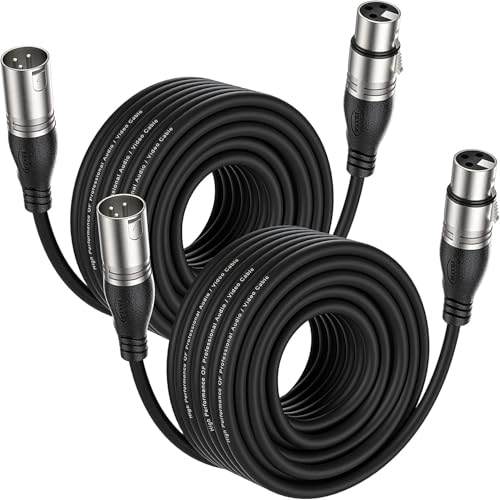
- 50-foot male-to-female cables
- Braided shielding and OFC conductor
- Flexible PVC jacket with locking connectors
Best For: Longer microphone, mixer, speaker, and live-sound runs
Braided Durability Pick

- Double-shielded 24AWG OFC design
- Flexible nylon-braided housing
- Heavy-duty locking connectors
Best For: Frequent studio, stage, KTV, and home-audio use
Everyday Premium Value
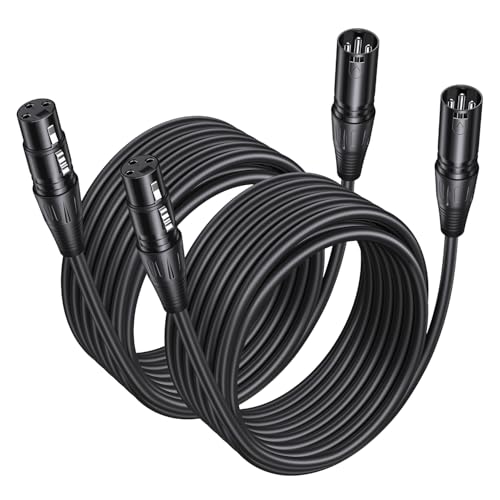
- Balanced OFC construction
- Self-locking male-to-female connectors
- Tested for bends and plug cycles
Best For: General studio, live-sound, mixer, and microphone setups
Best Value Pair – Cable Matters 2-Pack 6ft XLR Cables
For shoppers comparing XLR cables for microphones, this two-pack from Cable Matters offers a practical setup with 6-foot male-to-female leads. Its 21 AWG oxygen-free copper conductors, balanced design, and braided shielding are suited to studio and live recording equipment.
Best For: Home studios, live setups, and buyers who want a spare cable included.
Pros:
- Two cables provide a convenient spare or replacement.
- 21 AWG OFC conductors and balanced construction support clear, low-interference audio.
- Copper braided shielding, metal connectors, and molded strain relief add durability.
- Works with microphones, mixing boards, preamps, speaker systems, and other 3-pin XLR equipment.
Cons:
- The 6-foot length may be limiting for larger rooms or stage layouts.
- Designed for indoor use according to the supplied specifications.
This is a sensible choice when you need two standard-length XLR leads rather than a single extra-long cable. The bundle is especially useful for multi-microphone setups or keeping a backup on hand.
Best for Long-Term Stage Use – 10ft XLR Cable with REAN Connectors
When choosing XLR cables for microphones that need extra reach, this 10-foot male-to-female model combines genuine REAN connectors from Neutrik with dual shielding and a Kevlar-reinforced core. It is built for studio work, rehearsals, DJ booths, and live performance setups.
Best For: Performers and creators who need a durable 10-foot cable for repeated setup and teardown.
Pros:
- 10-foot length provides useful flexibility between microphones, mixers, speakers, and interfaces.
- REAN connectors with gold-plated contacts support a secure, smooth connection.
- Dual foil and braided copper shielding is designed to reduce hum, static, pops, and RF interference.
- Kevlar reinforcement, protected solder joints, and a nylon outer braid support frequent use.
Cons:
- A 10-foot cable may be more length than needed for compact desktop setups.
- The heavier reinforced construction may not be necessary for occasional indoor use.
This cable stands out for buyers prioritizing reach and repeated handling. Its reinforcement and lifetime warranty make it a strong fit for active studio, rehearsal, and stage environments.
Best Budget Single Cable – Amazon Basics 10ft XLR Cable
This Amazon Basics model is a straightforward option for shoppers seeking XLR cables for microphones, speakers, or PA systems. The 10-foot male-to-female cable uses all-copper conductors, spiral copper shielding, and nickel-plated zinc alloy connectors.
Best For: Basic home recording, PA connections, and general XLR-compatible audio equipment.
Pros:
- 10-foot length offers practical reach for microphones, mixers, speakers, and PA systems.
- All-copper conductors and inner copper spiral shielding help minimize noise interference.
- Nickel-plated 3-pin connectors use protective metal housings for secure connections.
- Flexible PVC jacket and tangle-free design simplify coiling and storage.
Cons:
- Only one cable is included.
- The supplied notes do not indicate a warranty or stage-specific reinforcement.
For everyday connections, this cable covers the essentials without adding specialized construction. It is a practical single-cable pick for a home studio, PA system, or occasional live setup.
Best Extra-Length Option – Shure C25J 25ft Hi-Flex Cable
For setups that require substantial reach, the Shure C25J is a 25-foot hi-flex cable with chrome XLR connectors. It is specified for low-impedance operation, making it a useful long-run choice when shorter XLR cables for microphones will not reach comfortably.
Best For: Longer microphone runs where a 25-foot cable is more convenient than combining shorter leads.
Pros:
- 25-foot length provides considerable flexibility for room and stage layouts.
- Hi-flex construction is designed for easier handling.
- Chrome XLR connectors provide the stated connection hardware.
- Specified for low-impedance microphone operation.
Cons:
- The supplied notes provide fewer construction details than the other cables in this roundup.
- Its 25-foot length may be excessive for compact desktop or close-mic setups.
The C25J is primarily about reach and flexible handling. Choose it when cable length is the deciding factor and you want a single long Shure cable for low-impedance microphone connections.
Best Multi-Cable Value – 25 ft 6-Pack XLR Microphone Cables
For setups that need several xlr cables for microphones, this six-pack provides 25-foot male-to-female cables with color-coded connectors. Gold-plated 3-pin connectors, OFC conductors, copper braided shielding, and a durable PVC jacket make it suited to indoor or outdoor audio work.
Best For: Multi-microphone rigs, stage setups, and buyers who want color-coded 25-foot cables in one bundle.
Pros:
- Six 25-foot cables offer strong quantity value for larger setups.
- Different connector colors make cables easier to identify during use.
- OFC conductors, polyethylene insulation, and copper braided shielding help reduce noise and hum.
- Heavy-duty locking connectors support repeated plugging and unplugging.
Cons:
- A six-pack may be more cable than a small home setup needs.
- At 25 feet each, these cables can require more storage and cable management.
This is a practical choice when quantity, reach, and quick cable identification matter more than buying a compact two-pack.
Best for Studio and Live Sound – Cable Matters 25 ft XLR 2-Pack
These xlr cables for microphones pair professional 3-pin male-to-female connectors with 21 AWG oxygen-free copper conductors and copper braided shielding. The two-pack gives you a spare or a way to connect multiple pieces of compatible audio equipment in studio and live environments.
Best For: Studio recording, live sound reinforcement, and professional equipment setups needing two matching 25-foot cables.
Pros:
- Two 25-foot cables provide useful reach and a ready spare.
- 21 AWG OFC conductors support clear audio transmission.
- Copper braided shielding is designed to reduce interference and noise.
- Heavy-duty metal connectors and molded strain relief improve durability.
Cons:
- The 25-foot length may be excessive for short desktop or rack connections.
- Only two cables are included, so larger installations may require additional packs.
Choose this pack for a balanced combination of professional-oriented construction, flexible compatibility, and practical two-cable coverage.
Best Short Cable Set – 3 ft Braided XLR 2-Pack
When long runs would create clutter, these 3-foot xlr cables for microphones provide a compact connection between compatible 3-pin XLR equipment. Double shielding, 24 AWG OFC conductors, and a flexible nylon-braided exterior target clean signal transmission while keeping the cables manageable.
Best For: Short microphone connections, compact home or studio setups, and users who want a spare cable in the same pack.
Pros:
- Three-foot length helps reduce excess cable around nearby equipment.
- Double shielding and OFC conductors are designed to limit interference, hum, and hiss.
- Nylon braiding improves flexibility, wear resistance, and tangle resistance.
- Heavy-duty connectors with molded strain relief support repeated use.
Cons:
- Three feet is too short for stage or across-room microphone runs.
- These are intended for 3-pin XLR connections and are not a universal cable for other connector types.
This two-pack is a good fit for tidy, close-range connections, especially when durability and noise shielding are priorities.
Long-Reach Workhorse – 50ft 2-Pack XLR Cable
If you need xlr cables for microphones across a larger room, stage, or recording setup, this 50-foot two-pack provides useful reach without requiring an extension. Its balanced three-pin male-to-female design, oxygen-free copper conductor, and braided shielding are suited to microphones, mixers, speakers, and other compatible equipment.
Best For: Home studios, live sound, parties, and setups where extra cable length matters.
Pros:
- 50-foot length helps span larger spaces.
- Two cables provide a spare or support two microphone setups.
- Braided shielding and oxygen-free copper are designed to resist interference.
- Locking metal connectors and a flexible PVC jacket support dependable everyday use.
Cons:
- The long length can create extra cable to manage in compact spaces.
- PVC insulation may be less abrasion-resistant than a braided exterior.
This is a practical choice when reach and quantity are more important than a compact cable footprint. The 3-pin balanced connection also makes it broadly useful with compatible audio and stage equipment.
Braided Durability Pick – 25ft 2-Pack XLR Cables
For shoppers comparing xlr cables for microphones, this 25-foot two-pack emphasizes durability and interference protection. It combines 24AWG oxygen-free copper, foil and copper-braid shielding, a flexible nylon-braided exterior, and male-to-female 3-pin connectors for studio, stage, and home audio use.
Best For: Users who want a durable, tangle-resistant cable pair for microphones and repeated setup changes.
Pros:
- Double shielding is designed to reduce hum, hiss, and external interference.
- Nylon braiding adds flexibility, wear resistance, and tangle resistance.
- Heavy-duty connectors include molded strain relief and tin-plated pins.
- 25-foot length and two-pack format work well for microphones or a spare cable.
Cons:
- 25 feet may be excessive for short desktop or rack connections.
- The braided exterior may cost more than a basic PVC-jacketed option.
This cable set stands out for buyers who expect frequent plugging, unplugging, and transport. Its stated compatibility with many 3-pin XLR microphones and audio devices adds flexibility when building or expanding a setup.
Everyday Premium Value – 25ft 2-Pack Microphone Cable
This two-pack is a straightforward option for shoppers seeking xlr cables for microphones with balanced audio connections and a practical 25-foot reach. Oxygen-free copper conductors, a soft PVC jacket, self-locking connectors, and male-to-female 3-pin compatibility make it suitable for microphones, mixing boards, preamps, and speaker systems.
Best For: Studio and live users who want two long, plug-and-play XLR cables at a practical price.
Pros:
- Two 25-foot cables offer useful reach and a ready spare.
- Oxygen-free copper and balanced construction support clear, low-interference audio.
- Self-locking connectors help secure connections during setup and use.
- Durability testing is stated at over 20,000 bends and 10,000 plug cycles.
Cons:
- The soft PVC jacket may not offer the same braided protection as nylon-covered cables.
- 25 feet can be more cable than needed for nearby equipment.
Choose this set when you want a versatile pair for common 3-pin XLR equipment without adding specialized features. Its balanced design and tested connector durability make it a sensible general-purpose solution for indoor or outdoor use.
How We Picked the Best Xlr Cables for Microphones
We focused on standard male-to-female XLR microphone cables suitable for dynamic and condenser microphones, audio interfaces, mixers, PA systems, and recording equipment. The selection covers common lengths from 3 to 50 feet, along with single cables, pairs, and larger multipacks.
Our comparisons emphasize practical specifications: balanced signal compatibility, conductor material, shielding, connector design, cable flexibility, jacket durability, and overall value. A cable does not need premium branding to perform well, but dependable connectors and effective shielding matter when cables are used near power supplies, lighting, computers, or other sources of electrical interference.
Quick Comparison
| Best For | Recommended Type | Why It Makes Sense |
|---|---|---|
| Home recording | 3- to 10-foot cable | Reduces clutter while keeping the microphone close to the interface or mixer |
| General studio and rehearsal use | 6- to 25-foot cable | Offers useful reach without excessive cable to coil and store |
| Live vocals and instruments | 25-foot cable | Provides stage mobility and flexible placement |
| Large stages or room installations | 50-foot cable | Reaches distant mixers, wall boxes, and stage positions |
| Multi-microphone setups | Two-, four-, or six-pack | Improves value when several channels need cabling |
Key Buying Factors for Xlr Cables for Microphones
Length and Cable Management
Choose the shortest length that comfortably reaches your equipment. Short cables are easier to store and less likely to create tangles, while longer cables provide positioning freedom. Avoid tightly coiling excess cable around stands or walkways.
Balanced Construction and Shielding
Standard three-pin XLR cables use balanced connections to help reject common electrical noise over longer runs. Dual shielding, braided shielding, and high-quality copper conductors can provide added protection, especially in recording spaces or live environments with many cables and electronics.
Connectors and Durability
Look for firmly assembled male and female connectors, strain relief, and a flexible outer jacket. Neutrik or REAN connectors are often valued for reliable fit, while molded connectors can be perfectly suitable for routine home use. Gold plating may resist corrosion, but it does not automatically make a cable sound better.
Pack Size and Compatibility
Confirm that the cable has the required male-to-female configuration. Multipacks are useful for drum microphones, PA systems, rehearsal rooms, and studio expansion. For phantom-powered condenser microphones, use a properly wired, balanced cable and inspect it regularly for damage.
Who Should Buy Which Xlr Cables for Microphones?
Choose a 3- to 10-foot cable for desktop recording, podcasting, voiceover, or a microphone positioned beside an interface. Choose 25 feet for most vocalists, rehearsal rooms, and small stages where movement matters. Choose 50 feet only when the extra reach is necessary, since longer cables require more storage and careful routing.
Buy a multipack if you are wiring several microphones or want spare cables for live work. For occasional home use, an affordable two-pack is usually the most practical balance. If cables will be stepped on, coiled frequently, or transported often, prioritize flexible jackets, solid strain relief, and reputable connectors over decorative features.