The best drum machines make it easier to build grooves, develop ideas, and add reliable rhythm parts to a performance or recording. The right choice depends on whether you prioritize hands-on sequencing, realistic sounds, sampling, portability, or live control.
Our roundup covers 10 drum machines and rhythm-focused devices across analog, digital, sample-based, pedal, and pocket-sized formats. Use the guide below to narrow the options by workflow, features, and budget.
Best 10 Drum Machines Picks for 2026
Professional Classic

- Circuit-modeled 808, 606, 909, 707, 727, and CR-78 sounds
- Imports mono or stereo samples via SD card
- Per-instrument effects and 128 kit storage
Best For: Hybrid production and live performance
Portable Pattern Lab

- Six-part DSP synth engine with waveguide resonator
- 16-step sequencer with Active Step and Slice functions
- Built-in speaker for portable creation
Best For: Portable electronic rhythm experiments
Songwriter Workhorse

- 500 onboard sounds with digital effects
- MIDI support for DAWs, keyboards, and electronic drums
- Wall or six-AA battery operation
Best For: Songwriting and live accompaniment
Analog Impact

- Separate accent control for each drum
- Song mode chains patterns for longer performances
- Optional Color shaping on most instruments
Best For: Hands-on analog rhythm performance
Best Portable Production Hub
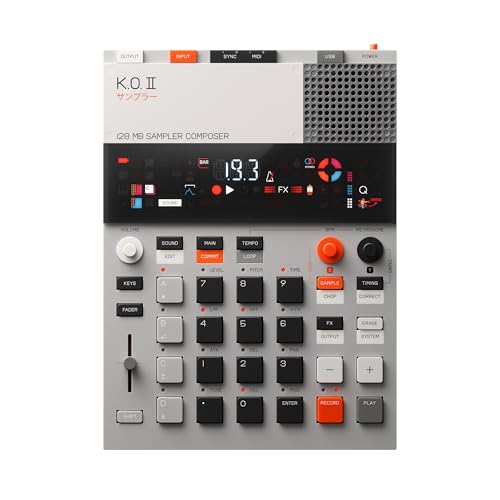
- 128MB memory and 999 sample slots
- Built-in mic, line-in sampling, and extensive effects
- Portable sequencing with MIDI and sync support
Best For: Mobile producers and live performers
Best Simple Stylus Groovebox

- Four drum kits and four bass sounds
- Click track and tempo lock for steady timing
- Records layers and multiple patterns
Best For: Beginners and casual beatmakers
Best Ultra-Compact Sampler

- Built-in mic and 3.5 mm line-in sampling
- 40-second memory with melodic and drum modes
- 16 effects in a pocket-sized battery-powered unit
Best For: Portable sampling and quick beat sketches
Versatile Guitar-Pedal Drumming

- 121 grooves across 11 styles
- Tap tempo, fills, and footswitch control
- 11 customizable song banks
Best For: Guitarists and bassists needing live rhythm control
Pocket-Sized Beatmaking

- Synthesized and sampled drum sounds
- 16 punch-in effects and pattern chains
- Battery powered with built-in speaker
Best For: Portable beat sketches and casual sequencing
Classic Analog Rhythm Workstation

- 15 classic analog drum sounds
- 34 rhythm presets
- 16-step sequencer in a durable design
Best For: Studio production and live analog-style rhythms
Professional Classic – Roland TR-8S Rhythm Performer
The Roland TR-8S is a strong choice among drum machines for producers and performers who want classic Roland sounds alongside modern sample-based production. It includes circuit-modeled TR-808, 606, 909, 707, 727, and CR-78 sounds, plus extensive kit, sample, and effects control.
Best For: Producers and live performers seeking authentic TR sounds with flexible sample manipulation.
Pros:
- Includes detailed circuit-modeled sounds from several sought-after TR drum machines.
- Supports custom mono or stereo sample imports through an SD card.
- Offers per-instrument effects, kit storage, and 128 kits for performance-ready setups.
- Free TR-EDITOR software adds graphical controls and organizational tools.
Cons:
- Its broad feature set may take time to learn.
- The plastic body may feel less substantial than metal alternatives.
The TR-8S stands out when sound heritage, detailed editing, and live-ready workflow matter more than minimalism. It is particularly well suited to building hybrid kits that combine classic drum-machine character with personal samples.
Portable Pattern Lab – Korg Volca Drum
Korg Volca Drum Digital Percussion Synthesizer w/ 16-step Sequencer and Active Step
Check Price On AmazonThe Korg Volca Drum is a compact option among drum machines, combining a six-part DSP synth engine with a 16-step sequencer. Its waveguide resonator, active step, slice, and randomize functions make it useful for creating varied rhythms in a small, portable format.
Best For: Mobile creators and electronic musicians who want hands-on pattern experimentation.
Pros:
- Compact design includes a built-in speaker for portable music creation.
- Six-part DSP synthesis and a waveguide resonator support distinctive drum sounds.
- Active Step, Slice, and randomize functions encourage rhythmic variation.
- Accent and choke controls add performance flexibility.
Cons:
- The 16-step sequencer may be limiting for longer arrangements.
- Its compact controls may offer less room for detailed editing than larger machines.
The Volca Drum is a practical pick for quick idea generation and tactile electronic rhythm programming. Choose it when portability, affordability, and sound experimentation are higher priorities than extensive sequencing depth.
Songwriter Workhorse – Alesis SR-18 Drum Machine
The Alesis SR-18 is a practical standalone choice among drum machines for songwriters, live performers, and remix engineers. It provides 500 professional sounds, built-in effects, MIDI connectivity, and performance features such as Pattern Play Mode and programmable drum rolls.
Best For: Songwriters and performers needing a straightforward drum machine with a broad onboard sound library.
Pros:
- Includes 500 professional sounds with built-in digital effects.
- Supports MIDI connections to keyboards, computers, DAWs, and electronic drum kits.
- Pattern Play Mode, drum rolls, and tap tempo support hands-on performance.
- Can run from the included wall adapter or six AA batteries.
Cons:
- Six AA batteries are not included.
- The plastic construction may be less rugged than metal-bodied alternatives.
The SR-18 favors dependable songwriting and performance workflow over elaborate synthesis. Its large sound library, MIDI support, and flexible power options make it a sensible studio-to-stage tool.
Analog Impact – Arturia DrumBrute Impact
The Arturia DrumBrute Impact is an analog-focused option among drum machines, designed around hands-on pattern performance and sound shaping. Separate accents, song mode, and optional Color controls give its instruments practical tools for building and chaining dynamic rhythms.
Best For: Performers and producers who want an analog drum machine with direct pattern control.
Pros:
- Provides separate accent control for each drum.
- Song mode supports chaining patterns into longer performances.
- Optional Color sound shaping is available on all instruments except the cowbell.
- Metal construction offers a substantial physical design.
Cons:
- Color shaping is unavailable for the cowbell.
- The supplied notes provide fewer connectivity details than some competing models.
The DrumBrute Impact is best suited to users who value immediate, performance-oriented control over a highly specified sound library. Its separate accents and song mode make it a focused option for dynamic analog rhythm work.
Best Portable Production Hub – EP-133 K.O. II
The teenage engineering EP-133 K.O. II is a powerful option for shoppers seeking versatile drum machines that can also sample, sequence, and perform. Its 128MB memory, built-in microphone, four-group pattern system, effects, and battery-powered design suit beatmaking at home, on the move, or onstage.
Best For: Producers and performers who want a portable sampler, drum machine, and sequencer in one unit.
Pros:
- 128MB memory with 999 sample slots and built-in sampling via microphone or line-in
- Flexible sequencing with four groups of 99 patterns, song mode, and real-time pattern changes
- Strong live-performance features, including stereo effects, punch-in effects, and a multifunctional fader
- Supports MIDI, sync connections, USB-C power, and four AAA batteries
Cons:
- Its broad feature set may be more than beginners need from a basic drum machine
- Plastic construction and a compact control surface may not suit users wanting a larger, traditional layout
The EP-133 K.O. II stands out when sampling and performance flexibility matter as much as drum programming. It is a particularly compelling choice for mobile creators who want room to grow beyond simple rhythm patterns.
Best Simple Stylus Groovebox – Stylophone BEAT
The Stylophone BEAT is a compact, approachable choice among drum machines, combining four drum kits with four bass sounds in a small battery-powered unit. Its stylus interface, click track, tempo lock, layering, and pattern recording make it suitable for quick rhythm ideas without a complex setup.
Best For: Beginners and casual beatmakers who want a straightforward portable rhythm machine.
Pros:
- Compact design with four drum kits and four bass sounds
- Click track and tempo lock help keep patterns in time
- Can record multiple layers, mute sounds, and save multiple patterns
- Built-in speaker and wired headphone support for convenient listening
Cons:
- Requires three AA batteries, which are not included
- Offers fewer sound options and deeper production features than larger drum machines
The BEAT focuses on immediacy rather than extensive sound design. Choose it if you want a small, accessible way to sketch beats and bass parts, but look elsewhere for advanced sampling or elaborate sequencing.
Best Ultra-Compact Sampler – PO-33 K.O.!
The teenage engineering PO-33 K.O.! is one of the most portable drum machines for sampling on the go. It combines a built-in microphone, 40-second sample memory, melodic and drum modes, sequencing, and 16 effects in a pocket-sized battery-powered format.
Best For: Creators who prioritize extreme portability and hands-on sampling for quick beat sketches.
Pros:
- Samples through its built-in microphone or 3.5 mm line input
- Includes melodic and drum modes for both chromatic parts and rhythm programming
- Offers 16 built-in effects and sequencing for shaping sampled sounds
- Very compact, battery powered, and usable with its speaker or headphones
Cons:
- 40 seconds of sample memory is limited compared with the EP-133 K.O. II
- Its tiny format may be less comfortable for users who prefer full-size controls
- Uses two AAA batteries rather than rechargeable power
The PO-33 K.O.! remains a strong fit for spontaneous sampling and pocket-sized beatmaking. Its memory and control layout are modest, but the combination of portability, sequencing, and effects makes it highly engaging for compact musical ideas.
Versatile Guitar-Pedal Drumming – MOOER Drummer X2
The MOOER Drummer X2 is one of the more flexible drum machines for guitarists and bassists who want foot-controlled rhythms. It combines 121 grooves across 11 styles with customizable song banks, tap tempo, and a fill function for live transitions.
Best For: Guitarists and bassists who need hands-free rhythm control for practice, songwriting, or performance.
Pros:
- Includes 121 grooves across 11 musical styles.
- Offers seven rhythm slots in each of 11 customizable song banks.
- Footswitch access, tap tempo, and fill controls support live use.
- Stereo inputs and outputs plus editor software add setup flexibility.
Cons:
- Its 5.43-by-4.8-inch pedal format may be larger than pocket-sized alternatives.
- Requires a 9V DC adapter unless paired with a compatible power setup.
With dedicated knobs and fast footswitch access, the Drummer X2 is a practical choice when immediate control matters more than an ultra-portable design.
Pocket-Sized Beatmaking – Teenage Engineering PO-12
The teenage engineering PO-12 is a compact drum machine and sequencer for making beats anywhere. It combines synthesized and sampled drum sounds with parameter-style sequencing features, punch-in effects, and pattern chaining in a battery-powered format.
Best For: Portable beatmaking, quick sketches, and musicians who want a small standalone rhythm device.
Pros:
- Offers synthesized and sampled drum sounds in a pocket-sized unit.
- Includes 16 punch-in effects for altering sequences.
- Supports 16 pattern chains for assembling longer tracks.
- Built-in speaker and 3.5mm line output support personal or external listening.
Cons:
- The compact interface may be less immediate for users who prefer full-size controls.
- Runs on two AAA batteries rather than a supplied mains adapter.
The PO-12 prioritizes portability and experimentation, making it a convenient companion for spontaneous rhythm ideas rather than a large studio centerpiece.
Classic Analog Rhythm Workstation – Behringer RD-78
The Behringer RD-78 is a straightforward analog drum machine for production and live performance. It provides 15 drum sounds, 34 rhythm presets, and a 16-step sequencer in a compact metal-bodied design intended for accessible beat programming.
Best For: Producers and performers who want classic-style analog rhythms with a simple sequencer workflow.
Pros:
- Provides 15 analog drum sounds for varied rhythm parts.
- Includes 34 rhythm presets to start ideas quickly.
- The 16-step sequencer supports programmed beat patterns.
- Compact alloy-steel construction is suited to studio or live use.
Cons:
- Its 16-step sequencer is less extensive than a longer-form arrangement workflow.
- At 15.5 inches wide, it is less portable than pocket-sized drum machines.
The RD-78 is a good fit for users who value immediate controls, classic analog drum sounds, and a durable format over maximum sequencing depth.
How We Picked These Drum Machines
We selected products that represent distinct approaches to beatmaking rather than treating every rhythm device as interchangeable. The lineup includes dedicated performance machines, analog and digital instruments, compact samplers, portable pocket units, and a guitar pedal with built-in grooves. We focused on sequencing flexibility, sound variety, hands-on control, connectivity, portability, and how well each device fits its intended use.
We also considered whether a product is best suited to studio production, live performance, songwriting, practice, or quick idea capture. A larger feature set is not automatically better if it makes a simple workflow unnecessarily complicated.
Quick Comparison
| Best For | What to Prioritize | Likely Best Fit |
|---|---|---|
| Live electronic performance | Hands-on controls, pattern variation, reliable outputs | Roland TR-8S or Arturia DrumBrute Impact |
| Sampling and beatmaking | Sampling, effects, sequencing, portability | teenage engineering EP–133 K.O. II or PO-33 K.O.! |
| Classic drum-machine sounds | Analog character, straightforward sequencing | Behringer RD-78 or Arturia DrumBrute Impact |
| Sound design | Digital synthesis and parameter control | Korg Volca Drum |
| Practice and songwriting | Preset variety, simple operation, useful connectivity | Alesis SR-18 |
| Guitar or bass practice | Foot operation, tempo control, fills | MOOER Drum Machine pedal |
Key Buying Factors for Drum Machines
Sound Source and Library
Analog machines typically appeal to buyers who want immediate, characterful tones and tactile controls. Digital instruments can offer broader synthesis options, while sample-based machines are better when you want to manipulate recordings or use varied acoustic and electronic sounds. Check whether sounds are editable and whether expansion or importing samples is supported.
Sequencing and Performance Control
Look for pattern length, step editing, real-time recording, song mode, parameter locks, probability, fills, and pattern chaining. Live performers should also check mute controls, trigger response, pattern transitions, and whether effects can be manipulated without menu diving.
Connections and Setup
Review the audio outputs, headphone connection, MIDI, USB, synchronization options, and trigger or footswitch support. A machine with stereo outputs may be convenient for live use, while MIDI and sync features matter when integrating synthesizers, controllers, or a DAW.
Size, Power, and Workflow
Compact devices are useful for travel and sketching but may have smaller controls or fewer connections. Larger units can be more comfortable for performance. Also check whether the device uses batteries, USB power, or an adapter, and whether its interface matches the way you prefer to work.
Who Should Buy Which Drum Machines?
Choose the Roland TR-8S if you want a versatile, performance-oriented centerpiece with extensive control. The Korg Volca Drum suits experimental producers who enjoy designing percussion sounds, while the Alesis SR-18 is a practical choice for players who want a broad onboard library and straightforward accompaniment.
The Arturia DrumBrute Impact and Behringer RD-78 are strong options for buyers drawn to hands-on analog-style workflows. Choose the EP–133 K.O. II for a more expansive sampling and sequencing setup, or the PO-33 K.O.! for an especially portable sampling tool. The PO-12 is a focused pocket rhythm machine for quick patterns and parameter-based performance.
The Stylophone BEAT is aimed at casual beatmaking and compact creative play, while the MOOER pedal makes the most sense for guitarists and bassists who need grooves, fills, and tap tempo in a pedalboard-friendly format.