The best stereo wireless in-ear monitor systems give performers clearer stage sound, more freedom to move, and better control over their monitor mix without relying on long cable runs. The right setup depends on channel capacity, operating frequency, range, battery life, and how many bodypack receivers your group needs.
We compared 10 options ranging from compact 2.4GHz kits to expandable UHF and 5.8GHz systems. Use the guide below to narrow your choices by performance setup, reliability requirements, and budget.
Best 10 Stereo Wireless in Ear Monitor Systems Picks for 2026
Best Overall Value
XTUGA SEM200 Stereo IEM System

- 230-foot UHF range with 200 tunable channels
- Two receivers with stereo/mono switching
- Bluetooth 5.3 and automatic pairing
Best For: Bands and small performance teams needing two monitoring stations
Best for Small Venues
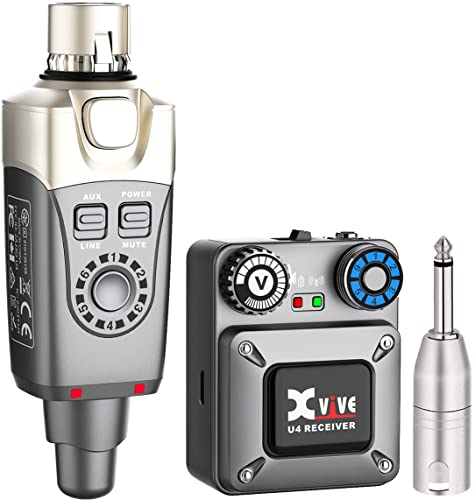
- 2.4GHz wireless with over 90-foot range
- Less than 5 ms latency
- Up to five hours of rechargeable battery life
Best For: Solo performers and small-club setups
Best Battery Life

- Up to 10 hours of battery life
- Automatic transmitter-receiver pairing
- Supports up to six receivers per transmitter
Best For: Churches, rehearsals, and performances needing extended runtime
Best for Four Performers
Phenyx Pro PTM-33-4B UHF IEM System

- Four bodypacks and four included earphones
- Up to four standalone mono mixes
- Rack-mountable transmitter with IR sync
Best For: Four-member bands and worship teams needing separate mixes
Best for Immersive Stereo

- True stereo sound with clear instrument and vocal separation
- Sub-5ms latency and 5.8GHz wireless transmission
- Stereo, mono, left, right, and mix monitoring modes
Best For: Performers wanting flexible stereo monitoring for live stages and rehearsals
Best for Stage Control

- UHF operation with 63 selectable frequencies and auto scan
- Mono/stereo modes with over 40 dB stereo separation
- Limiter, EQ, balance, PAD, and lock controls on the bodypack
Best For: Bands, churches, and stage crews needing adjustable RF and monitor controls
Best Multi-Receiver Value

- One transmitter includes two receivers and supports up to 10 pairs
- 30-hour stated battery life with charging case
- Auto-pairing, OTG input, and mono/stereo switching
Best For: Bands and small teams sharing a portable rechargeable monitoring system
Compact Stage Choice
Phenyx Pro PDP-M Stereo IEM System
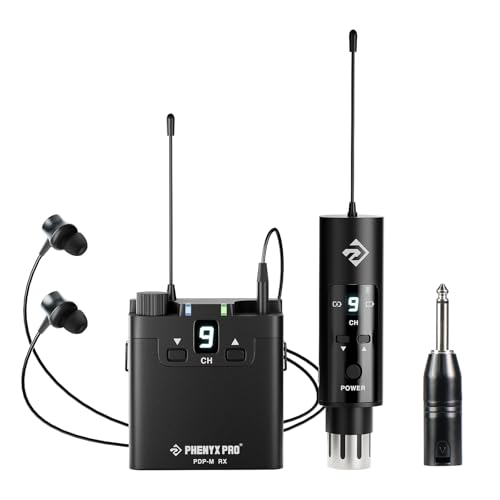
- Mono or stereo monitoring with included adapters
- 24-bit/48kHz digital audio and 16 selectable UHF frequencies
- 160–200-foot stated range with up to 4-hour runtime
Best For: Portable rehearsal, worship, and small-stage monitoring
Long-Running Wireless Pick

- Automatic pairing and less than 5ms latency
- Supports up to 10 channels and a 164-foot stated range
- Up to 10–12 hours of rechargeable battery life
Best For: Bands prioritizing easy setup and extended runtime
Simple Stereo Setup

- Auto-pairs and supports mono/stereo switching
- 164-foot stated range with less than 5ms latency
- Up to 10–12 hours of battery life and 6.35mm input
Best For: Single performers wanting easy, portable monitoring
Best Overall Value – XTUGA SEM200 Stereo IEM System
The XTUGA SEM200 is a versatile choice among stereo wireless in ear monitor systems, combining UHF transmission, two bodypack receivers, and Bluetooth 5.3 streaming. Its stereo/mono switching and included accessories make it suitable for bands that want a ready-to-use monitoring kit.
Best For: Bands, stage performers, church teams, and studio users needing two receivers and flexible stereo or mono monitoring.
Pros:
- UHF range reaches up to 230 feet with 200 tunable channels.
- Includes two receivers, headphones, antennas, and cables.
- Supports stereo and mono modes plus Bluetooth 5.3 streaming.
- Automatic pairing and LCD status display simplify setup.
Cons:
- The 3.29 kg package is less compact than single-receiver systems.
- Bluetooth streaming is an added convenience, not a replacement for a full mixer setup.
Choose the SEM200 when you want broad UHF coverage and two monitoring stations in one package. It offers more flexibility than basic single-receiver systems, particularly for small groups.
Best for Small Venues – Xvive U4 Wireless IEM System
The Xvive U4 is a compact, straightforward option among stereo wireless in ear monitor systems. Its 2.4GHz connection, low latency, and single transmitter/receiver set are well suited to performers who need a portable monitor link for smaller venues.
Best For: Solo performers, small-club stages, and users who prioritize portability and simple operation.
Pros:
- Less than 5 ms of latency helps keep monitoring distraction-free.
- Over 90 feet of working range suits small venues.
- Six channels allow simultaneous broadcasts.
- Rechargeable batteries provide up to five hours of use.
Cons:
- This package includes only one transmitter and one receiver.
- It uses 2.4GHz wireless rather than UHF.
- No headphones are listed in the package contents.
The U4 makes sense when you need a lightweight wireless link rather than a multi-performer rack system. For larger bands, additional receivers or a more expandable kit may be necessary.
Best Battery Life – M6S 2.4G Stereo IEM System
The M6S is a practical pick for buyers seeking stereo wireless in ear monitor systems with automatic pairing and extended battery life. Its 2.4GHz design supports 24-bit/48kHz audio processing, while one transmitter can pair with multiple receivers.
Best For: Church services, live performances, rehearsals, and users who need long operating time with simple setup.
Pros:
- Automatic pairing avoids manual channel setup.
- Up to 10 hours of operation after a full charge is advertised.
- One transmitter can work with up to six receivers simultaneously.
- One-button mono/stereo input switching is convenient.
Cons:
- The listed package includes only one receiver.
- The 2.4GHz system may be less suitable where that band is congested.
- Charging takes about three hours according to the supplied details.
Consider the M6S if battery endurance and quick pairing matter more than a large included receiver count. It is especially useful for teams that may add receivers over time.
Best for Four Performers – Phenyx Pro PTM-33-4B UHF IEM System
The Phenyx Pro PTM-33-4B is designed for teams that need several independent monitor feeds. Although it is a mono system rather than a stereo wireless in ear monitor system, its four bodypacks, four input groups, and UHF frequency options make it a strong multi-performer stage-monitoring solution.
Best For: Four-member bands, worship teams, stage productions, and live setups requiring separate monitor mixes.
Pros:
- Includes four UHF bodypack receivers and four in-ear earphones.
- Provides four groups of left/right inputs and loop outputs.
- Offers up to four standalone mixes with no stated audio delay.
- Rack-mount kit and IR sync support organized installation.
Cons:
- Monitoring is mono only.
- The system is designed around four auxiliary mixer outputs.
- Its stated 140–164-foot line-of-sight range can be affected by walls, glass, and metal.
The PTM-33-4B is the most purpose-built option here for a full group needing individual mixes. Select it over a stereo system when independent mono monitoring and four included bodypacks are the priority.
Best for Immersive Stereo – Xvive U45D
The Xvive U45D is a practical choice for performers seeking stereo wireless in ear monitor systems with a wide, separated mix. Its 5.8GHz transmission, sub-5ms latency, automatic channel scan, and selectable monitoring modes support reliable live performance and rehearsal use.
Best For: Performers who want stereo monitoring with flexible stereo, mono, left, right, and mix options.
Pros:
- True stereo monitoring helps separate vocals and instruments.
- Sub-5ms latency keeps timing closely aligned with the performance.
- Automatic channel scanning helps find an available frequency.
- Includes adapters, a charging cable, and a carrying case.
Cons:
- The set includes one transmitter and one receiver, limiting simultaneous users without additional equipment.
- Its 100-foot stated range may be less suitable for very large venues.
The U45D stands out for straightforward setup and adaptable monitoring modes. It is a focused option when stereo image and low latency matter more than supporting multiple receivers from one transmitter.
Best for Stage Control – Phenyx Pro PTM-10 GEN2
The Phenyx Pro PTM-10 GEN2 is designed for stage teams that need adjustable RF performance and hands-on bodypack controls. Among stereo wireless in ear monitor systems, it combines UHF operation, 63 selectable frequencies, auto scan, and switchable mono or stereo monitoring.
Best For: Singers, bands, churches, and stage crews needing rack-ready connections and detailed monitor controls.
Pros:
- Auto scan and 63 selectable UHF frequencies help manage busy RF environments.
- Three transmitter power levels support different setup sizes.
- Bodypack includes a limiter, balance control, EQ, PAD attenuation, and lock function.
- Includes a rackmount kit, carrying case, batteries, and earphones.
Cons:
- The stated operating range is up to 164 feet, which may not suit larger venues.
- The system includes one bodypack receiver, so extra performers require additional compatible equipment.
- Its 50 Hz–18 kHz response is narrower than some full-range monitoring systems.
This system is a strong fit when setup flexibility and receiver-side adjustments are priorities. Its UHF frequency selection and rack-oriented design make it particularly practical for organized stage rigs.
Best Multi-Receiver Value – LEKATO MS-20
The LEKATO MS-20 is a portable option for bands and performers who need one transmitter to serve multiple receivers. This 2.4GHz system supports stereo or mono operation, auto-pairing, OTG input, and up to 150 feet of open-area transmission, making it useful for rehearsal, studio, and live applications.
Best For: Bands and small performance teams wanting a rechargeable system with two included receivers and extended battery support.
Pros:
- Includes one transmitter and two receivers for shared monitoring.
- The transmitter can support up to 10 receiver pairs simultaneously.
- Charging case provides up to 30 hours of stated usage time.
- OTG support connects directly with compatible smartphones and USB-C devices.
Cons:
- Earphones are not included.
- The 2.4GHz band can be more vulnerable to congestion than less commonly used wireless bands.
- The stated 150-foot range applies to open areas and may vary on stage.
The MS-20 is especially appealing for portable multi-performer setups. Its included receivers, charging case, and one-to-many capability simplify band rehearsals and small live systems, though users must provide their own in-ear headphones.
Compact Stage Choice – Phenyx Pro PDP-M Stereo IEM System
The Phenyx Pro PDP-M is a practical option for musicians comparing stereo wireless in ear monitor systems for rehearsals, worship sets, small stages, and live performances. Its UHF connection, mono/stereo flexibility, and included adapters make it adaptable to common mixer outputs.
Best For: Performers who want a compact UHF system with flexible mono or stereo monitoring.
Pros:
- Supports mono monitoring or stereo monitoring when a stereo feed is available.
- 24-bit/48kHz digital audio path helps provide a consistent monitor feed.
- 30mW UHF transmission supports a stated range of 160–200 feet.
- Includes 16 selectable frequencies, rechargeable units, adapters, earphones, and a storage pouch.
Cons:
- Battery runtime is rated at up to 4 hours.
- Stereo operation requires a stereo source and the appropriate included adapter.
Choose this model when portability and connection flexibility matter more than extended battery life. The included accessories make it a convenient out-of-box solution for smaller performance setups.
Long-Running Wireless Pick – M6S 2.4GHz IEM System
This M6S package is a straightforward choice among stereo wireless in ear monitor systems, combining 2.4GHz transmission, automatic pairing, and a receiver with a 90-degree rotating transmitter design. It is intended for studio and band monitoring with a stated 164-foot range.
Best For: Bands needing simple setup, extended battery life, and support for multiple channels.
Pros:
- Automatic transmitter-receiver pairing supports plug-and-play setup.
- Up to 10 channels can be used simultaneously without cross-interference, according to the supplied notes.
- Less than 5ms latency, 107dB signal-to-noise ratio, and 24-bit/48kHz audio are specified.
- Rechargeable battery is rated for up to 10–12 hours per use.
Cons:
- The package includes one transmitter and one receiver, so additional performers need extra units.
- No noise control is specified in the listed product details.
This model stands out for its longer stated runtime and quick pairing. It is a sensible fit for performers who want a compact system that can cover a full performance without the shorter battery rating of some alternatives.
Simple Stereo Setup – M6S Auto-Pairing Wireless IEM
The M6S auto-pairing system offers a user-friendly approach to stereo wireless in ear monitor systems for studio work, bands, and live performance. It supports mono/stereo switching, 2.4GHz wireless transmission, and compatibility with audio devices using 3.5mm or 6.35mm connections.
Best For: Performers who want a lightweight, auto-pairing monitor kit for common audio connections.
Pros:
- Transmitter and receiver pair automatically, with manual pairing available through the MUTE button.
- Provides a stated 164-foot range, less than 5ms latency, and 20Hz–20kHz frequency response.
- Offers mono/stereo switching and up to 10–12 hours of battery life.
- Includes a 6.35mm audio jack and USB Type-C charging cable.
Cons:
- The one-transmitter, one-receiver package is designed for a single monitoring setup.
- The system is not water resistant.
Consider this version when ease of use and broad source compatibility are key priorities. Its automatic pairing and long stated battery life make it convenient for regular practice sessions and performances.
How We Picked the Best Stereo Wireless in Ear Monitor Systems
We focused on the features that matter most during rehearsals, performances, and recording sessions: stereo transmission, wireless stability, usable range, receiver count, battery performance, pairing convenience, and overall system flexibility. We also included different wireless formats and price points so solo performers can find a simple kit while bands and production teams can choose systems with greater capacity.
Specifications can vary by venue and region, so confirm the stated frequency band, included accessories, and local wireless regulations before buying.
Quick Comparison
| Best for | What to prioritize | Typical system type |
|---|---|---|
| Solo performers | Simple pairing, compact receiver, long battery life | 2.4GHz stereo kit |
| Small bands | Two or more receivers and dependable range | Dual-receiver or UHF system |
| Worship and live production | Expandable channels and interference management | UHF multi-channel system |
| Studios and rehearsals | Low setup time and convenient charging | Auto-pairing 2.4GHz system |
Key Buying Factors for Stereo Wireless In-Ear Monitor Systems
Stereo Operation and Monitor Mixing
Confirm that the system actually provides stereo transmission rather than a mono signal duplicated to both ears. Stereo is especially useful when you need spatial cues, separate channel information, or a more natural monitor mix. Also check whether the transmitter accepts the connections used by your mixer or interface.
Wireless Frequency and Interference
2.4GHz systems are convenient and often pair quickly, but they share spectrum with common wireless devices. UHF systems may offer more professional frequency coordination, while 5.8GHz options can provide another alternative in crowded environments. Choose a system with channel selection or scanning when you regularly perform in busy venues.
Range, Latency, and Reliability
Published range is measured under favorable conditions. Walls, people, antennas, and competing signals can reduce it. For live use, prioritize stable transmission and low latency over maximum advertised distance. Keep the transmitter visible to the receivers when possible.
Receivers, Battery Life, and Expansion
Count how many performers need independent bodypacks today, then consider future growth. A dual-receiver package can be more economical for a small group, while a multi-channel UHF system is better suited to larger setups. Long battery life and charging cases reduce interruptions, but replaceable batteries may be preferable for extended events.
Who Should Buy Which Stereo Wireless in Ear Monitor Systems?
Choose a compact 2.4GHz system if you want quick setup for rehearsal, streaming, solo performance, or a small stage. Auto-pairing and charging-case features are particularly useful when convenience matters most.
Choose a dual-receiver kit if two performers need the same monitor feed. Check whether both bodypacks are included and whether the transmitter can support the desired stereo input.
Choose a UHF or multi-channel system if you manage several performers, work in changing venues, or need more control over frequency coordination. These systems typically require more setup but can scale better for professional production.
Choose a 5.8GHz option when its frequency range fits your venue and you want an alternative to heavily used 2.4GHz equipment. Regardless of format, test the complete system with your mixer, earphones, and stage layout before relying on it for a live show.