The right looper can turn a solo set into a layered performance, but live musicians need more than basic record-and-playback functions. Footswitch layout, timing control, inputs, effects, and reliability all matter when you are building songs in real time.
We compared 10 loop stations for live performances across pedalboards, tabletop setups, vocal rigs, and full workstation configurations to help you choose the right balance of control, sound quality, and portability.
Best 10 Loop Stations for Live Performances Picks for 2026
Flagship Choice
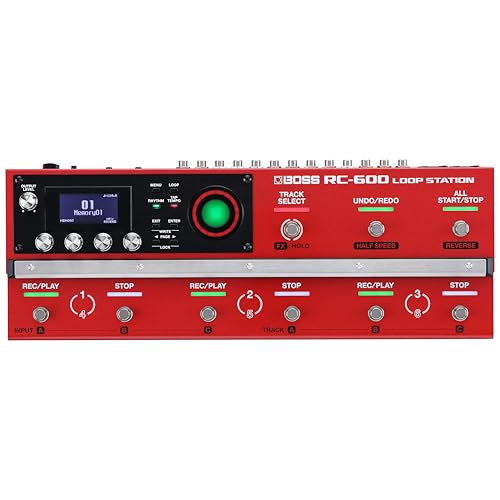
- Six simultaneous stereo phrase tracks
- 102 onboard Input and Track FX types
- Nine assignable footswitches
Best For: Complex, effects-rich live looping
Workstation Pick

- Five looping modes with up to four tracks
- Over seven hours of internal loop storage
- XLR inputs, phantom power, MIDI, and USB
Best For: Touring artists needing a complete looping hub
Tabletop Favorite

- Two stereo phrase tracks
- Eight simultaneous input and track FX
- 64 phrase memories with real-time saving
Best For: Hands-on tabletop looping with compact control
Streamlined Pedal

- Dual looper with stereo ins and outs
- Three hours of record time
- 50 recallable loops
Best For: Focused stereo looping with generous recording capacity
Best Dual-Track Pick

- Two-track stereo looping with 13 hours of recording
- Onboard rhythm tracks for live arrangements
- XLR, 1/4-inch, USB, and color LCD
Best For: Performers needing extended dual-track looping and flexible inputs
Best Touchscreen Sampler

- Standalone sampler for live sets and DJ performances
- 5-inch OLED touchscreen with real-time effects
- 16 velocity-compatible pads and DJ-style controls
Best For: Electronic performers and DJs triggering clips and effects live
Best Five-Track Setup

- Five simultaneous stereo phrase tracks
- Dedicated controls and independent volume faders
- Includes a 10-foot balanced TRS interconnect cable
Best For: Tabletop performers creating layered arrangements with detailed track control
Vocal Simplicity

- Automatic mic gain control
- Five-minute loops with unlimited overdubs
- Two-button operation for vocals and acoustic instruments
Best For: Vocalists and acoustic performers seeking simple live looping
Rhythm-Driven Performance
BOSS RC-10R Rhythm Loop Station

- 280 preset rhythm styles and 16 drum kits
- Six hours of stereo recording
- Two-track operation with phrase memory storage
Best For: Solo performers building rhythm-rich live arrangements
Hands-On Creative Control
VALETON VLP-400 Guitar Loop Station

- 100 stereo drum patterns with tempo sync
- Seven customizable performance effects
- USB audio and project-management connectivity
Best For: Performers wanting integrated drums and customizable effects
Flagship Choice – BOSS RC-600
The BOSS RC-600 is a powerful choice for musicians seeking loop stations for live performances with extensive layering, effects, and hands-on control. Its six stereo tracks, high-resolution processing, and assignable footswitches suit complex stage arrangements.
Best For: Guitarists, singer-songwriters, and multi-instrumentalists building detailed, effects-heavy live sets.
Pros:
- Records and edits up to six simultaneous stereo loops.
- Offers 49 Input FX and 53 Track FX types, with four usable at once in each section.
- Provides nine freely assignable footswitches and three pedal modes.
- Uses 32-bit AD/DA and 32-bit floating-point processing.
Cons:
- Its 22.88-by-9.81-inch footprint and 8.2-pound weight may be substantial for compact pedalboards.
- The extensive controls and customizable functions may require more setup time.
The RC-600 is the most feature-rich option here for performers who need multiple stereo layers, broad effects choices, and flexible foot control in one floor-based unit.
Workstation Pick – Sheeran Looper X
The Sheeran Looper X is a full workstation for performers comparing loop stations for live performances. It combines a 7-inch multitouch display, five looping modes, extensive storage, multi-effects, and connectivity for instruments, vocals, MIDI, recording, and streaming.
Best For: Touring performers and multi-instrumentalists who want a touchscreen-centered looping workstation with broad connections.
Pros:
- Supports five looping modes and up to four tracks per loop.
- Stores over seven hours of loops, with 99 layers per track and unlimited loop lengths.
- Includes four combo XLR/1/4-inch inputs with phantom power and multiple outputs.
- Functions as a 2-in/2-out USB audio interface for recording and streaming.
Cons:
- Its 21.65-inch width and 7.3-kilogram weight make it less portable than a compact pedal.
- The workstation-style feature set may be more than simple loopers require.
With its touchscreen workflow, large storage capacity, and extensive I/O, the Looper X is designed for performers who want a central hub rather than a basic phrase looper.
Tabletop Favorite – BOSS RC-202
The BOSS RC-202 offers a compact tabletop approach to loop stations for live performances. Its two stereo phrase tracks, dedicated controls, onboard effects, and real-time memory saving make it practical for hands-on looping while playing guitar, keyboard, or another instrument.
Best For: Tabletop performers who prefer fingertip controls and compact two-track looping.
Pros:
- Provides two simultaneous stereo phrase tracks with dedicated controls.
- Offers four input FX and four track FX simultaneously.
- Stores 64 phrase memories across eight banks.
- Supports optional footswitches, expression pedals, and MIDI connectivity.
Cons:
- It has fewer phrase tracks than the RC-600 and Looper X.
- External footswitches or an expression pedal are optional rather than included.
The RC-202 is a sensible fit when direct tabletop access and DJ- or sampler-style effects matter more than a large number of simultaneous layers.
Streamlined Pedal – Pigtronix Infinity 3
The Pigtronix Infinity 3 is a straightforward dual looper pedal for musicians comparing loop stations for live performances. It provides stereo inputs and outputs, 24-bit/48kHz recording, three hours of record time, and 50 recallable loops in a pedal-sized format.
Best For: Performers who want a focused stereo dual-looper pedal with substantial recording time and recallable loops.
Pros:
- Offers dual-loop operation with stereo inputs and outputs.
- Records at 24-bit/48kHz quality.
- Provides three hours of record time.
- Stores 50 recallable loops.
Cons:
- The supplied notes do not list onboard effects or expanded MIDI connectivity.
- It offers fewer documented tracks and features than the larger workstation-style options.
- The listing specifies the unit only, without additional included accessories.
The Infinity 3 keeps the focus on core looping, making it a practical option for players who value stereo operation, long recording capacity, and loop recall over extensive effects or workstation features.
Best Dual-Track Pick – BOSS RC-500
For musicians comparing loop stations for live performances, the BOSS RC-500 combines two-track looping with stereo recording, onboard rhythms, and flexible connectivity in a pedal-sized format. Its color LCD and multicolor backlight can also make navigation easier onstage.
Best For: Performers who want a dedicated dual-track looper with long recording time and microphone or instrument connectivity.
Pros:
- Two simultaneous tracks with up to 13 hours of stereo recording time.
- Onboard rhythm tracks support more complete live arrangements.
- XLR and 1/4-inch inputs, USB import/export, and a color LCD add setup flexibility.
Cons:
- Its two-track design offers less layering control than five-track loop stations.
- The 950 g pedal may be more substantial than a basic looper.
The RC-500 is a practical middle ground for live performers who need extended recording capacity, rhythm support, and both microphone and instrument connections without moving to a larger tabletop unit.
Best Touchscreen Sampler – Korg KAOSS Replay
The Korg KAOSS Replay takes a sampler-and-effects approach to loop stations for live performances. It works as a standalone unit, pairing a large 5-inch full-color OLED touchscreen with velocity-compatible pads, performance effects, and DJ-style mixing controls.
Best For: Live electronic performers, DJs, and artists who want to trigger clips and manipulate effects without additional equipment.
Pros:
- Standalone operation makes it suitable for live sets and DJ performances.
- Touchscreen-controlled vocal effects, delays, reverbs, pitch shifting, and distortion support real-time manipulation.
- Sixteen velocity-compatible pads, dual channel faders, beatmatch, and cue controls support hands-on performance.
Cons:
- At 2 kg, it is less pedal-like and less compact than a conventional floor looper.
- Its sampler and DJ-oriented workflow may be more involved than a simple phrase looper.
Choose the KAOSS Replay when clip triggering, touchscreen control, and dynamic effects matter more than a traditional guitar-pedal layout. It is especially suited to longer, mix-oriented live sets.
Best Five-Track Setup – BOSS RC-505MKII Bundle
BOSS RC-505MKII Loop Station and Hosa CSS-110 10' TRS to TRS Balanced Interconnect Cable Bundle
Check Price On AmazonFor performers who need extensive hands-on control, the BOSS RC-505MKII bundle is a strong option among loop stations for live performances. It provides five simultaneous stereo phrase tracks, dedicated controls, independent faders, and a 10-foot balanced TRS cable for connecting compatible pro audio gear.
Best For: Vocalists, beatboxers, and tabletop performers building layered arrangements with separate track control.
Pros:
- Five simultaneous stereo phrase tracks allow more complex live layering.
- Dedicated controls and independent volume faders provide direct track management.
- 32-bit AD/DA and floating-point processing plus input and track effects support detailed sound shaping.
- Included Hosa CSS-110 balanced interconnect cable adds immediate connection flexibility.
Cons:
- The tabletop design is less convenient for foot-controlled pedalboard setups.
- Its larger feature set may require more preparation than a basic looper.
The RC-505MKII is the most capable layering choice in this group for performers who want multiple stereo phrases, fader-based mixing, and extensive effects control. The included balanced cable is useful when integrating other pro audio equipment.
Vocal Simplicity – DITTO MIC LOOPER
TC Helicon DITTO MIC LOOPER Easy to Use Two-Button Looper Pedal for Vocals and Acoustic Instruments
Check Price On AmazonThe TC Helicon DITTO MIC LOOPER is a straightforward choice among loop stations for live performances, especially for vocalists and acoustic instrumentalists. Automatic mic gain control, a two-button design, and up to five minutes of looping make it easy to build layered parts without a complicated setup.
Best For: Vocalists and acoustic performers who want simple, hands-on looping with an XLR microphone connection.
Pros:
- Automatic microphone gain control simplifies setup.
- Five-minute loop length supports extended live phrases.
- Unlimited overdubs allow layered vocal or instrument parts.
- Dedicated stop button enables noiseless loop clearing.
Cons:
- Its feature set is focused on basic looping rather than built-in rhythms or multiple effects.
- Main unit only is included, so additional performance accessories may be needed.
This is a strong fit when ease of use matters more than extensive rhythm, storage, or effect options. Its compact, vocal-oriented design keeps live looping focused and accessible.
Rhythm-Driven Performance – BOSS RC-10R Rhythm Loop Station
The BOSS RC-10R combines song-based looping with dynamic rhythms in a compact pedal, making it a versatile option among loop stations for live performances. Its stereo looper, two-track operation, extensive rhythm library, and onboard phrase storage support fuller solo arrangements.
Best For: Solo performers who want synchronized loops, genre-spanning rhythms, and a compact pedal with expanded control support.
Pros:
- Includes more than 280 preset rhythm styles and 16 drum kits.
- Six hours of stereo recording supports substantial performance material.
- Two-track operation provides two independent song parts.
- Stores up to 99 phrase memories and 50 user rhythms.
Cons:
- The broad rhythm and storage feature set may require more learning than a basic looper.
- It requires a 9-volt, 300-milliamp power source.
Choose the RC-10R if rhythmic accompaniment is central to your live set. Its small footprint delivers considerable looping depth, though performers seeking only quick overdubs may not need all of its song-based tools.
Hands-On Creative Control – VALETON VLP-400 Guitar Loop Station
The VALETON VLP-400 adds a stereo drum machine, assignable controls, and performance effects to the looping workflow. For musicians comparing loop stations for live performances, its color-coded indicators, tempo-sync options, USB connectivity, and headphone output offer a flexible setup for both stage work and practice.
Best For: Guitarists and electronic-minded performers who want customizable foot controls, integrated drums, and computer connectivity.
Pros:
- Provides seven assignable effects, including Octave, Reverse, Freeze, and Fade.
- Offers 100 stereo drum patterns with 24-bit/48kHz processing.
- Automatic tempo matching can synchronize drums with loops.
- USB connectivity supports updates, audio import/export, and project management.
Cons:
- The many assignable controls and performance modes may take time to configure.
- Computer integration is specified for Windows/Mac software and may not suit every setup.
- The listed dimensions vary between the supplied measurements, so verify fit before mounting.
The VLP-400 is aimed at performers who want more than basic record-and-overdub looping. Its integrated drum machine and effects create a broad performance palette, while headphone monitoring makes it useful away from the stage too.
How We Picked the Best Loop Stations for Live Performances
We focused on features that affect real-world stage use rather than simply counting effects or recording time. The lineup includes compact pedals for guitarists and vocalists, rhythm-focused units, tabletop controllers, and advanced loop workstations for performers who build complete arrangements live.
Our main considerations were loop length and track architecture, hands-free control, input flexibility, rhythm and effects options, audio quality, storage or USB connectivity, and how easily each device can fit into an existing performance setup. We also considered whether a looper is intuitive enough for spontaneous use under stage pressure.
Quick Comparison
| Best For | What to Prioritize | Ideal Format |
|---|---|---|
| Solo instrumentalists | Reliable overdubbing, clear footswitches, and rhythm support | Floor pedal |
| Vocal performers | Microphone input, vocal-friendly effects, and simple controls | Vocal looper |
| Electronic and beat-based acts | Sampling, effects, MIDI, and hands-on manipulation | Tabletop workstation |
| Full live arrangements | Multiple tracks, song sections, memory, and extensive routing | Advanced loop station |
Key Buying Factors for Loop Stations for Live Performances
Tracks, Loop Structure, and Timing
Decide whether you need one continuous loop, two independent tracks, or several song sections that can be started and stopped separately. Independent tracks are useful for separating drums, bass, chords, and vocals, while quantization and undo/redo functions can help prevent small timing mistakes from disrupting a performance.
Inputs, Outputs, and Connectivity
Check that the station supports your instruments and microphones without extra adapters. Stereo inputs and outputs are valuable for keyboards, effects-heavy rigs, and wider mixes. USB, MIDI, external footswitch, and expression-pedal connections can expand control and simplify recording or synchronization.
Live Control and Reliability
Large switches, readable displays, assignable controls, and clear status indicators are especially important on dark stages. Look for durable construction, dependable switching, easy memory access, and controls that can be operated without taking your attention away from the performance.
Rhythms, Effects, and Sound Quality
Built-in drum patterns can provide a complete foundation for solo sets, while effects let you shape transitions and differentiate song sections. If you plan to record vocals or acoustic instruments, prioritize clean preamps, suitable microphone connectivity, and low-noise operation. Higher-resolution recording can also preserve detail when loops are layered repeatedly.
Who Should Buy Which Loop Stations for Live Performances?
Choose a compact pedal if portability, quick setup, and straightforward overdubbing matter most. These are often the best starting point for guitarists and other instrumentalists.
Choose a vocal-focused looper if microphone input and simple hands-free operation are central to your set. A dedicated vocal unit can be easier to manage than a general-purpose workstation.
Choose a tabletop or performance workstation if you build complex arrangements, manipulate samples, use effects extensively, or need multiple independent parts. These models offer deeper control but require more preparation and practice.
Choose a rhythm-oriented station if you want song-form accompaniment without carrying a separate drummer or backing-track system. Before buying, confirm that its patterns, fills, and section controls match the way you structure live songs.