The best samplers with sequencer combine sound capture, beat making, and pattern-based arranging in one focused instrument. They can turn a short recording into a complete groove without requiring a computer, making them useful for sketching ideas, performing live, or building tracks on the move.
This roundup compares 10 standout options across portable samplers, grooveboxes, drum machines, and performance-focused workstations. Consider workflow, sequencing depth, sampling features, portability, and connectivity to find the right fit for your setup.
Best 10 Samplers with Sequencer Picks for 2026
Compact Pattern Maker
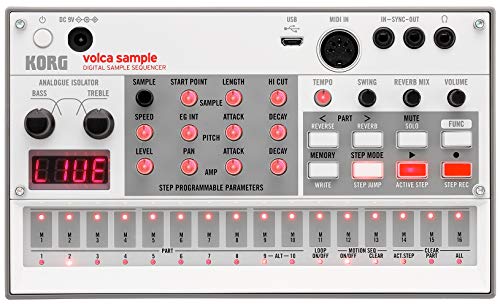
- 16-step sequencing with pattern chaining
- Eight-voice polyphony and expanded memory
- Built-in speaker with battery operation
Best For: Portable sample-based beat making
Live Groove Workstation

- Eight sample tracks for detailed beat building
- 32-step patterns chain up to 256 steps
- Built-in resampling and performance effects
Best For: Live beat production and sample manipulation
Portable Idea Station

- Advanced sequencing with drums and synths
- Onboard sampling and built-in microphone
- Rechargeable battery and built-in speaker
Best For: Mobile composition and quick idea capture
Pocket Granular Lab

- Built-in mic with chop and resampling tools
- Chromatic and polyphonic sample playback
- Granular controls for experimental sound design
Best For: Portable creative sampling and sound design
Pocket Sampling Pick

- Microphone and line-in sampling
- Melodic, drum, and sequencing modes
- Pocket-sized with 16 effects
Best For: Portable beatmaking and quick sound experiments
Standalone Production Pick

- Standalone MPC sampling and sequencing workflow
- 16 pads, color display, and sample chopping
- Rechargeable, connected, and effects-equipped
Best For: DAWless beatmaking and portable music production
Lo-Fi Groovebox Pick

- 12-bit retro sampling engine
- Four-track sequencer with parameter locking
- Built-in speaker and battery operation
Best For: Lo-fi grooves and retro sample-based production
Pattern-Building Workstation

- Chains patterns into full songs and sets
- Includes undo and original-value indicators
- Comes with MIDI adapters and Ableton Live 9 Lite
Best For: Electronic producers building pattern-based tracks and live sets
Portable Beat-Making Hub
teenage engineering EP-133 K.O. II
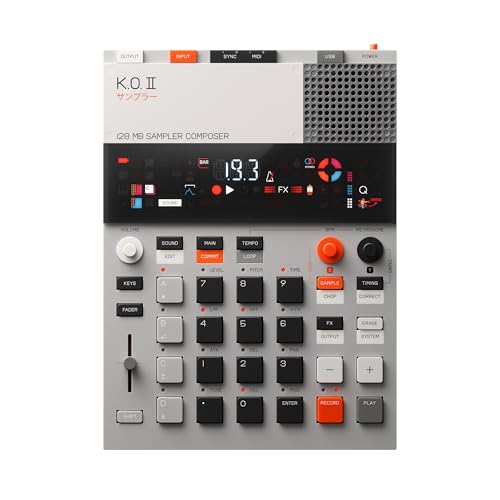
- Offers 128 MB memory and 999 sample slots
- Combines sampling, sequencing, and performance effects
- Runs on AAA batteries or USB-C power
Best For: Portable beatmaking, live performance, and quick track development
Voice-Sampling Pocket Instrument
teenage engineering PO-35 Speak

- Samples with a microphone or 3.5 mm line input
- Provides 120 seconds of memory and eight voice characters
- Adds eight built-in effects in a pocket-sized design
Best For: Portable vocal sampling, sound experiments, and quick sketches
Compact Pattern Maker – Korg Volca Sample 2
Korg Volca Sample 2 Digital Sample Sequencer Drum Machine w/Pattern Chain Mode and 16-step Sequencer
Check Price On AmazonThe Korg Volca Sample 2 is a lightweight choice for anyone seeking samplers with sequencer functionality in a compact drum-machine format. Its 16-step sequencer, pattern chaining, sample memory, and hands-on filter and reverb controls suit beat-making at home or on the move.
Best For: Portable sample-based beats, electronic genres, and beginners who want straightforward sequencing.
Pros:
- 16-step sequencer includes pattern chain mode and start delay.
- Eight-voice polyphony and expanded memory support longer, fuller patterns.
- Built-in speaker, headphone output, battery operation, and compact size support portable use.
- USB connectivity and dedicated Librarian software help manage samples and patterns.
Cons:
- Its 16-step workflow is less expansive than the longer pattern structures on larger grooveboxes.
- Runs on six AA batteries or an AC adapter, so neither power option is rechargeable.
The Volca Sample 2 emphasizes portability and immediate pattern creation rather than broad workstation features. It is a practical pick when a small, focused sampler with sequencer is the priority.
Live Groove Workstation – Novation Circuit Rhythm
The Novation Circuit Rhythm combines sampling, beat production, effects, and sequencing in a standalone groovebox. For shoppers comparing samplers with sequencer features, its eight sample tracks, 32-step patterns, pattern chaining, and resampling tools offer room to build complete arrangements.
Best For: Hands-on beat production, live performance, and users who want flexible sample manipulation.
Pros:
- Records from sources such as phones, turntables, and synths, then supports processing and resampling.
- Eight flexible sample tracks provide space for drums, basslines, melodies, and chopped audio.
- Each track offers 32-step patterns chainable up to 256 steps.
- Performance FX include lo-fi tape, beat repeat, reverb, delay, and sidechain.
Cons:
- At 1.9 pounds, it is less lightweight than pocket-sized samplers.
- Its wider feature set may take more time to learn than a simpler dedicated sample sequencer.
Circuit Rhythm is the most arrangement-focused option in this group, with substantial track capacity and performance controls. Choose it when sequencing flexibility and live manipulation matter more than the smallest possible footprint.
Portable Idea Station – Yamaha SEQTRAK
The Yamaha SEQTRAK is an all-in-one music-making device that combines drums, synths, sound design, sequencing, and onboard sampling. It stands out among samplers with sequencer functionality for its built-in microphone, speaker, rechargeable battery, and compact format designed for capturing ideas anywhere.
Best For: Mobile composition, quick idea capture, and creators wanting sampling alongside drums and synths.
Pros:
- Advanced sequencer supports composition, arrangement, and dynamic track playback.
- Onboard sampler and built-in microphone allow environmental sound capture without extra equipment.
- Built-in speaker and rechargeable battery support portable use.
- Three-part interface and real-time controls encourage hands-on operation.
Cons:
- Its compact controls and broad all-in-one design may not suit users seeking a dedicated sample-only workflow.
- The supplied notes do not specify sample memory or track-count details.
SEQTRAK is a versatile idea-capture tool rather than a narrowly focused sampler. It makes the most sense for musicians who want sequencing, synthesis, sampling, and self-contained portability in one device.
Pocket Granular Lab – Roland AIRA Compact P-6
The Roland AIRA Compact P-6 is a pocket-size creative sampler with a built-in microphone, onboard keyboard, sequencing, and extensive sound-shaping controls. Among samplers with sequencer capabilities, it is particularly suited to users who want to chop, resample, play samples chromatically, and explore granular textures.
Best For: Portable sound design, sample chopping, granular processing, and hands-on performance.
Pros:
- Built-in microphone enables quick sample capture from the surrounding environment.
- Chop, step-sampling, resampling, chromatic playback, and polyphonic playback support varied workflows.
- Dedicated filters and envelopes provide control over each sample.
- Granular parameters include detuning, head position, head speed, spread, and grains.
Cons:
- Its advanced granular controls may be more than beginners need for basic beat sequencing.
- Sample editing and import/export rely on P-6 Sample Tool software for macOS and Windows.
The P-6 favors experimental sound design and tactile sample manipulation in a very small package. It is a strong fit when granular capabilities and creative resampling are more important than a traditional large-format groovebox layout.
Pocket Sampling Pick – PO-33 K.O. Micro Sampler
If you want samplers with sequencer features in the smallest possible format, the teenage engineering PO-33 K.O. is an easy-to-carry option. It combines microphone and line-in sampling, melodic and drum modes, onboard effects, and a built-in sequencer in a battery-powered pocket device.
Best For: Portable beatmaking, quick sound experiments, and beginners who want a compact sampler with sequencing.
Pros:
- Samples through its built-in microphone or 3.5 mm line input.
- Offers melodic and drum modes with sequencing for complete patterns.
- Includes 16 effects, a built-in speaker, and headphone/line output.
- Compact, lightweight, and powered by two AAA batteries.
Cons:
- Sample memory is limited to 40 seconds.
- Its pocket-sized controls and four-voice sampler may feel restrictive for larger projects.
The PO-33 K.O. is a highly portable choice for sketching beats and melodies anywhere. Its limited memory is the main trade-off, but the combination of sampling, sequencing, effects, and low weight makes it particularly appealing for spontaneous ideas.
Standalone Production Pick – Akai MPC Sample
The Akai Professional MPC Sample is a standalone option for shoppers comparing samplers with sequencer capabilities and a fuller production workflow. It pairs 16 MPC pads with a color display, microphone, rechargeable battery, built-in speaker, sample chopping, effects, and storage through microSD.
Best For: Beatmakers, finger drummers, live performers, and DAWless producers who want a portable MPC-style setup.
Pros:
- Works without a computer or DAW and includes a rechargeable battery.
- Provides 16 responsive pads, a 2.4-inch color display, and Instant Sample Chop Mode.
- Includes four internal FX processors with 60 effect types.
- Offers audio, MIDI, USB-C, microSD, and smart-device connectivity.
Cons:
- The MIDI DIN adapter is not included.
- Its broader feature set may be more involved than a basic sampler for casual users.
With standalone operation, hands-on MPC controls, and extensive sampling and effects tools, the MPC Sample is the most production-focused option in this group. It is a strong fit when you want to move from captured sounds to arranged grooves without relying on a computer.
Lo-Fi Groovebox Pick – Sonicware Liven Lofi-12
The Sonicware Liven Lofi-12 is a distinctive choice among samplers with sequencer features, combining a 12-bit retro sampling engine with a four-track step sequencer. Its chromatic sample playback, parameter and sound locking, battery power, and built-in speaker make it suited to hands-on lo-fi groove creation.
Best For: Producers seeking retro sample character, lo-fi grooves, and multi-track step sequencing.
Pros:
- Uses a dedicated 12-bit sampler mode for retro-styled sound.
- Plays samples chromatically across its keyboard.
- Four-track sequencer supports parameter and sound locking.
- Provides track effects, master effects, battery power, and a built-in speaker.
Cons:
- The lo-fi sound profile is specialized rather than universally neutral.
- Its four-track sequencer is less extensive than a larger production workstation.
The Lofi-12 stands out when texture and groove matter more than pristine, all-purpose sampling. Its four-track sequencing and parameter-locking features provide useful depth, while the 12-bit engine gives recordings a deliberately retro character.
Pattern-Building Workstation – Korg Electribe Sampler
The Korg Electribe Sampler is a strong option for musicians seeking samplers with sequencer functions for building complete electronic tracks and live sets. Its pattern chaining, onboard controls, and Ableton Live 9 Lite support make it suited to both creation and performance.
Best For: Electronic producers who want pattern-based songwriting, live performance tools, and Ableton export support.
Pros:
- Chains patterns into full songs or extended sets with minimal limitation.
- Includes one-level undo and an original-value indicator for more confident editing.
- Includes two MIDI adapter cables, an AC adapter, and Ableton Live 9 Lite.
- Supports additional bonus patterns available through Korg with an optional SD card.
Cons:
- The optional SD card is required for the additional bonus patterns.
- At 18.78 inches wide and 1.67 kg, it is less compact than pocket-sized samplers.
Choose this Electribe when hands-on pattern arrangement and performance flexibility matter more than ultra-portable size. Its chaining workflow is particularly useful for turning ideas into longer-form arrangements.
Portable Beat-Making Hub – teenage engineering EP-133 K.O. II
The teenage engineering EP-133 K.O. II combines sampling, drum-machine features, and sequencing in a portable format. For shoppers comparing samplers with sequencer capabilities, it offers built-in and line-in sampling, pattern-based beat construction, effects, and a battery-powered design.
Best For: Beatmakers and performers who want a compact sampler with extensive pattern storage, live effects, and portable power.
Pros:
- Provides 128 MB of memory, 999 sample slots, and four groups of 99 patterns.
- Samples through the built-in microphone or line input and supports resampling and chopping.
- Includes six master effects, 12 punch-in effects, and a multifunctional fader.
- Supports MIDI and sync connections, USB-C power, or four AAA batteries.
Cons:
- The plastic body may feel less substantial than a metal workstation.
- Its many performance and sequencing features may take time to learn.
The K.O. II is a versatile middle ground between a pocket device and a larger production workstation. Its song mode, effects, and portable power make it especially practical for developing and performing beats away from a desk.
Voice-Sampling Pocket Instrument – teenage engineering PO-35 Speak
The teenage engineering PO-35 Speak is a compact choice for shoppers looking at samplers with sequencer functions and a focus on vocal sound design. Its built-in microphone, 120-second sample memory, voice characters, and effects support quick experiments wherever you are.
Best For: Travelers, vocal experimenters, and beginners who want an ultra-portable sampler and sequencer.
Pros:
- Samples through the built-in microphone or 3.5 mm line input.
- Offers 120 seconds of sample memory across eight voice-character slots.
- Includes eight voice characters and eight built-in effects for sound shaping.
- Battery operation, a built-in speaker, and a folding stand support portable use.
Cons:
- Its 120-second memory is substantially smaller than the EP-133 K.O. II’s 128 MB storage.
- The pocket-sized interface is better suited to compact ideas than full-scale arrangements.
- It uses two AAA batteries, so battery replacement is part of portable use.
The PO-35 Speak is best viewed as an immediately accessible sketchpad for voices and found sounds. Choose it for portability and characterful vocal processing rather than extensive memory or workstation-style sequencing.
How We Picked These Samplers with Sequencer
We selected instruments that combine sampling with an integrated sequencer rather than treating either feature as an afterthought. The lineup covers compact devices for quick beat sketches, performance-oriented grooveboxes, lo-fi sampling tools, and more capable production workstations.
Our comparisons focus on the workflow each device encourages: how quickly you can capture or load sounds, build patterns, arrange sections, manipulate samples, and perform without a computer. We also considered portability, controls, onboard effects, microphone availability, connectivity, and the learning curve. Specifications and included features can vary by region or software version, so confirm current details before purchasing.
Quick Comparison
| Best For | What to Prioritize | Typical Strength |
|---|---|---|
| Beginners and quick sketches | Simple controls and immediate pattern creation | Fast, approachable workflow |
| Live performers | Pattern chaining, mute controls, effects, and reliable hands-on access | Real-time arrangement |
| Portable production | Battery operation, built-in speakers, microphone, and compact design | Making music anywhere |
| Detailed beat production | Multitrack sequencing, sample editing, and broad connectivity | More complete standalone workflow |
| Lo-fi experimentation | Bit reduction, resampling, and characterful sample processing | Distinctive texture |
Key Buying Factors for Samplers with Sequencer
Sampling and Storage
Check whether the device samples through a built-in microphone, line input, or both. Maximum recording time, memory capacity, file-transfer methods, and sample-management tools matter if you plan to build a large library. A compact sampler may be ideal for short chops but limiting for long recordings or layered arrangements.
Sequencer Depth
Look beyond the step count. Useful questions include whether the sequencer supports multiple tracks, pattern chaining, song mode, parameter recording, probability, swing, automation, and live looping. Simpler sequencers can be faster to learn, while deeper systems provide more room to finish complete arrangements.
Sound Shaping and Effects
Filters, envelopes, pitch controls, slicing, resampling, and onboard effects determine how much you can transform a recording. Lo-fi reduction and saturation suit gritty production, while broader effects and modulation are more helpful for performance and sound design.
Portability and Connections
For travel or mobile sessions, assess battery life, speaker quality, headphone output, microphone access, and overall durability. For a studio or live rig, prioritize MIDI, USB, audio inputs and outputs, synchronization options, and the ability to integrate with other gear.
Who Should Buy Which Samplers with Sequencer?
Choose a pocket-sized sampler if you want an inexpensive, highly portable instrument for short beats and playful experimentation. A compact groovebox is a better choice when you want dedicated controls, stronger live performance features, and more flexible pattern construction.
Producers who want to work without a computer should look for a model with multiple tracks, dependable sample management, and a song or pattern-chain workflow. Performers should prioritize fast muting, scene or pattern changes, effects, and synchronization. If your priority is distinctive vintage character, select a unit with deliberate lo-fi processing and resampling tools rather than simply the largest feature list.
Before buying, decide whether you value immediate hands-on fun or a deeper production environment. The best sampler is the one whose sequencing workflow matches how you actually create: quick loops, arranged songs, live improvisation, or detailed sample-based production.