The best multitrack recorders with external microphone input give you more control than a basic handheld recorder, letting you connect microphones, instruments, or other line-level sources while capturing separate tracks.
These 10 picks range from compact battery-powered recorders to full tabletop Portastudios, so the right choice depends on your input count, workflow, portability needs, and desired track capacity.
Best 10 Multitrack Recorders with External Microphone Input Picks for 2026
Best All-Around Pick

- Four XLR/TRS inputs with phantom power
- 24-bit/96kHz WAV or MP3 recording
- Includes XY and MS microphone capsules
Best For: Flexible music, podcast, and video recording
Best Budget-Style Option

- Four-track recording with built-in and external mics
- Dual recording adds a safety track
- Switchable X-Y and A-B microphone positions
Best For: Simple portable recording and rehearsal capture
Best for Layered Song Ideas

- Two XLR/TS combo inputs for varied sources
- 32-bit float recording helps avoid clipping
- Four-track layering with rhythms and USB interface
Best For: Portable songwriting and musician demos
Best for Full Project Production
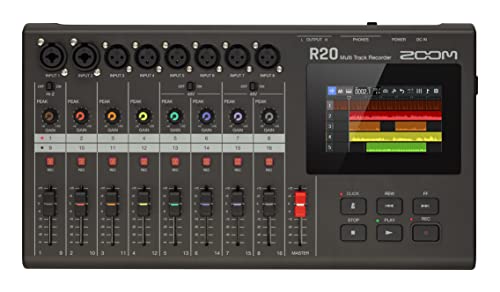
- Up to 16 tracks and eight simultaneous tracks
- Six XLR inputs plus two combo inputs
- Touchscreen editing with rhythms and effects
Best For: Bands and computer-free music production
Filmmaker Pick
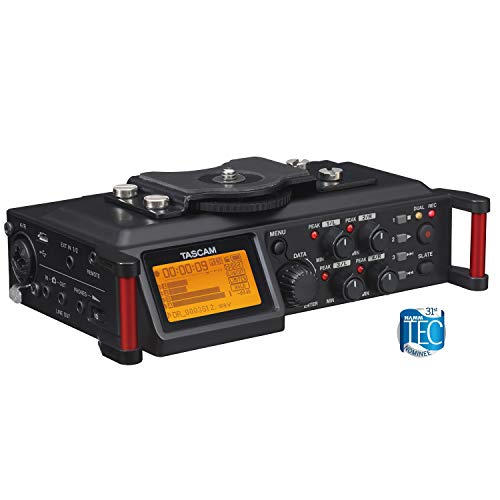
- Four XLR/TRS inputs with phantom power
- Dual Recording safety-copy mode
- Camera-mountable compact design
Best For: Filmmakers and DSLR-based production
Podcasting Pick

- Four XLR inputs and headphone outputs
- Phone and USB remote-interview support
- Multitrack recording with sound pads
Best For: Podcasts and multi-person interviews
Studio-Style Pick

- 24-track Portastudio recording
- Eight XLR microphone inputs
- Effects, mastering, and color screen
Best For: Musicians and project studios
Best Portable Pick

- Four-track simultaneous recording
- Two XLR/TRS combo inputs plus 1/8-inch mic input
- Built-in microphones and USB interface mode
Best For: Portable music, video audio, and podcast recording
Best for Larger Sessions

- Eight combo inputs
- Records up to eight channels simultaneously
- 16-channel playback with 135 effects
Best For: Bands, ensembles, and larger home-studio sessions
Best Compact Studio Workhorse

- Eight-track simultaneous recording
- Built-in stereo microphones and USB interface
- Pad sampler and rhythm machine included
Best For: Compact home studios, songwriting, and beat-based projects
Best All-Around Pick – Zoom H6
The Zoom H6 is a versatile choice among multitrack recorders with external microphone input, combining four XLR/TRS inputs with interchangeable stereo microphone capsules. It records up to 24-bit/96kHz audio to SD cards and can also serve as a multichannel USB audio interface.
Best For: Musicians, podcasters, and video creators who need flexible inputs, portable recording, and computer connectivity.
Pros:
- Four XLR/TRS inputs with gain controls, pads, and phantom power.
- Records WAV or MP3 files directly to SD cards up to 128GB.
- Includes XY and MS microphone capsules plus USB interface functionality.
Cons:
- Requires four AA batteries for portable operation.
- Some mounting accessories, such as the hot shoe adapter, are optional.
The H6 offers a strong balance of external-input flexibility, built-in microphones, and portable operation. Its included accessories and USB capabilities make it adaptable for both standalone and computer-based recording.
Best Budget-Style Option – Tascam DR-40
The Tascam DR-40 is a straightforward option for buyers seeking multitrack recorders with external microphone input. Its built-in microphones can record alongside connected mic inputs, while four-track and dual-recording modes add flexibility for rehearsals, interviews, and live takes.
Best For: Users who want an uncomplicated portable recorder with built-in microphones, external inputs, and safety-track recording.
Pros:
- Supports four-track recording using built-in microphones and mic inputs together.
- Dual recording can create a safety track to help prevent distorted takes.
- Switchable microphone positioning supports X-Y or A-B recording.
Cons:
- This is a discontinued model replaced by the DR-40X.
- Its listed storage capacity is 2GB.
- USB compatibility is described for USB 2.0 devices and older Windows versions.
The DR-40 remains useful when its four-track workflow and safety recording are the priorities. However, its discontinued status makes availability and replacement support important considerations before buying.
Best for Layered Song Ideas – Zoom R4
The Zoom R4 is a compact choice among multitrack recorders with external microphone input, offering two XLR/TS combo inputs and a four-track layer-and-bounce workflow. Its 32-bit float recording is designed to reduce clipping concerns, while built-in rhythms support songwriting and practice.
Best For: Musicians who want a battery-powered recorder for layering vocals, instruments, and quick song ideas without constant gain adjustment.
Pros:
- Two XLR/TS combo inputs accept microphones, instruments, keyboards, and more.
- Records, layers, and bounces up to four tracks with undo functionality.
- Includes over 80 rhythm patterns and works as a 2-in/2-out USB interface.
Cons:
- Provides two external combo inputs rather than the larger input count of bigger recorders.
- Its four-track architecture is more focused on layering than full-band multitrack capture.
The R4 is particularly appealing for portable songwriting because it combines external inputs, clip-resistant recording, effects, and rhythms in a small battery-powered unit. It is less suited to projects that require many simultaneous sources.
Best for Full Project Production – Zoom R20
The Zoom R20 is a larger tabletop option among multitrack recorders with external microphone input, supporting up to 16 tracks and recording up to eight simultaneously. Its touchscreen workflow lets you record, edit, and mix without a computer, while six XLR inputs support larger musical setups.
Best For: Bands, producers, and songwriters who need multiple external inputs, hands-on editing, and computer-free project production.
Pros:
- Supports up to 16 tracks and eight simultaneous tracks.
- Provides six XLR inputs plus two XLR/TRS combo inputs.
- Includes touchscreen editing, onboard effects, 150 rhythm patterns, and an 18-sound synth.
Cons:
- At 4.3 pounds, it is less portable than compact handheld recorders.
- Its listed maximum sample rate is 44.1kHz.
- The tabletop design is less suited to battery-powered field recording.
The R20 is the strongest fit here for building complete multi-instrument projects. Its generous input count and touchscreen editing make it practical for computer-free recording, though the larger tabletop format favors studio, rehearsal-room, or desktop use.
Filmmaker Pick – TASCAM DR-70D
The TASCAM DR-70D is a practical choice among multitrack recorders with external microphone input, especially for camera-based production. It provides four balanced XLR/TRS inputs, phantom power, individual gain controls, and built-in microphones in a compact body that can mount above or below a camera.
Best For: Filmmakers, documentarians, and DSLR shooters recording multiple production microphones.
Pros:
- Four balanced XLR/TRS inputs with phantom power.
- Individual gain controls and 64 dB of preamp gain.
- Dual Recording mode creates a lower-level safety copy.
- Supports SD, SDHC, and SDXC cards up to 128GB.
Cons:
- Requires four AA batteries.
- Its 1.5-inch screen is relatively small.
With camera-mounting flexibility, built-in microphones, and level-protection features, the DR-70D is well suited to location recording where dependable external mic connectivity matters.
Podcasting Pick – Zoom PodTrak P4
The Zoom PodTrak P4 is a portable option among multitrack recorders with external microphone input, built around four XLR microphone inputs and four individually controlled headphone outputs. Its phone and USB connectivity also supports remote interviews, while separate tracks can be recorded for the inputs and sound pads.
Best For: Podcasters and interviewers who need multiple microphones, guest monitoring, and remote-call support.
Pros:
- Four XLR microphone inputs with phantom power.
- Four headphone outputs with individual volume controls.
- Automatic mix-minus supports phone and remote interviews.
- Includes programmable sound pads and multitrack recording.
Cons:
- Battery life is listed at up to 3.5 hours on two AA batteries.
- Its USB audio interface mode is specified as 2-in/2-out.
The P4 focuses on podcast workflow rather than broad production features, making its combination of external mic inputs, headphone distribution, and call-in tools especially useful for spoken-word recording.
Studio-Style Pick – TASCAM DP-24SD
The TASCAM DP-24SD is the workstation-style choice among multitrack recorders with external microphone input. This 24-track Portastudio includes eight XLR inputs, onboard effects, mastering features, and a color screen for a more complete multitrack recording and mixing setup.
Best For: Musicians and project studios that want extensive track capacity and hands-on recording features.
Pros:
- Records up to 24 tracks.
- Provides eight XLR inputs for external microphones.
- Includes effects and mastering functions.
- Features a 3.5-inch color screen.
Cons:
- At 13.7 pounds, it is substantially less portable than handheld recorders.
- Its listed dimensions indicate a relatively large desktop footprint.
- The supplied details list a 32GB memory capacity.
The DP-24SD is best viewed as a dedicated recording workstation rather than a grab-and-go field unit. Its high track count and eight external mic inputs make it the strongest fit here for larger recording projects.
Best Portable Pick – Zoom H4n Pro 4-Track Recorder
For shoppers comparing multitrack recorders with external microphone input, the Zoom H4n Pro is a compact option with two XLR/TRS combo inputs plus a stereo 1/8-inch mic input. It also combines built-in X/Y microphones, four-track recording, and USB interface functionality.
Best For: Portable music recording, video audio, podcasting, and users who need flexible external microphone connections.
Pros:
- Records up to four tracks simultaneously with 24-bit/96 kHz WAV support.
- Offers two XLR/TRS combo inputs and a stereo 1/8-inch mic input.
- Includes built-in stereo microphones, effects, and 2-in/2-out USB interface mode.
- Battery powered, tripod- or mic-stand mountable, and rated for up to 5.5 hours of battery life.
Cons:
- Its four-track capacity is lower than the tabletop R16’s eight-input recording capability.
- Battery life is limited to up to 5.5 hours in standard operation.
The H4n Pro is a strong fit when portability and input flexibility matter more than a large track count. Its combination of onboard microphones, external inputs, and USB connectivity makes it adaptable for field and home setups.
Best for Larger Sessions – Zoom R16 16-Track Recorder
The Zoom R16 is designed for more expansive setups involving multitrack recorders with external microphone input. It provides eight balanced XLR/1/4-inch combination inputs, simultaneous recording on up to eight channels, and 16-channel playback.
Best For: Bands, ensembles, and home studios that need multiple external microphone or line-level connections at once.
Pros:
- Supports up to eight-channel simultaneous recording and 16-channel playback.
- Provides eight balanced XLR/1/4-inch combination inputs.
- Includes 48V phantom power on two tracks for compatible microphones.
- Offers 135 built-in effects plus USB audio interface functionality.
Cons:
- At 2.9 pounds, it is less lightweight than the portable H4n Pro.
- Phantom power is available on only two tracks.
- Its supplied recording format and specifications are less detailed in the provided notes than the H4n Pro’s.
Choose the R16 when input count is the priority. Eight combo inputs and eight-channel simultaneous recording give it a clear advantage for recording several performers or microphones in one session.
Best Compact Studio Workhorse – Zoom R8 Multi-Track Recorder
The Zoom R8 is a tabletop choice for shoppers seeking multitrack recorders with external microphone input and hands-on production features. It supports eight-track simultaneous recording, 16-track playback, built-in stereo microphones, and USB connectivity.
Best For: Compact home-studio recording, songwriting, and creators who want a recorder with sampling and rhythm tools.
Pros:
- Records up to eight tracks simultaneously and supports 16-track playback.
- Records 16- or 24-bit/44.1 kHz linear PCM WAV audio.
- Includes built-in stereo condenser microphones, a pad sampler, and rhythm machine.
- Supports SDHC cards up to 32GB and works as a USB audio interface.
Cons:
- The maximum sample rate is 44.1 kHz.
- The supplied notes identify XLR input but do not specify the total number of external microphone inputs.
- It lacks the R16’s stated eight balanced combo inputs.
The R8 balances multitrack recording with creative tools that are useful for building songs and arrangements. It is a practical fit for smaller setups, especially when sampling and rhythm features are as important as microphone input.
How We Picked the Best Multitrack Recorders with External Microphone Input
We compared these recorders by looking at the features that matter most in real recording setups: external microphone connectivity, number and type of inputs, simultaneous recording capability, track count, portability, monitoring options, storage, power, and computer integration. We also considered whether each model is better suited to field recording, podcast production, rehearsals, live performance, or multitrack music creation.
Input specifications deserve close attention. Combo XLR/TRS inputs can accept microphones, balanced line sources, and many instruments, while built-in stereo microphones add convenience for room sound, ambience, or quick sketches. Some models also function as USB audio interfaces, allowing them to serve as the front end of a computer-based studio.
Quick Comparison
| Best For | Look For | Models To Consider |
|---|---|---|
| Portable field recording | Battery power, compact design, built-in microphones | Zoom H6, Zoom H4n Pro, TASCAM DR-40 |
| Podcasting and interviews | Multiple mic inputs, headphone outputs, remote-call connectivity | Zoom PodTrak P4 |
| Songwriting and compact music setups | Overdubbing, effects, bounce functions, instrument inputs | Zoom R4, Zoom R8 |
| Band rehearsals and larger sessions | More simultaneous inputs and higher track capacity | Zoom R16, Zoom R20, TASCAM DP-24SD |
| Camera-mounted audio | Several balanced inputs, camera-friendly monitoring and outputs | TASCAM DR-70D |
Key Buying Factors for Multitrack Recorders with External Microphone Input
Input Count and Connector Type
Choose the number of sources you need to record at the same time, not simply the total number of tracks available. Two inputs may suit a singer-songwriter, while a drum kit, band, panel discussion, or multi-person podcast may require four, six, or eight microphone inputs. XLR/TRS combo sockets offer the most flexibility, but confirm whether phantom power is available for condenser microphones.
Track Capacity and Workflow
Portable recorders often emphasize quick capture and overdubbing, while tabletop workstations provide more tracks, physical controls, mixing features, and effects. A high track count is useful only if the recorder’s interface makes editing and bouncing manageable. Consider whether you prefer a hands-on standalone workflow or plan to transfer files to a computer.
Monitoring and Headphone Support
Reliable monitoring helps prevent clipping, noise, and routing mistakes. Podcast producers should prioritize multiple headphone outputs or an appropriate monitoring solution. For music, check input monitoring, playback control, metering, and whether performers can hear a useful mix while recording.
Portability, Power, and Storage
Battery-powered models are practical for outdoor sessions, rehearsals, and location work. Tabletop recorders generally provide more controls and inputs but require a more permanent setup. Check the supported SD card capacity, file formats, battery life, and whether the device can operate as a USB interface.
Who Should Buy Which Multitrack Recorders with External Microphone Input?
Choose a compact handheld model if you need mobility, built-in microphones, and occasional external mic connections. Select the PodTrak P4 if podcasting, guest interviews, multiple headphones, and phone or USB integration are central to your workflow. For musicians who want a dedicated standalone recorder, the R4, R8, or R16 offer progressively broader multitrack capabilities.
Move to the Zoom R20 or TASCAM DP-24SD when you need more simultaneous microphone inputs, more tracks, and a tabletop production environment. Videographers should focus on camera-oriented connectivity and compact operation, making the DR-70D a logical category fit. Before buying, count your microphones, decide whether you need phantom power and battery operation, and leave room for future sources rather than choosing solely by price.