The best audio mixers for home studio setups make it easier to combine microphones, instruments, playback audio, and effects without creating a complicated signal chain. The right choice depends on how many sources you record, whether you need USB connectivity, and how much hands-on control you want.
Our lineup includes traditional analog mixers, compact USB mixing consoles, and audio interfaces suited to solo creators. Use the guide below to compare features and choose a setup that fits your workflow, space, and budget.
Best 10 Audio Mixers for Home Studio Picks for 2026
Versatile Analog Hub

- 10 channels with USB and SPX effects
- D-PRE preamps, EQ, filters, and compressors
- Rugged metal chassis for studio or live use
Best For: Multi-input home studios wanting hands-on mixing
Modern Recording Interface
Focusrite Scarlett 2i2 4th Gen

- Two mic pres and two Hi-Z inputs
- 24-bit/192kHz conversion with 120dB dynamic range
- Auto Gain, Clip Safe, and Air modes
Best For: Artists recording vocals and instruments at a computer
Streaming Effects Console

- Two XLR inputs with 48V phantom power
- 99 DSP effects plus three-band channel EQ
- USB recording and Bluetooth 5.0 streaming
Best For: Podcasts and streams needing integrated effects
Compact Starter Interface
Focusrite Scarlett Solo 3rd Gen

- One XLR mic input and one Hi-Z instrument input
- 24-bit/192kHz recording with Air mode
- Compact design with software bundle and three-year warranty
Best For: Solo vocalists, guitarists, and podcasters
Flexible 6-Channel Pick
Compact Bluetooth Studio Mixer
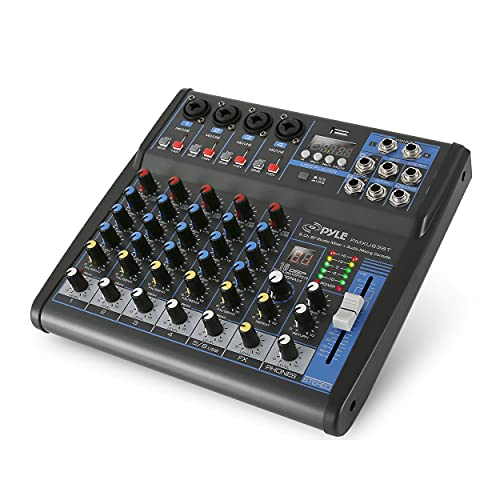
- USB computer recording and Bluetooth playback
- Four combo inputs with +48V phantom power
- Three-band EQ and 16-bit DSP effects
Best For: Home studios, streaming, podcasts, and small sessions
Beginner-Friendly Value

- Plug-and-play USB-B PC recording
- Three XLR inputs with 48V phantom power
- Bluetooth, USB playback, and headphone monitoring
Best For: Beginners, podcasts, streaming, and active-speaker setups
High-Capacity Studio Choice
12-Channel Bluetooth Console Mixer

- Twelve channels with extensive I/O options
- USB soundcard for Mac or PC recording
- Seven-band EQ and 16 DSP effects
Best For: Larger home studios, podcasts, bands, and live sound
Versatile 12-Channel Pick
12-Channel USB/Bluetooth Mixer

- 12 mic inputs with XLR and balanced line connectivity
- USB and Bluetooth playback, mixing, and recording
- +48V phantom power, 3-band EQ, and 16 DSP effects
Best For: Expandable home studios, streaming, karaoke, and multi-source setups
Slim 8-Channel Option

- Eight channels with USB recording and MP3 playback
- Bluetooth 5.0, reverb, and +48V phantom power
- Ultra-thin 1.57-inch design for space-conscious setups
Best For: Compact home KTV, studio, rehearsal, and conference setups
Compact Effects Mixer

- Four XLR inputs with selectable +48V phantom power
- USB playback/recording and Bluetooth streaming
- 3-band EQ and 16 DSP effects in a smaller console
Best For: Small home studios, vocal setups, karaoke, and streaming
Versatile Analog Hub – Yamaha MG10XU
The Yamaha MG10XU is a strong choice among audio mixers for home studio setups that need several inputs, hands-on EQ, compression, USB connectivity, and built-in effects. Its 10-channel layout and rugged metal chassis make it suitable for recording, rehearsal, and small live applications.
Best For: Home studios needing multiple inputs and practical onboard processing.
Pros:
- 10-channel design with USB connectivity and SPX digital effects
- Studio-grade discrete Class A D-PRE microphone preamps
- Three-band EQ, high-pass filters, and one-knob compressors
- Rugged, impact-resistant powder-coated metal chassis
Cons:
- Larger and heavier than compact two-channel interfaces
- Requires AC power rather than USB bus power
The MG10XU is a flexible physical mixer for creators who prefer hands-on control and need more than a couple of input channels. Its effects and channel processing add convenience without requiring separate hardware.
Modern Recording Interface – Focusrite Scarlett 2i2 4th Gen
The Focusrite Scarlett 2i2 4th Gen is a streamlined option for audio mixers for home studio workflows centered on computer recording. It provides two mic preamps, Hi-Z instrument inputs, high-resolution conversion, and features designed to help capture clean takes quickly.
Best For: Solo artists, vocalists, and guitarists recording directly into a computer.
Pros:
- Two mic preamps and two Hi-Z instrument inputs
- 24-bit/192kHz recording with a 120dB dynamic range
- Auto Gain and Clip Safe help manage recording levels
- Air modes add presence and harmonic character to vocals and guitars
Cons:
- Two-channel design is less suitable for larger multi-mic sessions
- Designed primarily for computer-based recording rather than standalone mixing
With USB-C connectivity and a substantial included software bundle, the 4th-generation Scarlett 2i2 is an accessible recording centerpiece. Its automatic level tools are particularly useful for beginners who want to focus on performance.
Streaming Effects Console – 4-Channel Podcast Mixer
This compact four-channel unit brings podcast and streaming features to audio mixers for home studio use. It combines XLR inputs, 48V phantom power, channel EQ, DSP effects, USB recording, and Bluetooth streaming in a small corded console.
Best For: Podcasters and streamers who want built-in effects and wireless playback.
Pros:
- Two XLR microphone inputs plus stereo line inputs
- 48V phantom power supports condenser microphones
- 99 DSP effects include reverb and delay
- USB recording, OTG support, and Bluetooth 5.0 streaming
Cons:
- Four-channel capacity is limited for larger recording projects
- Bluetooth range is specified at up to 15 feet
The mixer is a practical fit for spoken-word production and live streaming where quick access to effects, playback, and microphone controls matters. Its PAD and 80Hz high-pass filter also help accommodate louder sources and reduce low-frequency rumble.
Compact Starter Interface – Focusrite Scarlett Solo 3rd Gen
The Focusrite Scarlett Solo 3rd Gen is a compact entry point for audio mixers for home studio recording, with one XLR microphone input and a Hi-Z instrument input. Its 24-bit/192kHz converters, Air mode, and low-noise monitor outputs support straightforward vocal, guitar, and podcast sessions.
Best For: Solo musicians and creators recording one microphone and one instrument.
Pros:
- Dedicated XLR mic preamp and Hi-Z instrument input
- Records at up to 24-bit/192kHz
- Air mode adds clarity to acoustic instruments
- Includes recording software and a three-year warranty
Cons:
- Only one microphone preamp limits multi-mic recording
- Third-generation model lacks the newer 4th-generation Auto Gain and Clip Safe features
The Solo 3rd Gen keeps the setup small and focused, making it well suited to voice-and-instrument recording without the footprint of a traditional mixer. Its balanced outputs and headphone connection also support monitoring while tracking or listening back.
Flexible 6-Channel Pick – Compact Bluetooth Studio Mixer
For home creators who want audio mixers for home studio recording, streaming, and casual DJ use, the Pyle PMXU63BT.5 combines six channels with USB computer recording, Bluetooth playback, and built-in effects. Its compact layout provides practical control without requiring an especially complex setup.
Best For: Home studios, podcasts, practice sessions, streaming, and small sound setups that need flexible connectivity.
Pros:
- Six-channel design with four XLR/1/4-inch combo inputs for microphones and instruments.
- USB direct-to-computer recording and Bluetooth 4.0 streaming support.
- +48V phantom power, three-band EQ, LED meters, and 16-bit DSP effects.
- Compact construction with headphone, main, and USB connectivity.
Cons:
- Bluetooth range is listed at approximately 15 feet.
- Its six-channel capacity may be limiting for larger ensembles or more complex routing.
The PMXU63BT.5 is a versatile choice when you need recording, playback, and basic sound shaping in one compact mixer. It is especially appealing for creators who want a straightforward home setup with room for microphones, instruments, and media playback.
Beginner-Friendly Value – 5-Channel USB Recording Mixer
The Aveek 5 Channel Audio Mixer is a practical option for buyers comparing audio mixers for home studio recording, podcasting, and live streaming. It offers PC recording through USB-B, USB drive playback and recording, Bluetooth streaming, and straightforward controls in a small-format console.
Best For: Beginners, podcasters, streamers, online meetings, and compact setups using active speakers.
Pros:
- Three XLR inputs plus 1/4-inch and RCA stereo inputs accommodate several source types.
- Built-in PC recording interface supports plug-and-play USB recording.
- Includes 48V phantom power, two-band EQ, gain controls, and echo/delay effects.
- Dedicated headphone monitoring and USB drive playback/recording add convenience.
Cons:
- Bluetooth, USB, and four/five-channel functions cannot be used simultaneously.
- Bluetooth output cannot connect directly to an output device, and the mixer is intended for active systems.
- The mixer has three XLR inputs, which may not suit larger microphone setups.
With its simple USB recording workflow and useful input variety, the Aveek is well suited to modest home rigs. Be mindful of its simultaneous-use limitations and active-speaker requirement when planning your signal chain.
High-Capacity Studio Choice – 12-Channel Bluetooth Console Mixer
For larger home studios or projects requiring multiple connected sources, the Pyle PMXU128BT provides 12 channels, a USB soundcard, Bluetooth input, and extensive output options. Its broad I/O and seven-band EQ make it one of the more capable audio mixers for home studio recording among these options.
Best For: Larger home studios, multi-microphone podcasts, small bands, live sound, and users who need substantial input capacity.
Pros:
- Twelve-channel console with XLR combo inputs, mono and stereo inputs, and send/return connections.
- USB soundcard supports recording and connection to Mac or PC.
- Bluetooth streaming can be mixed with signals from other input channels.
- Seven-band EQ, 16 DSP effects, LED metering, and separate level controls provide detailed adjustment.
Cons:
- At 21.4 inches deep and 10.6 pounds, it is less portable than compact mixers.
- The larger control surface may be more than a small, simple home setup needs.
- It has a one-year limited warranty according to the supplied details.
The PMXU128BT makes the most sense when channel count and routing flexibility matter more than minimal size. It can support a more involved recording or live setup while still offering USB recording and wireless playback for convenient source management.
Versatile 12-Channel Pick – 12-Channel USB/Bluetooth Mixer
For creators comparing audio mixers for home studio use, this 12-channel model offers plenty of connectivity along with USB, Bluetooth, phantom power, and built-in DSP effects. Its separate gain and volume controls, 3-band EQ, and headphone output make it suitable for managing microphones, instruments, playback, and monitoring in one setup.
Best For: Home studios, karaoke, streaming, interviews, and users who need several inputs plus wireless playback.
Pros:
- 12 mic inputs with XLR and balanced line connections
- USB and Bluetooth support for playback, mixing, and recording
- +48V phantom power, 3-band EQ, and 16 DSP effects
- Headphone output and LED indicators support convenient monitoring
Cons:
- The larger channel count may be more than a simple one- or two-microphone setup requires
- The supplied notes do not identify specific recording software compatibility
This is the most flexible option of the three for setups that may grow over time. Its extensive inputs and control set are useful for a busy home studio, though a smaller mixer may be easier to manage if you rarely connect multiple sources.
Slim 8-Channel Option – FULUODE CT-80S Mixer
The FULUODE CT-80S is a practical choice among audio mixers for home studio setups that need multiple inputs without a deep chassis. It combines eight channels with USB recording, Bluetooth 5.0, an MP3 player, reverb, and +48V phantom power in an ultra-thin design.
Best For: Home KTV, small studio recording, band practice, conferences, and live music applications.
Pros:
- Eight-channel layout supports microphones, instruments, and other sources
- USB recording, MP3 playback, and Bluetooth 5.0 connectivity
- Built-in reverb and +48V phantom power add useful flexibility
- Ultra-thin 1.57-inch design saves space on a desk or console
Cons:
- The supplied details do not specify the exact per-channel EQ controls
- It uses a corded 110V American-plug power setup
- Software update support is listed as unknown
With eight channels and a compact profile, this mixer balances capacity and desk space well. It is especially appealing for users who want built-in playback and vocal reverb, while buyers needing more detailed specifications may want to confirm the control layout before purchasing.
Compact Effects Mixer – 6-Channel DSP Bluetooth Mixer
For smaller audio mixers for home studio systems, this six-channel console focuses on essential connections and hands-on control. It provides four XLR inputs, stereo channels, USB playback and recording functions, Bluetooth streaming, 3-band EQ, and 16 DSP effects.
Best For: Small home studios, vocal recording, karaoke, streaming, and setups using up to four microphone inputs.
Pros:
- Four XLR inputs support condenser or dynamic microphones with selectable phantom power
- USB and Bluetooth handle playback, streaming, and recording
- 16 DSP effects plus 3-band EQ provide tone-shaping flexibility
- Supports instruments and additional sources through 1/4-inch inputs
Cons:
- Six channels provide less expansion room than the 8- and 12-channel alternatives
- The listed manufacturer warranty is 90 days from purchase
- The supplied notes describe it as a traditional analog mixer rather than a computer-dependent interface
This model is a sensible fit when you want effects and wireless playback without moving to a larger console. Its four XLR inputs cover common vocal and microphone arrangements, while the lower channel count keeps the feature set focused for smaller recording or karaoke rigs.
How We Picked the Best Audio Mixers for Home Studio Use
We focused on practical features that matter in a home recording environment: input count, XLR and instrument compatibility, USB recording, phantom power, monitoring options, onboard effects, EQ controls, and overall ease of use. We also considered whether each model is better suited to music production, podcasting, livestreaming, karaoke, or general desktop recording.
A mixer can offer more physical controls and routing flexibility than a basic interface, while an interface may provide a simpler, cleaner path into recording software. The best option depends on how many sources you use simultaneously and whether you need mixing features beyond recording.
Quick Comparison
| Best For | Recommended Type | Features to Prioritize |
|---|---|---|
| Solo vocals or instruments | Compact audio interface | Clean preamps, low-latency monitoring, USB connectivity |
| Small music projects | Analog mixer with USB | Multiple inputs, EQ, phantom power, stereo outputs |
| Podcasts and livestreams | USB mixer | Simple routing, headphone control, effects, playback input |
| DJ, karaoke, or group recording | Larger channel mixer | More XLR inputs, Bluetooth, USB playback, sub outputs |
Key Buying Factors for Audio Mixers for Home Studio
Inputs and Channel Count
Count the microphones, instruments, and stereo playback devices you expect to connect at the same time. Leave room for expansion if you plan to add a second vocalist, hardware synthesizer, guitar, or external player. Combo inputs are useful because they can accept either XLR microphones or quarter-inch line and instrument cables.
USB Recording and Compatibility
USB connectivity lets a mixer send audio to a computer and, on many models, return playback audio for monitoring. Check whether the device provides a stereo mix or separate multitrack channels over USB. A basic stereo feed is easy to use, while multitrack recording offers more control during editing.
Phantom Power and Preamps
48V phantom power is necessary for most condenser microphones, but it should be used carefully with compatible equipment. For vocal and instrument recording, prioritize quiet preamps and sufficient gain rather than judging a mixer by effects or channel count alone.
Effects, EQ, and Monitoring
Built-in reverb and DSP effects can be helpful for live vocals, streaming, and quick monitoring. Three-band EQ is useful for broad tonal adjustments. Also look for a dedicated headphone output, independent level controls, and outputs that match your speakers or headphones.
Who Should Buy Which Audio Mixers for Home Studio?
Choose a compact audio interface if you mainly record one or two sources and want the simplest connection to a DAW. These models are typically easier to learn and can be a better fit for focused vocal, guitar, or voiceover work.
Choose a USB mixer if you need hands-on level control, several connected sources, or a convenient setup for podcasts and livestreams. Models with onboard effects and playback inputs are especially practical for spoken-word production.
Choose a larger console-style mixer if you record groups, connect several microphones, or need flexible routing for DJ, karaoke, or live-sound applications. Confirm that its physical size, output layout, and USB implementation suit your desk and recording software.
Before buying, verify the channel layout, connector types, computer compatibility, and whether the mixer records separate tracks or only a combined stereo signal. Those details usually matter more than the headline effect count.