Outdoor shooting can make a camera’s built-in display difficult to see, especially when you need precise focus, exposure checks, or a larger view of 4K footage. A field monitor with sun hood helps reduce glare while adding useful video-assist tools.
This roundup compares 10 options ranging from compact budget monitors to bright touchscreen models with 3D LUTs, HDMI loop-through, waveform tools, and included hoods. Use the guide below to match screen brightness, size, connectivity, and power needs to your camera setup.
Best 10 Field Monitor with Sun Hood Picks for 2026
Best High-Brightness Pick
VILTROX DC-A1 7" 2800-Nit Touch Monitor

- 2800-nit touchscreen for daylight shooting
- 4K HDMI loop in/out and 3D LUT support
- Includes detachable hood and NP-F550 battery
Best For: Outdoor filmmakers needing bright, detailed monitoring
Best Lightweight Starter
FEELWORLD FW759 7" DSLR Monitor

- Lightweight 300g design with slim 17mm profile
- Focus, exposure, framing, and audio tools included
- 4K HDMI input and NP-F battery compatibility
Best For: Beginners and portable indoor camera setups
Best Universal Hood Accessory
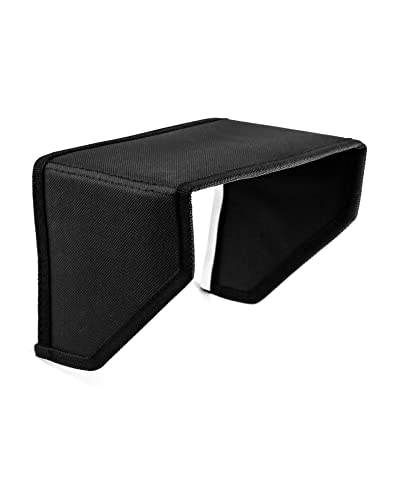
- All-sides shade helps reduce outdoor glare
- Fits compatible 6.5- to 7-inch flat LCD screens
- Quick installation with adhesive mounting pads
Best For: Adding sun protection to an existing compatible monitor
Best Feature-Rich Alternative
NEEWER F700 7" 2000-Nit Monitor

- 2000-nit Full HD touchscreen with auto backlight
- 4K HDMI loop-through and extensive video scopes
- Custom LUT support with NP-F, DC, and USB-C power
Best For: Filmmakers needing bright monitoring and production controls
Bright Cage-Rig Monitor

- 2000-nit 6-inch Full HD touchscreen
- Metal cage and sunshade hood included
- Waveform, vectorscope, false color, and 3D LUT support
Best For: Bright outdoor shoots and accessory-heavy camera rigs
Large Budget Assist Monitor
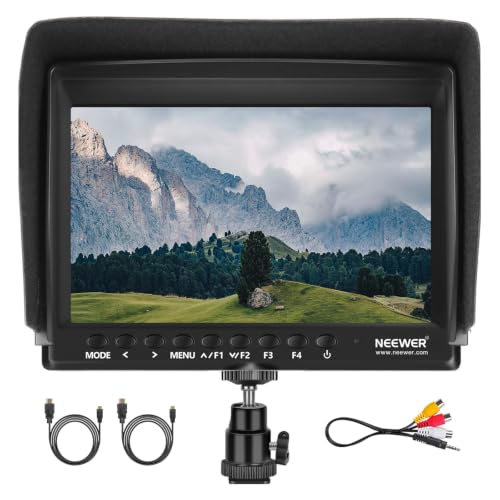
- 7-inch matte IPS display
- Sunshade, ball head, and cables included
- Peaking, histogram, safe-frame, and image tools
Best For: Budget-conscious HD video assist and larger on-camera viewing
Compact Touchscreen Sun-Hood Monitor
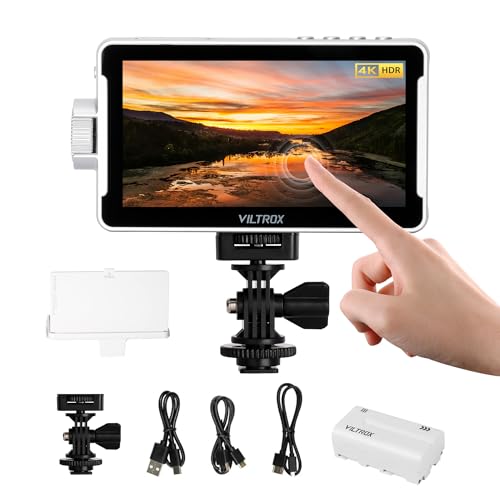
- 5.5-inch Full HD touchscreen
- Sunshade hood and 4K HDMI support
- HDR, 3D LUT, USB-C, and Rec.709/sRGB coverage
Best For: Portable camera rigs and color-conscious monitoring
Brightest 6-Inch Pick
VILTROX DC-X3 2000-Nit Field Monitor

- 2000-nit 6-inch Full HD IPS display
- Waveform, histogram, vectorscope, and focus tools
- 4K HDMI I/O with USB 3D LUT support
Best For: Outdoor filmmakers needing maximum screen brightness and professional monitoring tools
Complete Starter Kit
VILTROX DC-550 1200-Nit Monitor

- 1200-nit 5.5-inch touchscreen
- Includes battery, hood, cables, adapter, and case
- 4K HDMI support with waveform and focus tools
Best For: Mobile camera operators wanting a ready-to-use, flexible monitoring kit
Large-Screen Value Pick

- Bright 2000-nit 6-inch Full HD IPS screen
- Includes extensive exposure, color, and focus tools
- 4K HDMI input/output with 3D LUT workflow support
Best For: Shoots needing a bright, larger on-camera display for precise monitoring
Best High-Brightness Pick – VILTROX DC-A1 7" 2800-Nit Touch Monitor
If you need a field monitor with sun hood for bright outdoor production, the VILTROX DC-A1 stands out with its claimed 2800-nit brightness, 7-inch 1920×1080 touchscreen, and detachable quick-release hood. Its HDMI loop-through and professional exposure and focus tools also make it useful for more demanding camera rigs.
Best For: Outdoor filmmakers and camera operators who need high brightness, touchscreen control, and advanced monitoring tools.
Pros:
- 2800-nit 7-inch IPS touchscreen is designed for daylight visibility.
- Includes waveform, vectorscope, histogram, false color, focus assist, and audio monitoring tools.
- 4K HDMI input and output support enables loop-through viewing.
- Supports NP-F batteries, DC power, and compatible USB-C power, with an included NP-F550 battery.
Cons:
- The feature-rich design may be more than beginners need.
- Built-in cooling fans may add operational noise.
The DC-A1 is a strong choice when outdoor readability and detailed image evaluation matter most. Its hood helps reduce glare, while LUT support, customizable keys, and multiple power options add flexibility for production work.
Best Lightweight Starter – FEELWORLD FW759 7" DSLR Monitor
The FEELWORLD FW759 is a straightforward field monitor with sun hood for creators who want a larger view than their camera screen without adding a bulky accessory. Its 7-inch 1280×800 IPS display, focus tools, and slim 300g design suit indoor setups, travel, and everyday video work.
Best For: Beginner creators, vloggers, interview shooters, and tripod-based indoor recording.
Pros:
- 7-inch IPS screen provides a larger framing view than many built-in camera displays.
- Focus peaking, histogram, false color, exposure warning, and audio meter support more accurate shooting.
- Slim 17mm profile and 300g weight help keep a camera rig portable.
- Accepts 4K HDMI input signals up to 4K at 30Hz and works with NP-F batteries.
Cons:
- Its 400-nit brightness is better suited to indoor or shaded use than intense sunlight.
- The display resolution is 1280×800 rather than Full HD.
The FW759 prioritizes simplicity and portability over maximum brightness or advanced connectivity. It is a practical entry-level upgrade for checking focus, exposure, and composition during routine shoots.
Best Universal Hood Accessory – QWORK 7" LCD Monitor Sunshade
The QWORK sunshade is a dedicated field monitor with sun hood accessory for 6.5- to 7-inch flat LCD screens. Its all-sides coverage helps block strong light, while the lower opening preserves access to screen controls during outdoor viewing.
Best For: Camera operators who already own a compatible 6.5- to 7-inch monitor and need a simple glare-blocking hood.
Pros:
- Provides coverage on all sides to improve outdoor screen visibility.
- Designed for 6.5- to 7-inch flat LCD monitors with a stated outer width range of 165-178mm.
- Adhesive nylon mounting pads allow quick installation.
- Lower-side opening keeps monitor controls accessible.
Cons:
- It is a hood accessory, not a monitor, so a compatible display is required.
- Fit depends on matching the monitor’s dimensions to the stated size range.
- The supplied warranty description is only one month.
Choose the QWORK when your existing display works well but becomes difficult to see outdoors. Confirm the monitor’s outer width before ordering, since the fit range is more important than the nominal 7-inch screen size.
Best Feature-Rich Alternative – NEEWER F700 7" 2000-Nit Monitor
The NEEWER F700 is a bright field monitor with sun hood capability for outdoor camera work, combining a 2000-nit 7-inch Full HD touchscreen with automatic or manual backlight control. It adds 4K HDMI loop-through, extensive video scopes, custom LUT support, and flexible mounting and power options.
Best For: Filmmakers who want high-brightness monitoring with LUT workflows, adjustable mounting, and multiple power choices.
Pros:
- 2000-nit 1920×1080 IPS touchscreen is designed for clear viewing in varying light.
- Supports 4K HDMI loop in/out and headphone-based audio monitoring.
- Includes waveform, vectorscope, histogram, false color, zebras, HDR, and focus tools.
- Supports preloaded and custom 3D LUTs, NP-F batteries, DC power, and USB-C charging.
Cons:
- At 445g without batteries, it is less lightweight than the compact FW759.
- Cooling fans may be audible in quiet recording environments.
- The listed package includes a cold shoe mount, but the supplied notes do not explicitly confirm a sun hood accessory.
The F700 is a capable choice for crews that value control and connectivity as much as brightness. Its automatic backlight adjustment, 180-degree bracket, and broad monitoring toolkit make it well suited to flexible production rigs, but verify the included accessories if a hood is essential.
Bright Cage-Rig Monitor – VILTROX DC-X2
If you need a field monitor with sun hood for bright outdoor sets, the VILTROX DC-X2 stands out with a 2000-nit display and a supplied sunshade hood. Its 6-inch 1920×1080 screen, touchscreen controls, 4K HDMI input/output, and professional exposure tools make it a well-equipped option for demanding camera rigs.
Best For: Filmmakers who need strong daylight visibility, detailed monitoring tools, and a protective cage for on-set use.
Pros:
- Very bright 2000-nit Full HD IPS display with 160-degree viewing angle.
- Includes a metal rig cage with accessory mounting points for microphones, lights, or battery plates.
- Offers waveform, histogram, vectorscope, RGB parade, false color, zebra, and focus-peaking tools.
- Supports 4K HDMI input/output, USB 3D LUT input, headphone monitoring, and active cooling.
Cons:
- The 6-inch display is smaller than the 7-inch option in this roundup.
- The glossy screen finish may be less forgiving of reflections than a matte panel.
The DC-X2 is the most feature-rich choice here for production teams that value visibility and advanced monitoring. Its cage adds protection and mounting flexibility, while the high brightness and wide toolset support precise work in changing locations.
Large Budget Assist Monitor – NEEWER F100 7-Inch
The NEEWER F100 is a practical field monitor with sun hood for DSLR, camcorder, and stabilizer setups. Its 7-inch IPS display provides a larger viewing area, while the included sunshade, mini ball head, and multiple cables make it ready for straightforward video-assist work.
Best For: Shooters who prefer a larger screen and need an affordable monitor for supported HD production formats.
Pros:
- Large 7-inch IPS display with 1280×800 resolution and a matte finish.
- Included sunshade helps block harsh sunlight during outdoor shooting.
- Comes with a 360-degree mini ball head and cold shoe mount for flexible positioning.
- Provides peaking focus assist, histogram, pixel-to-pixel viewing, safe frames, image flip, and freeze functions.
Cons:
- At 450 nits, it is substantially less bright than the VILTROX DC-X2.
- Maximum resolution is 1280×800 rather than Full HD.
- The listing states that no battery is included.
The F100 makes sense when screen size and included mounting accessories matter more than maximum brightness or resolution. Its matte panel and sunshade improve outdoor usability, while the broad format support suits many HD camera workflows.
Compact Touchscreen Sun-Hood Monitor – VILTROX DC-V1 5.5-Inch
For a compact field monitor with sun hood, the VILTROX DC-V1 combines a 5.5-inch touchscreen with a 1920×1080 display and 4K HDMI input/output support. Its supplied sunshade hood, HDR capability, 3D LUT support, and USB-C connectivity make it a flexible choice for lightweight camera setups.
Best For: Filmmakers and photographers who want a small Full HD touchscreen with color-focused features and flexible power connectivity.
Pros:
- Compact 5.5-inch Full HD display with a 160-degree viewing angle.
- Includes a sunshade hood and supports brightness adjustment from 100 to 400 nits.
- Supports 4K HDMI input/output, HDR, 3D LUT, USB-C, and compatible battery power.
- Covers Rec.709 and sRGB color spaces for color-sensitive work.
Cons:
- The 400-nit peak brightness is lower than the DC-X2’s 2000-nit rating.
- The smaller screen may provide less comfortable viewing than a 7-inch monitor.
- The supplied product color is white, which may not suit every rig aesthetic.
The DC-V1 is a strong middle ground for portable setups. It delivers sharp Full HD monitoring and useful HDR, LUT, and color-space features without the larger footprint of a 7-inch display, though its moderate brightness is better suited to shaded or controlled conditions.
Brightest 6-Inch Pick – VILTROX DC-X3 2000-Nit Field Monitor
If you need a field monitor with sun hood for outdoor production, the VILTROX DC-X3 emphasizes daylight visibility with a 2000-nit, 6-inch Full HD IPS display. Its monitoring tools, 4K HDMI connectivity, and 3D LUT support make it suited to more demanding camera workflows.
Best For: Filmmakers who prioritize maximum brightness and detailed exposure and focus monitoring in changing light.
Pros:
- Very bright 2000-nit 1920×1080 display for sunny shooting conditions.
- Includes waveform, histogram, vectorscope, RGB parade, false color, zebra, and focus tools.
- Supports 4K HDMI input/output, USB 3D LUT input, and headphone monitoring.
- Offers multiple power options and active cooling for extended use.
Cons:
- The 6-inch monitor weighs about 1.3 kg, making it relatively substantial for a camera rig.
- The glossy screen finish may be less forgiving of reflections when the hood is not in use.
The DC-X3 is a strong choice when screen visibility and professional scopes matter more than keeping a rig especially light. Its advanced tools and bright panel give it a clear advantage for outdoor and on-set monitoring.
Complete Starter Kit – VILTROX DC-550 1200-Nit Monitor
The VILTROX DC-550 is a practical field monitor with sun hood for DSLR, mirrorless, and cinema camera setups. Its 5.5-inch touchscreen combines a 1200-nit display with exposure and focus tools, while the included battery and accessories help you get started quickly.
Best For: Camera operators who want a compact, accessory-rich monitoring kit with flexible power options.
Pros:
- 1200-nit 5.5-inch IPS touchscreen is designed for daylight viewing.
- Provides waveform, vectorscope, histogram, false color, HDR, and focus-assist functions.
- Accepts up to 4K HDMI signals and provides HDMI input and output.
- Includes an NP-F550 battery, sunshade hood, cables, adapter, case, and manual.
Cons:
- Its 1200-nit brightness is lower than the 2000-nit VILTROX alternatives in this roundup.
- The 5.5-inch screen provides less viewing area than a 6-inch monitor.
The DC-550 stands out for convenience: the included battery, hood, cables, and case reduce the need for separate purchases. It is a well-rounded option for mobile production where portability and a ready-to-use kit are priorities.
Large-Screen Value Pick – VILTROX DC-X2 6-Inch Monitor
For creators looking for a field monitor with sun hood and a larger viewing surface, the VILTROX DC-X2 offers a 6-inch Full HD IPS display with 2000-nit brightness. It also includes 4K HDMI input/output and a broad set of tools for judging exposure, color, and focus.
Best For: Shooters who want a bright 6-inch monitor with professional tools and straightforward HDMI connectivity.
Pros:
- 2000-nit brightness improves visibility in bright shooting environments.
- 6-inch 1920×1080 IPS display provides a useful on-camera viewing area.
- Includes waveform, histogram, vectorscope, RGB parade, false color, zebra, and focus features.
- Supports 4K HDMI input/output and USB connectivity for 3D LUT workflows.
Cons:
- At about 1.28 kg, it is not an especially lightweight monitor.
- The listed glossy screen finish can be more reflective than an anti-glare panel.
- The supplied notes do not specify an included battery or accessory bundle beyond the monitor.
The DC-X2 is a sensible fit for users who want the visibility of a 2000-nit panel without giving up a 6-inch screen. Its toolset is particularly useful for manual exposure and focus decisions during production.
How We Picked the Best Field Monitor with Sun Hood
We focused on monitors that are practical for DSLR, mirrorless, and video-camera rigs, giving priority to models with a dedicated sun hood or a compatible hood option. We compared screen brightness, resolution, touchscreen controls, HDMI or SDI connectivity, monitoring aids, battery support, and mounting practicality.
Brightness received particular attention because a hood works best when paired with a screen that can overcome strong ambient light. We also considered whether each monitor suits a lightweight handheld setup, a tripod rig, or a more advanced production configuration.
Quick Comparison
- Best for bright daylight: Choose a 1,200- to 2,800-nit display, such as the brighter VILTROX and NEEWER options.
- Best for basic monitoring: A 400- or 450-nit model can be suitable for shaded locations and controlled lighting.
- Best for precise exposure and focus: Look for waveform, histogram, peaking, false color, and zebra tools.
- Best for compact rigs: A 5.5- or 6-inch monitor generally saves space and weight.
- Best for larger viewing: A 7-inch screen is easier to share with an operator or focus puller.
Key Buying Factors for a Field Monitor with Sun Hood
Brightness and Hood Design
Brightness is measured in nits. Higher values improve visibility in direct sun, while the hood blocks side glare and reflections. Check whether the hood is included, how securely it attaches, and whether it still allows comfortable access to touchscreen controls.
Screen Size and Resolution
A 7-inch display offers a more comfortable view for focusing and composition, but smaller monitors are often easier to balance on a gimbal or compact cage. Full HD resolution provides a sharper image for checking detail, while lower-resolution screens may be adequate for basic framing.
Video Tools and Signal Support
Waveform, histogram, peaking, zebras, and 3D LUT support can make an external monitor more useful than a simple larger screen. Confirm that the monitor accepts your camera’s output resolution and frame rate. HDMI loop-through is helpful when sending the signal to another display or recorder; SDI support is more relevant to professional camera systems and longer cable runs.
Power, Mounting, and Rig Compatibility
Check the required battery type, DC input, runtime expectations, and whether batteries are included. A monitor should have a secure mounting point and fit your cage, articulating arm, tripod, or shoulder rig without creating excessive strain. Also verify HDMI port placement and cable clearance when the sun hood is installed.
Who Should Buy Which Field Monitor with Sun Hood?
Outdoor filmmakers and documentary shooters should prioritize high brightness, a sturdy hood, and reliable battery support. Budget-conscious creators can choose a lower-brightness monitor if most shooting happens indoors or in shade. Solo operators will benefit from touchscreen controls, focus peaking, and exposure scopes that reduce the need to switch between camera menus. Commercial and narrative crews may prefer a larger 7-inch display, 3D LUT support, loop-through connectivity, or SDI depending on the workflow. Finally, gimbal and travel shooters should favor the lightest compact model that still provides adequate brightness and the monitoring tools they actually use.