Recording a lecture can help you review difficult material, revisit explanations, and take more complete notes. The right device depends on whether you prefer physical cassette tapes, digital files, or AI-assisted transcription.
These 10 picks include compact cassette recorders, combination tape players, and newer digital tools. Use the guide below to match recording quality, battery life, storage, and portability to your study routine.
Best 10 Cassette Recorders for Lectures Picks for 2026
Best One-Touch Cassette Recorder

- One-touch cassette recording
- Automatic level control
- Built-in mic and headphone jack
Best For: Simple classroom and personal tape recording
Best AI Lecture Note Taker

- 64GB digital storage
- AI transcription and summaries
- 45-hour continuous recording
Best For: Searchable digital lecture notes and transcripts
Best Cassette Recorder With Radio
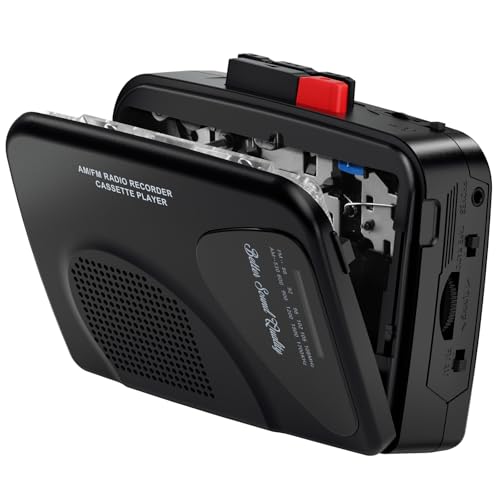
- Records lectures or radio to cassette
- AM/FM tuner included
- AA battery or 5V power options
Best For: Portable analog recording with radio listening
Best Digital Recorder for Lectures

- 16GB WAV storage
- Noise reduction and voice activation
- USB file transfer and rechargeable battery
Best For: Compact digital lecture recording and playback
Best Portable Cassette Recorder

- One-touch recording for lectures and interviews
- Built-in and external microphone options
- Lightweight design with headphone and AUX connections
Best For: Students and users needing simple cassette recording on the go
Best Smart Lecture Recorder
Innioasis PR1 AI Voice Recorder
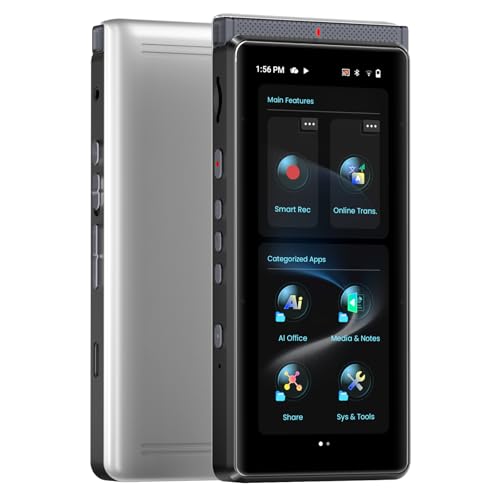
- Offline transcription and AI-generated summaries
- Beamforming microphone array for lecture capture
- Up to 17 hours of AI recording
Best For: Users prioritizing searchable transcripts over cassette recording
Best Cassette Recorder With Aux Input
Deluxe Products Portable Recorder

- Records through built-in or external microphone
- AUX cable supports recording from compatible devices
- Includes AC adapter, cable, and external microphone
Best For: Simple cassette recording, playback, and AUX transfers
Most Connected Pick
QFX RETRO-39BT USB Cassette Recorder

- USB-to-cassette recording
- Bluetooth, FM, MP3, and line-in support
- AC or four-C-battery operation
Best For: Flexible recording and playback from multiple audio sources
Best Hands-Free Option
Coby CVR42BK Cassette Voice Recorder
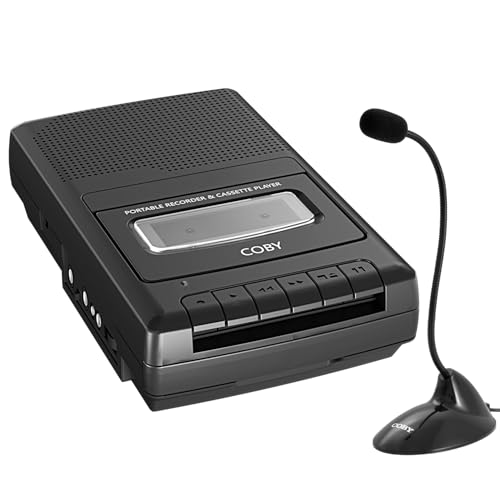
- Detachable standing microphone
- Built-in speaker, headphone jack, and aux input
- AC or four-C-battery power
Best For: Hands-free classroom, meeting, and lecture recording
Simple Recording Pick
Coby CVR-22 Portable Cassette Recorder

- Built-in microphone for voice recording
- Clear controls for easy operation
- AC or four-C-battery power
Best For: Straightforward lecture notes, voice memos, and interviews
Best One-Touch Cassette Recorder – JENSEN MCR-100
For shoppers comparing cassette recorders for lectures, the JENSEN MCR-100 is a straightforward analog option with one-touch recording, a built-in microphone, and automatic level control. Its retractable handle and headphone jack also make it practical for moving between classrooms or listening privately.
Best For: Students and users who want simple cassette recording for lectures, notes, or audio played through an auxiliary connection.
Pros:
- One-touch recording is easy to start and stop.
- Automatic level control helps maintain consistent recording volume.
- Built-in microphone, external microphone jack, auxiliary input, and headphone jack offer flexible use.
- Retractable handle supports portable use.
Cons:
- Records to cassette rather than directly to a digital audio file.
- It has a mono microphone operation mode.
- The listed warranty is limited to 90 days.
The MCR-100 suits buyers who prefer familiar cassette controls and uncomplicated operation. It is a good fit for recording lectures to tape, though digital-first users may prefer a voice recorder with USB file transfer.
Best AI Lecture Note Taker – Comulytic Note Pro
Although it is not a cassette machine, the Comulytic Note Pro is a modern alternative for shoppers seeking cassette recorders for lectures. It records digitally, offers 64GB of local storage, and can transcribe recordings and create summaries through its companion app.
Best For: Students, professionals, and journalists who want searchable digital lecture recordings, transcription, summaries, and action items.
Pros:
- 64GB of local storage is designed to hold thousands of hours of recordings.
- Triple microphones and AI noise reduction are intended to capture speech within 5 meters.
- Offers transcription in 113 languages, summaries, and a built-in Spanish translator mode.
- Provides Wi-Fi syncing, a 45-hour recording battery, and AES encryption.
Cons:
- It does not record or play cassette tapes.
- Cloud features depend on the Comulytic app and plan.
- Some advanced tools require the optional Premium plan.
The Note Pro is the strongest digital workflow choice in this group. It costs more in complexity than a basic tape recorder, but transcription and summaries can make reviewing long lectures substantially easier.
Best Cassette Recorder With Radio – Mersoco T201BUS
The Mersoco T201BUS is a practical choice among cassette recorders for lectures when you also want AM/FM radio. It can record external sounds or broadcasts to cassette, includes a built-in speaker and earphones, and runs on two AA batteries or a 5V power supply.
Best For: Buyers who want an inexpensive portable cassette recorder for lectures, study courses, radio recording, and everyday listening.
Pros:
- Records external audio and AM/FM broadcasts to cassette.
- Voice activation can begin recording when sound is detected.
- Supports battery or DC 5V power for flexible use.
- Includes 3.5mm earphones, a USB-to-DC cable, and a user manual.
Cons:
- Two AA batteries are required for battery operation.
- The 5V adapter is not included.
- Its listed frequency response is 125–6.3 kHz, so it is designed for basic speech and radio use rather than high-fidelity audio.
Choose the T201BUS if radio reception and cassette recording matter as much as lecture capture. Its simple controls and included earphones are convenient, while the separate power adapter requirement is worth planning for.
Best Digital Recorder for Lectures – Sunlan 16GB Dictaphone
For buyers using “cassette recorders for lectures” as a general search term, the Sunlan dictaphone is a compact digital alternative. It records WAV files to 16GB of storage, uses noise reduction, and connects to a computer through USB for file transfer.
Best For: Students who want a small rechargeable recorder for lectures with playback, voice activation, and easy computer access.
Pros:
- One-button recording and simple playback controls are easy to operate.
- DSP noise reduction and a sensitive microphone are designed for clearer speech.
- Voice activation can conserve recording time and power.
- USB connectivity allows recordings to be transferred as files, and battery life is listed at over 30 hours of continuous recording.
Cons:
- It records digitally rather than onto cassette tape.
- The built-in microphone operates in mono.
- Playback is listed at up to 7 hours, shorter than its stated recording time.
The Sunlan is more convenient than a cassette recorder for reviewing and moving lecture files between devices. Its compact design and rechargeable battery make it especially suitable for students who need straightforward digital capture without transcription features.
Best Portable Cassette Recorder – Proscan Cassette Recorder
PROSCAN Cassette Player & Recorder with Microphone, Headphone Jack, Aux in, Black
Check Price On AmazonIf you want cassette recorders for lectures, classes, interviews, or conferences, the PROSCAN offers straightforward one-touch recording in a portable format. Its built-in microphone, external microphone input, headphone jack, and AUX input make it flexible for both recording and playback.
Best For: Students and users who want a simple, lightweight cassette recorder for classes, lectures, interviews, and conferences.
Pros:
- One-touch recording for classes, interviews, and conferences
- Includes a built-in microphone and external microphone jack
- Portable 1.8-pound design with a carry handle
- Offers headphone, AUX input, fast-forward, and rewind controls
Cons:
- Uses analog cassette recording rather than digital storage
- Power options are limited to AC/DC operation
The PROSCAN is a practical choice when ease of use and cassette compatibility matter most. Automatic level control is designed to help produce clear recordings, while its compact build makes it easier to take between classrooms or meeting locations.
Best Smart Lecture Recorder – Innioasis PR1 AI Voice Recorder
Although it is a digital recorder rather than a cassette model, the Innioasis PR1 is worth considering alongside cassette recorders for lectures if transcription and searchable notes are priorities. It records audio, processes speech offline, and can generate summaries from captured lectures and meetings.
Best For: Students, professionals, and researchers who want lecture recordings with offline transcription, summaries, and file-management tools.
Pros:
- Offline transcription with support for more than 70 languages
- AI-generated summaries, mind maps, and translation features
- Four-array plus one high-SNR microphone system with beamforming
- Up to 17 hours of AI recording or 58 hours of Hi-Fi audio recording
Cons:
- It does not record to cassette tapes
- Its extensive smart features may be more than needed for basic audio recording
- Some translation features require online access
The PR1 is a modern alternative for buyers who value transcription over tape recording. Its large touchscreen, 64GB storage, privacy-focused offline processing, and noise-filtering microphone array make it particularly suited to turning long lectures into organized notes.
Best Cassette Recorder With Aux Input – Deluxe Products Portable Recorder
The Deluxe Products portable recorder is a useful option among cassette recorders for lectures when you want a traditional tape deck with simple controls. It can record through its built-in or included external microphone, and its AUX cable allows compatible phones, laptops, or tablets to record audio onto cassette.
Best For: Buyers who want an easy-to-use cassette recorder for voice recording, tape playback, and transferring audio from compatible devices.
Pros:
- Records voice through the built-in or included external microphone
- AUX input supports recording from a smartphone, laptop, or tablet with headphone output
- Includes an AC adapter, external microphone, and AUX cable
- Built-in speaker, headphone jack, and carrying handle improve usability
Cons:
- Four C batteries are required for portable battery operation and are not included
- Recording requires cassette media and does not provide digital transcription
With large playback buttons and both AC and battery power options, this model is convenient for basic use at home or while traveling. Its AUX recording feature also adds flexibility for users who want to put compatible digital audio onto cassette.
Most Connected Pick – QFX RETRO-39BT USB Cassette Recorder
For shoppers comparing cassette recorders for lectures, the QFX RETRO-39BT stands out for its broad connectivity. It can record from a USB drive to cassette and supports playback or recording through Bluetooth, FM radio, a microphone, and line-in connections.
Best For: Users who want a portable lecture recorder with USB, Bluetooth, cassette, and radio features.
Pros:
- Records digital audio from USB directly onto cassette.
- Supports Bluetooth playback, FM radio, MP3 files, microphone input, and line-in/out.
- Includes a built-in 3.5-inch speaker and can run on AC power or four C batteries.
Cons:
- Four C batteries are required but not included.
- Its extra connectivity may be more than needed for basic voice recording.
The RETRO-39BT is a versatile choice when lecture recording is only part of your use case. Choose it if USB transfer and multiple audio sources matter as much as straightforward cassette operation.
Best Hands-Free Option – Coby CVR42BK Cassette Voice Recorder
The Coby CVR42BK is a practical option among cassette recorders for lectures because it includes a detachable standing microphone. Its large controls, built-in speaker, headphone jack, and aux input make it straightforward for classroom, meeting, or home use.
Best For: Students, teachers, and users who want hands-free voice recording with simple controls.
Pros:
- Includes a detachable tabletop microphone for hands-free recording.
- Offers a built-in speaker, 3.5 mm headphone jack, and aux input.
- Runs from four C batteries or the included AC adapter.
- Large Play, Stop, Record, Rewind, and Fast Forward buttons are easy to operate.
Cons:
- It uses mono or stereo recording modes rather than offering advanced digital connectivity.
- Four C batteries are needed for portable use.
With its included standing microphone and accessible controls, the CVR42BK is especially suited to recording spoken material. It is a sensible pick for lecture notes when ease of use matters more than modern file-transfer features.
Simple Recording Pick – Coby CVR-22 Portable Cassette Recorder
For buyers seeking uncomplicated cassette recorders for lectures, the Coby CVR-22 keeps the setup simple with a built-in microphone, clearly labeled buttons, and flexible AC or battery power. It also plays cassettes and supports headphone or aux-connected listening.
Best For: Users who want an easy-to-operate recorder for voice notes, lectures, and interviews.
Pros:
- Built-in microphone records voice notes, lectures, and interviews without extra equipment.
- Simple buttons and clear labels support easy operation.
- Offers cassette playback, a headphone jack, aux input, and external-speaker compatibility.
- Can run on AC power or four C batteries.
Cons:
- Four C batteries are required for battery-powered use.
- It has fewer connectivity features than the QFX model.
The CVR-22 is a straightforward choice for recording spoken audio without a complicated control layout. Its built-in microphone and portable power options make it useful for everyday lecture notes and interviews.
How We Picked the Best Cassette Recorders for Lectures
We evaluated these devices for the features that matter most in classrooms and lecture halls: recording method, microphone usability, playback options, portability, power requirements, storage, and ease of transferring or reviewing recordings. Traditional cassette models are useful for users who already own tapes or want simple physical recordings, while digital and AI recorders offer faster playback, file management, transcription, and searchable notes.
Because lecture environments vary, there is no single best option for everyone. A built-in microphone may work well from a desk near the speaker, but a larger room may require careful placement or an external microphone input. We also considered practical controls, headphone support, speakers, and whether a device can be used without relying on a phone.
Quick Comparison
- Best for traditional tape recording: JENSEN, PROSCAN, Deluxe Products, QFX, and Coby cassette recorders.
- Best for simple digital recording: The 16GB digital voice recorder offers rechargeable, file-based recording and playback.
- Best for transcription and summaries: Comulytic Note Pro and Innioasis PR1 add AI-assisted note-taking features.
- Best for radio and flexible playback: Cassette models with AM/FM, auxiliary input, speakers, or headphone outputs provide more listening options.
Key Buying Factors for Cassette Recorders for Lectures
Recording Format
Cassette recorders create physical tape recordings that are familiar and easy to play back on compatible hardware, but tapes take more effort to organize and share. Digital recorders save files for easier copying, backup, and playback across computers or other devices. AI models may also transcribe or summarize recordings, though results depend on speaker clarity, distance, accents, and background noise.
Microphone Performance
A built-in microphone is convenient, but placement strongly affects lecture quality. Look for a device that can sit close to the lecturer or supports an external microphone or auxiliary source. A recorder with clear monitoring through headphones can help you confirm that it is capturing sound before the lecture continues.
Power and Portability
Battery-powered cassette recorders are convenient for classrooms without accessible outlets, while AC or USB power can be better for long sessions. Check battery type, charging method, dimensions, handle design, and whether controls are easy to operate quickly and quietly.
Playback and File Management
Built-in speakers are useful for quick checks, but headphones usually provide clearer and more private listening. For digital devices, consider internal capacity, USB transfer, file naming, and recording duration. For cassette units, verify whether the model records, plays back, or supports both functions.
Who Should Buy Which Cassette Recorders for Lectures?
Choose a traditional cassette recorder if you already use tapes, prefer straightforward physical media, or want a simple device with minimal menus. Models with built-in speakers and microphones are suitable for basic classroom recording and immediate playback.
Choose a digital voice recorder if you want rechargeable operation, compact storage, and easy access to individual files. It is the more practical choice for students who regularly transfer recordings to a computer or keep organized lecture archives.
Choose an AI voice recorder if transcription, translation, summaries, or searchable notes are more valuable than cassette compatibility. Confirm its supported languages, processing requirements, privacy terms, and expected recording environment before relying on it for important coursework.
Whichever style you choose, test the recorder before your first lecture, ask for permission when required, and keep backup notes for especially important material.