If you want the stability of a support pole without the bulk of a full tripod, lightweight camera monopods are an easy win. They’re ideal for travel, sports, events, and long shooting days.
Below, we’ve narrowed the field to 10 options that balance portability, height, load support, and everyday usability so you can pick the right monopod faster.
Best 10 Lightweight Camera Monopods Picks for 2026
Editor’s Choice
Manfrotto Element MII Lightweight Travel Monopod

- 0.5 kg aluminum body
- Supports up to 15 kg
- Folds to 43 cm with twist locks
Best For: Travel photographers needing a compact, high-capacity monopod
Best All-Terrain Pick
NEEWER 61-inch Portable Monopod Stand

- 401 g aluminum alloy construction
- Interchangeable rubber and spike feet
- 1/4" to 3/8" adapter for many devices
Best For: Creators who shoot on mixed surfaces and need versatile mounting
Budget Buy
Amazon Basics 67-Inch Lightweight Monopod
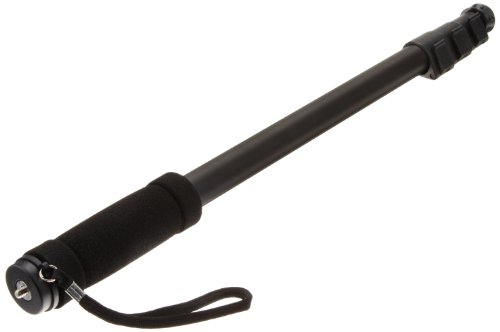
- Under 1 lb aluminum build
- Extends to 67 inches
- Includes bag, strap, and spikes
Best For: Budget buyers wanting simple, portable camera support
Compact Carry Pick
Altura Photo 62-Inch Travel Monopod

- 0.59 lb lightweight aluminum design
- Collapses to 16.75 inches
- Includes pouch, strap, and spike
Best For: Travelers and hikers needing a small, easy-to-pack monopod
Portable 61-Inch Travel Pick
ULANZI TB12 Lightweight Monopod

- Weighs 0.83 lbs and folds to 16.9 inches
- Extends to 61 inches with 5 sections
- Works as monopod, selfie stick, or walking stick
Best For: Travelers and hikers who want a compact multipurpose support
Stable Base Value Pick
NEEWER Extendable Monopod with Base
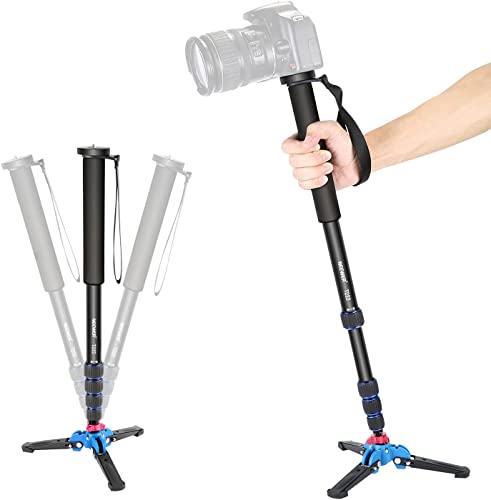
- Includes detachable 3-leg base for added support
- Extends to 66 inches and folds to 20.5 inches
- 5 kg load rating with foam handle grip
Best For: Users who want extra stability and panoramic movement
Higher-Load Travel Pick
Manbily A-555L Compact Monopod

- Weighs 1.1 lbs and folds to 15.7 inches
- Rated for up to 15.4 lbs with 6-section build
- Includes rubber/metal feet and trekking handle
Best For: Travel shooters who want higher load capacity and versatility
Compact All-Around Monopod
K&F CONCEPT 63" Aluminum Monopod

- 63" max height with a 17" folded size
- 10 kg payload capacity and quick locking
- Metal/rubber feet plus 1/4" and 3/8" mounts
Best For: Travel shooters who need a compact, versatile monopod
Travel-Friendly Telescopic Pick

- Extends from 44 cm to 155 cm
- Light aluminum build with carrying bag included
- 1/4" and 3/8" mounts with non-slip grip
Best For: Travel photographers needing a simple, portable support
Stability-Focused Travel Option
Manbily A-222 Monopod with Base

- 21" to 67" extension with 1/4-turn lock
- Removable three-foot base adds extra stability
- 15.5 lb load rating with rubber and spike feet
Best For: Shooters who want a portable monopod with added footing
Editor’s Choice – Manfrotto Element MII Lightweight Travel Monopod
This lightweight camera monopod is built for travel shooters who want a small footprint without giving up support. The aluminum body folds compactly, extends high enough for flexible framing, and uses twist locks for quick setup when you need to move fast.
Best For: Hobbyist photographers using compact cameras, mirrorless cameras, or DSLRs who want a compact, sturdy travel monopod.
Pros:
- Light 0.5 kg aluminum build with a folded length of 43 cm
- Supports up to 15 kg, making it suitable for heavier zoom lenses
- 5-section design with ergonomic twist locks for fast height changes
- Includes wrist strap and convertible 1/4" & 3/8" attachment
Cons:
- Not water resistant
- No included feet or extra stability accessories mentioned
For photographers who prioritize portability and stronger load capacity, this Manfrotto is a very practical pick among lightweight camera monopods. It balances compact storage with serious payload support.
Best All-Terrain Pick – NEEWER 61-inch Portable Monopod Stand
If you want a lightweight camera monopod that handles different shooting surfaces, this NEEWER stand is a flexible option. It combines a compact folded size, easy flip-lock height adjustment, and interchangeable rubber or spike feet for indoor and outdoor use.
Best For: Content creators, hikers, and videographers who need a portable monopod for mixed terrain and versatile mounting.
Pros:
- Lightweight 401 g aluminum alloy build with a 44 cm folded size
- Supports up to 8 kg and extends to 155 cm
- Interchangeable rubber feet and steel spike feet for different surfaces
- 1/4" to 3/8" adapter works with cameras, gimbals, rigs, and more
Cons:
- Weight capacity is lower than some heavier-duty monopods
- Not water resistant
This is a smart choice if your shoots move from smooth floors to grass, sand, or dirt. The terrain-friendly feet and broad accessory compatibility make it one of the more versatile lightweight camera monopods here.
Budget Buy – Amazon Basics 67-Inch Lightweight Monopod
This Amazon Basics model covers the essentials of a lightweight camera monopod at a very approachable level. It extends to a tall 67 inches, stays under 1 lb, and includes a carrying bag for easier transport and storage.
Best For: Budget-minded photographers and casual users who want simple, portable camera support.
Pros:
- Lightweight aluminum construction at under 1 lb
- Extends to 67 inches for flexible framing
- Includes non-skid rubber foot and retractable spikes
- Comes with a carrying bag, cushion grip, and wrist strap
Cons:
- 6.6 lb capacity is lower than heavier-duty options
- Not water resistant
For basic stills, video, or scope support, this is an easy-value pick. It keeps the feature set simple while still giving you the portability expected from lightweight camera monopods.
Compact Carry Pick – Altura Photo 62-Inch Travel Monopod
The Altura Photo monopod is a compact, easy-to-pack option for shooters who want a lightweight camera monopod with a familiar no-fuss layout. It collapses to a very short length, comes with a carry pouch, and uses a universal thread plus adapter for broad camera compatibility.
Best For: Travelers and hikers who want a compact monopod for DSLR, mirrorless, or video camera use.
Pros:
- Very light at 0.59 lb and collapses to 16.75 inches
- Includes a carry pouch for easy packing
- Universal 1/4-inch thread plus 3/8-inch adapter
- Foam grip, wrist strap, and retractable spike for secure handling
Cons:
- 5 lb weight limit is lower than several competitors
- Not water resistant
This model is a strong fit if compactness matters more than load capacity. It delivers the portability and basic stability many people want from lightweight camera monopods without adding bulk.
Portable 61-Inch Travel Pick – ULANZI TB12 Lightweight Monopod
If you want one of the more versatile lightweight camera monopods for travel, the ULANZI TB12 keeps things simple: it weighs just 0.83 lbs, folds to 16.9 inches, and extends to 61 inches. The 5-section aluminum build makes it easy to pack for hiking, wildlife outings, or quick handheld-style shooting without bringing a full tripod.
Best For: Travelers and outdoor shooters who want a compact, easy-to-carry monopod that can also work as a walking stick or selfie stick.
Pros:
- Very light at 0.83 lbs and folds down to 16.9 inches for easy packing.
- Extends to 61 inches with 4 adjustable height levels for flexible framing.
- Supports up to 11.02 lbs, which suits compact cameras, CSCs, and DSLRs.
- Multiple modes include monopod, selfie stick, walking stick, hiking stick, and trekking pole.
Cons:
- Maximum load is limited to 11.02 lbs, so it is not aimed at heavier rigs.
- Not water resistant, so it is better suited to dry conditions.
This is a strong pick if you value portability first and want one of the most travel-friendly options in lightweight camera monopods. It is especially appealing when you need a compact support tool that can do more than one job.
Stable Base Value Pick – NEEWER Extendable Monopod with Base
The NEEWER extendable monopod stands out among lightweight camera monopods because it adds a detachable, foldable 3-leg base for extra support. It extends to 66 inches, folds to 20.5 inches, and uses aluminum alloy construction with a 5 kg load rating, giving you a practical balance of reach and stability for everyday shooting.
Best For: Shooters who want a lightweight monopod with an included stand base for steadier framing and panoramic movement.
Pros:
- Detachable 3-leg base adds support and includes 15-degree tilt and 360-degree panoramic rotation.
- Extends to 66 inches while folding to 20.5 inches for decent portability.
- 5-section adjustment system helps with different shooting heights.
- Foam handle improves comfort and grip during handheld use.
Cons:
- At 1.3 lbs, it is still portable but heavier than some ultra-light monopods.
- The notes caution that you need to hold the monopod with one hand when a camera is mounted.
If stability matters as much as portability, this NEEWER model offers a useful middle ground. The included base makes it more versatile than a bare monopod while keeping the overall setup compact enough for regular carry.
Higher-Load Travel Pick – Manbily A-555L Compact Monopod
The Manbily A-555L is a strong option if you want lightweight camera monopods with a bit more load capacity. It weighs 1.1 lbs, folds to 15.7 inches, and reaches 61 inches, while the 6-section aluminum build and 15.4 lb rating make it a practical choice for travel, sports, and wildlife use.
Best For: Photographers and videographers who want a compact monopod with a higher stated load capacity and trekking-pole versatility.
Pros:
- Lightweight at 1.1 lbs and very compact when folded at 15.7 inches.
- Higher load rating of 15.4 lbs offers more headroom than many travel monopods.
- 6-section quick-lock design sets up fast and adjusts from 15.7 to 61 inches.
- Includes rubber and metal feet options plus a removable handle for trekking pole use.
Cons:
- Maximum height is listed as 61 inches in the title and 66.14 inches in the details, so the specs are not perfectly consistent.
- At 1.1 lbs, it is still portable but not the lightest model here.
For buyers who want a travel-ready monopod with more load margin, the Manbily A-555L is a compelling pick. Its mix of quick setup, compact folded size, and accessory-friendly mounting platform makes it useful in more demanding field situations.
Compact All-Around Monopod – K&F CONCEPT 63" Aluminum Monopod
If you want lightweight camera monopods that are easy to pack but still offer real support, this K&F CONCEPT model is a practical pick. The 5-section aluminum design reaches 63 inches, folds down to 17 inches, and includes both a wrist strap and anti-slip padding for more secure handling during travel or outdoor shoots.
Best For: Photographers who want a compact, portable monopod for travel, mixed terrain, and quick setup.
Pros:
- Extends to 63 inches while folding down to a compact 17 inches.
- 10 kg payload support makes it suitable for a wide range of camera setups.
- Dual metal-and-rubber foot design helps on both hard and soft ground.
- 1/4″ and 3/8″ interfaces add broad device compatibility.
Cons:
- It is not water resistant.
- Only one leg section is listed in the details, so stability is still monopod-style rather than tripod-style.
Overall, this is a versatile lightweight camera monopod for users who value easy carry, quick height changes, and flexible foot options. It leans more toward portability than heavy-duty field use, but the included features make it a solid everyday support choice.
Travel-Friendly Telescopic Pick – PATONA 155cm Portable Monopod
This PATONA option fits the lightweight camera monopods category well if you want a simple travel companion with a small packed size. It extends from 44 cm to 155 cm, uses a lightweight aluminum build, and adds a non-slip grip plus adjustable wrist strap for more secure handheld use.
Best For: Travel photographers and mobile creators who want a light, easy-carry monopod with broad thread compatibility.
Pros:
- Telescopic range from 44 cm to 155 cm suits flexible shooting heights.
- Light aluminum construction keeps it easy to transport.
- Non-slip grip and adjustable wrist strap improve handling.
- 1/4″ and 3/8″ thread mount supports many cameras and accessories.
Cons:
- No load rating is listed in the supplied details.
- It is not water resistant.
For buyers focused on portability and straightforward operation, this is a clean, travel-ready monopod. It emphasizes easy setup and compatibility over extra stability features, which makes it a sensible choice for casual photo and video use.
Stability-Focused Travel Option – Manbily A-222 Monopod with Base
If you want lightweight camera monopods with a little more planted feel, the Manbily A-222 stands out thanks to its removable three-foot base. It extends from 21 inches to 67 inches, uses a quick-lock system, and pairs a rubber grip with interchangeable rubber and metal feet for different shooting surfaces.
Best For: DSLR and video shooters who want a portable monopod with added footing for extra stability.
Pros:
- Reaches 67 inches and adjusts quickly with a 1/4-turn lock.
- Removable base with three feet adds stability during use.
- Includes both rubber feet and a metal spike for different ground conditions.
- 15.5 lb load rating supports many camera and camcorder setups.
Cons:
- The base is for added stability, not a full tripod replacement.
- No ball head is included.
- At 0.98 kg, it is still portable but heavier than the lightest travel-focused monopods.
This model is a good fit if you want the convenience of a monopod but prefer extra footing when shooting. Its portable design, quick adjustments, and dual-foot setup make it especially useful for photographers who split time between travel and more controlled shooting environments.
How We Picked These Lightweight Camera Monopods
We focused on models that make sense for real-world shooting: low carry weight, sensible folded length, reliable locking systems, and enough load capacity for common mirrorless and DSLR setups. We also considered grip comfort, foot design, included straps or bags, and whether the monopod is easy to set up quickly in the field.
Because Lightweight Camera Monopods are often used on the move, we gave extra attention to compactness and portability rather than unnecessary bulk or complicated features.
Quick Comparison: What Matters Most
Start by matching the monopod to your shooting style. If you travel often, prioritize folded size and section count. If you shoot sports or action, look for fast height changes and secure twist or flip locks. If you plan to use heavier cameras or lenses, pay more attention to load rating and the base design.
Some monopods stay very minimal, while others add a small stand or foldable feet for extra stability. Those hybrid designs can be useful, but they usually add a little weight and size.
Key Buying Factors for Lightweight Camera Monopods
Height and Sections
A taller max height gives more framing flexibility, but more sections can mean a slightly slower setup. Four- and five-section designs often offer a good balance between reach and portability.
Weight and Folded Length
The best lightweight option is the one you will actually carry. Check both the monopod’s weight and how short it folds down, especially if you pack it in a backpack or carry-on.
Locks and Stability
Twist locks are common on Lightweight Camera Monopods because they keep the profile slim. Make sure they feel secure and easy to operate with gloves or in cold weather.
Base and Foot Design
Rubber feet improve grip on hard surfaces, while removable or foldable bases can add standing support. If you often shoot on smooth floors or uneven ground, this detail matters more than it may seem.
Load Capacity and Mount Compatibility
Choose a capacity that comfortably exceeds your camera and lens weight. Also confirm that the head mount or screw thread matches your gear, especially if you switch between bodies and accessories.
Who Should Buy Which Lightweight Camera Monopods?
Travel photographers should lean toward the most compact and easiest-to-pack options. Sports and event shooters should prioritize quick deployment and a secure grip. DSLR users with heavier lenses should look for stronger aluminum construction and higher load ratings. If you want extra support without carrying a tripod, a monopod with a detachable base may be the best fit.
In short, the right choice depends on whether your top priority is portability, speed, or added stability. Once you know that, picking from the best Lightweight Camera Monopods becomes much simpler.