Choosing the right microphone can make a bigger difference than upgrading almost any other part of your audio setup. Dynamic microphones are a top pick for creators because they handle loud voices well, reject background noise, and stay reliable in demanding setups.
Below, we focus on ten standout options for podcasting, streaming, gaming, and live vocals, with a practical buying guide to help you match the mic to your workflow.
Best 10 Dynamic Microphones Picks for 2026
Broadcast Standard
Shure SM7B Dynamic Vocal Microphone for Podcasting
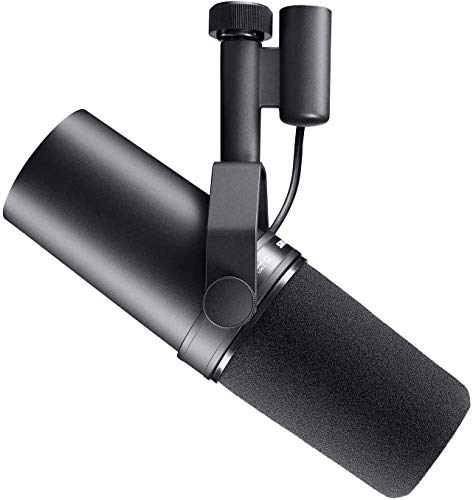
- Warm, balanced vocal tone
- Cardioid pickup reduces room noise
- Built-in pop filtering and windscreen
Best For: Podcasting, streaming, voiceover, and studio vocals
Podcast Desk Favorite
RØDE PodMic Cardioid Dynamic Broadcast Microphone

- Speech-tuned broadcast capsule
- Internal pop filter and shock mounting
- All-metal XLR build
Best For: Podcasting and streaming in untreated rooms
Stage Vocal Workhorse
Shure BETA 58A Supercardioid Dynamic Vocal Microphone

- Supercardioid pattern for feedback control
- Tailored vocal response with bass rolloff
- Rugged build with shock mount system
Best For: Live singers and stage vocals
Dual-Mode Creator Pick
FIFINE AmpliGame AM8 USB/XLR Dynamic Microphone

- USB and XLR connectivity
- Cardioid pickup reduces off-axis noise
- USB mode adds mute, gain, monitoring, and RGB
Best For: Streamers and beginner creators who want flexibility
Stage Vocal Choice

- Cardioid pickup aids isolation and feedback rejection.
- Balanced response and presence boost support vocal clarity.
- Rugged metal build with internal damping reduces handling noise.
Best For: Live singers who want a durable XLR handheld mic for clear vocals
Podcast Recording Pick

- Dynamic cardioid mic with integrated shock mount.
- XLR-only output works with interfaces and mixers.
- All-metal build suits podcasting and vocal recording.
Best For: Podcasters and streamers who want a broadcast-style XLR mic
Gaming Creator Bundle

- USB/XLR mic with boom arm for flexible setups.
- Cardioid pattern and -50dB sensitivity help reduce noise pickup.
- Includes mute, gain, monitoring, and RGB controls.
Best For: Gamers and streamers who want an all-in-one mic kit
Classic Stage Standard
Shure SM58 Pro XLR Dynamic Vocal Microphone

- Legendary vocal tuning with a subtle midrange lift
- Cardioid pattern helps reject background noise and feedback
- Rugged metal build with built-in plosive control
Best For: Singers and speakers needing a durable XLR vocal mic
Feature-Rich Hybrid
Shure MV7+ USB-C & XLR Podcast Dynamic Microphone

- USB-C and XLR outputs for flexible setup options
- Auto Level and denoiser help keep audio consistent
- LED touch panel adds tap-to-mute and monitoring
Best For: Podcasters and streamers who want modern controls and flexibility
Stage Control Pick
Shure SM58S Pro XLR Dynamic Vocal Microphone with On/Off Switch

- Warm vocal tuning with proven stage presence
- Cardioid pattern helps reject off-axis noise
- On/off switch adds quick muting during live use
Best For: Live vocal setups that benefit from easy mute control
Broadcast Standard – Shure SM7B Dynamic Vocal Microphone for Podcasting
The Shure SM7B is one of the most trusted dynamic microphones for creators who want warm, balanced vocal capture with strong noise rejection. Its cardioid pattern, built-in pop filtering, and shock isolation make it a practical pick for podcasting, streaming, voiceover, and close-mic studio work.
Best For: Podcast hosts, streamers, and vocal recordists who want a rugged XLR mic with polished broadcast-style sound.
Pros:
- Warm, clear vocal tuning with a wide-range frequency response
- Cardioid pickup and shock isolation help reduce room noise and handling vibration
- Built-in pop filtering and detachable windscreen reduce plosives and breath noise
- All-metal build with electromagnetic shielding for reliable long-term use
Cons:
- XLR-only design requires an audio interface or mixer
- Needs substantial gain, with at least 60 dB recommended
- Not the simplest plug-and-play option for beginners
If you want a dynamic microphone that prioritizes voice quality and broadcast cleanliness, the SM7B remains a strong benchmark. It is best suited to setups where you already have the gain and XLR chain to support it.
Podcast Desk Favorite – RØDE PodMic Cardioid Dynamic Broadcast Microphone
The RØDE PodMic is a straightforward dynamic microphone built for speech-heavy recording in untreated spaces. With a broadcast-tuned capsule, internal pop filter, and shock mounting, it aims to keep voices clear while cutting down on desk noise and room reflections.
Best For: Podcasters and streamers who want a sturdy XLR mic designed for clean spoken-word recording.
Pros:
- Broadcast-quality dynamic capsule tuned for speech
- Internal pop filter helps control plosives without extra accessories
- Shock mounting reduces desk bumps and handling noise
- All-metal construction built for long-term use
Cons:
- Requires an XLR interface or mixer
- Does not include USB convenience
- Best suited to spoken voice rather than all-purpose flexibility
The PodMic is a practical choice if you want an affordable broadcast-style dynamic mic with fewer add-ons to buy. It fits especially well in podcast and streaming setups where XLR gear is already part of the chain.
Stage Vocal Workhorse – Shure BETA 58A Supercardioid Dynamic Vocal Microphone
The Shure BETA 58A is a dynamic microphone aimed at live vocal use, with a supercardioid pattern that helps maximize gain before feedback. Its tailored response and durable construction make it a strong option when you need reliable voice clarity on loud stages or in the studio.
Best For: Singers and live performers who need feedback control and dependable vocal presence.
Pros:
- Supercardioid pattern helps maximize gain before feedback
- Tailored frequency response supports natural vocals with controlled bass rolloff
- Rugged build with hardened steel mesh grille and pneumatic shock mount system
- Includes stand adapter, thread adapter, and storage bag
Cons:
- XLR-wired design needs a mixer or compatible input
- Primarily focused on vocal performance rather than general-purpose recording
- Not the most convenient option for plug-and-play use
If your priority is stage-ready vocal control, the BETA 58A offers a reliable mix of rejection, durability, and consistent output. It is built for performers who need their voice to stay clear in louder environments.
Dual-Mode Creator Pick – FIFINE AmpliGame AM8 USB/XLR Dynamic Microphone
The FIFINE AmpliGame AM8 is a versatile dynamic microphone for creators who want both USB simplicity and XLR upgrade potential. It offers cardioid pickup for noise rejection, plus USB-only extras like mute control, monitoring, and RGB lighting for streaming and gaming setups.
Best For: Streamers and beginner creators who want one dynamic microphone that can start simple and grow with their setup.
Pros:
- USB and XLR connectivity offer flexible setup options
- Cardioid pickup helps reject off-axis noise for clearer voice capture
- USB mode adds tap-to-mute, gain control, monitoring, and RGB lighting
- Includes a windscreen and built-in 3/8-inch and 5/8-inch threads
Cons:
- RGB and function keys do not work in XLR mode
- XLR cable is not included
- Some controls are USB-only, so the feature set depends on connection type
The AM8 stands out if you want a dynamic microphone that covers both easy desktop use and a more advanced interface-based path later. It is especially appealing for gaming and streaming where convenience features matter.
Stage Vocal Choice – Sennheiser E 835
If you want one of the more dependable dynamic microphones for live vocals, the Sennheiser E 835 is built for clear stage performance. Its cardioid pickup pattern helps isolate your voice, while the balanced response and gentle presence boost are designed to keep vocals intelligible as you move on and off axis.
Best For: Singers and live performers who want a rugged handheld XLR mic with strong feedback rejection and consistent vocal clarity.
Pros:
- Cardioid pattern helps reject feedback and isolate the vocal.
- Balanced frequency response stays consistent as you move around the mic.
- Gentle presence boost supports vocal clarity and projection.
- Rugged metal construction and internal damping help reduce handling noise.
Cons:
- XLR-only design needs an external interface, mixer, or amp.
- Made primarily for vocals rather than flexible multi-use recording.
Overall, the E 835 reads like a straightforward stage workhorse: simple, durable, and tuned for dependable vocal results in live settings.
Podcast Recording Pick – Shure MV7X XLR Microphone
For creators looking at dynamic microphones for spoken-word recording, the Shure MV7X is aimed squarely at podcasting, streaming, and vocal capture. Its dynamic cardioid design and integrated shock mount are meant to help reduce room noise, background distractions, and unwanted vibrations for a cleaner voice signal.
Best For: Podcasters, streamers, and vocal recordists who want an XLR-only mic with strong voice isolation and a broadcast-style build.
Pros:
- Focused voice-isolation design helps cut room noise and vibrations.
- XLR-only output works with audio interfaces and mixers for flexible setup control.
- All-metal construction adds durability for regular use.
- Broadcast-inspired form factor suits spoken-word and vocal performance.
Cons:
- XLR-only connection means it is not a direct USB plug-and-play mic.
- Requires interface or mixer, so it is less convenient for simple mobile setups.
As a recording-focused option, the MV7X prioritizes voice isolation and studio compatibility over convenience, making it a solid fit for more controlled creator setups.
Gaming Creator Bundle – FIFINE AmpliGame AM8T Kit
If you want dynamic microphones built for gaming and streaming, the FIFINE AmpliGame AM8T stands out because it combines a USB/XLR mic with a boom arm in one kit. The cardioid pattern, -50dB sensitivity, and included monitoring controls are all aimed at keeping voice capture practical for streaming, recording, and everyday creator use.
Best For: Gamers and streamers who want a versatile starter kit with USB convenience, XLR upgrade path, and an included boom arm.
Pros:
- USB and XLR connectivity gives you flexible setup options.
- Cardioid pattern helps limit background noise pickup.
- Includes boom arm, mute button, gain knob, and headphone monitoring.
- Customizable RGB lighting adds a visual gaming setup touch.
Cons:
- XLR cable is not included in the package.
- RGB and control features are geared more toward creator setups than pure audio minimalists.
Overall, the AM8T is a convenience-first kit that covers both plug-and-play USB use and future XLR expansion, making it a practical choice for first-time streamers.
Classic Stage Standard – Shure SM58 Pro XLR Dynamic Vocal Microphone
If you want one of the most proven dynamic microphones for vocals, the Shure SM58 remains a safe, practical choice. Its cardioid pattern, tuned midrange lift, and integrated pop filtering make it a straightforward fit for live singing, basic recording setups, podcasting, and broadcast use.
Best For: Singers, speakers, and creators who want a durable XLR dynamic mic with reliable vocal focus.
Pros:
- Legendary vocal tuning with a subtle midrange lift for clear, articulate vocals
- Cardioid pickup helps reduce background noise and feedback
- Built-in spherical grille and filter help control plosives, breath, and wind noise
- Rugged metal construction is made for touring and regular stage use
Cons:
- Requires XLR gear such as an audio interface, mixer, or preamp
- No onboard controls or digital features for quick on-mic adjustments
- Best suited to vocal capture rather than flexible multi-mode recording
This is the classic workhorse pick if you value consistency over extras. For buyers comparing dynamic microphones for stage and studio vocals, the SM58 is still one of the easiest models to recommend.
Feature-Rich Hybrid – Shure MV7+ USB-C & XLR Podcast Dynamic Microphone
The Shure MV7+ is a strong option if you want dynamic microphones that work well for both simple plug-and-play use and more advanced studio setups. With USB-C and XLR outputs, plus auto level mode and real-time denoising, it is built for podcasting, streaming, voice recording, and on-camera use.
Best For: Podcasters, streamers, and creators who want a flexible dynamic mic with modern onboard controls.
Pros:
- USB-C and XLR outputs support both easy desktop setups and pro audio rigs
- Auto Level Mode helps keep gain consistent as your distance changes
- Real-time denoiser helps reduce background noise during recording
- LED touch panel adds tap-to-mute control and level monitoring
Cons:
- More feature-heavy than a simple stage microphone
- USB features are only useful if you want digital convenience
- Higher complexity may be unnecessary for basic vocal-only needs
If you want one microphone that can move between casual recording and more polished production, this is the most versatile pick in the group. The added controls make it especially practical for creators who want clean audio without a lot of setup work.
Stage Control Pick – Shure SM58S Pro XLR Dynamic Vocal Microphone with On/Off Switch
The Shure SM58S is a practical variation on a classic dynamic vocal mic, adding an integrated on/off switch for easier muting during live use. It keeps the familiar warm vocal tuning, cardioid rejection, and rugged metal build that make the SM58 line a standard choice for performances and rehearsal rooms.
Best For: Performers, presenters, and worship setups that want a reliable vocal mic with quick mute control.
Pros:
- Warm, present vocal sound designed to help voices cut through a mix
- Cardioid pickup reduces off-axis noise from instruments and monitors
- Integrated on/off switch makes muting fast and convenient
- Hardened grille and internal filtering help reduce plosives and handling noise
Cons:
- XLR-only design means you need compatible mixer or interface gear
- On/off switch is useful, but not everyone needs that extra control
- Still focused primarily on vocal capture rather than multipurpose recording
If quick muting matters in your setup, this version adds a useful real-world convenience without changing the core SM58 formula. It is a solid fit for live environments where simple control and dependable vocal performance matter most.
How We Picked the Best Dynamic Microphones
We focused on real-world use rather than hype. The best picks balance voice clarity, off-axis noise rejection, build quality, and compatibility with common setups like audio interfaces, mixers, USB connections, and streaming rigs. We also gave extra weight to models that are easy to position and dependable for long sessions.
Quick Comparison: Which Type Fits Your Setup?
USB/XLR hybrids are the most flexible choice if you want one microphone that can grow with your setup. Pure XLR models are better if you already use an interface or mixer and want maximum control. Broadcast-style Dynamic Microphones tend to suit spoken-word creators, while stage-focused models are often the better choice for live vocals and loud environments.
Key Buying Factors for Dynamic Microphones
Pickup Pattern
Cardioid and supercardioid patterns help isolate your voice and reduce room noise. If your space is untreated or noisy, stronger rejection can be a major advantage.
Connection Type
USB is simpler for beginners and streamers. XLR offers more upgrade potential and usually fits better in more advanced audio chains. Hybrid models can bridge both worlds.
Gain Requirements
Some Dynamic Microphones need a decent amount of clean gain to sound their best. If your interface is weak, you may need a preamp or booster.
Use Case
Podcasting, streaming, gaming, singing, and live performance all benefit from different tuning and handling. A spoken-word mic may not be the ideal stage mic, and vice versa.
Who Should Buy Which Dynamic Microphones?
Choose a broadcast-style model if your priority is voice clarity for podcasts or streaming. Pick a classic live vocal mic if you need durability and feedback resistance on stage. If you want easy setup plus future flexibility, a USB/XLR hybrid is often the smartest all-around choice. Among Dynamic Microphones, the best option is the one that matches your room, your gear, and how you actually record or perform.